
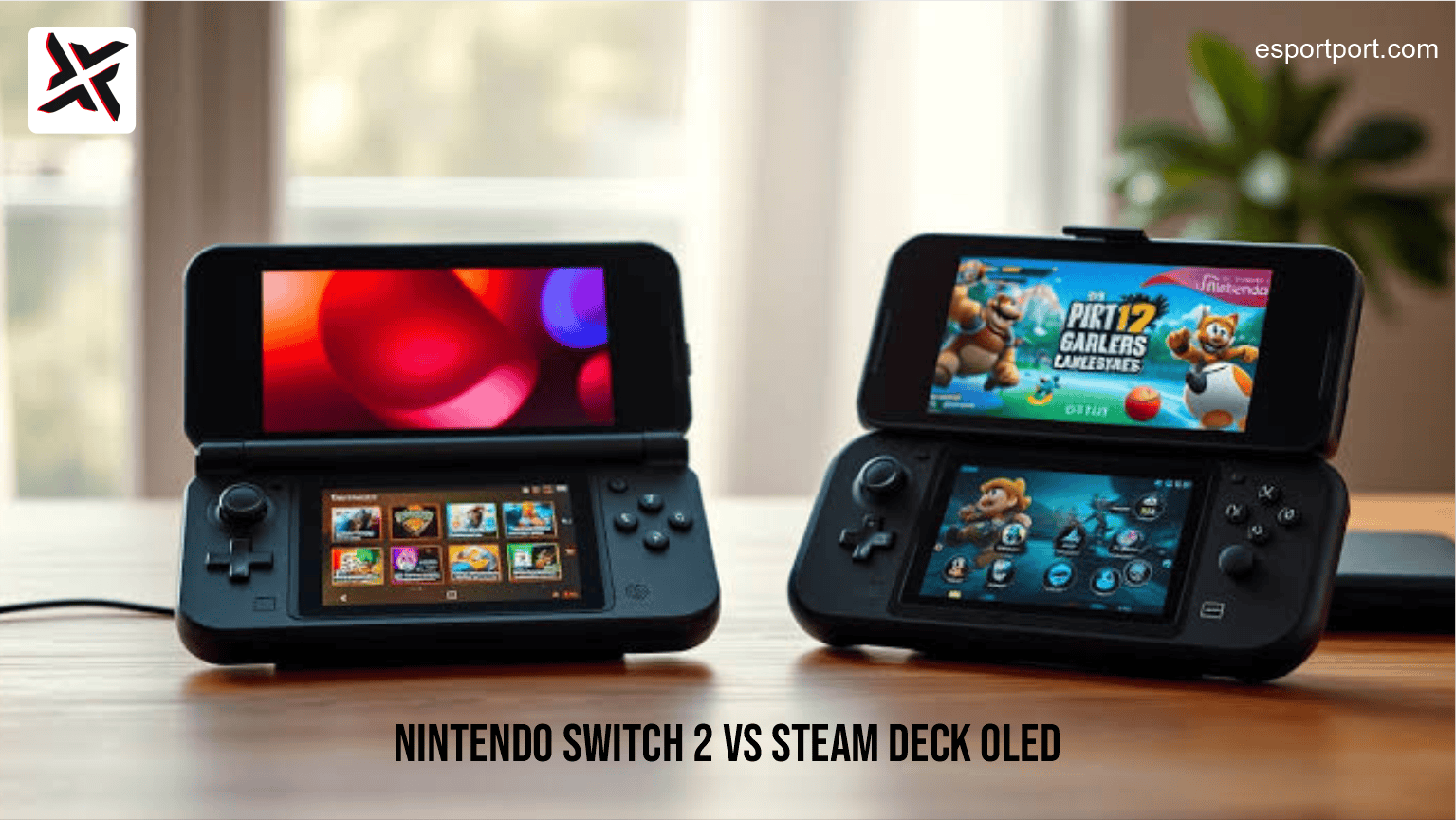
With the handheld gaming market booming and Nintendo preparing to roll out the highly anticipated Nintendo Switch 2, portable PC and console enthusiasts face a massive purchasing decision. On one side stands Valve’s refined Steam Deck OLED—the reigning champion of open handheld PC gaming. On the other stands Nintendo’s next-generation hybrid system, packing DLSS-powered hardware and flagship first-party blockbusters.
If you are planning to invest in a premium portable gaming device this month, here is our complete nintendo switch 2 vs steam deck oled hardware, library, and performance comparison to help you choose the right machine.
- Table of Contents:
- Hardware Specifications & Display Comparison
- Game Libraries: Nintendo Exclusives vs Steam Backlog
- Battery Life & Portability Realities
- Operating System: Walled Garden vs Open Freedom
- Final Recommendation: Which Device Fits You?
- 💡 Expert Tip: The MicroSD & Backward Compatibility Factor
🔥 NEXT UP (Don’t Miss This): Fire Emblem Fortune’s Weave: Switch 2 Release Date & Mechanics
1. Hardware Specifications & Display Comparison
| Feature | Nintendo Switch 2 | Steam Deck OLED |
|---|---|---|
| Display | 8.0-inch Custom HDR LCD / OLED | 7.4-inch 90Hz HDR OLED |
| Resolution | 1080p Handheld (Up to 4K Docked via DLSS) | 1280 x 800 (800p native) |
| Refresh Rate | Up to 120Hz (Docked) / 60Hz Handheld | Up to 90Hz Native |
| Processor | Custom Nvidia Tegra T239 Chip | AMD Custom APU (Zen 2 + RDNA 2) |
| Upscaling | Nvidia DLSS (Hardware Tensor Cores) | AMD FSR (Software level) |
| Storage Options | 256GB / 512GB UFS 3.1 Internal | 512GB / 1TB NVMe SSD |
| Weight | ~400g (with Joy-Cons attached) | 640g |
- Display Quality: The Steam Deck OLED’s 90Hz panel produces deeper blacks and richer contrast in dark environments. However, the Switch 2’s larger 8-inch screen and 1080p native resolution deliver significantly crisper text and finer in-game geometry.
- Performance: The Switch 2’s secret weapon is its dedicated Nvidia silicon with hardware-accelerated DLSS. While the raw compute of both devices is close, DLSS allows the Switch 2 to output exceptionally clean images on external 4K TVs when docked, whereas the Steam Deck struggles when pushed past its native 800p output.
2. Game Libraries: Nintendo Exclusives vs Steam Backlog
- The Switch 2 Advantage: Access to legendary, system-selling exclusives you cannot legally play anywhere else: the next 3D Super Mario, Mario Kart 9, Pokemon Gen 10, and enhanced editions of The Legend of Zelda: Tears of the Kingdom. It is the ultimate platform for families, casual multiplayer, and Nintendo purists.
- The Steam Deck Advantage: The vast, boundary-free Steam library. Thousands of PC titles, massive seasonal Steam sales, emulation capability, and free online multiplayer with zero subscription fees. If you already own a 300-game Steam library, your existing collection works on Day 1.
3. Battery Life & Portability Realities
- Weight & Form Factor: The Steam Deck OLED is a bulky device weighing 640g; holding it for longer than two hours without resting your arms on a table or pillow can cause fatigue. The Switch 2 remains noticeably sleeker and lighter, making it much easier to toss into a backpack.
- Battery Endurance: The Steam Deck OLED delivers between 3 to 12 hours depending on how demanding the game is (indie titles like Hades II can run for nearly 8 hours). The Switch 2 is engineered to average 4 to 6.5 hours on demanding modern titles thanks to Nvidia’s efficient power-scaling profiles.
4. Final Recommendation: Which Device Fits You?
- Buy the Nintendo Switch 2 if: You prioritize first-party Nintendo franchises, play local couch co-op with detachable controllers, frequently dock your handheld to a living room TV, and want a lightweight, plug-and-play console experience.
- Buy the Steam Deck OLED if: You already have a large PC game library, love indie roguelikes and PC strategy games, want true 90Hz OLED black levels, refuse to pay monthly fees for online multiplayer, and value complete software freedom.
🛡️ EXPERT TIP: THE BACKWARD COMPATIBILITY FACTOR
Don’t sell your physical Switch cartridges!
One of the biggest concerns for prospective buyers has been physical backward compatibility. Official supplier reports confirm that the Nintendo Switch 2 features a hybrid cartridge slot capable of reading original Nintendo Switch game cartridges. Furthermore, select original Switch games automatically receive performance patches on Switch 2 hardware, unlocking stable 60 FPS frame rates and higher rendering resolutions without needing paid upgrade passes. If you have an extensive physical library on the original Switch, upgrading to the Switch 2 preserves your entire investment while dramatically improving your existing backlog.