
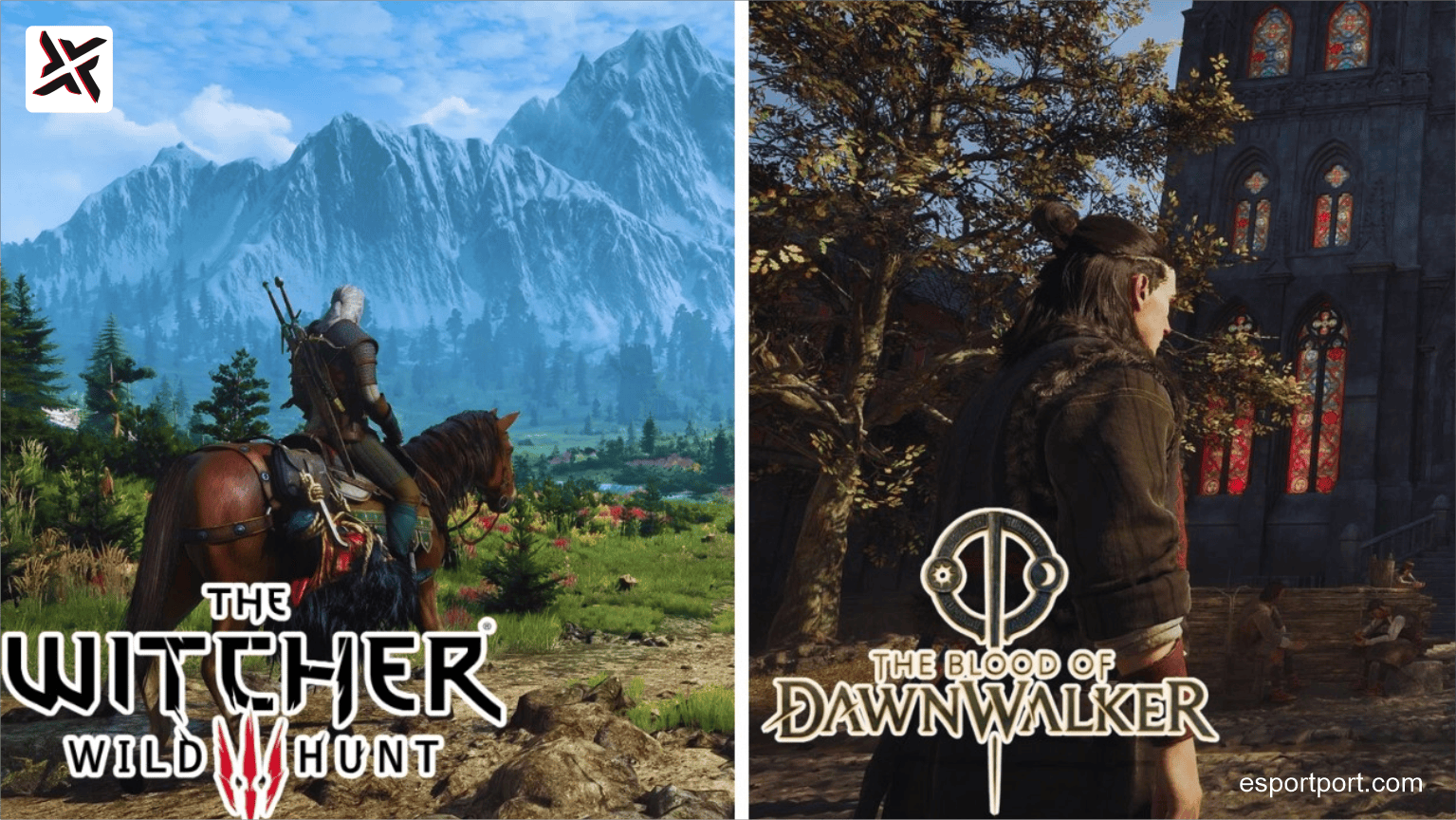
With the global launch of Rebel Wolves’ The Blood of Dawnwalker and CD Projekt RED’s upcoming September 29 remaster of The Witcher 3: Wild Hunt, dark fantasy RPG enthusiasts are facing an incredible dilemma. Developed in large part by veteran developers who worked on Geralt’s legendary adventures, Dawnwalker shares direct creative DNA with The Witcher 3.
However, beneath the grim medieval atmosphere and monster-hunting themes lie two fundamentally different role-playing experiences. If you only have time to sink 100 hours into one massive fantasy world this autumn, here is our definitive blood of dawnwalker vs the witcher 3 breakdown to help you decide.
- Table of Contents:
- Core Gameplay Loops: Open Exploration vs Finite Time Slots
- Combat Comparison: Silver Swords vs Day-and-Night Transformation
- Narrative Depth: Geralt’s Search vs Coen’s Curse
- Technical Performance & World Design
- Final Verdict: Which Game Fits Your Playstyle?
- 💡 Expert Tip: Why You Shouldn’t Play Both Simultaneously
🔥 NEXT UP (Don’t Miss This): Blood of Dawnwalker: 5 Things To Do First on Day 1
1. Core Gameplay Loops: Open Exploration vs Finite Time Slots
The most radical difference between the two games lies in how they value your time:
- The Witcher 3 (Relaxed Freedom): You can wander Velen or Skellige for 80 hours without advancing the main story. Quest markers wait indefinitely, allowing you to clear bandit camps, play Gwent, and tackle witcher contracts at your own leisure.
- The Blood of Dawnwalker (High-Stakes Pressure): Dawnwalker introduces an active “Time Slot” resource. Moving between regions, taking rests, and completing side objectives actively consumes time. Major story gates trigger automatically once time thresholds pass, locking out unvisited questlines. It feels closer to Majora’s Mask or Persona wrapped in brutal grimdark armor.
| Feature | The Witcher 3 | The Blood of Dawnwalker |
|---|---|---|
| World Freedom | 100% Unrestricted open world | Zone-based with Time Slot gates |
| Pacing | Player-dictated (leisurely) | High urgency & calendar pressure |
| Mini-Games | Gwent (legendary card game) | Dice poker & tavern duels |
| Replayability | Moderate (branching endings) | Very High (unseen paths per playthrough) |
2. Combat Comparison: Silver Swords vs Day-and-Night Transformation
- The Witcher 3: Relies on rhythm, sword-dancing, dodging, and oil/potion preparation before engagements. While the 2026 remaster introduces instant Sign casting and Sekiro-like deflection parries, Geralt fundamentally remains an agile swordsman.
- The Blood of Dawnwalker: Features a split protagonist mechanic. By day, Coen plays as a grounded, methodical human swordsman using heavy parries and stamina management. By night, Coen embraces his vampire bloodline, unlocking superhuman wall-climbing, teleportation dashes, and brutal blood siphon abilities. If you love dynamic stance-switching, Dawnwalker offers significantly more mechanical variety.
3. Narrative Depth: Geralt’s Search vs Coen’s Curse
- The Witcher 3’s Story: Emotional, cinematic, and character-driven. The father-daughter bond between Geralt and Ciri, alongside morally gray tales like the Bloody Baron, remains the gold standard of video game storytelling.
- Dawnwalker’s Story: Far more grim and existential. Set in 14th-century plague-ridden Europe, the narrative explores the horrors of religious fanaticism, biological corruption, and identity loss as your vampirism slowly strips away your humanity. Choices in Dawnwalker carry permanent consequences that can eradicate entire settlements.
4. Final Verdict: Which Game Fits Your Playstyle?
- Buy The Witcher 3 Remastered if: You want a cozy, sprawling 150-hour journey where you can explore every undiscovered question mark on the map without being penalized, accompanied by world-class writing and Gwent.
- Buy The Blood of Dawnwalker if: You want modern next-gen combat, thrilling time-management stakes, reactive branching narratives, and the fantasy of playing a lethal predator in a brutal historical world.
🛡️ EXPERT TIP: WHY YOU SHOULDN’T PLAY BOTH SIMULTANEOUSLY
Avoid RPG burnout by picking one rhythm.
While both titles look aesthetically similar on the surface, alternating between them will severely ruin your muscle memory and pacing habits. The Witcher 3 encourages you to inspect every barrel, loot every ruin, and take your time. If you apply that hoarder mindset to The Blood of Dawnwalker, you will rapidly drain your finite Time Slots and lock yourself into the worst possible story branches. Commit to finishing Dawnwalker’s intense, focused 35-hour campaign first while the community is actively uncovering launch secrets, then settle into The Witcher 3 Remastered on September 29 for a relaxed, classic autumn playthrough.
Related posts:
 The Blood of Dawnwalker Review: A Dark Fantasy Masterpiece (Day 1 Guide)
 Today’s Massive Game Drops: Star Wars Zero Company & Plague Tale Legacy Lead the August 27 Lineup
 Battlefield 6 Release Details: Input Matchmaking & Pre-Order Discounts
 VCT Champions Shanghai 2026: Qualified Teams Tracker & Format