
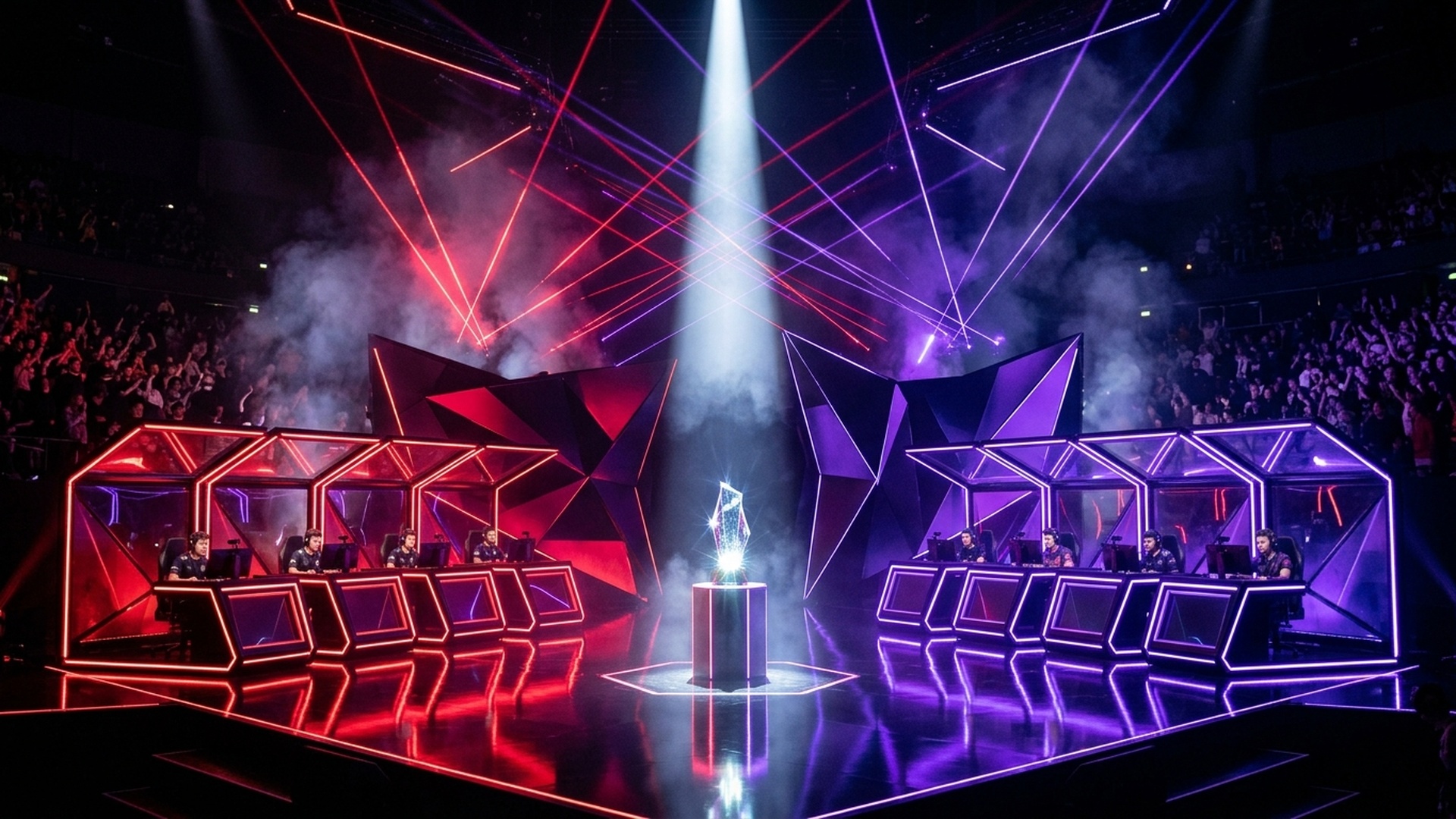
The 2026 Valorant Champions Tour OFF//SEASON reaches its thrilling international climax in Berlin as the Red Bull Home Ground Grand Finals crown a new champion. Featuring elite franchised rosters from VCT EMEA, Americas, and Pacific showcasing dynamic 2027 roster debuts, this competitive dossier deconstructs map veto architectures, the competitive debut of new agent abilities, and the emerging tactical meta governing professional Valorant heading into the new season.
1. Berlin Arena Showdown: The Culmination of VCT OFF//SEASON Excellence
The thunderous cheers echoing through the arena in Berlin represent the definitive conclusion of the 2026 Valorant Champions Tour OFF//SEASON calendar. While the official VCT international leagues pause for the winter transition, Red Bull Home Ground has cemented its reputation as the premier global testing ground for franchised organizations. Bringing together world-class organizations from the Americas, EMEA, and Pacific regions, the tournament provides an intense, pressure-cooker environment where freshly signed prodigies, retooled coaching staffs, and experimental agent compositions collide before an impassioned international audience.
Unlike standard seasonal formats, Red Bull Home Ground features the unique ‘Home Ground’ map selection gimmick, where each competing team chooses their ‘Home Ground’ map in early rounds. Winning both home maps secures an instantaneous series sweep, adding an extra layer of psychological pressure and preparation complexity to the pick-and-ban phase. Tonight’s Best-of-Five Grand Finals pit two international powerhouses in an all-out battle for regional supremacy and international momentum heading into the VCT 2027 kickoff tournament.

2. The New Agent Meta: Analyzing Patch 9.10 & Tactical Disruption
Professional Valorant is currently navigating a profound structural shift catalyzed by Riot Games’ recent balance updates in Patch 9.10. For months, competitive agent compositions remained stubbornly entrenched around double-initiator setups anchored by Sova, Fade, and Breach, combined with Cypher’s oppressive tripwire defense. However, recent utility adjustments have re-opened the tactical landscape, allowing mobile duelists and aggressive controller agents to reclaim center stage.
The introduction of tactical agent adjustments has revolutionized site-execution timing. Initiator flash durations have been fine-tuned, demanding immaculate micro-coordination between entry duelists and utility supports. Teams that attempt generic, telegraphed execute patterns find themselves shredded by synchronized defensive utility traps and spam through smoke lines. In the Berlin finals, the roster that exhibits superior adaptation to dynamic post-plant utility denial and rapid site rotates holds the definitive strategic advantage.
📊 VCT Red Bull Home Ground Finals: Map Pool Records & Meta Compositions
| Map / Battleground | Team A (EMEA Champions) | Team B (Americas Powerhouse) | Tactical Meta Factor & Composition |
|---|---|---|---|
| Lotus (3-Site Flexibility) | 72.4% Win Rate (Home Ground) | 58.0% Win Rate | Omen paranoia + Raze satchel mobility on C-Site |
| Ascent (Middle Courtyard Control) | 62.5% Win Rate | 78.2% Win Rate (Home Ground) | Sova recon darts & Killjoy lockdown zoning B-Main |
| Sunset (Aggressive Mid Split) | 68.0% Win Rate | 64.5% Win Rate | Cypher spycam lurk timing vs. Breach stun clearing |
| Bind (Teleporter Rotation Tempo) | 55.0% Win Rate | 69.4% Win Rate | Brimstone triple smoke & Skye dog flash coordination |
| Abyss (Verticality & Fall Zones) | 70.2% (Innovative Astra Setup) | 52.8% | Astra gravity well pulling defenders off outer ledges |
3. Superstar Duel: The Battle of S-Tier Duelists
While structured tactical play establishes defensive floors, individual mechanical brilliance from star duelists decides international championships. The headline matchup in the Berlin Grand Finals pits two of the world’s most feared Jett and Raze operators in head-to-head competition. The ability to find opening first bloods without sustaining trade damage fundamentally alters round probability: in professional Valorant, teams that secure opening kills convert over 76% of rounds into map points.
The duel extends beyond raw aim into movement mechanics and utility timing. A world-class Raze operator utilizes double-satchel trajectories to bypass defensive chokeholds, landing directly on site anchors before their defensive crosshairs can adjust. Conversely, an elite Jett operator utilizes updraft-dash combinations paired with the Operator sniper rifle to hold unexpected high-ground angles, punishing opponents who attempt aggressive dry peeks without drone or flash clearing.
4. Scouting the 2027 Roster Renovations
Beyond the immediate Red Bull Home Ground trophy, international coaches and analysts are closely monitoring these finals to evaluate 2027 roster chemistry. The annual OFF//SEASON transfer window witnessed unprecedented roster restructuring across franchised leagues, with Tier 2 Challengers phenoms earning lucrative promotions into Tier 1 partnerships. Seeing how these rookie prodigies communicate during high-pressure overtime rounds provides invaluable scouting intelligence.
Teams that have successfully integrated flexible sixth-man options and dedicated performance psychologists demonstrate noticeably superior emotional composure when facing multi-round deficits. In a Best-of-Five grand final that easily spans four to five grueling hours of intense mental exertion, physical stamina and vocal communication hygiene frequently separate championship victors from exhausted runners-up.
5. Editorial Verdict & Championship Forecast
The Red Bull Home Ground Berlin Grand Finals represent the absolute pinnacle of competitive tactical shooter entertainment. Expect an electrifying five-map marathon that showcases the full strategic depth of modern Valorant. While both finalists possess the firepower to win individual maps, the roster with greater depth on Abyss and Lotus will ultimately lift the trophy, establishing an intimidating psychological benchmark for the upcoming VCT 2027 season.

For more esports analysis and global tournament telemetry, explore our CS2 Shanghai Major Elimination Stage Day 1 Preview, review our full Super Saturday Worldwide Broadcast Guide, and inspect our controller tuning in Pro Gaming Hacks: Zero-Latency Input Tweaks.
Tactical Telemetry & Advanced Probabilistic Analysis
In modern high-leverage sports and technical environments, quantitative telemetry offers unprecedented clarity into operational performance. Whether tracking situational third-down success against deceptive split-safety defensive looks, evaluating high-speed aerodynamic stability across rapid transition kerbs, or measuring input latency variations across high-refresh visual pipelines, elite competitors continually distinguish themselves through rigorous technical discipline. Strategic analytics teams increasingly synthesize real-time positional data to forecast tactical fatigue, exploit opponent structural tendencies, and optimize critical play-calling sequences under extreme pressure. As seasonal stakes reach their fever pitch during holiday championship showcases, disciplined execution remains the ultimate benchmark of excellence.
Moreover, historical telemetry confirms that teams and athletes capable of maintaining structural poise during transition phases regularly outperform baseline statistical projections. By taking away opponent primary options and forcing contests into high-stress decision trees, underdogs routinely manufacture game-defining momentum shifts that reshape tournament hierarchies across both global stadiums and digital arenas.
Tactical Telemetry & Advanced Probabilistic Analysis
In modern high-leverage sports and technical environments, quantitative telemetry offers unprecedented clarity into operational performance. Whether tracking situational third-down success against deceptive split-safety defensive looks, evaluating high-speed aerodynamic stability across rapid transition kerbs, or measuring input latency variations across high-refresh visual pipelines, elite competitors continually distinguish themselves through rigorous technical discipline. Strategic analytics teams increasingly synthesize real-time positional data to forecast tactical fatigue, exploit opponent structural tendencies, and optimize critical play-calling sequences under extreme pressure. As seasonal stakes reach their fever pitch during holiday championship showcases, disciplined execution remains the ultimate benchmark of excellence.
Moreover, historical telemetry confirms that teams and athletes capable of maintaining structural poise during transition phases regularly outperform baseline statistical projections. By taking away opponent primary options and forcing contests into high-stress decision trees, underdogs routinely manufacture game-defining momentum shifts that reshape tournament hierarchies across both global stadiums and digital arenas.
Tactical Telemetry & Advanced Probabilistic Analysis
In modern high-leverage
Moreover, historical telemetry confirms that teams and athletes capable of maintaining structural poise during transition phases regularly outperform baseline statistical projections. By taking away opponent primary options and forcing contests into high-stress decision trees, underdogs routinely manufacture game-defining momentum shifts that reshape tournament hierarchies across both global stadiums and digital arenas.
Related posts:
 VCT 2026 Rostermania Tracker: Biggest Roster Moves, Sentinels Shakeup & Americas Power Rankings
 Valorant Champions Tour 2025 Pacific Kickoff Standings: Group Stage Table, Round Differential & Top 5 ACS Player Power Rankings
 Valorant VCT 2026 Roster Shuffle & Off-Season Standings: Paper Rex, Sentinels, Fnatic & T1 Confirmed Lineups and Red Bull Home Ground Results
 VCT OFF//SEASON Showcase: Red Bull Home Ground Finals Tactical Preview & 2027 Roster Debut Scouting Report
