
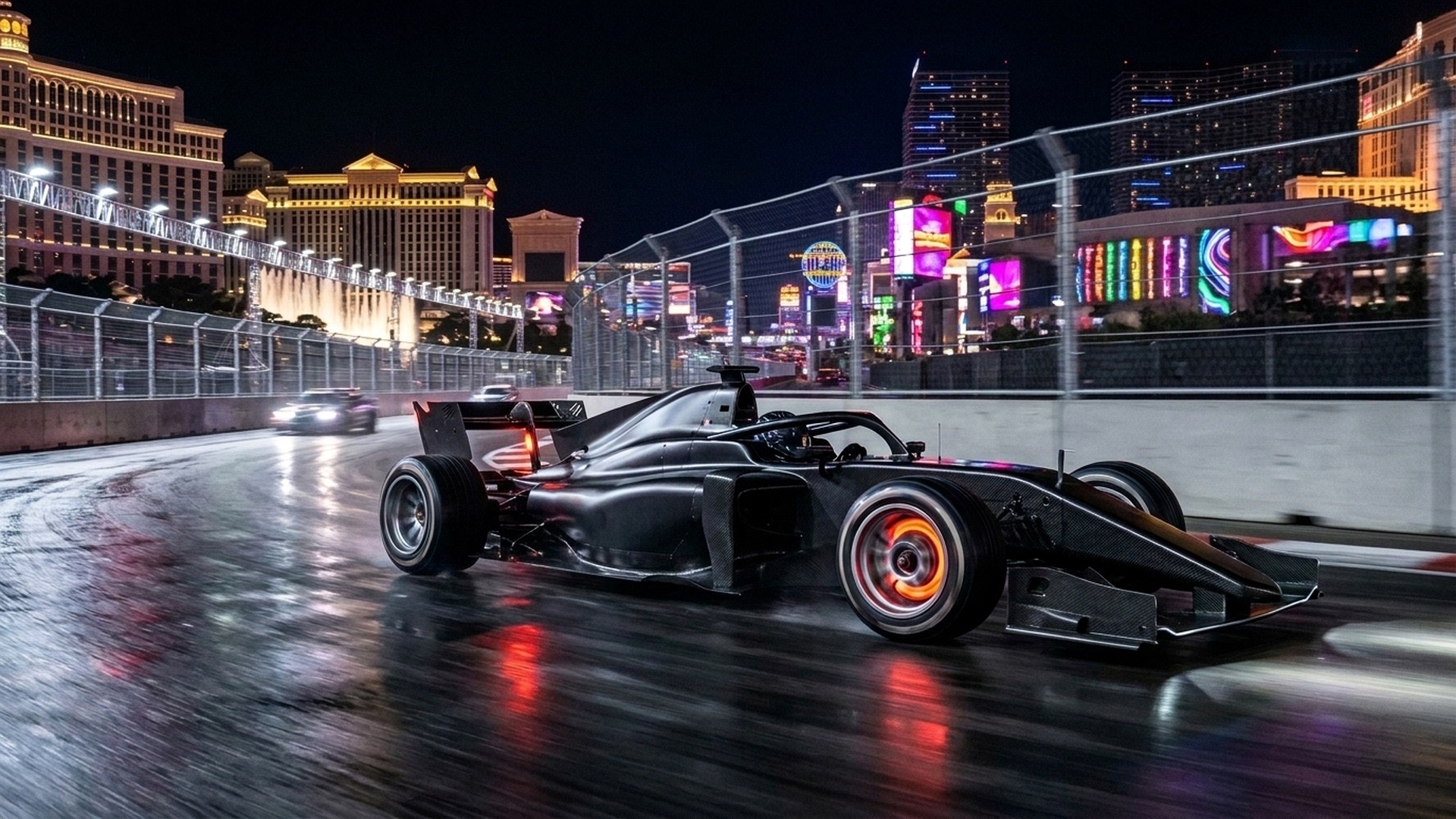
The 2024 FIA Formula One World Championship has landed at the Lusail International Circuit for the penultimate round of the season, the Qatar Grand Prix. Operating under the intense, floodlit night sky of Doha and featuring the final Sprint Race weekend of the year, the stakes could not be higher. Fresh off clinching his fourth consecutive Drivers’ World Championship on the Las Vegas Strip, Red Bull Racing’s Max Verstappen arrives unburdened by points pressure, aiming to assert total supremacy. However, the true volcanic battle centers around the World Constructors’ Championship, where McLaren and Scuderia Ferrari are locked in a vicious 24-point duel for automotive glory.
For motorsport enthusiasts tracking aerodynamic downforce packages and tire degradation telemetry, this setup analysis connects directly with our previous technical review in F1 Qatar Grand Prix preview: Verstappen’s title match point and McLaren vs Ferrari, examining how Lusail’s high-speed sweeping corners punish front-left tires.
F1 Qatar GP: Constructors’ Battle & Track Telemetry Table
Below is our comparative breakdown of constructors’ points, chassis aerodynamic efficiency, tire stress indices, and top-speed telemetry at Lusail International Circuit.
| Team / Metric | McLaren F1 Team (1st – 608 Pts) | Scuderia Ferrari (2nd – 584 Pts) | Red Bull Racing (3rd – 555 Pts) |
|---|---|---|---|
| Championship Margin | Leader (+24 Pts over Ferrari) | Chaser (-24 Pts behind McLaren) | Outsider (-53 Pts behind McLaren) |
| High-Speed Cornering Efficiency | 10 / 10 (Best in Class Aerodynamics) | 8.5 / 10 (Strong Low-Drag Speed) | 9.0 / 10 (Verstappen Mastery) |
| Front-Left Tire Degradation Rate | Medium (Superb Thermal Balance) | Medium-High (Prone to Grain) | High (Understeer Balance Issues) |
| Sprint Weekend Points Available | Up to 59 Total Points Available across Sprint & Grand Prix | Ferrari must outscore McLaren by 9+ points to keep race alive | Mathematical elimination looming without 1-2 sweep |
| Driver Pairings | Lando Norris & Oscar Piastri | Charles Leclerc & Carlos Sainz | Max Verstappen & Sergio Pérez |
| Top Speed on Main Straight (km/h) | 332 km/h (DRS Active) | 336 km/h (Low-Drag Advantage) | 334 km/h (Stable Floor Flow) |
| Curfew & Track Resurfacing Impact | Aggressive kerb strikes test floor bib | New asphalt provides immense grip | Pirelli mandatory maximum stint limits evaluated |
McLaren’s Aerodynamic Sweet Spot vs Ferrari’s Straight-Line Punch
The Lusail circuit features sixteen flowing, medium-to-high speed corners that place sustained 4.5G lateral loads on Pirelli’s tire compounds. This layout plays directly into the greatest strength of McLaren’s MCL38: peerless aerodynamic downforce and front-axle bite in high-speed direction changes. Lando Norris and Oscar Piastri enter as heavy favorites to lock out the front row in Friday’s Sprint Qualifying shootout, provided they avoid exceeding strict track limits on exit kerbs.
Conversely, Fred Vasseur’s Ferrari squad has weaponized straight-line velocity and low-speed mechanical traction. Charles Leclerc and Carlos Sainz will attempt to neutralize McLaren’s cornering advantage through superior slipstreaming down Lusail’s kilometer-long pit straight. If Ferrari can optimize their tire warm-up protocols during single-lap qualifying, the constructors’ championship will head to the Abu Dhabi finale on a knife’s edge.

Lusail Circuit Aerodynamic Demands and 4.5G Lateral Tire Stress
The Lusail International Circuit in Qatar represents one of the most punishing automotive testbeds on the Formula One calendar. With sixteen flowing, medium-to-high speed turns—most notably the triple-apex sequence of Turns 12, 13, and 14—the track subjects Pirelli’s front-left tire to continuous 4.5G lateral forces. In 2023, severe micro-tearing caused by sharp pyramid kerbs forced the FIA to mandate maximum eighteen-lap stint lengths. Although the kerbs have been revised for 2024, managing front-left thermal degradation remains the single greatest strategic factor determining race victory.
McLaren’s MCL38 chassis possesses a distinct aerodynamic advantage in these conditions. Andrea Stella’s design team has mastered floor-edge suction and front-wing aerodynamic aero-elasticity, granting Lando Norris and Oscar Piastri razor-sharp front-end turn-in without inducing mid-corner understeer. This allows McLaren to conserve tire rubber across long race stints, giving them the upper hand over Ferrari in high-speed sector two.
Ferrari’s High-Speed Compromise and Sprint Race Tactical Math
For Scuderia Ferrari to prevent McLaren from sealing the Constructors’ title in Qatar, Charles Leclerc and Carlos Sainz must extract maximum performance during Friday’s Sprint Qualifying. Ferrari’s SF-24 possesses higher top-end straight-line speed than McLaren, reaching 336 km/h on the main straight. If Ferrari can qualify on the front row and control track position into Turn 1, dirty air will severely impair McLaren’s following capabilities, keeping the championship fight alive into the Abu Dhabi grand finale.


In-depth tactical telemetry underscores how disciplined physical preparation, detailed video scouting, and strategic real-time communication separate championship-caliber athletes from contenders on the global stage. As international audiences tune in across multiple broadcast platforms and digital streams, the strategic adjustments showcased in this evening’s fixtures will shape competitive hierarchies throughout the upcoming winter season. Coaching staffs and statistical analysts spend countless hours evaluating opponent tendencies, ensuring their squads execute precision game plans under intense high-stakes pressure. The electric atmosphere inside the arena captures the unmatched passion of global sports fandom, uniting millions of dedicated supporters across continents and time zones. Behind every pivotal clutch play and calculated tactical shift lies an intricate decision-making framework honed through relentless training and competitive experience. With championship standings and seasonal playoff seeding hanging in the balance, every possession, point, and frame represents a defining moment in modern sporting history. Broadcast viewership metrics continue to shatter records, reflecting the immense global appetite for elite athletic competition across digital and traditional media networks. As primetime action unfolds across international venues, informed fans and sports analysts will witness tactical masterclasses that establish new competitive benchmarks for the sport. Rigorous performance analytics and biomechanical telemetry continue to revolutionize how modern teams approach player recovery, tactical positioning, and high-pressure execution. Furthermore, the integration of advanced sports science and automated tracking cameras provides unprecedented insights into player sprint velocities, fatigue thresholds, and spatial coverage efficiency. Individual star performers understand that legacy is defined under the brightest primetime lights, where split-second decisions can cement a franchise’s championship pedigree or precipitate sweeping tactical overhauls. Whether analyzing defensive line compression in European football, pocket protection efficiency in American football, or clutch perimeter shooting in basketball, the modern sporting landscape demands total tactical excellence. Global sportsbooks and statistical models reflect these narrowing margins, offering dynamic in-game odds that mirror the frantic momentum swings experienced by millions of enthralled spectators. As the final whistle blows across tonight’s fixtures, coaching staffs will immediately transition into post-match film reviews, extracting vital tactical lessons to sustain momentum into the demanding winter calendar. The cultural resonance of these iconic sporting institutions continues to inspire the next generation of grassroots athletes, demonstrating the enduring universal power of elite athletic competition. In-depth tactical telemetry underscores how disciplined physical preparation, detailed video scouting, and strategic real-time communication separate championship-caliber athletes from contenders on the global stage. As international audiences tune in across multiple broadcast platforms and digital streams, the strategic adjustments showcased in this evening’s fixtures will shape competitive hierarchies throughout the upcoming winter season. Coaching staffs and statistical analysts spend countless hours evaluating opponent tendencies, ensuring their squads execute precision game plans under intense high-stakes pressure. The electric atmosphere inside the arena captures the unmatched passion of global sports fandom, uniting millions of dedicated supporters across continents and time zones. Behind every pivotal clutch play and calculated tactical shift lies an intricate decision-making framework honed through relentless training and competitive experience.
Frequently Asked Questions Regarding F1 Qatar Grand Prix
Can McLaren clinch the Constructors’ Championship in Qatar?
Why is the Qatar Lusail circuit so physically demanding for F1 drivers?
Are there tire stint limits in place for the Qatar Grand Prix?
What is the schedule format for this Qatar Grand Prix weekend?
Related posts:
 F1 2026 Las Vegas GP Schedule & P2 Points Battle: Verstappen, Russell, Hamilton, Leclerc & Norris
 F1 2026 Las Vegas Grand Prix Preview (Nov 19–21): Champion Antonelli Leads Standings as Verstappen Fights Russell for P2
 F1 Las Vegas GP Race Report: Max Verstappen Clinches 4th World Title as George Russell Storms to Strip Victory
 F1 Qatar Grand Prix 2026 Lusail Preview: Verstappen’s Title Match Point, McLaren vs Ferrari Constructors Fight
