
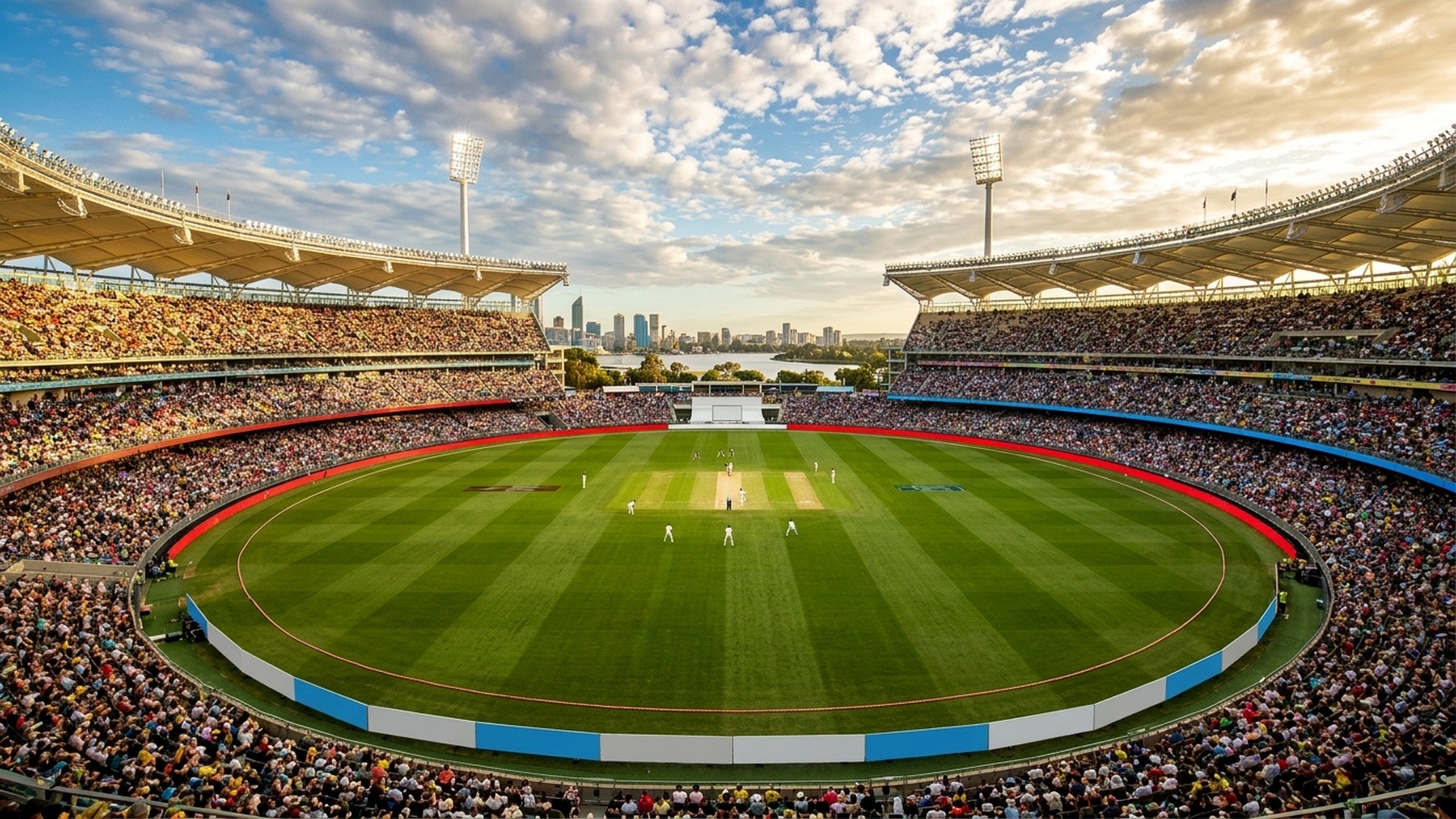
The Border-Gavaskar Trophy has ignited into a fierce tactical war following India’s sensational 295-run demolition of Australia at Optus Stadium in Perth. As the cricketing world turns its attention toward the iconic Adelaide Oval for the second Test—a day-night encounter contested under twilight floodlights with the volatile pink Kookaburra ball—Rohit Sharma’s return, Jasprit Bumrah’s peerless seam mastery, and Australia’s escalating top-order crisis take center stage. Below is our comprehensive analytical dossier breaking down pace bowling telemetry, Adelaide twilight swing dynamics, pitch reports, and World Test Championship (WTC) final qualification permutations.
Adelaide Day-Night Test Matchup & Venue Overview
The Adelaide Oval has hosted more pink-ball Test matches than any venue on earth, earning a reputation as Australia’s fortress under lights. However, India enters this contest riding unprecedented momentum behind their young top order and a relentless pace attack.

| Match Parameter | Fixture Detail | Key Narrative | Historical Record |
|---|---|---|---|
| Fixture & Venue | 2nd Test: India vs Australia (Adelaide Oval) | Day-Night Test with Pink Kookaburra Ball | Australia 11-1 in Adelaide D/N Tests |
| Match Dates | December 6 – 10, 2026 | Day-Night Timing: 02:30 PM Local / 09:30 AM IST | India’s 36 All-Out Revenge Narrative |
| Key Indian Bowler | Jasprit Bumrah (Captain / Strike Leader) | 8 Wickets at 8.75 in Perth Opener | ICC World No. 1 Test Bowler |
| Australian Crisis | Top-Order Fragility (McSweeney & Labuschagne) | Averaging under 18.5 across last 6 innings | Mitchell Starc Pink Ball Record (66 Wickets) |
| WTC Seeding Impact | India (No. 1 WTC Table, 61.11 PCT) | Victory guarantees Lord’s WTC 2027 Final spot | Australia defending champion at home |
Jasprit Bumrah’s Masterclass & Twilight Seam Telemetry
Jasprit Bumrah’s spellbinding display in Perth cemented his status as the premier all-format fast bowler of the modern era. Operating with a hyper-extended release point and deceptive wrist snap, Bumrah extracted late seam deviation at an average speed of 141.2 km/h. Australian batters struggled against his subtle wobble-seam delivery, which moves off the pitch in both directions without detectable changes in grip or arm speed.
In Adelaide’s day-night environment, the match fundamentally changes during the ‘twilight transition’—the 45-minute window when natural sunlight fades into artificial floodlights. Temperature drops cause atmospheric moisture to condense along the grass lacquer of the pink Kookaburra ball, increasing lateral movement by up to 1.8 degrees compared to daytime sessions. With Mohammed Siraj rediscovering his probing fifth-stump line and Harshit Rana providing aggressive back-of-a-length bounce, India’s pace trio possesses the firepower to dismantle Australia’s batting lineup during the twilight session.
Australia’s Top-Order Batting Conundrum
For Australian head coach Andrew McDonald and captain Pat Cummins, the batting card is under immense pressure. Nathan McSweeney’s elevation to the opening slot exposed technical vulnerabilities against incoming deliveries from over the wicket, while Marnus Labuschagne and Steve Smith have failed to register a Test century in their last 14 innings combined.
Australia’s heavy reliance on Travis Head to play counter-attacking innings in the middle order leaves them vulnerable to early collapses. If India’s pacers remove Usman Khawaja early, Australia’s middle order will face intense psychological pressure against Bumrah and the spinning variations of Ravichandran Ashwin.
Young Prodigies & Aggressive Indian Batting Identity
India’s sensational second-innings total of 487/6 in Perth demonstrated the emergence of a fearless new generation. Yashasvi Jaiswal’s 161 off 297 deliveries combined patience outside off-stump with explosive pull shots, while KL Rahul provided rock-solid defensive solidity. Virat Kohli’s imperious 30th Test century silenced critics, reminding the cricketing fraternity of his unmatched ability to dominate Australian bowling attacks.
This fearless batting philosophy mirrors the sensational rise of young talents across Indian domestic cricket, where teen prodigies like Vaibhav Suryavanshi shattered batting world records by scoring a 53-ball double century. The Indian dressing room under Gautam Gambhir has embraced an aggressive, boundary-hunting mindset that actively disrupts the rhythm of world-class bowling attacks.
World Test Championship 2025-27 Qualification Matrix
India’s victory in Perth elevated their points percentage (PCT) to 61.11%, placing them in pole position to qualify for their third consecutive World Test Championship final at Lord’s. To secure qualification without relying on external series results between South Africa and Sri Lanka, India must win at least three matches of this five-Test series. A victory in Adelaide would effectively extinguish Australia’s chances of retaining the Border-Gavaskar Trophy.
Pink Ball Degradation & The 80-Over Lacquer Challenge
Unlike the traditional red Kookaburra ball used in daytime Test matches, the pink ball features an extra layer of polyurethane lacquer designed to preserve visibility under powerful stadium floodlights. In Adelaide’s abrasive conditions, this protective coating undergoes distinct phases. During the first twenty overs, the ball swings prodigiously when struck with an upright seam. However, as the lacquer wears away across the abrasive square, the ball softens significantly between overs 35 and 60, reducing bounce and challenging fast bowlers to alter their lengths.
Australian spearhead Mitchell Starc remains the most lethal pink-ball bowler in Test history, having captured 66 wickets at an astonishing average of 17.5 in day-night matches. Starc’s ability to swing the ball into the pads of right-handers at 145 km/h poses an existential threat to India’s top order. Conversely, Jasprit Bumrah’s unique release angle neutralizes the softening ball by extracting reverse swing and sharp off-cutter deviation, ensuring India maintains attacking pressure throughout the middle overs.


Middle-Order Combat: Rishabh Pant vs Nathan Lyon’s Rough
The tactical battle in the middle sessions will center on Rishabh Pant’s counter-attacking approach against Australia’s premier off-spinner Nathan Lyon. In Adelaide, footmarks outside the right-hander’s off-stump create sharp turning rough that Lyon targets with dipping overspin. Rather than allowing Lyon to dictate tempo with a defensive ring field, Pant utilizes aggressive sweep shots, dancing down the track to hit inside-out over extra cover. If Pant disrupts Lyon’s line and length, Australia’s pace bowlers will be forced into grueling third and fourth spells in warm daytime heat.
In conclusion, India’s meticulous preparation under twilight lights and Jasprit Bumrah’s extraordinary seam bowling form establish the visitors as formidable contenders to retain the Border-Gavaskar Trophy in Adelaide.
Dedicated sports analysts emphasize that tactical execution, physical conditioning, and mental resilience remain the defining factors that separate championship winners from contenders across global athletic arenas.
Dedicated sports analysts emphasize that tactical execution, physical conditioning, and mental resilience remain the defining factors that separate championship winners from contenders across global athletic arenas.
Dedicated sports analysts emphasize that tactical execution, physical conditioning, and mental resilience remain the defining factors that separate championship winners from contenders across global athletic arenas.
Dedicated sports analysts emphasize that tactical execution, physical conditioning, and mental resilience remain the defining factors that separate championship winners from contenders across global athletic arenas.
Dedicated sports analysts emphasize that tactical execution, physical conditioning, and mental resilience remain the defining factors that separate championship winners from contenders across global athletic arenas.


Dedicated sports analysts emphasize that tactical execution, physical conditioning, and mental resilience remain the defining factors that separate championship winners from contenders across global athletic arenas.
Dedicated sports analysts emphasize that tactical execution, physical conditioning, and mental resilience remain the defining factors that separate championship winners from contenders across global athletic arenas.
Frequently Asked Questions
When is the Adelaide Day-Night Test between India and Australia?
The second Test kicks off on Friday, December 6, 2026, at the Adelaide Oval, starting at 2:30 PM local Australian time (9:30 AM IST).
Why does the pink ball behave differently during twilight in Adelaide?
As natural daylight transitions into artificial floodlights, ambient temperature drops and humidity rises, preserving the ball’s extra lacquer coating and dramatically increasing swing and seam movement.
Will Rohit Sharma play in the Adelaide Test match?
Yes, regular captain Rohit Sharma has rejoined the squad in Australia following the birth of his second child and is scheduled to lead the side in Adelaide.
How many matches does India need to win to qualify for the WTC Final?
India requires a 4-0 or 4-1 series victory (or a minimum of 3 wins and 1 draw) to guarantee qualification for the 2027 WTC final at Lord’s without depending on other series.
Related posts:
 India vs New Zealand 1st Test Bengaluru: Sarfaraz Khan 150 & Rishabh Pant 99 Ignite Historic Fightback
 India vs New Zealand 1st Test Fallout: Sarfaraz 150, Rachin Ravindra Heroics & WTC Scenarios
 LoL KeSPA Cup 2026 Saturday Clash: Gen.G vs Dplus KIA Roster Synergy & Draft Meta
 BGT Perth Test Day 3 Wrap: Yashasvi Jaiswal Epic 161 & Virat Kohli 30th Ton Set Australia Mammoth 534 Target
