
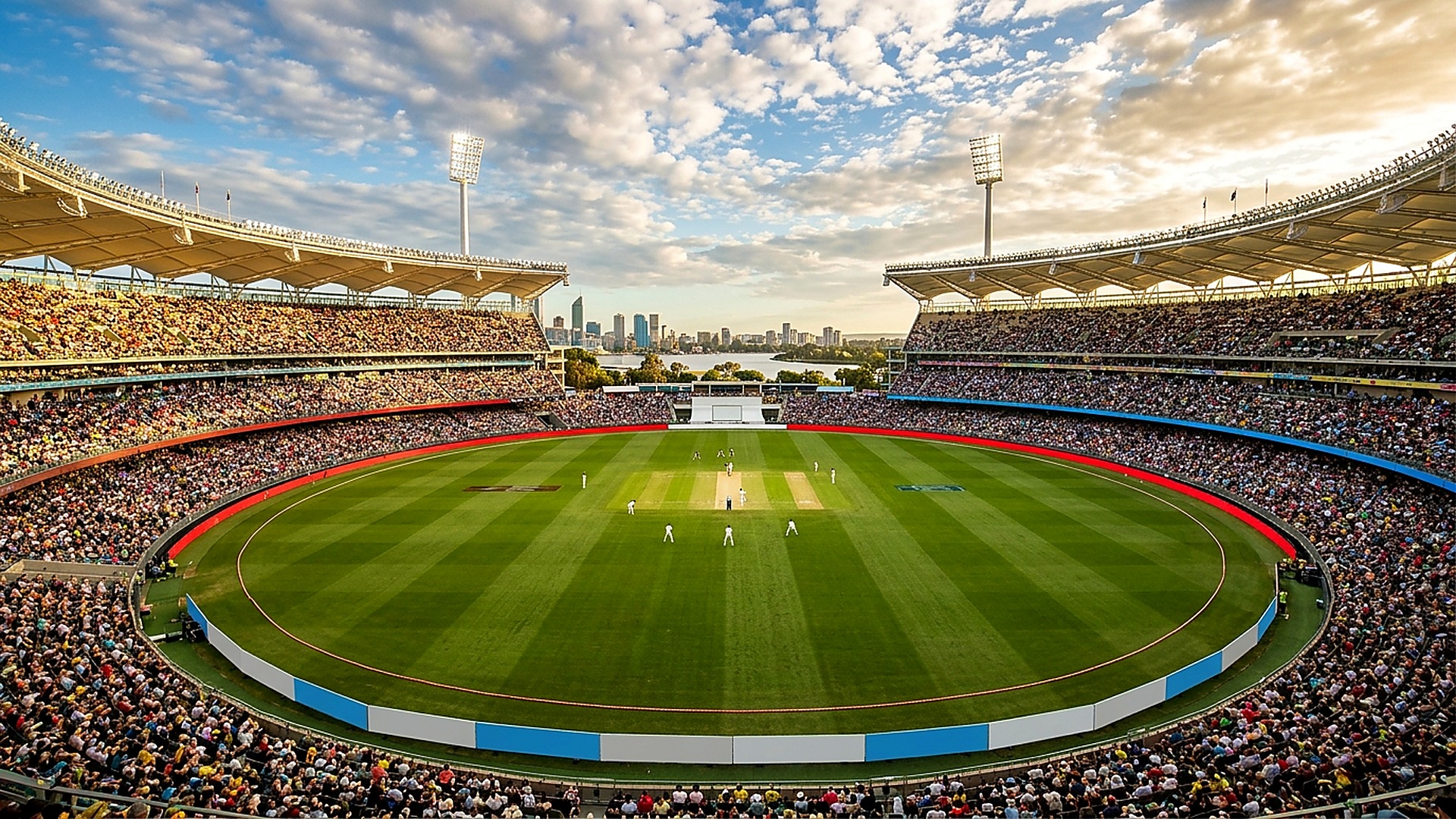
A relentless display of batting mastery, psychological resilience, and fast-bowling ferocity from India transformed the series-opening Border-Gavaskar Trophy Test at Optus Stadium in Perth into an insurmountable trial for Australia. Resuming their second innings with total tactical clarity and technical discipline, India batted the hosts completely out of the contest on Day 3, declaring at an imperious 487 for 6 to set Pat Cummins’ side a record-breaking victory target of 534 runs. Before the close of play, an inspired burst of venomous fast bowling from captain Jasprit Bumrah and Mohammed Siraj decimated Australia’s top order under the floodlights, leaving the hosts shattered at 12 for 3 on an abrasive, cracked pitch that is spitting venom.
The Perth Masterclass: Yashasvi Jaiswal’s Defining 161
The unyielding foundation of India’s commanding superiority was forged by 22-year-old opening prodigy Yashasvi Jaiswal, who constructed one of the most mature, complete fourth-innings setups ever witnessed by an overseas batter on Australian soil. Resuming on his overnight score with KL Rahul under scorching morning sunshine, Jaiswal displayed breathtaking poise against Pat Cummins, Mitchell Starc, and Josh Hazlewood. Rather than being lured into false hooks by Australia’s back-of-a-length barrage aimed at his upper torso, Jaiswal swayed, dropped his wrists, and countered with sublime upper-cuts and authoritative back-foot punches through the point cordon.


Jaiswal’s 161 spanned 297 deliveries, featuring 15 crisp boundaries and 3 towering sixes that sailed deep into the Optus Stadium stands. His 201-run opening partnership with KL Rahul—who contributed an invaluable, technically immaculate 77 over four hours of intense concentration—represented India’s highest opening stand in Australia since 1986. Jaiswal’s ability to maintain high defensive concentration through the morning session before accelerating ruthlessly post-lunch drained the Australian pace quartet of physical reserves and strategic conviction.
| Batter / Bowler | Runs / Figures | Balls / Overs | Strike Rate / Econ | Key Match Phase |
|---|---|---|---|---|
| Yashasvi Jaiswal | 161 runs | 297 balls | 54.21 SR | Record 201-run opening stand; dismantled short ball barrage |
| Virat Kohli | 100* runs | 143 balls | 69.93 SR | 30th Test century; masterful acceleration to declaration |
| KL Rahul | 77 runs | 176 balls | 43.75 SR | Defensive masterclass against new-ball pace & seam movement |
| Nitish Kumar Reddy | 38* runs | 27 balls | 140.74 SR | Explosive cameo with 3 sixes powering immediate declaration |
| Jasprit Bumrah | 2 wkts / 9 runs | 4.0 overs | 2.25 Econ | Removed McSweeney & Labuschagne in opening blitz |
| Mohammed Siraj | 1 wkt / 1 run | 3.0 overs | 0.33 Econ | Trapped Usman Khawaja with steep shoulder-high lifter |
Virat Kohli’s 30th Test Century: The Return of the King
While Jaiswal laid the unyielding bedrock, Virat Kohli delivered the emotional and statistical crescendo of the day. Entering the crease amid immense scrutiny following a lean home season, Kohli produced a vintage batting exhibition that silenced critics and reignited his storied love affair with Australian conditions. Moving fluently across his stumps to negate Hazlewood’s fifth-stump corridor of uncertainty, Kohli drove with clinical precision and rotated the strike effortlessly against Nathan Lyon.
Reaching his century with a trademark flick through midwicket for a boundary, Kohli raised his bat to an ecstatic Perth crowd, registering his 30th career Test century and his seventh on Australian soil—surpassing Sachin Tendulkar for the most Test hundreds by an Indian batter in Australia. Kohli’s unbeaten 100 off 143 deliveries featured 8 boundaries and 2 sixes, providing the clinical acceleration that allowed stand-in skipper Jasprit Bumrah to declare immediately upon Kohli reaching triple figures.
Australian Pace Bowling Fatigue & Nitish Kumar Reddy’s Fireworks
The physical toll on Australia’s primary bowling attack became glaringly evident during the post-tea session. With Mitchell Starc having bowled 24 overs, Josh Hazlewood 27 overs, and Pat Cummins 25 overs in sweltering 33°C heat, Australian pace speeds dropped by an average of 6 km/h. Cummins’ field placements became increasingly desperate as India’s lead swelled past 450 runs.
Capitalizing on exhausted bowlers, debutant all-rounder Nitish Kumar Reddy played an electrifying cameo that added insult to Australian injury. Smashing 38 not out off just 27 deliveries, Reddy took on Starc and Cummins with audacious pull shots and an upper-cut six over third man that brought the Indian dressing room to its feet. His fearless counter-punching underscored the depth and modern aggressive intent coursing through this Indian side.
Optus Stadium Pitch Degeneration: The Snake Cracks Widen
Under blistering Western Australian sunshine, the Optus Stadium drop-in pitch began showing alarming signs of physical degradation throughout Day 3. Severe vertical cracks along good-length areas—characteristic of Perth surfaces baking under dry, hot winds—widened to over two centimeters. Deliveries pitching on the seam fissures either deviated violently off the straight or shot through ankle-high, rendering standard footwork patterns obsolete.


While Indian batters successfully counteracted the uneven bounce through deep-crease positioning and soft hands, Australia’s bowlers visibly tired as their spells extended into the 110th over. Nathan Lyon extracted sharp turn and puffing dust from the footmarks, but India’s middle order attacked the Australian off-spinner with calculated aggression, hitting over mid-on to prevent him from settling into an economical holding pattern.
Australia’s Nightmare Evening: 12/3 Under Bumrah’s Blitz
Left with a grueling 45-minute examination before stumps, Australia’s pursuit of 534 unraveled almost immediately under the floodlights. Operating with the brand-new Kookaburra ball, Jasprit Bumrah showcased why he remains the premier red-ball bowler on the planet. In his very first over, Bumrah trapped debutant Nathan McSweeney leg-before with a searing nip-backer that beat the inside edge for a duck.
Two overs later, Mohammed Siraj produced an unplayable lifter from back-of-a-length that struck Usman Khawaja on the glove, looping directly into the hands of Rishabh Pant. With Australia rocking at 9 for 2, Bumrah returned to strike the definitive psychological blow, pinning Marnus Labuschagne in front of his stumps for 3 with a devastating yorker that flattened the batter’s defenses. When bad light brought play to a close, Australia walked off at 12 for 3, still requiring 522 runs with Steven Smith and Travis Head facing an insurmountable fourth-innings mountain.
World Test Championship Stakes & Series Narrative Shift
Beyond the immediate confines of the Perth Test, India’s dominant positioning carries immense ramifications for the ICC World Test Championship (WTC) standings. Following the recent home series defeat against New Zealand, India required a minimum of four victories across the five-Test Border-Gavaskar Trophy to guarantee direct qualification for the WTC Final at Lord’s without relying on external match permutations.
Securing a 1-0 lead at Australia’s fortress in Western Australia fundamentally recalibrates the psychology of the entire series. For Australia, who have not won the Border-Gavaskar Trophy since 2014-15, facing an opening-match demolition on a fast, bouncy wicket specifically prepared to favor their pace attack shatters tactical complacency. With the second Test scheduled as a day-night pink-ball affair at Adelaide Oval, India’s pace reserves and youthful top order have sent an unequivocal warning across world cricket.


Historical Precedent & Day 4 Tactical Prognosis
No team in the 147-year history of Test cricket has successfully chased down a fourth-innings target exceeding 418 runs. The highest successful chase at Perth’s Optus Stadium remains 342. With seven Australian wickets standing and two full days remaining, India requires only seven clinical deliveries to claim a 1-0 lead in the five-match Border-Gavaskar Trophy series.
For Australia, Day 4 represents a battle for survival and dignity. Steven Smith and Travis Head must contend with widening cracks, reverse swing, and the unyielding intensity of an Indian bowling unit firing on all cylinders. Bumrah’s bowling rotations, combined with Washington Sundar’s rough-targeting off-spin, ensure that India holds every conceivable tactical card as the Perth Test marches toward an inevitable conclusion.
Frequently Asked Questions Regarding BGT Perth Test Day 3
What was the final target set by India for Australia in the Perth Test?
India declared their second innings at 487 for 6, setting Australia a mammoth victory target of 534 runs at Optus Stadium in Perth.
How many runs did Yashasvi Jaiswal score in India’s second innings?
Yashasvi Jaiswal scored a magnificent 161 runs off 297 deliveries, featuring 15 fours and 3 sixes, sharing a historic 201-run opening stand with KL Rahul.
How many Test centuries does Virat Kohli now have after Day 3 in Perth?
Virat Kohli scored his 30th career Test century (100* off 143 balls), marking his seventh Test century on Australian soil and surpassing Sachin Tendulkar’s tally in Australia.
What was Australia’s score at stumps on Day 3?
Australia finished Day 3 in disarray at 12 for 3 in their second innings, having lost McSweeney, Khawaja, and Labuschagne to Bumrah and Siraj.
Related posts:
 India vs New Zealand 1st Test Bengaluru: Sarfaraz Khan 150 & Rishabh Pant 99 Ignite Historic Fightback
 India vs New Zealand 1st Test Fallout: Sarfaraz 150, Rachin Ravindra Heroics & WTC Scenarios
 India vs New Zealand 4th ODI (Nov 13): Shreyas Iyer Squad, Bay Oval Timing & Pitch Report
 LoL KeSPA Cup 2026 Saturday Clash: Gen.G vs Dplus KIA Roster Synergy & Draft Meta
