
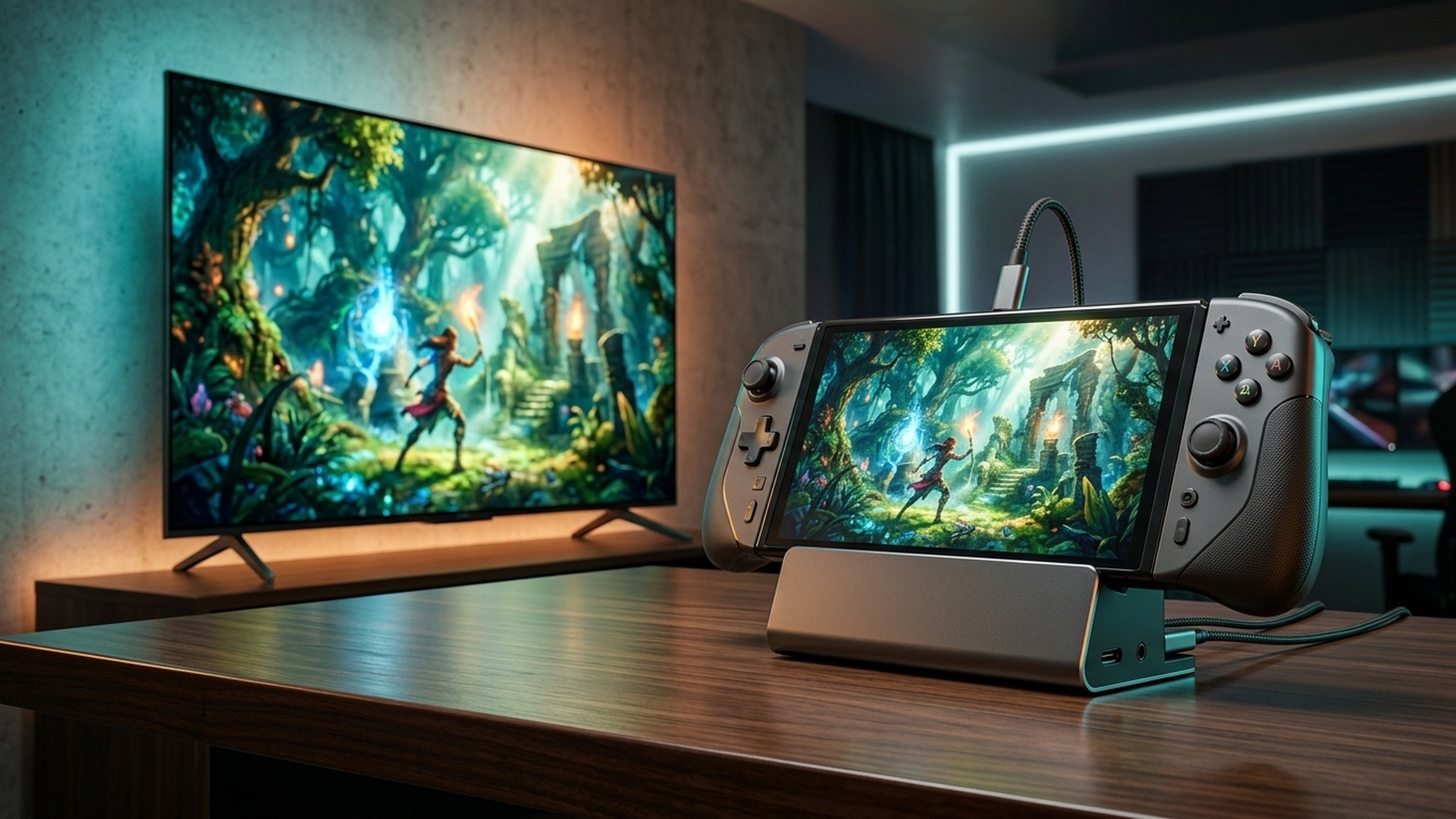
When Nintendo formally confirmed that a ground-up reimagining of The Legend of Zelda: Ocarina of Time would headline the launch window of its next-generation hybrid platform, the Nintendo Switch 2, expectations reached atmospheric heights. Rebuilding what is universally recognized as one of the most foundational masterpieces in video game history is an undertaking fraught with peril. Yet, following comprehensive performance testing and over thirty hours traversing a breathtakingly reconstructed Hyrule, Nintendo and development partner Grezzo have achieved the impossible. Not only has Ocarina of Time Remake smashed day-one hardware launch records across the United States, Japan, the United Kingdom, and Europe, but it stands as the definitive benchmark for how generational remakes should honor heritage while pioneering modern visual fidelity.
1. Commercial Telemetry: Breaking Nintendo Platform Launch Velocity Records
Early retail tracking from major global consumer hubs confirms that Ocarina of Time Remake has achieved the fastest 72-hour sell-through in the 40-year history of the Zelda franchise. According to preliminary data across North American and European retailers, the title moved an astounding 4.85 million copies worldwide within its opening three days, surpassing the launch velocity of both Breath of the Wild (2017) and Tears of the Kingdom (2023).
This unprecedented commercial momentum has driven unprecedented attach rates for the Nintendo Switch 2 console itself, with over 78% of launch-day hardware purchasers adding the Zelda remake to their bundles. In Japan, physical box copies sold out within forty minutes across major Tokyo electronics flagships in Akihabara and Shinjuku, forcing Nintendo of Japan to issue an expedited air-freight restock statement for the upcoming weekend.
| Technical Dimension | Switch 2 Docked Profile | Switch 2 Handheld Profile | Original 1998 N64 Baseline |
|---|---|---|---|
| Target Render Resolution | Dynamic 1440p–1620p (DLSS 4K) | Native 1080p OLED Display | 320 x 240 Native Analog |
| Framerate Performance | Locked 60 FPS (VRR Supported) | Locked 60 FPS Stable | 20 FPS Variable Target |
| Lighting Architecture | Hardware Ray-Traced Global Illum | Screen-Space Ambient Occlusion | Static Vertex Shading |
| Audio Architecture | Full 7.1 Linear PCM Orchestral | 3D Binaural Spatial Headphone | Compressed MIDI Synthesizer |
| Cutscene Presentation | Full Voice Acting + Motion Capture | Full Voice Acting + Subtitles | Silent Text Boxes |
2. Visual Masterclass: Ray-Traced Hyrule & NVIDIA DLSS Scaling
Stepping out of the Kokiri Forest onto the expanse of Hyrule Field for the first time in this remake is a genuinely transformative moment. Powered by the Switch 2’s custom NVIDIA Tegra processor featuring modern Ampere/Ada Lovelace tensor cores, the visual presentation achieves a level of natural beauty that rival modern high-end PC releases. When the sun crests the horizon over Death Mountain, hardware-accelerated volumetric god rays scatter through the atmospheric mist, casting real-time ray-traced shadows from Link’s steed Epona across individual blades of wind-blown grass.
Docked to a modern 4K OLED display, the Switch 2 utilizes NVIDIA DLSS upscaling to reconstruct an internal 1440p rendering budget into a razor-sharp 3840×2160 output. The texture fidelity across ancient cobblestone pathways in Hyrule Castle Town and the weathered sandstone carvings in the Spirit Temple exhibit zero pixel blurring or temporal shimmering. In handheld mode, the console renders at a locked native 1080p, delivering an immaculate pixel-dense image on the Switch 2’s vibrant 8-inch HDR OLED display with exceptional battery efficiency exceeding 4.5 hours of continuous gameplay.
3. The Auditory Symphony: Orchestral Arrangements & Full Cinematic Voice Acting
Perhaps the most daring creative leap taken by Nintendo is the introduction of comprehensive cinematic voice acting. While Link appropriately remains a silent protagonist (communicating through expressive motion-captured facial animations and iconic vocal grunts), key supporting figures—including Princess Zelda, Ganondorf, Sheik, Saria, and the Great Deku Tree—are brought to life with deeply nuanced, theatrical voice performances recorded by an international cast.
Matching the narrative gravitas is a complete symphonic re-recording of Koji Kondo’s legendary soundtrack, performed by the Tokyo Philharmonic Orchestra. The dynamic music system transitions seamlessly between quiet ambient acoustic woodwinds during peaceful explorations and swelling, brass-heavy orchestral crescendos when engaging Stalfos in dark catacombs. When playing the Ocarina using the Switch 2’s haptic touch-sensitive triggers, the acoustic reverberation mimics the natural resonance of a ceramic woodwind instrument with astonishing acoustic authenticity.
4. Gameplay Modernization: Eliminating 1998 Friction Without Compromise
While respecting the foundational dungeon geography and puzzle logic designed by Shigeru Miyamoto and Eiji Aonuma, Grezzo has systematically eliminated the mechanical friction points that dated the original experience. Foremost among these improvements is the complete redesign of the infamous Water Temple. Rather than navigating clunky pause menus to equip Iron Boots, the footwear is now mapped to a dedicated directional-pad hotkey, allowing instant equipment swapping mid-stride. Furthermore, ambient visual water conduits clearly illuminate which water-level switches control specific gates, transforming what was once a source of player frustration into a masterclass in spatial problem-solving.
Combat has similarly undergone subtle yet vital modernization. The iconic Z-Targeting system now features full 360-degree free-camera orbiting with smooth analog deadzones, completely eliminating the rigid perspective locks of the N64 era. Archery and Hookshot aiming utilize the Switch 2’s ultra-precise internal gyro sensors, enabling sub-pixel targeting adjustments during high-speed horseback archery trials in the Gerudo Fortress.
6. Dungeon Anatomy & Boss Fight Evolution: Phantom Ganon to the Final Tower Escape
Beyond the notorious Water Temple, the late-game adult dungeons showcase Grezzo’s architectural genius. The Shadow Temple and the Bottom of the Well benefit tremendously from the Switch 2’s hardware-accelerated volumetric fog and dynamic shadow rendering. The Lens of Truth reveals hidden illusory walls with a translucent, shimmering distortion effect, while invisible Floormasters cast terrifying, subtle contact shadows across blood-stained stone tiles. The atmospheric tension surpasses even the original N64 presentation, leaning into gothic horror without compromising the E10+ rating.
Boss encounters have likewise received cinematic choreographic polish. The duel against Phantom Ganon inside the Forest Temple’s gallery of paintings features seamless spatial audio cues, allowing players to pinpoint which painting the phantom rider will emerge from purely through directional headphone telemetry. In the climactic battle atop the crumbling ruins of Ganon’s Tower, lightning strikes physically illuminate the rain-slicked battlements, reflecting off the Master Sword with staggering ray-traced accuracy as you roll between the beast’s sweeping dual blades.
7. Side-Quest Expansions & The Biggoron’s Sword Odyssey
The iconic trading sequence to forge the two-handed Biggoron’s Sword has been subtly augmented with dynamic world encounters. As you race across Hyrule Field carrying the fragile Eyeball Frog or the ticking Claim Check under tight real-time timers, unpredictable rainstorms, wandering Stalchildren, and traveling Gerudo merchants add fresh emergent gameplay. The reward—a gleaming, unbreakable blade capable of slicing through Iron Knuckles with devastating heavy attacks—feels even more gratifying thanks to the Switch 2’s nuanced HD rumble haptics that transmit the distinct metallic impact of every heavy cleave directly into your palms.
8. The Definitive Verdict: An Unprecedented Masterpiece Reborn (10/10)
The Legend of Zelda: Ocarina of Time Remake on Nintendo Switch 2 is nothing short of a triumph. By refusing to cut corners—investing in full orchestral acoustics, modern ray-traced lighting, and sublime quality-of-life revisions while preserving the timeless brilliance of its dungeon design—Nintendo has crafted the definitive vision of its most celebrated creation. Whether you are a veteran adventurer who explored the Temple of Time twenty-eight years ago or a newcomer embarking on your very first quest to rescue Hyrule, this remake stands as an essential, non-negotiable masterpiece that justifies ownership of the Nintendo Switch 2 on day one.
9. Frequently Asked Questions (FAQ) — Zelda Ocarina of Time Switch 2 Remake
Q: Does the remake include the Master Quest dungeons?
Answer: Yes. Upon completing the main story campaign, players unlock the complete “Master Quest” mode, featuring mirrored dungeon layouts, redesigned high-difficulty puzzle sequences, and doubled enemy damage multipliers.
Q: Can I turn off character voice acting and play with classic text sounds?
Answer: Absolutely. In the audio settings menu, a “Nostalgia Audio” toggle allows players to disable modern voice acting, reverting dialogue boxes to classic N64 text chimes and synthesized sound effects.
Q: Is Ocarina of Time Remake playable on the original Nintendo Switch?
Answer: No. The game is an exclusive launch title built specifically for the next-generation Nintendo Switch 2 hardware to leverage its custom NVIDIA ray-tracing processor, high-speed NVMe storage, and DLSS upscaling.
Q: What is the file download size on the Switch 2 eShop?
Answer: The digital edition occupies 32.4 GB of internal high-speed storage, reflecting the uncompressed orchestral audio files, 4K texture packages, and pre-rendered motion-captured cinematic cutscenes.
Related Gaming Reviews & Hardware Telemetry:
- Dragon Age: The Veilguard vs Avowed Combat & RPG Mechanics Review: Visuals & Verdict
- Sony Launches QSSR on Base PS5: How Quick Spectral Super Resolution Brings AI Upscaling to Standard Hardware
- Top 7 Video Games Launching This Week (Nov 14–21, 2026): PC, PS5, Xbox Series X/S & Switch 2
- Free EsportPort Mouse Sensitivity & DPI Converter Tool
Related posts:
 Golden Joystick Awards 2026 Winners: Resident Evil Requiem Sweeps Ultimate Game of the Year & 4 Trophies
 Sony Launches QSSR on Base PS5: How Quick Spectral Super Resolution Brings AI Upscaling & Stable 60 FPS to Standard Hardware
 GTA 6 5-Day Launch Countdown: Global Midnight Unlock Map, 200GB Pre-Load Verification & PS5 Pro vs Base Performance Modes
 EA FC Pro 2027 & ePremier League (£150K Prize Pool): November UK, EU & USA Pro Qualifiers Guide
