
The high-octane spectacle of vehicular soccer reaches a thrilling turning point as Psyonix and Epic Games officially unveil the competitive roadmap for the Rocket League Championship Series (RLCS) 2026/27 Season. Following an unforgettable 2026 World Championship in Fort Worth, Texas, the RLCS ecosystem enters its next competitive chapter with expanded international prize pools, restructured Open Qualifier regional formats, and a revamped qualification pathway to the 2027 World Championship. For passionate esports audiences across the United States, Canada, France, and the United Kingdom, the upcoming season centers on the fiercest cross-border rivalry in digital sports: North American titans G2 Stride clashing against European royal juggernauts Karmine Corp.
With millions of aspiring players grinding aerial mechanics and competitive controller settings—as explored in our modern pro gaming controller guide—the technical skill ceiling in professional Rocket League has reached unprecedented heights. Triple ceiling flip resets, pre-jump aerial passing chains, and 130 km/h team pinch clearances are no longer isolated highlight clips; they are baseline prerequisites for championship contention. In this definitive RLCS dossier, we analyze the G2 vs Karmine Corp supremacy battle, dissect the new major tournament qualification rules, and examine the emerging mechanical meta.
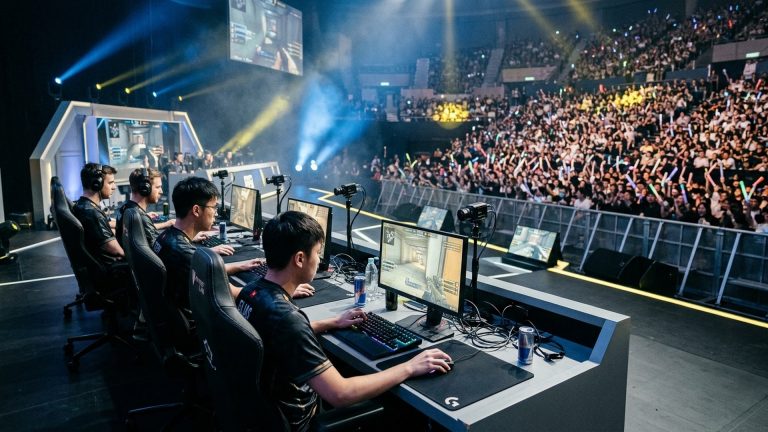
The Transatlantic Heavyweights: G2 Stride vs Karmine Corp
For over four seasons, the North American vs European debate in Rocket League has crystallized around two legendary organizations. In 2026, G2 Stride cemented North American pride by capturing Major II silverware behind the transcendent mechanical synergy of American prodigy Daniel, Landon ‘BeastMode’ Konerman, and veteran anchor Massimo ‘Atomic’ Franceschi. Their playstyle is defined by clinical midfield suffocating: using rapid wave-dash recoveries and boost-starvation tactics to trap opponents in their own defensive corners before unleashing unstoppable backboard double-taps.
Across the Atlantic, France’s Karmine Corp commands the most vociferous fandom in competitive gaming. Spearheaded by French phenom Axel ‘Vatira’ Touret and mechanical virtuoso Atow, the ‘Blue Wall’ plays with unrelenting offensive velocity. Rather than defaulting to defensive rotations, Karmine Corp utilizes aggressive pre-jump challenges and supersonic demo rotations to shatter opposing structures before defensive aerial saves can be mounted. Their head-to-head clashes remain the most viewed and fiercely contested fixtures in the RLCS calendar.
| RLCS Organization | Region | Star Roster | Major Achievements | RLCS 2026/27 Title Odds |
|---|---|---|---|---|
| G2 Stride | North America (USA) | Daniel, BeastMode, Atomic | RLCS Major Champions, World Finalists | +220 (Co-Favorite) |
| Karmine Corp | Europe (France/Belgium) | Vatira, Atow, dralii | Major I Champions, European Regional Dynasts | +210 (Co-Favorite) |
| Team Vitality | Europe (France) | Zen, Radosin, Alpha54 | 2023 World Champions, Major Contenders | +350 |
| Gen.G Mobil1 Racing | North America (USA/Canada) | Firstkiller, AppJack, Chronic | NA Regional Champions, Major Finalists | +450 |
| Spacestation Gaming | North America (USA) | Lj, Hockser, Chicago | North American Top 3 Contender | +600 |
The 2026/27 Major Format Overhaul: Open Qualifiers & LAN Seeding
Responding to extensive feedback from professional players and community organizations, Psyonix has overhauled the competitive structure for the 2026/27 circuit. The season is split into two distinct splits leading into the World Championship:
- Open Qualifier Double-Elimination: Each regional split features three open qualifier tournaments utilizing an expanded double-elimination bracket, guaranteeing that grassroots unsigned teams have a transparent, merit-based route to clash against tier-one partnered organizations.
- Swiss-to-Playoff LAN Format: Both Major 1 and Major 2 LAN events will expand from 16 to 20 international teams, introducing a grueling 5-round Swiss stage before seeding the top 8 squads into a single-elimination arena bracket.
- Global Circuit Point Scaling: Point values scale exponentially between Major 1 and Major 2, ensuring that teams hitting peak competitive form in the spring split have a viable mathematical route to secure World Championship qualification seeds.
The Aerial Ceiling Reset & Boost-Starvation Meta
Mechanically, the 2026/27 meta has evolved into a masterclass of momentum conservation and resource denial. In professional lobbies, players rarely commit to traditional aerial launches from the ground; instead, they utilize ceiling pinches and flip resets harvested off the ball’s underbelly to maintain boost reserves while keeping opponents guessing. The mastery of the directional air roll (DAR) allows fraggers to manipulate car orientation mid-flight, converting awkward defensive clearances into pinpoint top-corner snipes.
Equally critical is small-pad boost pathing. Rather than wasting precious rotation seconds driving out of position to grab 100-boost corner canisters, elite teams like G2 and Vitality navigate intricate lanes of 12-boost mini-pads, sustaining continuous supersonic velocity while suffocating enemy boost collectors.
Canadian and UK Talent Driving Regional Depth
Beyond the marquee French and American superstars, Canadian and British players remain the lifeblood of competitive Rocket League. Canadian icons like Jack ‘ApparentlyJack’ Benton and veteran fraggers across Gen.G and Spacestation Gaming anchor North American defensive stability. In the UK, prodigies like rise. and Archie continue to deliver clutch ice-in-the-veins performances in European playoff deciders.
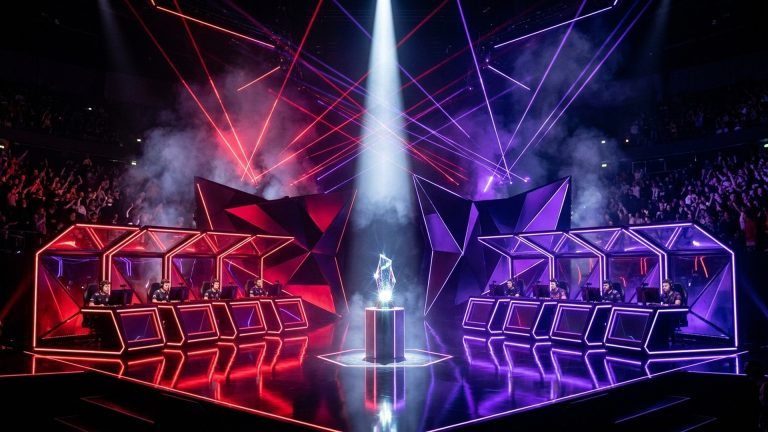
With Psyonix expanding live LAN venue stops across iconic arenas in North America and Europe, the RLCS 2026/27 season promises to deliver unprecedented broadcast spectacles, cementing Rocket League as the purest, most viewer-friendly esport in modern digital entertainment.
Demolition Metas, Physical Play & Shadow Defense Mechanics
Beyond raw aerial acrobatics, the defining tactical evolution in modern RLCS competition is the weaponization of physical play and demolition mechanics. Top-tier teams like Karmine Corp and G2 Stride no longer view demolitions as secondary gimmicks; they are calculated tactical disruptions engineered to create immediate numbers advantages on the pitch. When an attacker air-dribbles toward the backboard, a trailing teammate frequently supersonic-charges into the goal crease, demoing the defending goalkeeper just milliseconds before the ball reaches the net.
To counter this physical onslaught, defensive coaching has prioritized shadow defense and backboard positioning. Rather than charging forward into contested 50/50 midfield 50-50s, last-man defenders match the velocity of incoming attackers while driving backward toward their own net, buying crucial recovery seconds for rotating teammates to re-enter the defensive third. Small-pad pathing remains vital: players who collect six or seven 12-boost pads along defensive arcs maintain full aerial maneuverability without conceding positioning.
The integration of ultra-low-latency controller protocols and hall-effect analog sticks has also refined micro-touch accuracy. In a game where millimeters dictate whether a shot deflects off the crossbar or ripples the net, physical conditioning, reaction training, and mechanical consistency remain the bedrock of Rocket League excellence as teams gear up for the grueling 2026/27 Major circuit.

Kickoff variations have similarly evolved into a high-stakes mind game. Pro squads alternate seamlessly between high-speed diagonal speed-flips and delayed ‘Spanish kickoffs’—where the primary challenger intentionally loses the 50/50 toward a waiting teammate on the back wall—to generate instantaneous counter-attacks. Combined with the massive expansion of the French and North American collegiate feeder leagues, the competitive talent pool in the RLCS has never been deeper or more exhilarating to follow.
Car body standardization has settled predominantly around the Octane and Fennec hitboxes, which share identical rectangular collision volumes that maximize shooting power on corner pinches. Aspiring players across the US and Europe study pro replay telemetry to master flip-cancel ball contact, ensuring that every touch propels the ball with maximum terminal velocity.
Frequently Asked Questions
When does the RLCS 2026/27 season begin?
The RLCS 2026/27 season officially kicks off in January 2026 with regional Open Qualifier 1 events taking place across North America, Europe, South America, Oceania, MENA, and APAC.
How many international Major tournaments are held during an RLCS season?
The season features two live international LAN Majors (Major 1 in early spring and Major 2 in early summer), culminating in the prestigious RLCS World Championship in late summer 2027.
What is a flip reset in Rocket League?
A flip reset occurs when a player touches all four wheels of their car simultaneously against the surface of the ball in mid-air, resetting their jump timer and granting an additional unlimited directional flip to shoot or pass unexpectedly.
Where can fans watch live RLCS broadcasts?
All regional qualifiers and international Majors stream live on the official Rocket League Twitch and YouTube channels, with community co-streams and fan viewing parties hosted globally across North America and Europe.
Related posts:
 Rocket League RLCS 2026 Major 1 Qualifiers: European Swiss Preview
 LoL Worlds 2026 Swiss Stage Deciders: T1, Bilibili Gaming & Gen.G Quarterfinal Qualification Scenarios & Meta Shift
 EA FC Pro 2027 & ePremier League (£150K Prize Pool): November UK, EU & USA Pro Qualifiers Guide
 LoL Worlds 2026 Grand Final Today (Nov 14): Gen.G vs Bilibili Gaming at Barclays Center Brooklyn, Bo5 Summoner Cup Showdown & Opening Ceremony
