
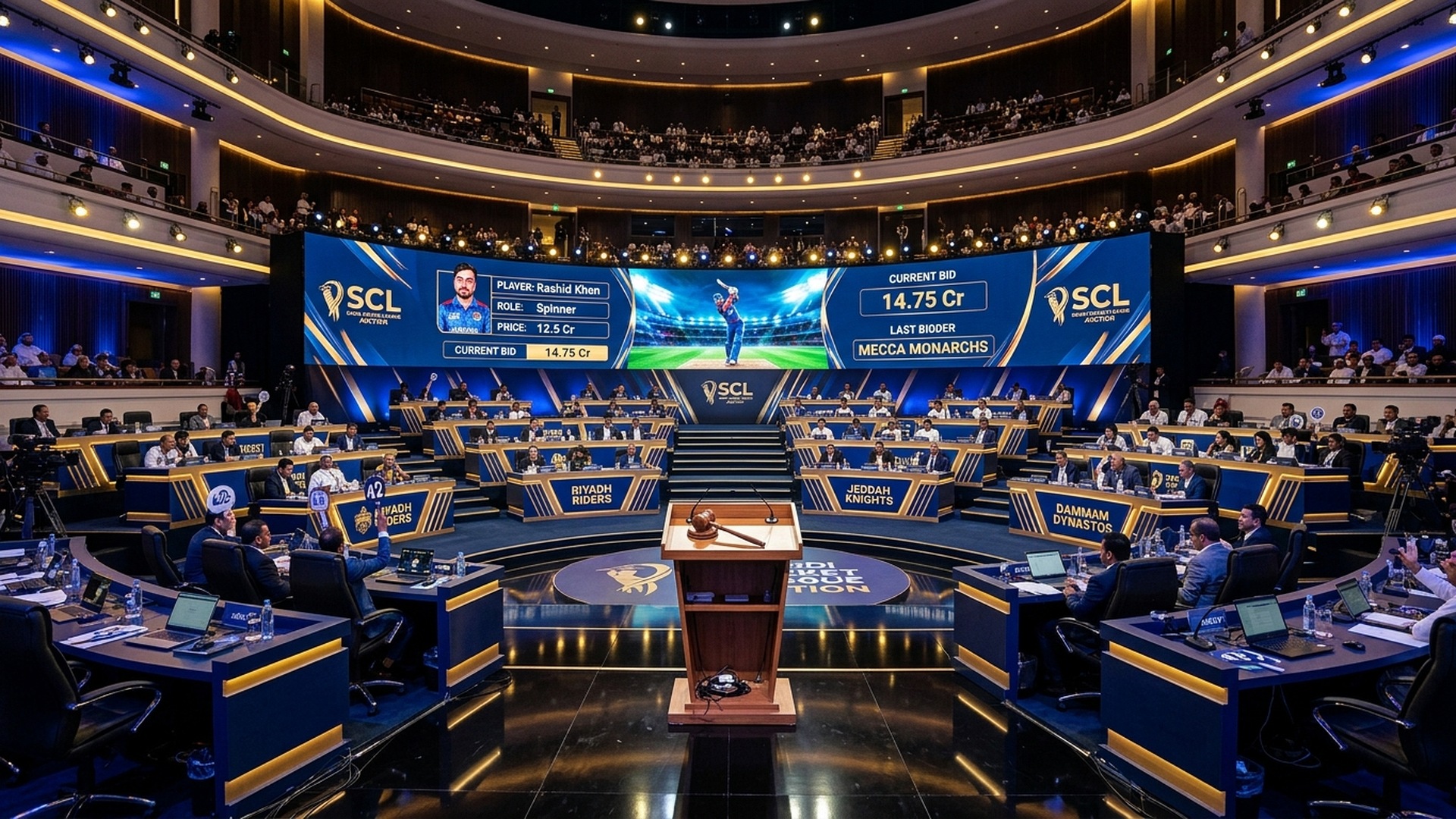
The landscape of the Indian Premier League (IPL) underwent a seismic paradigm shift this week, sending shockwaves through boardroom planning sessions across all ten franchises. While the BCCI finalized the structural framework for the IPL 2027 Mega Auction—revising salary purse ceilings to a massive ₹125 crore per franchise and reinstating strategic Right-to-Match (RTM) cards—the entire talent acquisition playbook was completely rewritten by a historic cricketing event in Doha, Qatar.
On Tuesday, 15-year-old Bihar sensation Vaibhav Suryavanshi shattered the global cricket record books by smashing the fastest century in List A history (in just 28 balls) en route to an unfathomable 204 off 53 balls with 28 sixes for India A against the UAE, as chronicled in our viral feature on Vaibhav Suryavanshi’s world-record innings and IPL career. Having been signed by Rajasthan Royals at age 13 for ₹1.1 crore, Suryavanshi’s stratospheric rise has proven that teenage batting prodigies are no longer developmental flyers; they are franchise-defining cornerstones. In this in-depth scouting dossier, we analyze the top domestic prodigies dominating franchise radar screens and assess the retention fallout heading into the auction.

The Suryavanshi Precedent: Why Teenage Power-Hitters Rule the Market
Historically, IPL franchise talent scouts reserved multi-crore auction bids for seasoned international superstars or proven Indian capped internationals. However, the introduction of the Impact Player rule and the exponential inflation of average T20 strike rates—where 200+ scores are now standard par totals—has shifted front-office valuation metrics entirely toward fearless, high-intent ball strikers who can attack from ball one without fear of dismissal.
Rajasthan Royals’ bold investment in Suryavanshi—which yielded the Orange Cap, MVP, and Emerging Player award in IPL 2026 after scoring 776 runs at a 237.30 strike rate—has prompted rival franchises to overhaul their domestic scouting networks. Teams like Mumbai Indians, Chennai Super Kings, and Royal Challengers Bengaluru have deployed advanced biomechanical tracking and video analysts to junior tournaments like the Cooch Behar Trophy and Vinoo Mankad Trophy, hunting for the next breakout phenom.
| Player Name | Age | Domestic Team / State | Primary Skill | Recent Highlight Benchmark | Projected Auction Tier |
|---|---|---|---|---|---|
| Vaibhav Suryavanshi | 15 | Bihar / Rajasthan Royals | Top-Order Left-Hand Batter | 204 off 53 balls (28-ball 100), 28 sixes | Locked Pre-Auction Retention (₹18 Cr) |
| Ayush Mhatre | 17 | Mumbai | Aggressive Opening Batter | Ranji Trophy debut ton, 168 strike rate | High Bidding War (₹6 Cr – ₹9 Cr) |
| Musheer Khan | 21 | Mumbai | Top-Order Batter / Left-Arm Spin | Duleep Trophy century, U19 World Cup star | Premium All-Rounder (₹8 Cr – ₹12 Cr) |
| Samit Dravid | 20 | Karnataka | Pace-Bowling All-Rounder | Maharaja T20 death bowling, middle-order power | High Upside Target (₹4 Cr – ₹7 Cr) |
| Angkrish Raghuvanshi | 21 | Kolkata Knight Riders | Middle-Order Anchor / Finisher | IPL 2026 400+ runs, 360-degree ramp play | Franchise RTM Priority (₹8 Cr – ₹10 Cr) |
Top 4 Domestic Prodigies on the Franchise Scouting Radar
1. Ayush Mhatre (Mumbai): The Fearless Strokemaker
Hailing from the storied maidans of Mumbai, 17-year-old Ayush Mhatre has emerged as the most technically gifted young opener since Yashasvi Jaiswal. Exhibiting flawless balance against high-velocity pace bowling, Mhatre announced his arrival with a blistering century on Ranji Trophy debut. His ability to hit through the line over extra cover against 145+ km/h fast bowlers makes him an ideal target for franchises like Delhi Capitals and Punjab Kings, who desperately need explosive opening firepower.
2. Musheer Khan (Mumbai): The High-Tempered Big-Match Winner
Younger brother of Sarfaraz Khan, Musheer possesses an extraordinary mental fortitude forged in grueling Mumbai club cricket. Equally adept at absorbing early collapses and accelerating through the middle overs against elite spin, Musheer’s handy left-arm orthodox bowling provides invaluable team balance under the Impact Player substitution framework.
3. Samit Dravid (Karnataka): The Complete All-Round Package
Carrying a legendary cricketing surname, Samit Dravid has carved out his own aggressive identity as a genuine pace-bowling all-rounder. Operating in the 135 km/h range with sharp seam movement while possessing the power to clear long-on boundaries, Dravid addresses the rarest commodity in Indian cricket: a domestic fast-bowling all-rounder capable of finishing innings.
4. Priyanshu Moliya (Baroda): The Middle-Overs Spin Destroyer
At just 20 years of age, Moliya has terrorized domestic attacks with his devastating sweep and lofted pull shots against finger spin and wrist spin. With franchise analytical data showing that IPL matches are won or lost in overs 7 through 15, Moliya’s 155+ strike rate against spin makes him a priority middle-order asset for Chennai Super Kings at Chepauk.

Franchise Retention Strategy & RTM War-Chests
The revised retention guidelines permit franchises to secure up to five players through direct retention and one player via the Right-to-Match (RTM) card at the auction table. For Rajasthan Royals, retaining Vaibhav Suryavanshi at the top ₹18 crore slab alongside captain Sanju Samson and Yashasvi Jaiswal is an absolute certainty, locking in the most explosive top three in global T20 cricket.
Meanwhile, franchises with extensive rebuilding needs like Punjab Kings and Royal Challengers Bengaluru are expected to enter the auction ballroom with over ₹85 crore in unspent purse funds. When auctioneer Mallika Sagar raises the gavel in late 2026, expect unprecedented bidding wars as franchises invest generational fortunes into India’s teenage cricketing royalty.
Franchise Purse Re-Allocation & Data-Driven Bidding Wars
The financial dynamics of the IPL 2027 Mega Auction will see unprecedented analytical modeling applied to player valuation. With the expanded ₹125 crore salary cap and the strategic deployment of Right-to-Match (RTM) cards, franchise analytical teams are moving away from traditional aggregate career statistics in favor of modern advanced metrics: specifically Balls Per Boundary (BPB), True Strike Rate (TSR), and Pressure Run Value (PRV) across specific match phases.
In this data-driven environment, teenage power-hitters like Vaibhav Suryavanshi offer staggering financial value. When a 15-year-old prodigy can score 204 runs off 53 balls with 28 sixes in international competition while playing on a cost-controlled entry-level contract, the return on investment (ROI) completely outclasses legacy overseas acquisitions who consume ₹20+ crore in auction purse funds while delivering inconsistent availability due to national team commitments.


Franchises like Kolkata Knight Riders, Sunrisers Hyderabad, and Rajasthan Royals have demonstrated that building a fearless domestic core around high-intent stroke-makers allows for tactical flexibility when bidding on specialized overseas death bowlers and mystery spinners in later auction rounds. As the auction gavel prepares to fall, the battle for India’s next generation of domestic batting royalty will define the competitive hierarchy of the IPL for the next three-year cycle.
Furthermore, the auction dynamics will place a premium on tactical flexibility. Franchises that construct versatile 25-man rosters capable of adapting to varied pitch conditions—from the red-soil bounce of Wankhede to the spinning turn of Chepauk and the high-altitude altitude clearing at Chinnaswamy—will enter IPL 2027 with a decisive strategic advantage over top-heavy squads that overspend on marquee figureheads.
Frequently Asked Questions
What is the total purse limit for each franchise in the IPL 2027 Mega Auction?
The BCCI has finalized a total team salary purse ceiling of ₹125 crore per franchise for the IPL 2027 season, representing a ₹5 crore expansion to accommodate rising player valuations.
How does the Right-to-Match (RTM) card work at the IPL Mega Auction?
The RTM card allows a franchise to re-acquire their 2026 player during the auction by matching the highest bid submitted by a rival team. The winning bidder then has one final opportunity to raise their offer before the original franchise makes their final RTM decision.
Will Rajasthan Royals retain Vaibhav Suryavanshi ahead of the auction?
Yes, following his historic 28-ball List A century and dominant IPL 2026 campaign (Orange Cap and MVP), Rajasthan Royals consider Suryavanshi an untouchable core asset and will retain him in their premier retention tier.
How has the Impact Player rule affected uncapped domestic player valuations?
The Impact Player rule has vastly increased the value of specialized domestic power-hitters and express bowlers, allowing teams to field 12 players and bid aggressively on fearless young boundary-hitters without sacrificing bowling depth.
Related posts:
 IPL 2027 Trades: Hardik Pandya to PBKS, Arshdeep Singh to MI (₹18 Cr) & BCCI Expansion Ruling
 IPL 2027 Retention Deadline Nov 17: CSK-SRH 4-Player Trade, Pant ₹15 Cr DC Return & Purse Tracker
 IPL 2026 Mega Auction Day 1 Closing Wrap: Rishabh Pant, Shreyas Iyer Break Records, Team Purses and Day 2 Strategy
 Vaibhav Suryavanshi Smashes 204 Off 53 Balls: Fastest List A Century (28 Balls), 28 Sixes & Full Record Breakdown
