
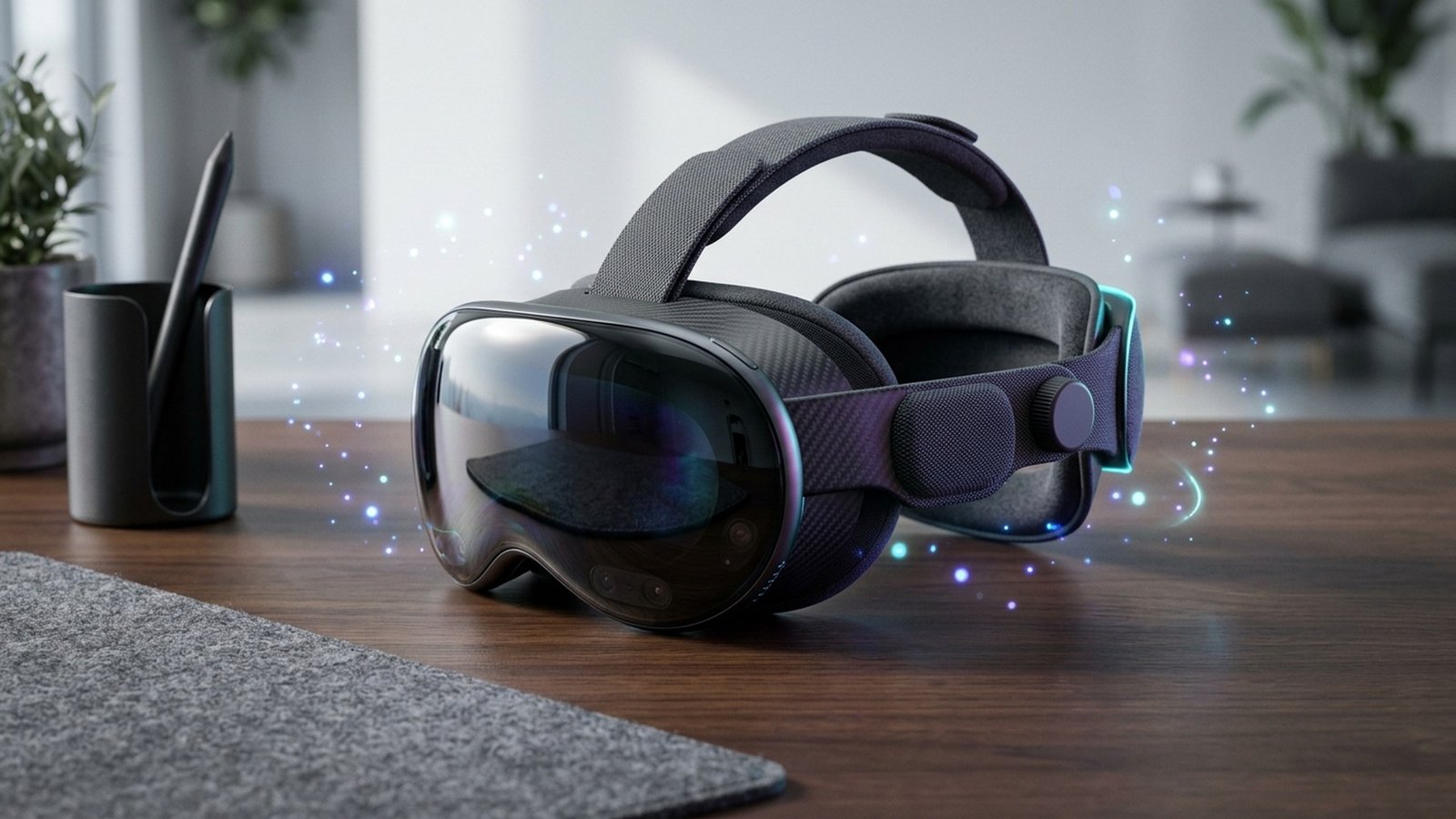
The evolution of Metaverse gaming 2026 has matured from abstract corporate buzzwords into a tangible, high-performance technological reality. Driven by rapid breakthroughs in spatial computing hardware, real-time photorealistic engine rendering via Unreal Engine 5, and neural eye-tracking locomotion, Metaverse gaming 2026 represents the convergence of persistent digital social spaces, interactive virtual sports arenas, and decentralized creator economies.
- Spatial Computing Adoption: Next-generation mixed-reality headsets delivering 4K-per-eye micro-OLED visual fidelity.
- Foveated Rendering Efficiency: Eye-tracking hardware dynamically concentrates compute power where the fovea focuses, cutting GPU load by 40%.
- Persistent Virtual Worlds: Server architectures supporting thousands of concurrent avatars within a unified shared physics instance.
- Generative AI Environments: Real-time neural procedural world generation allowing creators to build complex 3D environments via natural language.
- Digital Fashion & Interoperability: Cross-platform avatars utilizing universal 3D file formats (USD and glTF) across disparate engines.
- Enterprise & Esports Integration: Virtual stadiums hosting real-time volumetric broadcast recreations of global esports and sporting events.
Interactive Technological Index
- 1. Spatial Computing Hardware: Micro-OLED Displays & Foveated Graphics
- 2. Neural Motion Tracking: High-Fidelity Facial capture & Natural Locomotion
- 3. Virtual World Persistence: Seamless Massive-Concurrency Engine Sharding
- 4. Virtual Reality vs Spatial Computing Metaverse Benchmark Table
- 5. Volumetric Esports Arenas: Attending Global Finals in 3D Space
- 6. The Creator Economy: Procedural AI World-Building & Monetization
- 7. Frequently Asked Questions (FAQ)
1. Spatial Computing Hardware: Micro-OLED Displays & Foveated Graphics
The technical foundation of Metaverse gaming 2026 is anchored in spatial computing hardware. The clumsy, low-resolution VR headsets of the past decade have been superseded by lightweight, high-density optical visors featuring twin 4K micro-OLED panels capable of delivering over 3,400 pixels per inch.
Critical to maintaining smooth 90fps and 120fps refresh rates without tethered supercomputers is dynamic foveated rendering. High-speed infrared cameras track the user’s pupil micro-saccades, directing the GPU to render the tiny central focal point in pin-sharp native 4K while dropping peripheral rendering resolution, slashing computational overhead by up to 45%.
2. Neural Motion Tracking: High-Fidelity Facial capture & Natural Locomotion
A primary historical barrier to immersive virtual social interaction was the “uncanny valley” of dead-eyed, stiff digital avatars. In 2026, neural motion synthesis models reconstruct real-time facial micro-expressions, lip-sync phonemes, and realistic body posture directly from onboard sensor arrays.
When interacting in virtual concert halls or esports watch parties, avatars mirror subtle smirks, head tilts, and hand gestures seamlessly, fostering a genuine sense of physical co-presence among participants distributed across disparate continents.
3. Virtual World Persistence: Seamless Massive-Concurrency Engine Sharding
Traditional MMO architecture relied on fractured server instances that segregated friends into isolated lobbies of a few dozen players. Modern metaverse worlds deploy dynamic serverless sharding networks backed by cloud orchestration frameworks.
Tens of thousands of concurrent users can congregate within a single continuous architectural space—such as a virtual city square or esports festival plaza—with seamless spatial audio attenuation ensuring conversation intelligibility based on physical proximity.
4. Virtual Reality vs Spatial Computing Metaverse Benchmark Table
Technological Evolution: Legacy VR Platforms vs Modern Spatial Computing
| Technical Capability | Early Virtual Reality (2016 – 2020) | Spatial Computing Metaverse (2026 Standard) | Generational User Impact |
|---|---|---|---|
| Display Resolution | 1080×1200 Pentile LCD (Screen-Door Effect) | Twin 4K Micro-OLED (3,400+ PPI) | Complete Elimination of Screen-Door Artifacts |
| Tracking Architecture | External Lighthouse Base Stations | Onboard Inside-Out Computer Vision + LiDAR | Zero Setup Friction in Any Room Environment |
| Input Method | Bulky Handheld Plastic Controllers | Hand Tracking, Eye Navigation & Neural Wristbands | Fluid, Controller-Free Natural Interaction |
| Rendering Pipeline | Heavy Brute-Force Rasterization | Dynamic Eye-Tracked Foveated Rendering | High-End Fidelity at Portable Battery Limits |
| Avatar Expressiveness | Static Floating Torsos with Fixed Emotes | Full-Body Photorealistic Neural Motion Avatars | Natural Eye Contact & Emotional Resonance |
5. Volumetric Esports Arenas: Attending Global Finals in 3D Space
Among the most commercially lucrative applications of metaverse technology is the volumetric esports arena. Rather than viewing a 2D livestream video feed of tournaments like the League of Legends World Championship or Counter-Strike 2 Majors, spectators enter a 1:1 volumetric stadium.
Spectators can walk directly onto a life-sized holographic reproduction of Summoner’s Rift or Mirage, watching champion skillshots and smoke executions unfold from any custom camera angle while listening to live shoutcaster commentary in dynamic 3D spatial acoustics.
6. The Creator Economy: Procedural AI World-Building & Monetization
Building virtual spaces historically required specialized 3D modeling expertise in tools like Blender or Maya. Today, generative AI pipelines empower everyday users to synthesize interactive virtual architecture through natural language prompts.
Creators retain programmatic royalties enforced via decentralized protocols, receiving instant micropayments whenever visiting users patronize virtual boutiques, play community-built mini-games, or attend ticketed digital events.
7. Frequently Asked Questions (FAQ)
Frequently Asked Questions (AI & Reader Search Radar)
What is the difference between Virtual Reality and the Metaverse in 2026?
Virtual Reality refers to the display hardware that immerses you in a 3D environment, whereas the Metaverse is the interconnected, persistent digital network of shared virtual worlds, social spaces, and economies accessible across devices.
Do you need a headset to access metaverse gaming platforms?
No. While spatial computing visors offer maximum immersion, modern virtual worlds feature cross-platform compatibility allowing users to participate via PCs, smartphones, and gaming consoles.
How does foveated rendering improve metaverse performance?
Foveated rendering uses high-speed eye-tracking to render only the exact focal point of your gaze in ultra-high resolution while reducing peripheral quality, dramatically lowering GPU workload.
Can brands and creators earn real money in virtual worlds?
Yes. Creators monetize through custom virtual clothing, interactive architectural experiences, digital real estate development, and ticketed virtual events settled in standard currency.
Related Digital Culture Intel: Review our in-depth hardware telemetry in Nintendo Switch 2 Custom Architecture Dossier and Cryptocurrency in Gaming & Web3 GameFi.