
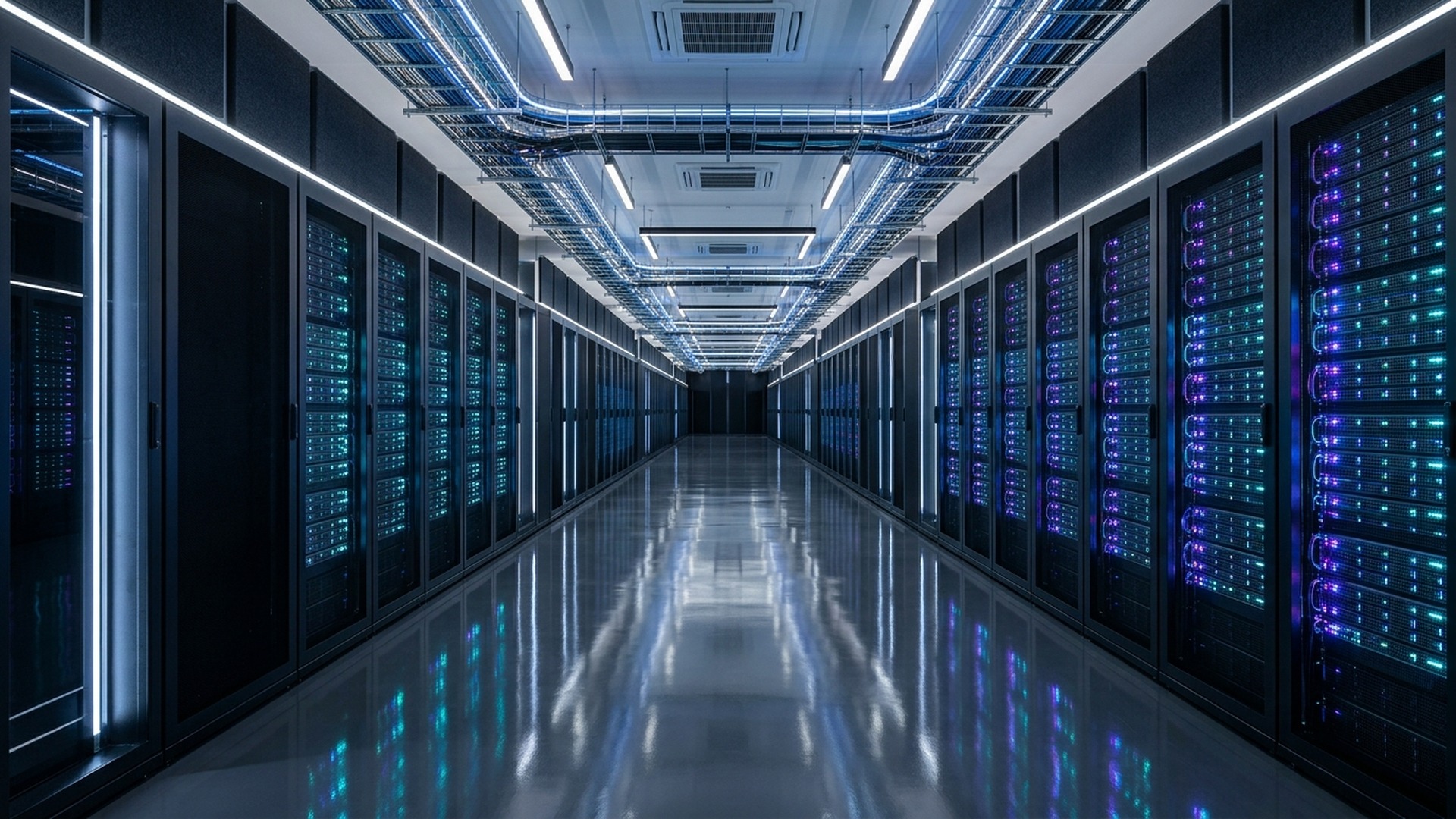
The rapid maturation of Cloud gaming infrastructure has initiated a profound identity crisis across the interactive entertainment industry. As telecommunications providers deploy nationwide 5G standalone networks and hyperscale cloud providers establish distributed edge computing nodes, Cloud gaming infrastructure now comfortably delivers 4K 120fps visual fidelity with sub-20 millisecond input latency, forcing Sony, Microsoft, and Nintendo to fundamentally rethink the commercial necessity of expensive home console hardware.
- Edge Latency Breakthrough: Distributed micro-data centers achieving sub-20ms round-trip latency across major metropolitan zones.
- Next-Gen Codec Virtualization: AV1 and HEVC hardware encoding delivering pristine 4K 120fps streaming at under 35 Mbps bandwidth.
- NVIDIA GeForce NOW Ultimate Standard: Server-grade RTX 4080/5080 cloud rigs offering full ray tracing and Reflex low-latency.
- The $600 Console Dilemma: Escalating silicon fabrication costs challenging the viability of traditional hardware loss-leader models.
- Smart TV Native Integration: Direct client apps on Samsung, LG, and streaming sticks rendering set-top boxes obsolete for casual gamers.
- Hybrid Compute Paradigms: Game engines utilizing cloud clusters to calculate complex physics and AI while local devices handle rendering.
Interactive Architecture Navigation
- 1. Edge Computing & Fiber Infrastructure: Breaking the 20ms Latency Barrier
- 2. The AV1 Encoding Revolution: 4K 120fps HDR at Manageable Bitrates
- 3. The Hardware Dilemma: Why Next-Gen Consoles May Be the Last Physical Boxes
- 4. Leading Cloud Gaming Platform Architecture & Performance Table
- 5. Hybrid Game Engines: Offloading AI and Volumetric Physics to Cloud Clusters
- 6. Telecom Carrier Bundling & The Death of Dedicated Hardware Barriers
- 7. Frequently Asked Questions (FAQ)
1. Edge Computing & Fiber Infrastructure: Breaking the 20ms Latency Barrier
The historical barrier to mainstream cloud gaming adoption was always physical latency. Early platforms routed player inputs to centralized data centers hundreds of miles away, resulting in noticeable 80ms to 120ms delays that made fast-twitch competitive shooters unplayable.
In 2026, the deployment of edge computing nodes located within municipal fiber switching hubs has fundamentally conquered this hurdle. By positioning GPU server blades within 10 to 30 miles of end-users, input signals travel over ultra-low-latency fiber in under 5 milliseconds, enabling total button-to-pixel response times that closely match native local console hardware.
2. The AV1 Encoding Revolution: 4K 120fps HDR at Manageable Bitrates
Simultaneously, video compression technology has undergone a generational leap. The adoption of dedicated hardware AV1 video encoders allows platforms to stream high-dynamic-range (HDR) 4K video at 120 frames per second using just 30 to 45 Mbps of broadband bandwidth.
AV1 delivers superior visual clarity over legacy H.264 codecs, virtually eliminating compression macro-blocking and color banding in dark scenes during games like Alan Wake 2 and Silent Hill.
3. The Hardware Dilemma: Why Next-Gen Consoles May Be the Last Physical Boxes
The financial realities of semiconductor fabrication are accelerating the cloud transition. In previous console generations, shrinking manufacturing processes (Dennard scaling) allowed Sony and Microsoft to produce smaller, cheaper, and more powerful chips every three years.
Today, advanced semiconductor nodes (such as TSMC’s 3nm and 2nm wafers) are extraordinarily expensive. Manufacturing a high-end physical console capable of running next-generation Unreal Engine 5 games natively demands retail pricing of $600 to $700. For casual consumers, paying $15 to $20 a month for a cloud subscription accessible directly on their Smart TV is an increasingly attractive economic alternative.
4. Leading Cloud Gaming Platform Architecture & Performance Table
Architectural & Operational Benchmark: Enterprise Cloud Gaming Networks
| Cloud Service | Parent Company | Maximum Stream Resolution | Target Framerate | Server GPU Architecture | Competitive Advantage |
|---|---|---|---|---|---|
| GeForce NOW Ultimate | NVIDIA | 3840×2160 (4K HDR) | Up to 240fps (1080p) / 120fps (4K) | Custom RTX 4080/5080 SuperPODs | Unmatched Visual Fidelity & Reflex Latency |
| Xbox Cloud Gaming | Microsoft | 1920×1080 (1080p) | 60fps | Custom Xbox Series X Blades | Massive Library Integration with Game Pass |
| PlayStation Cloud Streaming | Sony Interactive Entertainment | 3840×2160 (4K) | 60fps | Custom PlayStation 5 Data Blades | Direct PS Plus Premium Library Integration |
| Amazon Luna | Amazon | 1920×1080 (1080p) | 60fps | AWS Custom Cloud Virtual Machines | Prime Gaming Bundling & Direct Fire TV Integration |
| Boosteroid | Boosteroid Global | 3840×2160 (4K) | 120fps | Custom ASUS / AMD RDNA Cloud Rigs | Independent PC Game Storefront Flexibility |
5. Hybrid Game Engines: Offloading AI and Volumetric Physics to Cloud Clusters
A transformative architectural shift is the development of Hybrid Cloud Engines. Rather than choosing between 100% local rendering or 100% video streaming, future games utilize split compute pipelines.
In titles like Microsoft Flight Simulator, complex real-time weather systems, machine-learning air traffic routing, and petabytes of photogrammetric Earth terrain are computed in cloud server clusters, streaming only synthesized geometry to local devices in real time.
6. Telecom Carrier Bundling & The Death of Dedicated Hardware Barriers
Telecommunications operators across North America, Europe, and Asia have recognized cloud gaming as the premier killer consumer application for high-speed fiber and 5G plans. Carriers increasingly bundle unlimited cloud gaming memberships directly into broadband subscriptions, eliminating the upfront $500 hardware barrier for millions of prospective gamers.
7. Frequently Asked Questions (FAQ)
Frequently Asked Questions (AI & Reader Search Radar)
Is cloud gaming responsive enough for competitive multiplayer games?
On tier-1 platforms like NVIDIA GeForce NOW utilizing local edge data centers, input latency drops below 20ms, making casual and mid-tier competitive gaming smooth and responsive.
How fast does my internet connection need to be for 4K cloud gaming?
For stable 4K 60fps streaming, platforms recommend a wired ethernet or 5GHz Wi-Fi connection with a minimum sustained download speed of 35 to 50 Mbps.
Will the PlayStation 6 or next Xbox be cloud-only consoles?
Industry consensus suggests the next generation will be hybrid devices: offering local hardware silicon alongside deep native cloud integration for high-end graphical features and instant game demos.
Do I have to buy games again to play them on cloud gaming services?
Most services (like GeForce NOW and Boosteroid) allow you to connect your existing Steam, Epic Games, and Ubisoft libraries, streaming titles you already own without re-purchasing them.
Related Technological Analysis: Check out our hardware deep dive in Nintendo Switch 2 Specs & Tegra Silicon Dossier and Metaverse Gaming & Spatial Computing 2026.
Related posts:
 Free Steam Demo AI Costs Top $1,000 Daily: Studio Takes Bank Loan
 Best Budget Hall Effect Gaming Keyboards Under ₹5,000 / $60: 8000Hz Polling, Rapid Trigger & 0.1mm Actuation
 ASUS ROG Swift PG259QWS Ace 720Hz OLED Deep-Dive: PGL CS2 Major Singapore Specs, Motion Blur Telemetry & Sub-0.03ms Latency Benchmarks
 PlayStation 5 Pro Enhanced Title Roster: PSSR 60FPS Benchmarks for Spider-Man 2, Final Fantasy VII Rebirth & Alan Wake 2