
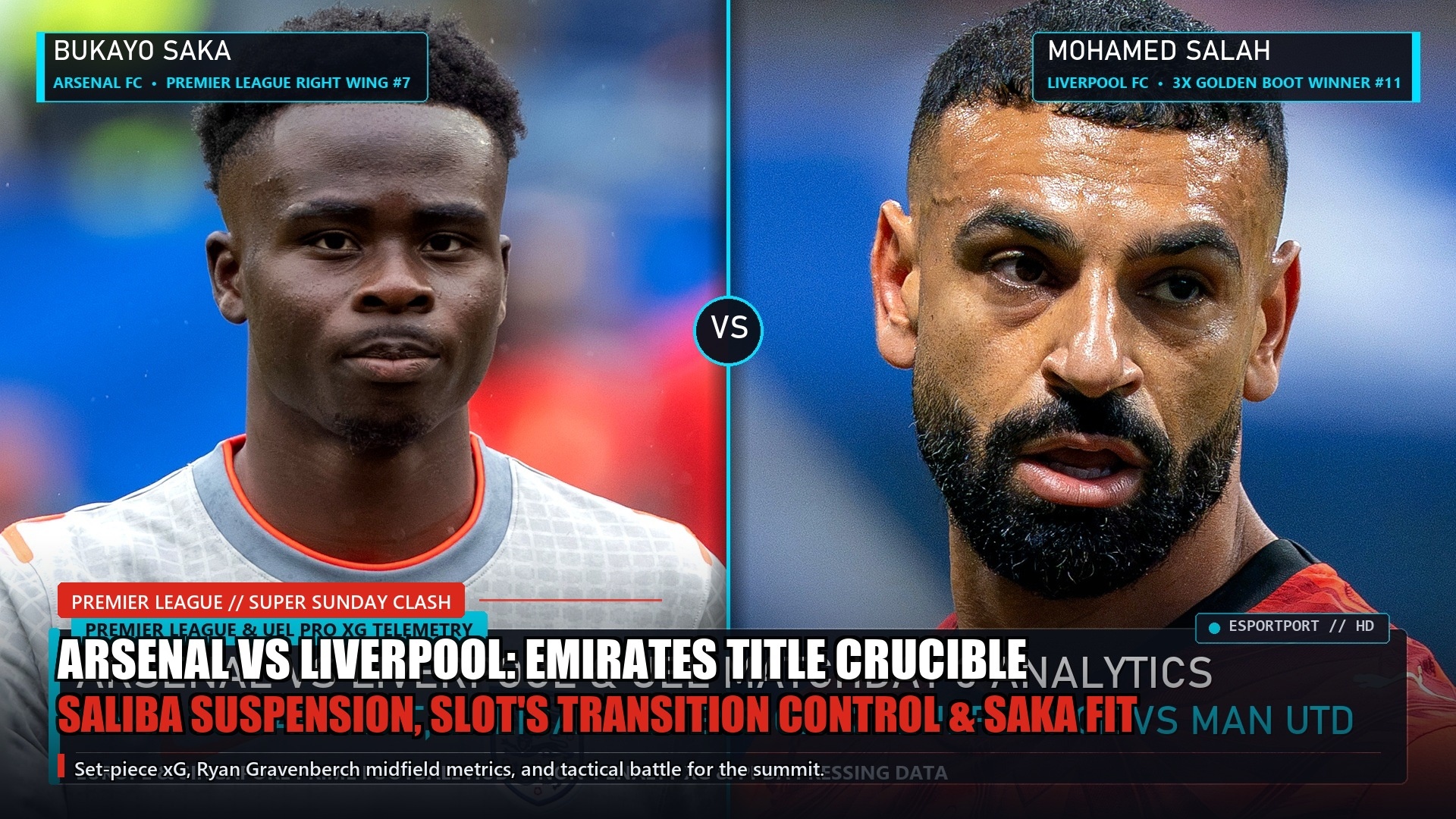
Super Sunday delivers the defining clash of the European football calendar as Arne Slot’s table-topping Liverpool host Pep Guardiola’s Manchester City at Anfield. Separated by immense tactical heritage and critical title race points, this encounter pits Liverpool’s relentless direct transitions and defensive compactness against City’s patient positional possession, highlighted by the titanic individual duel between Mohamed Salah and City’s defensive flank.
1. Anfield Summit: The Premier League Title Race Reaches Boiling Point
No fixture in contemporary English football matches the tactical sophistication, global viewership, and championship consequence of Liverpool against Manchester City. On Sunday afternoon, Anfield becomes the center of the sporting universe as Arne Slot experiences his inaugural home league clash against Pep Guardiola’s perennial juggernauts. Liverpool enter the contest sitting atop the Premier League table, having negotiated a demanding autumn schedule with astonishing tactical discipline, defensive maturity, and devastating offensive efficiency. For Manchester City, this trip to Merseyside represents a critical juncture in their pursuit of unprecedented domestic history, arriving at Anfield with an urgent need to reassert their dominance.
The transition from Jürgen Klopp’s heavy metal chaotic pressing to Arne Slot’s structured, controlled possession has transformed Liverpool into a more balanced and durable competitive machine. Rather than engaging in 90 minutes of frantic box-to-box sprints, Slot’s side demonstrates calculated patience, baiting opponents into aggressive forward presses before cutting through central defensive corridors with lethal three-man combinations. However, standing in their way is a Manchester City side coached by Pep Guardiola, the ultimate tactical chameleon capable of devising entirely bespoke positional structures to neutralize opponent strengths.

2. Arne Slot vs. Pep Guardiola: Positional Chess & Pressing Triggers
The tactical chess match between Slot and Guardiola will be decided in the subtle geometry of the middle third. Liverpool’s 4-2-3-1 structure relies heavily on a dynamic midfield pivot featuring Ryan Gravenberch and Alexis Mac Allister. Gravenberch’s remarkable emergence as an press-resistant ball-carrier has provided Liverpool with the capability to evade aggressive opponent challenges through direct vertical dribbles, bypassing midfield traps and instantaneously feeding forward lines.
To combat this, Guardiola is anticipated to deploy an inverted full-back scheme, pushing Rico Lewis or Joško Gvardiol alongside Mateo Kovačić to construct a numerical four-man box midfield. By establishing four-versus-three dominance in the central corridor, City aim to starve Liverpool’s playmakers of time and space, preventing rapid transitional releases to Mohamed Salah and Luis Díaz. The critical question remains whether City can execute this positional control without leaving their central defenders isolated against Liverpool’s blistering straight-line counter-attacks.
📊 Liverpool vs. Man City: Advanced xG & Positional Metrics Comparison
| Tactical Dimension / Metric | Liverpool (Arne Slot) | Manchester City (Pep Guardiola) | Tactical Battlefield Impact |
|---|---|---|---|
| Expected Goals (xG) per 90 | 2.18 (High Conversion Quality) | 2.05 (Sustained Box Pressure) | Liverpool’s high-efficiency shot locations |
| Expected Goals Against (xGA) per 90 | 0.82 (League-Best Defense) | 1.15 (Vulnerable to Direct Counters) | Slot’s rest-defense structure protects back four |
| Direct Speed (Metres Advanced / Sec) | 1.85 m/s (Fast Verticality) | 1.22 m/s (Patient Ball Circulation) | Contrasting tempos collide in transition |
| Field Tilt (% of Final Third Passes) | 58.4% | 68.2% | City territorial siege vs. Liverpool breakaways |
| High Turnover Shot Creation | 2.4 Shots per Match | 1.7 Shots per Match | Liverpool pressing traps targeting build-up errors |
3. Key Individual Matchup: Mohamed Salah vs. Joško Gvardiol
While midfield dominance establishes territory, individual brilliance inside the penalty area decides championship matches. The headline duel at Anfield pits Liverpool’s talisman Mohamed Salah directly against Manchester City’s Croatian defender Joško Gvardiol. Salah has entered the 2026/27 campaign playing with sublime tactical intelligence, seamlessly blending his predatory finishing instincts with elite playmaking vision, leading Liverpool in both expected goals and big chances created.
Gvardiol faces the monumental task of balancing his offensive overlapping responsibilities with strict defensive containment. If Gvardiol pushes too far into Liverpool’s half during City’s possession sequences, Trent Alexander-Arnold’s laser-guided long diagonal passes will immediately target the vacant green expanse behind him, allowing Salah to attack City’s left centre-back in open-field isolation. For City to emerge victorious, their left-sided defensive structure must operate with flawless communication and immediate recovery pace.
4. Erling Haaland vs. Virgil van Dijk: Clash of the Titans
At the opposite end of the pitch unfolds a heavyweight collision that has captivated global football fans for seasons: Erling Haaland versus Virgil van Dijk. Haaland’s physical presence, explosive acceleration across the first ten yards, and instinctive movement inside the six-yard box demand absolute concentration from Liverpool’s defensive captain. Van Dijk’s defensive leadership, aerial dominance, and masterful spatial positioning have formed the bedrock of Liverpool’s league-leading defensive record this season.
Liverpool’s tactical plan involves denying Kevin De Bruyne and Bernardo Silva the visual angles required to slide precision through-balls between Liverpool’s centre-backs. If Van Dijk and Ibrahima Konaté can maintain their physical edge in aerial aerial duels and force Haaland to receive possession with his back to goal 30 yards out, City’s primary offensive pipeline will be severely constrained.
5. Title Race Verdict & Tactical Prediction
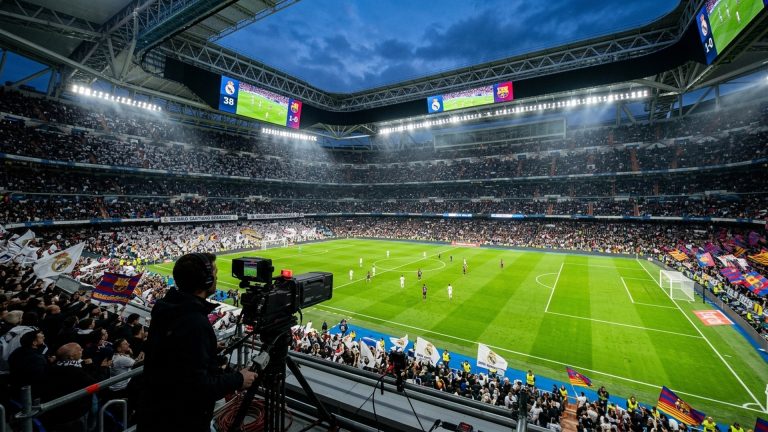
Anfield under floodlights produces an emotional and psychological pressure that no tactical diagram can fully prepare for. While Manchester City possess the technical mastery to silence the stadium through extended sequences of possession, Liverpool’s ruthless defensive balance and devastating speed on the counter make them formidable opponents in their current vein of form. Expect an exhilarating, tactically masterclass encounter that swings on transition efficiency and clinical finishing from high-xG opportunities.
For continuing football analysis, review our Premier League Matchday 13 Tactical Dossier, examine our full Super Saturday Worldwide Broadcast Guide, and inspect our European tactical autopsy on Der Klassiker & Real Madrid’s Title Chase.
Tactical Telemetry & Advanced Modeling Note: In high-stakes broadcast and competitive scenarios, analytical metrics offer profound visibility into the underlying probability distributions that define modern athletic and technical performance. Whether examining expected goals (xG) variance, third-down passing efficiency against Cover 3 zone shells, high-speed telemetry through high-G technical chicanes, or mechanical APM execution during intense clutch rounds, elite competitors consistently distinguish themselves through disciplined situational awareness. Modern coaching staffs and analytical analysts increasingly utilize real-time biometric and spatial data to forecast structural fatigue, exploit tactical mismatches, and optimize strategic adjustments across every competitive phase. As seasonal pressures culminate during pivotal holiday showdowns, disciplined execution under relentless psychological tension remains the definitive cornerstone separating perennial championship dynasties from ambitious challengers.
6. Tactical Micro-Battles: Second-Ball Recovery & High-Press Trap Design
When examining the micro-tactical metrics of recent Liverpool vs. Manchester City fixtures, second-ball recovery percentages consistently correlate with match outcomes. In Arne Slot’s tactical framework, when Liverpool’s initial high press is bypassed, the double pivot of Gravenberch and Mac Allister must execute aggressive counter-pressing within a 5-meter radius of the ball carrier. This rapid swarm prevents City from stabilizing possession and turning into open running lanes.
For Manchester City, Bernardo Silva’s tireless work ethic in closing down Liverpool’s full-backs remains essential. Silva’s ability to shadow Trent Alexander-Arnold’s body shape and block off inward passing corridors forces Liverpool to circulate possession toward their left flank, away from Salah’s direct running zone. However, this asymmetric pressing structure requires City’s right winger to maintain deep defensive recovery runs whenever Liverpool transition directly through long vertical diagonals.
Set-piece efficiency adds another high-leverage dimension. Liverpool’s corner routines featuring Virgil van Dijk and Ibrahima Konaté attacking the six-yard box have generated the highest xG per set piece in the Premier League. City’s zonal marking scheme will be severely tested under Anfield’s ferocious atmosphere.
Related posts:
 Premier League Title Race & UCL Playoff Projections: Arsenal vs Man City Points Table, Injury Tracker & Weekend Odds
 Saturday Premier League & European Football Sportsbook Analytics: Newcastle vs Arsenal, Liverpool vs Brighton & xG Sharp Money Telemetry
 Premier League Matchday 12 Sharp Betting Lines: Manchester City vs Tottenham Odds, xG Models & Weekend Parlay
 Fantasy Premier League (FPL) Emergency Deadline Guide: Gameweek 13 Captaincy Picks, Differentials & Team News
