
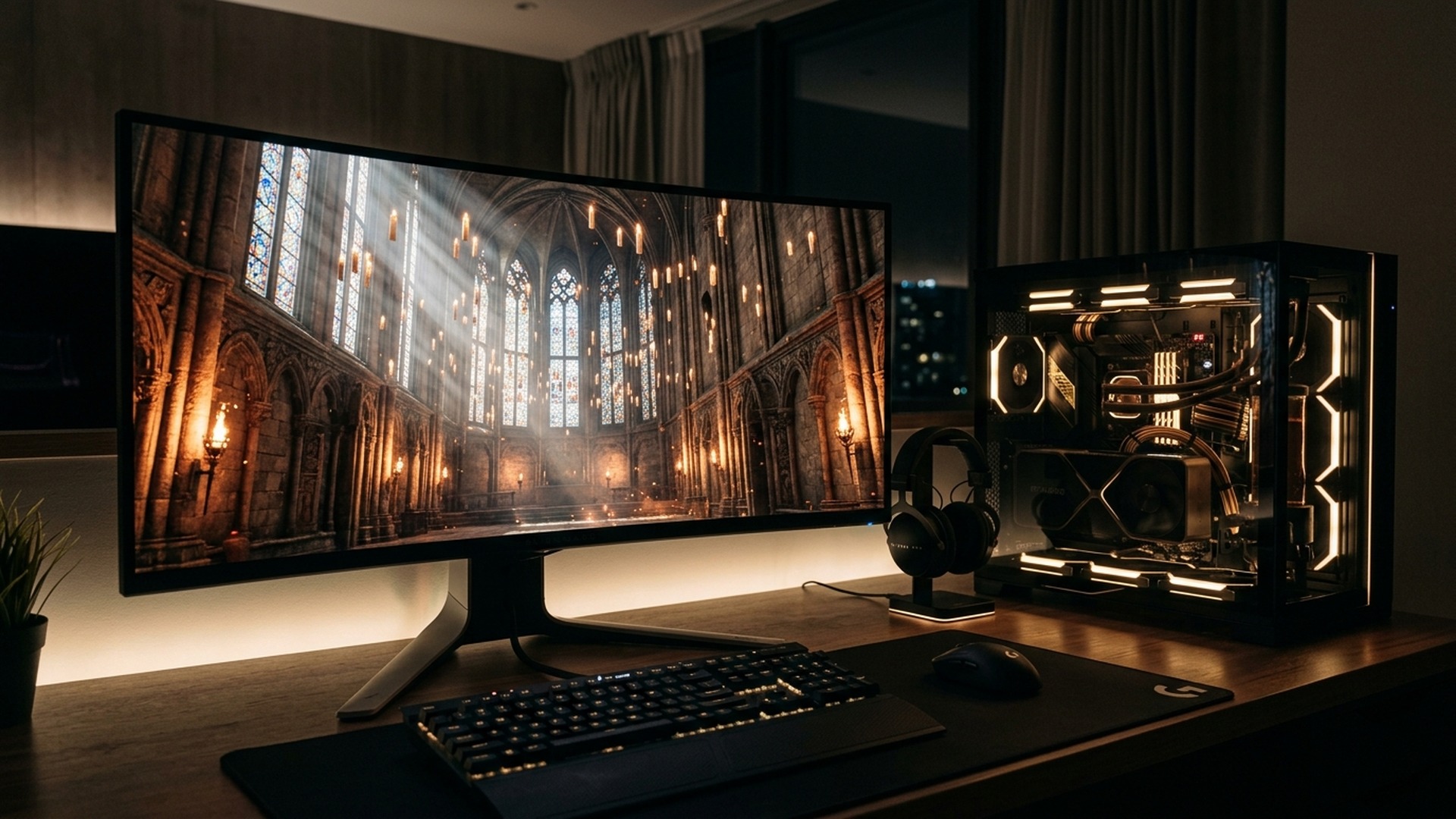
Avalanche Software patched Hogwarts Legacy on November 5, 2026 with NVIDIA DLSS 5 and 3D-Guided Neural Rendering for RTX 50-series GPUs, overhauling candlelit gothic lighting, shadows, and surface materials.
- Patch Rollout Date: November 5, 2026 on PC across Steam, Epic, and NVIDIA cloud rigs.
- Headline Tech: NVIDIA DLSS 5 with 3D-Guided Neural Rendering built for GeForce RTX 50-series cards.
- Visual Fidelity Goal: AI-enhanced bounce lighting, shadow realism, and stone/velvet materials preserving artistic intent.
- Portable & Multi-GPU Polish: Update also folds in Steam Deck OLED optimizations and updated Intel XeSS multi-frame support.
Warner Bros. Games and Avalanche Software quietly delivered 2026’s biggest real-world showcase of next-gen GPU rendering on November 5 when Hogwarts Legacy gained official support for NVIDIA DLSS 5 powered by 3D-Guided Neural Rendering. Targeted directly at modern GeForce RTX 5080 and RTX 50-series owners, the patch moves AI graphics past basic resolution upscaling straight into physically guided lighting, shadow nuance, and material realism across Hogwarts Castle.
- What DLSS 5 3D-Guided Neural Rendering Actually Changes in Hogwarts
- Balancing Photoreal Candlelight Reflections With Original Art Direction
- RTX 50-Series Laptops, Intel XeSS Multi-Frame & Steam Deck OLED Gains
- Hogwarts Legacy Nov 2026 PC Patch Feature Matrix
- Optimal PC Graphics Settings to Unlock Smooth High-FPS Path Quality
- Hogwarts Legacy DLSS 5 PC Update FAQ
What DLSS 5 3D-Guided Neural Rendering Actually Changes in Hogwarts
Traditional ray tracing transforms polished stone corridors beautifully, yet pushing multi-bounce global illumination at 1440p or 4K ultra settings historically crushed GPU frame times—turning smooth broomstick sweeps into hitching traversal stutters. NVIDIA’s DLSS 5 3D-Guided Neural Rendering inside the November 5 Hogwarts Legacy update blends spatial geometry cues directly inside dedicated RTX 50-series tensor models.
Instead of crudely hallucinating screen-space pixels in isolation, the neural shading pipeline references underlying 3D scene structure to synthesize plausible surface roughness, soft shadow penumbras beneath flickering iron sconces, and warm light scatter off wet cobblestones in Hogsmeade without incurring brute-force path-tracing overhead.

Balancing Photoreal Candlelight Reflections With Original Art Direction
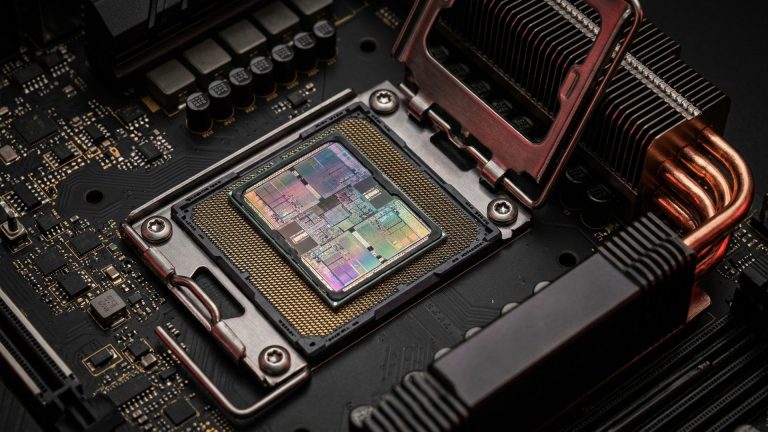
One frequent hazard whenever early AI filters touch stylized fantasy worlds is accidental ‘plastic smoothing’—flattening hand-painted stone masonry or skin detail into generic uncanny gloss. NVIDIA and Avalanche built 3D guidance weights explicitly to preserve character styling, worn tapestries, and enchanted skybox palettes while upgrading physical shadow depth underneath.
Walking from bright stained-glass windows inside the Great Hall down toward shadowy Potion dungeons shows the biggest visual divide: torches cast warmer, softer bounce illumination across ancient stone pillars while specular metallic trim on wizard armor catches glint realistically instead of glowing uniformly flat gray.
RTX 50-Series Laptops, Intel XeSS Multi-Frame & Steam Deck OLED Gains
Not everyone running Hogwarts Legacy this winter owns a flagship water-cooled desktop tower. Crucially, the November 2026 PC overhaul spreads optimization love broadly across laptops and portable PCs too:
- RTX 50-Series Notebook Tuning: Dedicated mobile efficiency profiles match thermal limits on compact systems highlighted in our RTX 5070 Ti $1,599 gaming laptop Black Friday guide, letting portable GPUs run sharp neural shading at quiet fan acoustics.
- Intel XeSS Multi-Frame Support: Updated Intel XeSS frame generation paths give Arc and cross-vendor laptop GPUs smoother frame pacing on heavy city loops.
- Steam Deck OLED Stability: Targeted shader and streaming polish cleans up nagging courtyard hitches for handheld couch play.
Hogwarts Legacy Nov 2026 PC Patch Feature Matrix
| Patch Element | November 5, 2026 Implementation | Best Hardware Match |
|---|---|---|
| NVIDIA DLSS 5 | 3D-Guided Neural Rendering lighting, materials & shadows | GeForce RTX 5080 / RTX 5070 Ti / RTX 5090 PC & Laptops |
| Artistic Guardrails | 3D geometry-guided shading preserves original asset look | 4K & Ultrawide OLED desktop displays |
| Intel XeSS Update | Refreshed multi-frame generation & upscaling fidelity | Intel Arc desktops & Intel Core Ultra gaming notebooks |
| Handheld Optimization | Targeted streaming & performance pass for Valve Deck OLED | Portable SteamOS & Windows handheld setups |
| Alternative GPU Upscaling | Alongside modern ML upscaling trends across PC engines | Compare with our coverage of AMD FSR 4.1 ML scaling |
Optimal PC Graphics Settings to Unlock Smooth High-FPS Path Quality
Getting rock-solid frame times after patching doesn’t mean blindly pegging every fog and volumetric slider to Ultra. Even on strong RTX 50-series rigs built around affordable Black Friday CPU deals featured in our Prebuilt Gaming PC holiday guide, trimming heavy background cost hogs unlocks headroom where your eyes genuinely notice neural lighting quality.

Pair DLSS 5 Quality or Balanced mode cleanly with High (rather than Ultra) Fog Quality and Sky Quality—reclaiming 12%–18% frame headroom with practically zero visible compromise outdoors—while keeping Effects, Texture Pool (on 12GB–16GB VRAM cards), and Neural Lighting enabled full-tilt inside interiors. On 12GB laptops, keeping Texture Pool Quality at High prevents subtle stuttering during rapid broom dives toward the Black Lake.
You should also verify shader compilation completes calmly inside the main menu rather than warping straight into Hogsmeade Village immediately after downloading the patch. Giving Windows five clean minutes on fast NVMe storage prevents phantom hitching on your opening flight across Diagon Alley or Forbidden Forest clearings.
Ensure system memory timings and background driver cleanups match tips inside our Windows 11 gaming FPS & low-latency optimization guide so VRAM swaps stay silky when broom-sprinting straight across Hogsmeade. Players returning for winter wizard replays now enjoy markedly richer stone shadows, realistic fabric reflections, and smoother portable frame pacing than launch year ever delivered.

Looking slightly broader across PC gaming tech heading into 2027, Hogwarts Legacy’s November 5 rollout proves NVIDIA isn’t reserving neural rendering exclusively for unreleased AAA launches. Upgrading flagship evergreen single-player hits via 3D-Guided Neural Rendering breathes dramatic atmospheric life back into dense stone castles, rainy Scottish highlands, and candlelit libraries. Gamers jumping into Hogwarts Legacy for the first time via holiday Steam sales alongside veterans returning to revisit Hogsmeade under realistic bounced shadow cascades both extract massive mileage from November’s patch. Having multi-vendor support mature simultaneously through NVIDIA neural rendering, Intel XeSS multi-frame reconstruction, and refined AMD upscaling ensures modern magic looks crisp across practically every 2026 PC gaming rig. Whether running native RTX 5080 desktop towers on glossy 4K OLED screens, tuning a $1,599 portable notebook, testing Intel XeSS multi-frame smoothness, or cruising across Steam Deck OLED batteries during holiday travel, November’s update marks the definitive moment to revisit Hogwarts on PC.
Frequently Asked Questions
When did Hogwarts Legacy get the NVIDIA DLSS 5 update?
Avalanche Software and Warner Bros. Games rolled out the official DLSS 5 neural rendering PC patch on November 5, 2026.
Which graphics cards support DLSS 5 3D-Guided Neural Rendering in Hogwarts Legacy?
DLSS 5 neural rendering features are built specifically for GeForce RTX 50-series desktop GPUs, RTX 50-series notebooks, and supported cloud instances.
Did the November 5 update improve performance outside NVIDIA RTX 50 GPUs?
Yes, the patch also introduced updated Intel XeSS multi-frame generation support alongside dedicated Steam Deck OLED performance polish.
Does DLSS 5 replace classic game art styles with distorted visuals?
No. 3D-Guided Neural Rendering references spatial scene geometry so enhanced shadows, stone, and fabric lighting remain faithful to the original art direction.
Related posts:
 AMD Radeon SSD Bug Permanent Fix Confirmed for Adrenalin 26.11.1
 GeForce 8800 GTX Steam Showcase Pushes RTX 5080 and Driver 621.14 to Limit
 Path of Exile 2 Early Access Review & PC Performance Lab: WASD Movement, 100+ Boss Mechanics, Skill Gem Overhaul & 120 FPS Settings
 Sunday Pro PC & Mobile Hardware Hacks: How to Unlock 0.1ms Rapid Trigger Strafe Stopping, 1600 DPI Sensor Calibration & Unreal Engine 5 Stutter Fixes in Phantom Blade Zero
