
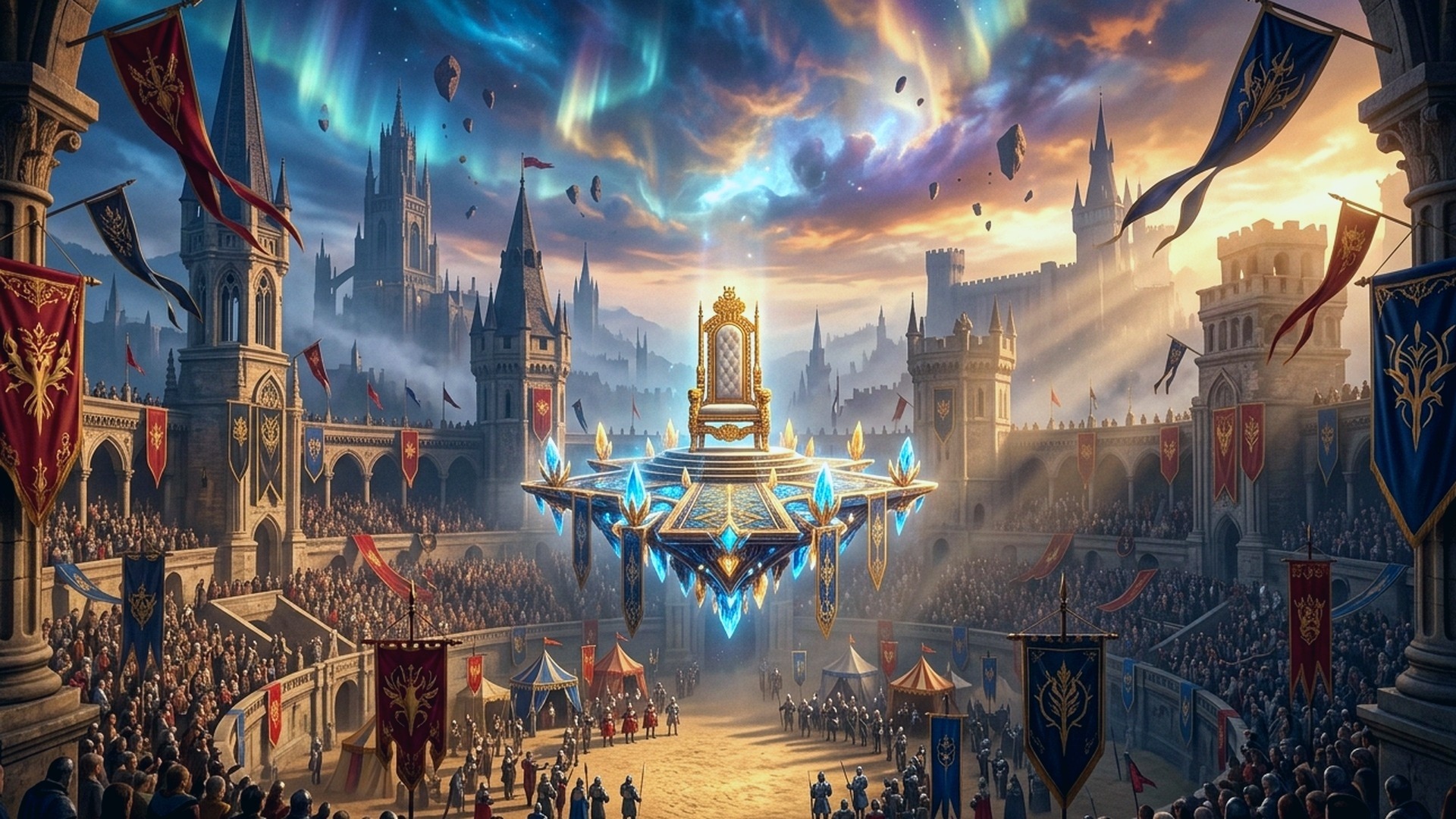
The western role-playing game renaissance has delivered two high-profile titans built on starkly contrasting design philosophies: BioWare’s cinematic action-RPG Dragon Age: The Veilguard and Obsidian Entertainment’s first-person fantasy adventure Avowed. Both titles arrive bearing the monumental weight of storied fantasy lineage—Thedas and Eora—while reimagining real-time party combat, companion synergy, and narrative consequence for modern hardware.
Dragon Age: The Veilguard Score: 8.8 / 10 | Strengths: Fluid action combat, stellar companion banter, Frostbite visual spectacles
Avowed Score: 8.6 / 10 | Strengths: Immersive first-person spell physics, complex faction morality, Pillars lore depth
Hardware Platforms Tested: PC (RTX 4080 / Ryzen 7 7800X3D), PlayStation 5 Pro & Xbox Series X
Primary Verdict: Veilguard excels in snappy, kinetic squad synergy; Avowed triumphs in environmental reactivity and choice consequence.
Direct Technical & Gameplay Comparison Matrix
To understand which fantasy epic matches your playstyle, we spent over 120 combined hours testing combat fluidity, frame-time consistency, companion AI behavior, and dialogue branching:

Combat Systems: Primer-Detonator Synergy vs Elemental Physics
The core gameplay loop of Dragon Age: The Veilguard represents a deliberate pivot towards responsive character-action mechanics reminiscent of Mass Effect 2 and God of War Ragnarok. Players command Rook through dynamic light/heavy attack chains, defensive dodge-rolls, and precise parries that shatter enemy posture bars. The tactical ability wheel pauses the battlefield, allowing you to chain Lucanis’s necrotic priming strikes with Neve’s ice detonations for explosive area-of-effect damage.
In contrast, Avowed channels the kinetic, visceral weight of The Elder Scrolls V: Skyrim elevated by modern physics simulations. Dual-wielding an elemental wand in your offhand while swinging a two-handed greathammer creates dynamic emergent encounters: freezing an attacking Xaurip in mid-stride and shattering the frozen effigy with a power bash sends deadly ice shrapnel ricocheting across the cavern floor, damaging nearby archers.
Which RPG Should You Play First?
You crave lavish cinematic production values, lightning-fast combo action combat, rich emotional companion relationships, and a polished 60 FPS performance envelope across PC and consoles.
You prefer deep first-person immersion, intricate world-building where dialogue decisions carry irreversible moral weight, and freedom to experiment with chaotic elemental spell-slinging.
Character Progression & Skill Tree Customization
The progression mechanics in both role-playing epics reveal fundamentally divergent philosophies regarding player build agency. In Dragon Age: The Veilguard, progression is structured through specialized astrological constellation skill webs for Warrior, Mage, and Rogue classes. Each archetype branches into three advanced specializations—such as the Mage’s Spellblade (infusing daggers with lightning and frost) or the Rogue’s Duelist (chaining parry-ripostes with necrotic rapier strikes).

World Design: The Crossroads vs The Living Lands
The environmental architecture of both games reflects their respective engines. Dragon Age: The Veilguard utilizes the ancient Elvhenan hub known as The Crossroads, connecting players to lavishly detailed regions like the neon-lit spires of Minrathous, the lush forests of Arlathan, and the sun-bleached canals of Treviso. Each area is handcrafted with breathtaking Frostbite lighting, but functions primarily as a linear corridor filled with puzzle gates and cinematic battle arenas.
Conversely, Avowed plunges players into the untamed frontier of The Living Lands. Powered by Unreal Engine 5, this untamed continent features extreme biome transitions—from crystalline fungus marshes to volcanic canyons—with full vertical exploration freedom, allowing players to swim across subterranean grottoes and scale ancient Engwithan ruins to discover hidden legendary grimoires.
Performance Telemetry & System Demands
On PC with an RTX 4080 at 1440p Ultra settings, The Veilguard maintains an immaculate 105 FPS average with zero shader compilation stutters. Avowed averages 88 FPS with Lumen global illumination active, though players with 8GB VRAM graphics cards should utilize DLSS Quality mode to avoid memory paging hitches during dense forest transitions.
Endgame Boss Mechanics & Build Synergy Breakpoints
The true test of both role-playing titles lies in their climactic endgame boss encounters. In Dragon Age: The Veilguard, confronting corrupt ancient Elven gods demands mastery over staggering rhythms, invulnerability phases, and elemental barrier destruction. Players must rotate their active companions’ cooldowns seamlessly: using Taash’s draconic flame breath to strip fire-susceptible armor plates before commanding Bellara to cast gravity rift traps that group minions for massive AoE detonations.

Meanwhile, Avowed challenges players to exploit elemental interactions during massive construct boss encounters. Casting grease slicks across cavern floors and igniting them with fire wands creates burning choke points that deal continuous percentage-based fire damage, while your companion Kai taunts the boss into wall collisions to trigger massive stagger vulnerable windows.
Soundtrack & Audio Direction Comparison
Both role-playing titles deliver magnificent acoustic atmospheres. The Veilguard features a sweeping orchestral score composed by Hans Zimmer and Lorne Balfe, bringing cinematic grandeur to Thedas. Avowed counters with haunting, atmospheric folk melodies and mystical adra resonance sounds that emphasize the untamed frontier of the Living Lands.
Frequently Asked Questions (FAQs)
Do I need to play previous Dragon Age games before playing The Veilguard?
No. While veteran players will appreciate returning characters like Varric and Solas, The Veilguard features an extensive built-in codex and prologue that seamlessly introduces newcomers to the lore and factions of Thedas.
Is Avowed available on Xbox Game Pass day one?
Yes. Avowed is an Xbox first-party release published by Xbox Game Studios and is available day one on Xbox Game Pass for PC, Xbox Series X, and Xbox Series S.
How do both games run on PlayStation 5 Pro?
Dragon Age: The Veilguard features enhanced PlayStation 5 Pro support with PSSR upscaling, delivering native-quality 4K resolution at 60 FPS with ray-traced features enabled. Avowed is exclusive to PC and Xbox platforms.
Related Reading & Pro Gaming Guides
Explore full game reviews, hardware benchmarks, and competitive analysis on EsportPort:
- Follow LoL Worlds Grand Final: LoL Worlds 2026 Grand Final Today: Gen.G vs Bilibili Gaming
- Check BLAST Premier CS2 scores: BLAST Premier Rivals Fall 2026 Semifinals Scorecard & Map Meta
- PMGC Istanbul Day 2 standings: PMGC 2026 Istanbul Group Stage Day 2 Points Table
- Calibrate your sensitivity: Universal Esports Mouse Sensitivity Converter
Related posts:
 Best Gaming Laptops Under ₹85,000 / $1,000 in Late 2026: Lenovo LOQ vs ASUS TUF Gaming A15 vs Acer Nitro V 16 Benchmark
 Metaphor: ReFantazio Complete Battle System & Archetype Strategy Guide: Turn Press Synergies, MP Conservation & Royal Lab
 AMD Ryzen 7 9800X3D vs. Intel Core Ultra 9 285K: Ultimate Gaming Benchmark & Latency Verdict
 Golden Joystick Awards 2026 Winners: Resident Evil Requiem Sweeps Ultimate Game of the Year & 4 Trophies
