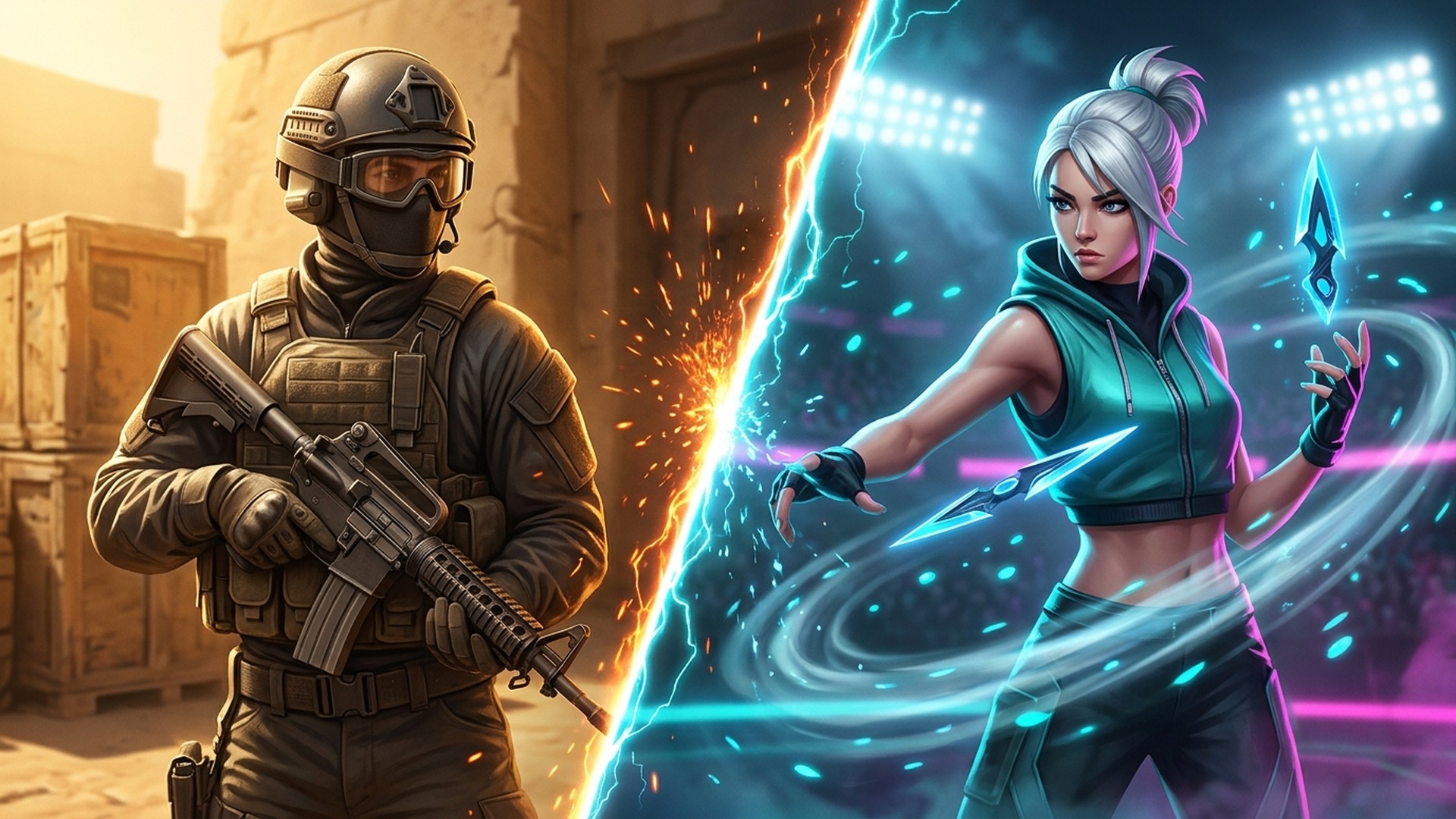
Judging which shooter fields the fiercer competitive ecosystem in late 2026 comes down to Valve’s unforgiving open tournament meritocracy versus Riot Games’ centralized VCT stability—even as Riot prepares its own open-circuit shift in 2027.
- Peak Viewership Lead: CS2’s 2026 IEM Cologne Major (Team Falcons 3-0 FURIA) shattered records at 2.75M peak viewers, nearly doubling VALORANT Champions Shanghai (1.49M, LOUD 3-1 Vitality).
- Hours & Depth: Esports Charts data across Jan–May 2026 logged ~205M S-tier hours watched (~292K average viewers) for CS2 versus ~130M+ hours (~141K average) in VALORANT.
- Pathway Convergence: Today’s VALORANT players still navigate Premier and Challengers while CS2 grinders climb VRS and FACEIT—before Riot flips VCT open in 2027.
Every major LAN season sparks the same barbershop debate among tactical shooter fans: does Counter-Strike 2 (CS2) or VALORANT demand more from professionals stepping onto a main stage? On the surface, both ask five-player rosters to plant or defuse an objective across crisp angles with unforgiving headshot multipliers. Beneath that shared chassis, however, Valve and Riot Games engineered two radically opposing definitions of competitive pressure.
As teams clash in Hong Kong’s BLAST Premier Rivals Fall 2026 showdown ahead of year-end Majors, and Riot reshapes its post-Shanghai roadmap with VALORANT Patch 13.10 balancing shifts, late 2026 offers the clearest side-by-side dataset esports has ever seen. Rather than repeating generic talking points, let’s examine hard 2026 tournament results, viewership telemetry, pro-pathway economics, and mechanical skill ceilings to decide which title actually cultivates tougher competition.
- Open Meritocracy vs Partnered Security—And Riot’s 2027 Pivot
- 2026 Viewership, Prize Pools & Regional Gravity
- Gunplay Purity vs Utility Synthesis: Where Matches Are Won
- Breaking Into Tier-1: FACEIT & VRS vs Premier & Challengers
- Final Verdict for Players, Fans & Organizations
- Frequently Asked Questions
Circuit Architecture: Valve’s Open Gauntlet vs VCT Partner Stability
To understand why competition feels so different across both broadcasts, look at how teams stay employed. Counter-Strike operates as an open commercial bazaar governed by Valve’s tournament operating rules and the Valve Regional Standings (VRS). Independent powerhouse organizers—ESL, BLAST, and PGL—stack dozens of elite LANs throughout the year. No roster owns a permanent seat at an S-tier event. If a legendary tag drops form across six weeks of online and LAN play, its VRS points evaporate, dropping it straight back into brutal open qualifiers.
That structural Darwinism creates intense calendar density. Top CS2 squads cross continents monthly, fighting back-to-back Best-of-Three series under constant map-pool anti-stratting from hungrier tier-two squads eager for an upset. Yet that same cutthroat openness carries an undeniable downside: smaller esports organizations without sticker payouts or Saudi/external investor backing routinely hemorrhage capital trying to keep squads boot-camped across Europe.

Riot Games built the VALORANT Champions Tour (VCT) specifically to cure that financial volatility. Across 2026, four partnered International Leagues—Americas, EMEA, Pacific, and China—locked stable multi-year slots for vetted organizations, supplemented by Ascension promotions. Players receive salary floors, predictable Kickoff and Stage 1–2 pacing, and structured stipends funded by VCT Team Capsule cosmetic sales. Every regular-season league match carries playoff consequences without forcing players onto 14-flight itineraries in 90 days.
The irony heading into 2027? Riot itself recognized that pure closed franchising risked stalling grassroots hunger. Following LOUD’s second world title in Shanghai, Riot confirmed a sweeping transition toward an open VCT circuit starting in 2027—adding open regional cups and stricter Vanguard verification rules leading toward Champions Austin. In short, Counter-Strike proved open pressure generates sharper upsets, prompting VALORANT to blend its production polish with open-bracket jeopardy.
2026 Viewership, Prize Pools & Where Global Audiences Split
Talk to sponsors or broadcast executives, and competitive gravity quickly gets measured in hours watched and trophy prestige. Across the opening five months of 2026, independent tracking from Esports Charts underscored Counter-Strike’s unmatched endurance across tier-one tournaments: CS2 generated nearly 205 million hours watched with a weighted average audience around 292,000 viewers, outpacing VALORANT’s roughly 130 million hours and 141,000 average across the same stretch.
| Competitive Metric (2026) | Counter-Strike 2 (CS2) | VALORANT (VCT) |
|---|---|---|
| 2026 Circuit Model | Open third-party circuit (ESL, BLAST, PGL) seeded via VRS rankings | 4 partnered International Leagues (transitioning to open model in 2027) |
| Flagship 2026 World Crown | IEM Cologne Major (Team Falcons 3-0 FURIA) & seasonal Majors | VALORANT Champions Shanghai (LOUD 3-1 Team Vitality; erde MVP) |
| 2026 Flagship Prize Pool | $1,250,000 Major base + $2M+ external mega-events (EWC) + Stickers | $2,250,000 Champions pool ($1,000,000 first prize) + Team Capsules |
| 2026 Peak Viewership | 2,753,128 concurrent peak (IEM Cologne Major Grand Final) | 1,490,000 concurrent peak (Champions 2026 Shanghai Final) |
| Jan–May 2026 Avg Viewership | ~292,000 weighted average (~205M S-tier hours watched) | ~141,000 weighted average (~130M+ S-tier hours watched) |
| Regional Audience Core | Western & Eastern Europe, CIS, Brazil & Middle East | North & South America, East & Southeast Asia (Pacific/China) |
Look closely at the prize-money column above, because raw numbers deceive casual readers. On paper, Champions Shanghai’s $2.25 million pot dwarfs a single CS2 Major’s $1.25 million payout. Yet elite CS2 teams compete across far more million-dollar checkpoints annually—spanning Intel Extreme Masters stops, BLAST Premier Hong Kong $1M stops, and monumental multi-title events like the Esports World Cup—while Major capsule sticker distributions frequently generate seven-figure team windfalls surpassing tournament winnings.
Geography further divides how competitive both titles feel on regional servers. Counter-Strike reigns uncontested across Europe, CIS nations, and Brazil, packing football-stadium atmospheres in Cologne, Katowice, and Rio where multigenerational fans dissect default smokes like set plays. Meanwhile, VALORANT dominates North American campus culture and explodes across Tokyo, Seoul, Manila, Jakarta, and Shanghai, harnessing watch-party co-streams that capture younger mobile-and-PC crossovers.
Gunplay Fundamentals vs Agent Synthesis: Which Is Harder Under Pressure?
Ask two Radiant/Global-tier pros why the opposing game feels easy—or terrifying—and their complaints immediately pinpoint the true mechanical divide.
Why CS2 feels merciless mechanically: Zero character abilities exist to bail out sloppy positioning. Five teammates hold identical movement speeds, identical hitbox profiles, and identical five-slot utility budgets built from incendiary, smoke, flashbang, HE, and decoy grenades. Recoil spray patterns follow steep deterministic curves where transferring a 15-bullet AK-47 burst between two peeking defenders remains a genuine art form. CS2’s sub-tick networking architecture and dynamic volumetric smoke clouds—which scatter briefly when punctured by HE explosions or gunfire—strip away memorized 2018 habits, forcing teams into instantaneous raw aim duels under deafening utility noise.
Furthermore, Counter-Strike map architecture has been refined across twenty-five years of competitive feedback loops. Every choke point on Mirage, Inferno, Ancient, or Anubis carries decades of institutionalized micro-knowledge: timing gaps down to quarter-seconds, boost pixel angles, and fragile economy management where losing back-to-back gun rounds fractures buy plans for half a side.
Why VALORANT punishes sloppy intellect: VALORANT flattens raw recoil memorization slightly in favor of first-bullet precision and crisp counter-strafing bursts, replacing deterministic sprays with hyper-complex character synergy and cooldown warfare. Across two dozen diverse Duelists, Initiators, Controllers, and Sentinels, defenders do not merely hold angles—they wire interactive cyber-traps, deploy orbital suppressions, bend space via teleports, and revive fallen anchors mid-round.

Executing an A-site hit in Tier-1 VCT requires synchronizing drone clears, stun timings, recon darts, and double-controller smoke layering down to half-second windows. Even more exhausting for coaches, Riot deploys balance patches every few weeks alongside rotating map pools, ensuring stale comfort metas never calcify. Whereas CS2 mastery means perfecting timeless geometry across years, VALORANT mastery means solving fresh puzzle pieces faster than rival analysts before Masters qualifiers begin.
Road to Going Pro: Grinding FACEIT & VRS vs Premier & Challengers
If you are an ambitious ranked climber wondering which ladder gives an unknown teenager a realistic shot against world champions, the architectural differences become deeply personal.
In Counter-Strike 2, the ladder stays horizontal and brutal. Nobody awaits Riot’s invitation to play against tier-one opposition. Young riflers sharpen mechanics in third-party FACEIT lobbies, join ESEA open leagues, grind regional online cups to register onto VRS leaderboards, and ambush slumped top-30 organizations inside open Major qualifiers. That exact freedom explains how hungry Eastern European, Mongolian, and Brazilian five-stacks continually crack global top-20 rankings inside twelve months. Conversely, rampant cheating scares on Valve’s default Premier rating ladder push almost every serious grinder straight onto third-party anti-cheat clients like FACEIT.
In VALORANT, the ramp feels cleaner—at least up to Tier-2. Riot integrated a unified team tournament layer directly into the main client through Premier, smoothly funneling amateur five-stacks straight into regional Challengers leagues with kernel-level Vanguard anti-cheat protecting ranked integrity from iron to Radiant. Yet as high-profile cases like the VCT EMEA Kickoff cheating disqualification ruling demonstrate, even tight tournament structures still face intense integrity policing. Until the 2027 open-circuit overhaul fully unlocks, breaking past Challengers into partnered Tier-1 arenas historically bottlenecked through scarce Ascension slots and buyout negotiations with entrenched orgs—similar in franchise exclusivity to what fans debate in T1’s multi-title dynasty building.
Verdict: Which Esport Truly Holds the More Competitive Crown?
Choosing a definitive winner hinges cleanly on whether you value ruthless open-field depth or structured global variety. Neither game lacks elite talent, packed stadiums, or split-second clutches—yet their competitive DNA points in two distinct directions.
CS2 edges ahead as the purer, harder competitive battleground in 2026. Its relentless open tournament calendar, 2.75M+ peak stadium heritage, zero ability crutches, and unforgiving VRS qualification pressure guarantee that no top-10 squad survives on legacy name value alone.
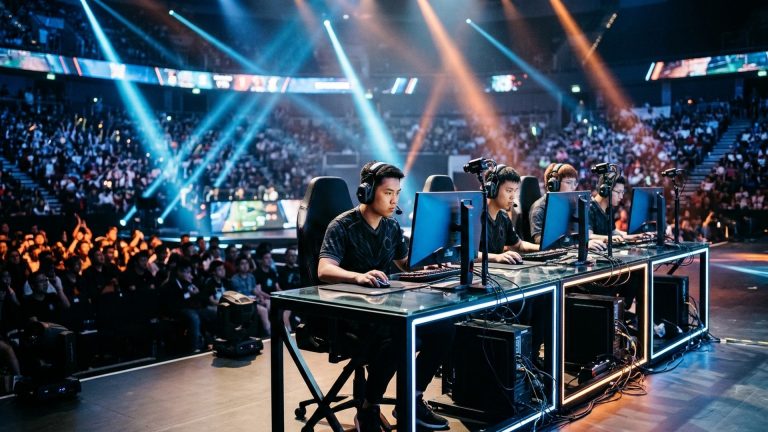
VALORANT excels in tactical adaptation, anti-cheat client access, multi-region parity across Asia and the Americas, and sustainable org revenue. With Riot flipping VCT open in 2027, VALORANT is rapidly borrowing CS2’s best open-qualifier chaos while keeping tactical hero depth intact.
Looking ahead to 2027, esports wins regardless of which server you queue tonight: CS2 continues refining the purest mechanical shooter on earth (official Counter-Strike portal), while Riot’s VALORANT Esports open-circuit transition promises the fiercest grassroots scramble tactical FPS has seen since classic CS 1.6 brackets.
Frequently Asked Questions
Which has higher esports viewership in 2026: CS2 or VALORANT?
CS2 leads significantly in both cumulative S-tier hours watched (~205M vs ~130M+ from Jan–May 2026) and peak viewership, hitting 2.75 million at the IEM Cologne Major 2026 compared to 1.49 million at VALORANT Champions Shanghai.
Why do many veterans say CS2 is harder mechanically than VALORANT?
CS2 omits character abilities entirely, demanding deeper deterministic spray transfers, instantaneous movement precision, and manual smoke-and-flash physics without healing, recon drones, or mobility dashes.
Is VALORANT better than CS2 for aspiring pro players starting from scratch?
VALORANT offers a smoother in-game ramp via Vanguard anti-cheat and Premier client tournaments, whereas CS2 relies on third-party FACEIT queues—though CS2 historically lets unpartnered dark-horse stacks qualify directly to S-tier LANs faster.
How is Riot changing VALORANT esports after 2026?
Following LOUD’s Champions 2026 victory in Shanghai, Riot Games is transitioning VCT toward a global open-circuit framework in 2027 leading to Champions Austin, expanding grassroots paths toward Masters and Champions.
Related posts:
 CS2 vs VALORANT Esports in 2026: Which Tactical Shooter Owns the Fiercer Scene?
 Top USA Esports Teams: Rankings, Prize Money & Next Events
 CS2 Thunderpick World Championship Sunday Finals Recap: Trophy Winners, MVPs & Highlight Rounds
 Valorant VCT APAC Watch Parties & Sentinel Meta Guide: Singapore, Vietnam & Malaysia Hubs + Vyse vs Cypher Tier List