
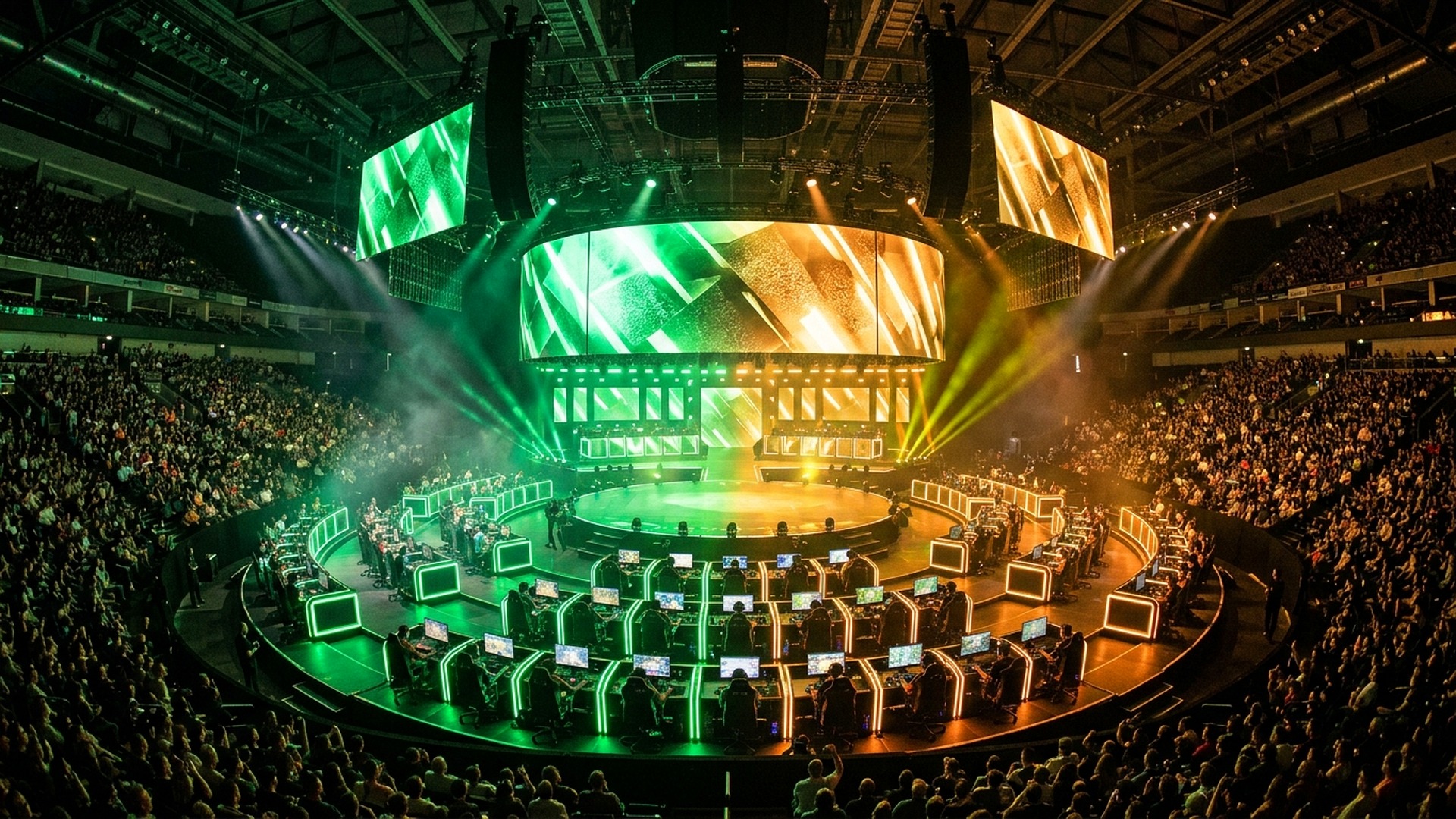
The global competitive gaming landscape in late 2026 is larger and more engaged than ever before. Driven by massive international stadium tournaments, constant live-service seasonal overhauls, engine modernization upgrades, and the explosive growth of collegiate and amateur leagues, millions of players log in daily to test their skills in high-stakes ranked queues. While hundreds of competitive titles exist, a select echelon of legacy and contemporary juggernauts command the lion’s share of worldwide player attention.
Analyzing telemetry from Valve’s Steam API, Riot Games internal active user disclosures, Epic Games server metrics, and third-party concurrent telemetry trackers, here is our definitive breakdown of the top 5 most played esports titles dominating the global scene in late 2026.
Global Esports Player Count & Engagement Telemetry
The following real-time data captures average daily concurrent peaks, monthly active users (MAU), and premier tournament viewership records across the top five competitive titles:
| Rank | Esports Title | Publisher & Engine | Peak 24h Concurrents | Monthly Active Users (MAU) | Core Global Strongholds |
|---|---|---|---|---|---|
| 1 | Counter-Strike 2 | Valve (Source 2) | 1,620,000 | 31,500,000 | Europe, CIS, North America, China |
| 2 | League of Legends | Riot Games (Proprietary) | 3,850,000 (Global Est.) | 135,000,000 | South Korea, China, Europe, Americas |
| 3 | Valorant | Riot Games (Unreal Engine 4) | 1,480,000 | 28,000,000 | North America, Pacific, EMEA, Brazil |
| 4 | Dota 2 | Valve (Source 2) | 840,000 | 14,200,000 | Eastern Europe, Southeast Asia, South America |
| 5 | Fortnite (Battle Royale & Reload) | Epic Games (Unreal Engine 5.5) | 2,150,000 | 72,000,000 | North America, Europe, Latin America, Oceania |
1. Counter-Strike 2 (Valve)
More than two decades after the original franchise debuted, Valve’s Counter-Strike 2 stands as the titan of PC gaming on Steam. Throughout 2026, CS2 has sustained staggering daily concurrent peaks hovering between 1.4 million and 1.62 million players. The transition to the Source 2 engine, coupled with dynamic volumetric smoke interactions and refined sub-tick hit registration, has elevated the tactical FPS to unprecedented competitive heights.
Fueled by the prestigious Perfect World Shanghai Major and a booming virtual skin economy exceeding billions in annual transaction volume, CS2 remains the undisputed benchmark for tactical team shooters across Europe, the Americas, and Asia.
2. League of Legends (Riot Games)
While Steam numbers capture PC client data for Western platforms, Riot Games’ League of Legends remains the single largest PC multiplayer ecosystem on Earth by a wide margin. Boasting an unfathomable 135 million monthly active summoners, League of Legends is a cultural phenomenon, particularly in South Korea and China where regional leagues (LCK and LPL) draw mainstream television broadcasts.
In 2026, the competitive meta underwent a seismic revolution with the introduction of Fearless Draft formats and sweeping map terrain updates. The LoL World Championship continues to break global esports broadcasting records, regularly surpassing 6 million peak concurrent viewers (excluding Chinese streaming platforms).
3. Valorant (Riot Games)
Since its launch in 2020, Valorant has steadily grown into a premier global esports powerhouse, commanding over 28 million monthly active players. Combining razor-sharp tactical gunplay with diverse character abilities, Valorant captures a distinctly younger, hyper-engaged demographic across North America, Japan, and Southeast Asia.
Riot’s aggressive anti-cheat architecture (Vanguard) provides industry-leading competitive integrity, virtually eliminating wallhacks and aimbots in high-elo ranked matches. With the successful launch of console editions on PlayStation 5 and Xbox Series X|S in late 2024 and 2025, Valorant has expanded its ecosystem to millions of console shooter enthusiasts worldwide.
4. Dota 2 (Valve)
Renowned for its unparalleled strategic depth and complex economic mechanics, Valve’s Dota 2 maintains an intensely loyal, mature player base. Daily concurrent player counts reliably peak at 800,000 to 850,000 players, cementing its status as the second most played title on the entire Steam platform.
The game’s legendary competitive flagship, The International (TI), continues to showcase the most intricate macro strategies in competitive gaming. Massive balance updates—such as the New Frontiers map expansion and the integration of innate character abilities—have kept the gameplay fresh, challenging, and endlessly replayable.
5. Fortnite (Epic Games)
Epic Games’ Fortnite has transcended standard battle royale gameplay to become an expansive, multi-genre metaverse. Backed by Unreal Engine 5.5, Fortnite features breathtaking Nanite and Lumen visuals alongside sustained concurrent player counts exceeding 2 million active gamers during peak evening hours.
The permanent addition of Fortnite Reload (a fast-paced, competitive OG-inspired mode) and the Championship Series (FNCS) maintains deep grassroots esports participation, where millions of aspirational players compete weekly for six-figure cash prize pools directly from their living rooms.
Anti-Cheat Architecture & Competitive Parity: Vanguard vs. VAC 3.0
A crucial differentiator sustaining the massive player populations of Counter-Strike 2 and Valorant is competitive integrity. Cheating in competitive shooters historically devastated player retention, prompting developers to deploy aggressive, multi-layered anti-cheat security measures.
Riot Games’ Vanguard operates at the kernel level (Ring 0), utilizing hardware-enforced virtualization and machine-learning anomaly detection to identify DMA (Direct Memory Access) cheating hardware before a match even begins. Consequently, Valorant boasts the lowest reported cheat prevalence among modern shooters, maintaining unwavering player trust across high-elo competitive ranks.
Conversely, Valve’s CS2 relies on VAC Live, a cloud-based neural network trained on millions of player telemetry data points to detect erratic aim trajectories and impossible recoil snaps in real time. In 2026, Valve integrated behavioral trust factor algorithms and third-party platform matchmaking partnerships (such as FACEIT), drastically improving the daily matchmaking experience for millions of competitive players across Europe and the Americas.
The Rise of Mobile Esports Convergence
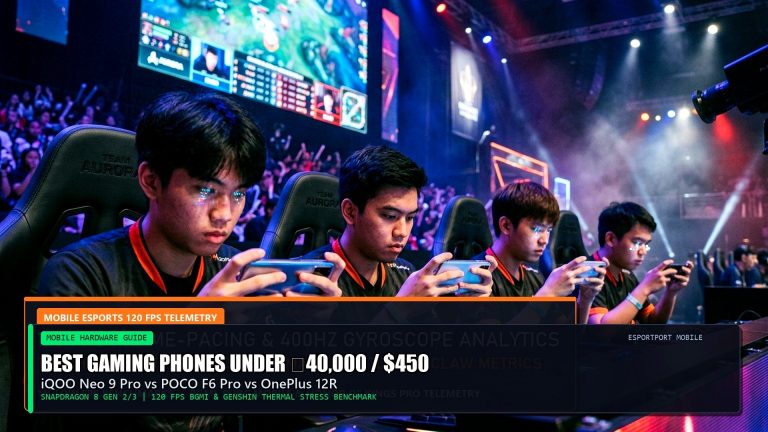
An emerging catalyst expanding the global esports audience is the convergence of PC and mobile platforms. Titles like PUBG Mobile, Free Fire MAX, and Honor of Kings regularly rival traditional desktop esports in international viewership, with the Esports World Cup in Riyadh demonstrating that mobile and PC disciplines now command equal prestige and multi-million-dollar championship prize pools.
What Drives Player Retention in Modern Esports?
The enduring dominance of these five titles reveals three critical factors essential for long-term esports longevity:
- Low Latency & High Server Tick Rates: Competitive players demand responsive hitboxes and zero desync. Titles that prioritize sub-tick networking and robust server infrastructure retain player trust far longer than visually flashy competitors with erratic netcode.
- Dynamic Live-Service Balance Cycles: Bi-weekly balance patches keep metas evolving, ensuring that dominant team compositions or weapon exploits do not stagnate the competitive experience.
- Aspirational Esports Ladders: Clear ranked progression systems (from Bronze to Radiant or Global Elite) provide attainable milestones that motivate daily grinding and skill improvement.
Broadcast Production Technology & Virtual Arena Spectating
A driving catalyst behind esports viewership growth is continuous innovation in broadcast production technology. In late 2026, premier tournaments employ automated AI observer cameras, dynamic 3D spatial audio mapping, and augmented reality character telemetry projections that immerse viewers directly into the tactical action, rivaling traditional television sports broadcasts.
Grassroots Ecosystems & Collegiate Tournament Growth
A major structural pillar bolstering modern esports titles is the massive expansion of collegiate and scholastic gaming circuits. In North America and Europe, universities offer full athletic scholarships for elite Counter-Strike 2, League of Legends, and Valorant rosters. These sanctioned varsity leagues provide an organized talent pipeline that feeds directly into semi-professional tier-two Challengers circuits, ensuring a continuous stream of hungry, disciplined young contenders ready to step onto the international stage.
Frequently Asked Questions (FAQ)
Which esports game has the highest concurrent player count on Steam?
Counter-Strike 2 holds the highest concurrent player count on Steam, regularly reaching daily peaks between 1.4 million and 1.62 million active players, followed closely by Dota 2 and PUBG: Battlegrounds.
Is League of Legends bigger than Valorant in 2026?
Yes. While Valorant commands an impressive 28 million monthly active users, League of Legends remains significantly larger with an estimated 135 million monthly active summoners globally, largely driven by monumental player populations across China and South Korea.
Why do esports games run so smoothly on budget PC hardware?
Esports developers like Valve and Riot Games specifically optimize game engines (Source 2 and modified Unreal Engine) to run at ultra-high frame rates (240+ FPS) on modest CPU and GPU hardware, ensuring accessible competitive parity for players worldwide.
How do third-party sites track real-time esports player counts?
Telemetry trackers utilize public server querying protocols, Valve’s official Steam Web API, publisher investor disclosures, and in-game lobby scraping to compile verified, real-time concurrent player metrics.
Related posts:
 CS2 Shanghai Major 2026 Americas RMR Opening Round Matchups: Complexity, Liquid & Imperial Swiss Bracket Predictions
 ALGS 2026 Split 2 Playoffs: Final Standings, Match Point Telemetry & Team Falcons Championship Points Table
 Top 10 LoL Players 2026: Definitive Global Rankings, Roster Moves, DPM Telemetry & Worlds Metas
 Brawl Stars World Finals 2026 Tournament Meta: Hypercharge Tier List, Draft Bans & Best Team Compositions
