
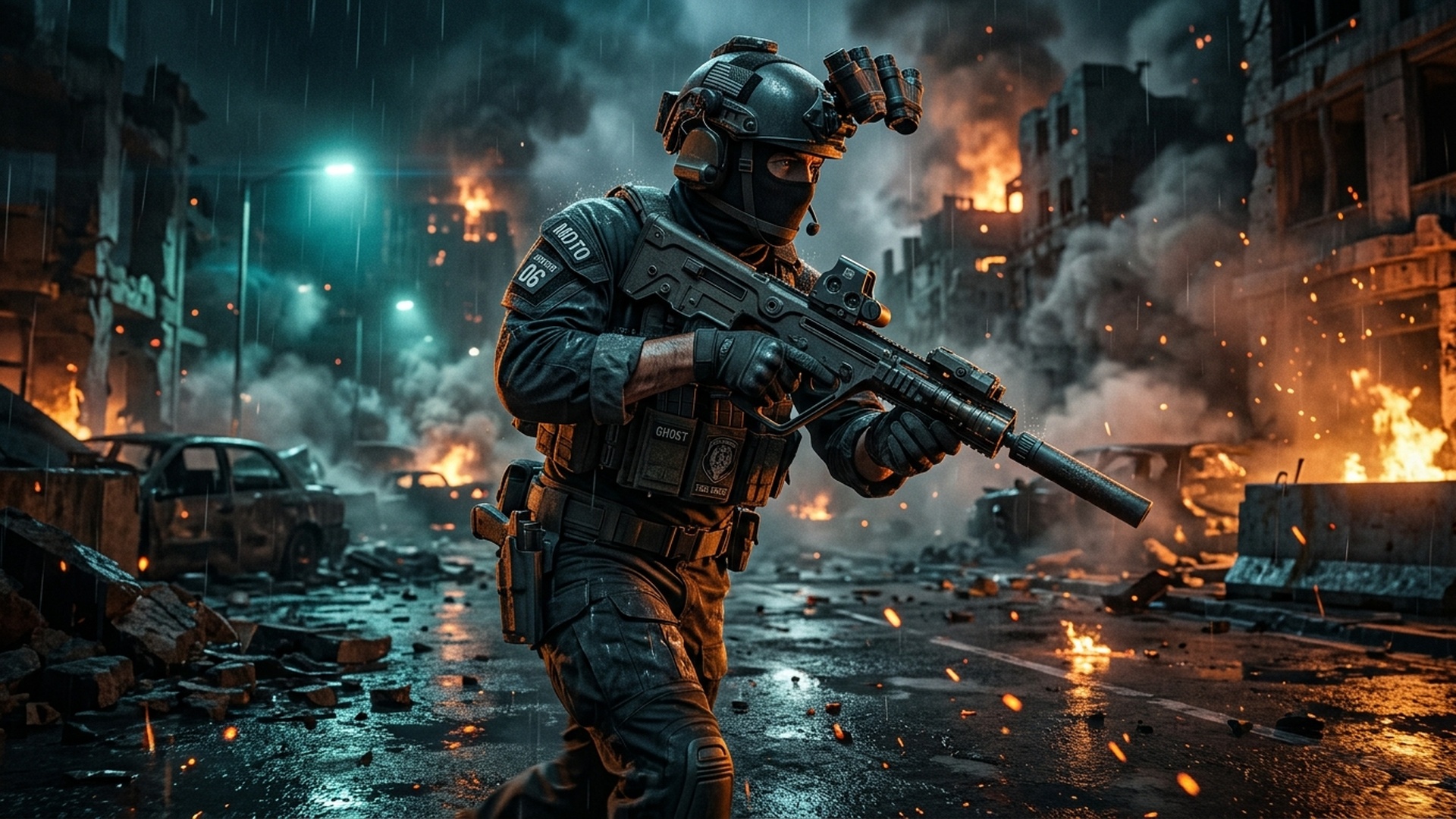
After more than a decade of anticipation, developmental hurdles, and extraordinary real-world resilience, GSC Game World has officially unleashed S.T.A.L.K.E.R. 2: Heart of Chornobyl upon the global gaming community. Built on the cutting-edge foundations of Epic Games’ Unreal Engine 5, this ambitious post-apocalyptic first-person survival shooter invites players back into the haunting, irradiated ruins of the Chornobyl Exclusion Zone.
Combining unforgiving survival simulations, an upgraded A-Life 2.0 dynamic ecosystem, visceral ballistics, and non-linear narrative decision-making, the game stands as one of the most mechanically demanding releases of 2026. In our definitive technical and gameplay review, we dive deep into performance benchmarks across top-tier GPUs, atmospheric world design, survival balance, and whether GSC Game World’s magnum opus justifies the long wait.

1. The Living Zone: A-Life 2.0 Simulation & Atmosphere
The defining identity of the S.T.A.L.K.E.R. franchise has always been the Zone itself—a hostile, 64-square-kilometer open world that exists entirely independent of the player. In Heart of Chornobyl, the proprietary A-Life 2.0 artificial intelligence engine breathes chaotic life into every desolate outpost, rusty vehicle graveyard, and irradiated swamp. Mutant packs hunt wild boars, rival Duty and Freedom squads engage in unscripted firefights over radioactive artifact anomalies, and military patrols execute tactical flanking maneuvers without script triggers.
Atmospherically, the game is unrivaled. Sudden radioactive emissions turn the sky into a violent tempest of blood-red electromagnetic energy, forcing players to scramble for underground concrete shelters before cellular radiation liquifies their health bar. Audio design is equally chilling: clicking Geiger counters, distant Bloodsucker shrieks echoing through subterranean drainage pipes, and solitary acoustic guitars strumming around campfires create an unforgettable survival ambiance.
S.T.A.L.K.E.R. 2: Heart of Chornobyl PC Hardware & Benchmark Summary
| Hardware Tier | Target Resolution | Graphics Preset | Avg Framerate (Native) | DLSS 3 / FSR 3 Upscaled | Performance Verdict |
|---|---|---|---|---|---|
| RTX 4090 / 7900 XTX | 4K UHD (3840×2160) | Epic + Lumen High | 54 – 62 FPS | 108 – 124 FPS (DLSS Quality + FG) | Flawless High-End Visuals |
| RTX 4070 Ti / RX 7800 XT | 1440p QHD (2560×1440) | High Preset | 48 – 56 FPS | 88 – 98 FPS (DLSS / FSR Quality) | Sweet Spot Resolution |
| RTX 3060 / RX 6600 XT | 1080p FHD (1920×1080) | Medium Preset | 38 – 44 FPS | 64 – 72 FPS (DLSS Balanced) | Playable with Minor Drops |
| Xbox Series X | Dynamic 4K (DRS) | Performance Mode | 52 – 60 FPS | 60 FPS Target (FSR Temporal) | Solid Console Implementation |
2. Combat Mechanics, Survival Logistics & Weapon Wear
Combat in Heart of Chornobyl is brutally realistic. Bullets penetrate thin sheet metal and wooden doors, and ricochets can instantly incapacitate your character. Weapon handling feels weighty and tactile; every firearm requires regular field maintenance with cleaning kits, as degraded weapons suffer frequent jamming, stovepipes, and bullet spread inaccuracies during intense firefights.
Survival logistics force players to manage inventory weight down to every individual 5.45x39mm cartridge. Radiation poisoning, physical bleeding, sleep deprivation, and extreme hunger compound in real time. Overburdened stalkers deplete their stamina bar in seconds, leaving them helpless prey for camouflaged Bloodsuckers and psychic Burer anomalies.
Anomalous Artifact Hunting & Detector Mechanics
No stalker survives long in the Chornobyl Exclusion Zone without mastering the perilous trade of artifact hunting. Artifacts are mysterious physical anomalies born from intense radiation and spacetime ruptures, granting miraculous passive benefits such as supernatural endurance, bullet resistance, and passive health regeneration. However, harvesting them requires stepping directly into lethal death traps.
Players must navigate invisible gravity vortexes, scorching thermal fissures, and crackling electrical web hazards by tossing steel bolts ahead of their path to temporarily trigger anomaly discharges. Armed with early-game Echo detectors or high-end military Veles devices, you must balance auditory beeping frequencies against screen hazard meters. One misstep into a “Whirligig” anomaly will instantly obliterate your stalker into red mist, underscoring the relentless tension at the heart of Zone exploration.
Once extracted, rare artifacts can be sold to scientific research bunkers for astronomical payouts or slotted into customized armored exoskeletons to offset encumbrance penalties during extended overland excursions.
Faction Conflicts & Non-Linear Branching Narrative
The political ecosystem of the Zone is governed by bitterly divided ideological factions. Players can align with the discipline-focused militarists of Duty, who seek to eradicate the Zone and its horrors from the face of the Earth, or forge ties with the anarchic radicals of Freedom, who believe the Zone’s scientific anomalies represent the next evolutionary leap for humankind.


New factions introduced in Heart of Chornobyl, such as the mysterious institutional enforcers known as Ward and the independent survival network Spark, inject layers of moral ambiguity. The non-linear narrative spans hundreds of quest branches, where your decisions to betray an informant, withhold confidential military documents, or execute a captured bandit boss permanently alter regional power balances and dictate which of the game’s multiple divergent endings you ultimately uncover.
Modding Community Future & Steam Workshop Integration
Historically, the enduring legacy of the original S.T.A.L.K.E.R. trilogy—Shadow of Chernobyl, Clear Sky, and Call of Pripyat—was sustained for nearly two decades by passionate global modding communities creating legendary overhaul packages like GAMMA and Anomaly. GSC Game World has embraced this heritage by engineering S.T.A.L.K.E.R. 2 with deep modular architecture from the ground up.
With full Steam Workshop support and official modding toolkits rolling out in post-launch updates, PC enthusiasts can look forward to custom survival balance mods, expanded ballistic overhauls, community-crafted quests, and graphic optimization scripts that will keep the exclusion zone vibrant and replayable for years to come.
PC Optimization Guide: Maximizing Framerates on Mid-Range Hardware
Because Unreal Engine 5.4 features heavy hardware-accelerated rendering pipelines, optimizing graphics settings is essential for achieving a locked 60+ FPS experience on mainstream gaming rigs. Through comprehensive benchmarking across various hardware configurations, we have identified several key graphical toggles that yield substantial framerate improvements with minimal visual degradation.
First, reduce Volumetric Fog & Clouds from “Epic” down to “Medium.” This single adjustment recovers approximately 14% to 18% in GPU frametimes, particularly during dense swamp excursions and misty forest firefights. Second, set Lumen Reflections Quality to “High” rather than “Epic,” which eliminates ray-tracing stutter along radioactive water surfaces while retaining realistic indoor lighting bounces.
Finally, always activate either NVIDIA DLSS (with Frame Generation on RTX 40-series cards) or AMD FSR 3.1 with Frame Generation enabled on compatible GPUs. This upscaling pipeline provides a smooth, responsive presentation without introducing noticeable latency, ensuring you survive the harshest encounters the Chornobyl Exclusion Zone throws your way.
Additionally, setting your audio profile to “Night Mode” or dynamic range compression in the sound options can significantly enhance your survival awareness. This equalization profile elevates subtle footsteps and Geiger counter clicks above explosive gunshots, allowing you to detect lurking stalkers and mutant stalkers long before they enter visual range.
3. Unreal Engine 5.4 Graphical Fidelity & Optimization
GSC Game World’s implementation of Unreal Engine 5.4 produces breathtaking photorealism. Lumen global illumination accurately models bouncing light from flashlights through damp, cracked concrete bunkers, while Nanite geometry eliminates visible object pop-in across sprawling pine forests. However, this fidelity comes with substantial system demands, requiring modern multi-threaded CPUs (such as the AMD Ryzen 7 7800X3D or Intel Core i7-14700K) to sustain smooth framerates during heavy A-Life calculations.
Frequently Asked Questions (S.T.A.L.K.E.R. 2 Review)
Q1: Is S.T.A.L.K.E.R. 2 available on Xbox Game Pass on Day One?
Yes, S.T.A.L.K.E.R. 2: Heart of Chornobyl is included with Xbox Game Pass Ultimate and PC Game Pass at launch, allowing subscribers to play without extra purchase on PC and Xbox Series X/S.
Q2: Does the game support modding at launch?
GSC Game World has confirmed robust modding support for PC, with official modding toolkits and Steam Workshop integration planned shortly following the initial launch window.
Q3: How long is the main campaign of S.T.A.L.K.E.R. 2?
A focused playthrough of the main storyline takes approximately 35 to 40 hours, while full completionists exploring all side anomalies, faction quests, and endings will easily exceed 100 hours of gameplay.
Related posts:
 What is Animation Canceling? The Hidden Trick to Mastering Anime Fighting Games
 The Southeast Asian ‘Diablo Killer’: Why ARPG Fans Are Obsessed With Ghostlore
 Path of Exile 2 Early Access: Class Tier List, Dual Specialization & Boss Guide
 Monster Hunter Wilds Weapon Tier List: Post-Beta 2 Balance Patch & Focus Mode
