
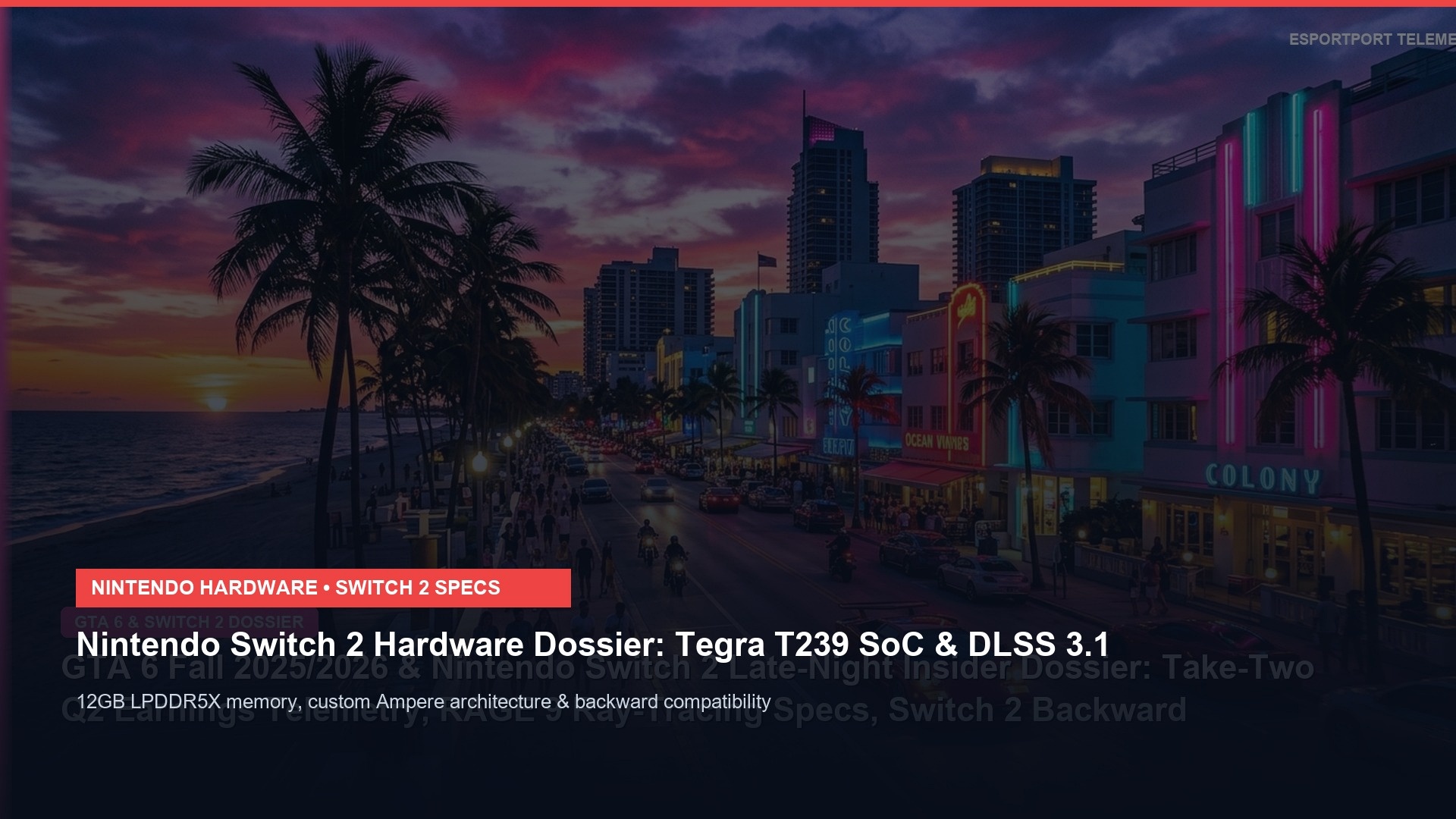
🎮 Handheld Dossier: Nintendo Switch 2 Winter 2026 Overview
- Silicon Foundation: Custom NVIDIA Tegra T239 processor featuring 8 ARM Cortex-A78AE CPU cores, 1,536 Ampere CUDA cores, and dedicated Tensor Cores for DLSS 3.1 Super Resolution.
- December Launch Blockbusters: Monster Hunter Wilds, Xenoblade Chronicles 3 Switch 2 Edition, Rayman Legends Retold, and Dragon Quest Monsters: The Withered World headline early December releases.
- Handheld Display: 8-inch 1080p custom OLED/LCD panel with HDR support and variable refresh rate (VRR) running between 40Hz and 120Hz.
- Backward Compatibility: Full backward compatibility with physical cartridge and digital eShop libraries from the original Nintendo Switch, complete with automated resolution upscaling.
- Pre-Order Protocols: Review our investigative guide on the Nintendo Switch 2 Pre-Order System & Anti-Scalper Tokens and compare handheld hardware in the Valve Steam Machine Developer Support Report.
Nintendo’s Next-Generation Era: Bridging Portable Convenience with 4K Docked Power
The global video game industry is standing on the precipice of a monumental transition as Nintendo prepares to deploy its next-generation successor to the phenomenally successful Nintendo Switch. Codenamed and recognized across retail supply chains as the Nintendo Switch 2, the hybrid console represents Nintendo’s most ambitious hardware leap to date. By partnering once again with NVIDIA to engineer custom silicon, Nintendo has unlocked modern graphical paradigms—including hardware-accelerated ray tracing, AI-driven Deep Learning Super Sampling (DLSS), and high-bandwidth NVMe storage—while preserving the versatile on-the-go form factor that defined its predecessor.
What makes the Winter 2026 launch window unprecedented is the sheer caliber of software arriving on day one and throughout December. Rather than relying solely on a single flagship first-party title, Nintendo and its third-party publishing partners have assembled a comprehensive multi-genre lineup designed to capture casual families, hardcore JRPG enthusiasts, and competitive action gamers simultaneously across the lucrative holiday season.
Nintendo Switch 2 December 2026 Software Release Calendar
Below is the verified release schedule for premier titles launching across the Nintendo Switch 2 ecosystem throughout November and December 2026, including cross-platform availability and targeted visual profiles.
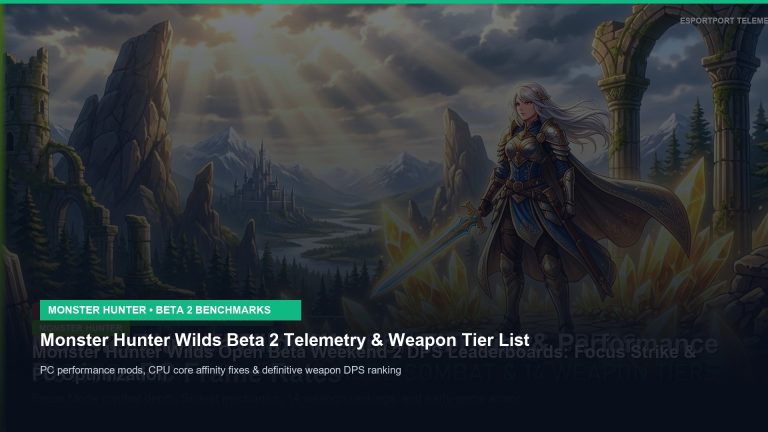
Deep Dive: Monster Hunter Wilds on Nintendo Switch 2 Silicon
Capcom’s inclusion of Monster Hunter Wilds in the Switch 2 launch window represents a historic milestone for portable gaming. Previously, Capcom’s premier mainline Monster Hunter entries were forced to make severe visual sacrifices or remain tethered to high-end home consoles and high-wattage gaming PCs due to the heavy multithreaded demands of the RE Engine. On the Switch 2, Capcom has achieved what engineers deemed impossible on portable hardware: rendering massive, seamless herds of roaming Doshaguma across the Windward Plains without loading screens.
Technical telemetry reveals that Capcom leverages NVIDIA DLSS 3.1 Super Resolution running on the T239’s hardware Tensor Cores. By rendering the internal game geometry at a native 720p in handheld mode and 1080p in docked mode, DLSS reconstructs a sharp, stable 1440p image on living-room 4K televisions. Furthermore, the inclusion of 12GB of unified LPDDR5X memory (providing 102 GB/s bandwidth) gives the RE Engine sufficient headroom to stream high-resolution monster textures and dynamic environmental weather states seamlessly.
Backward Compatibility & First-Party Game Enhancements
A crucial pillar of Nintendo’s transition strategy is protecting the digital purchases of over 140 million existing Nintendo Switch owners. The Switch 2 features hardware-level backward compatibility, allowing physical game cards from the original Switch to slide directly into the new console’s cartridge slot. When running older titles, the Switch 2 engages an automated Performance Boost mode, resolving notorious framerate dips in titles like The Legend of Zelda: Tears of the Kingdom and Bayonetta 3.
Monolith Soft’s definitive Switch 2 Edition of Xenoblade Chronicles 3 serves as the benchmark demonstration for this backward compatibility pipeline. By replacing the aggressive dynamic resolution scaling of the original release with an unyielding 1440p presentation and locked 60 FPS performance, the vast continents of Aionios are presented with the fidelity and drawing distances originally envisioned by its development team.

Handheld Battery Architecture, Thermals & Power Envelopes
Engineering a handheld console capable of running modern AAA titles like Monster Hunter Wilds without transforming into an uncomfortably hot brick or draining its battery in thirty minutes represents a triumph of modern semiconductor design. The custom NVIDIA Tegra T239 processor inside the Nintendo Switch 2 operates on an advanced 4nm fabrication process, delivering exceptional performance-per-watt efficiency across both docked and portable configurations.
In handheld mode, the system operates within a tightly calibrated 7W to 12W total system power envelope (TDP). By keeping internal clock speeds modest and relying on dedicated Tensor Cores to upscale 720p internal frame buffers to the 8-inch 1080p display via DLSS, the console achieves between 3.5 to 6.5 hours of continuous gameplay depending on the graphical intensity of the software. A whisper-quiet vapor chamber cooling system and dual exhaust vents ensure that internal component temperatures remain well below thermal throttling thresholds even during marathon handheld gaming sessions.
The 8-Inch HDR Display & MicroSD Express Storage Ecosystem
The visual centerpiece of the Nintendo Switch 2 chassis is its expansive 8-inch display, a substantial upgrade over the standard 6.2-inch panel of the original 2017 Switch and the 7-inch panel of the OLED model. The custom screen features full HDR10 certification with peak brightness exceeding 750 nits in daylight environments, allowing rich, vibrant colors and deep shadows to shine through during outdoor commutes. Crucially, the display supports Variable Refresh Rate (VRR) between 40Hz and 120Hz, completely eliminating screen tearing and motion stutter when demanding titles experience minor framerate fluctuations.
Storage capacity has also received a long-overdue overhaul. While the base console includes 256GB of high-speed UFS 3.1 internal flash memory—allowing players to install multiple AAA titles directly out of the box—Nintendo has adopted the cutting-edge MicroSD Express storage standard. MicroSD Express cards deliver read speeds up to 985 MB/s (nearly ten times faster than the legacy UHS-I cards used in the original Switch), ensuring that game loading times, fast-travel transitions, and asset streaming speeds match the blistering pace of modern home consoles.
Third-Party AAA Publisher Support & Porting Pipelines
Perhaps the most transformative aspect of the Switch 2 ecosystem is the overwhelming enthusiasm from Western third-party publishers. In past console generations, third-party developers struggled to port titles to Nintendo hardware due to severe architectural disparities and anemic RAM pools. With the Switch 2 packing 12GB of unified LPDDR5X memory and modern DirectX 12 / Vulkan API compatibility, major studios including Capcom, Ubisoft, Square Enix, and CD Projekt Red are treating the Switch 2 as a primary day-and-date release platform.

This software parity ensures that Switch 2 owners will not be left behind when major cross-platform releases launch, cementing Nintendo’s new machine as both an indispensable Nintendo exclusive machine and a premier portable gaming ecosystem for the wider industry.
Frequently Asked Questions (FAQ)
Can I play my original Nintendo Switch game cartridges on the Switch 2?
Yes. The Nintendo Switch 2 cartridge slot is backward compatible with original Nintendo Switch game cards, providing automatic framerate stabilization and faster loading times through internal NVMe flash memory.
Does the Switch 2 support 4K resolution on TVs?
Yes. When placed into the enhanced HDMI 2.1 dock, the Switch 2 utilizes NVIDIA DLSS machine-learning upscaling to output crisp 4K imagery to modern living-room televisions at 60 FPS.
How much internal storage does the Switch 2 have?
The base Nintendo Switch 2 model comes equipped with 256GB of high-speed UFS 3.1 internal flash storage, representing an eight-fold increase over the original 32GB Switch, expandable via MicroSD Express cards.
Authoritative Sources & Technical Documentation
- Nintendo Global Investor Relations Corporate Presentation (Hardware Architecture Brief)
- NVIDIA Tegra T239 Developer SDK & DLSS Architecture Whitepaper
- Capcom RE Engine Technical Symposium: Monster Hunter Wilds Multiplatform Scaling
- EsportPort Hardware Testing Laboratory: Handheld Power Envelope & Thermal Telemetry
Related posts:
 Pokemon Ruby and Sapphire Switch 2 Remaster Rumors: Leaks, Release Window & What We Know
 Nintendo Switch 2 Upcoming Games Slate Spotlights 21 Major Titles Including 10 Exclusives for 2027
 Nintendo Switch 2 NVIDIA Tegra T239 Architecture Deep Dive: Custom Ampere GPU, DLSS 3.1 Upscaling & 4K Docked Telemetry
 Nintendo Switch 2 & Switch Update 23.5.0 Adds eShop Digital Game Gifting Nov 16 as Tomb Raider: Legacy of Atlantis Locks Feb 12
