
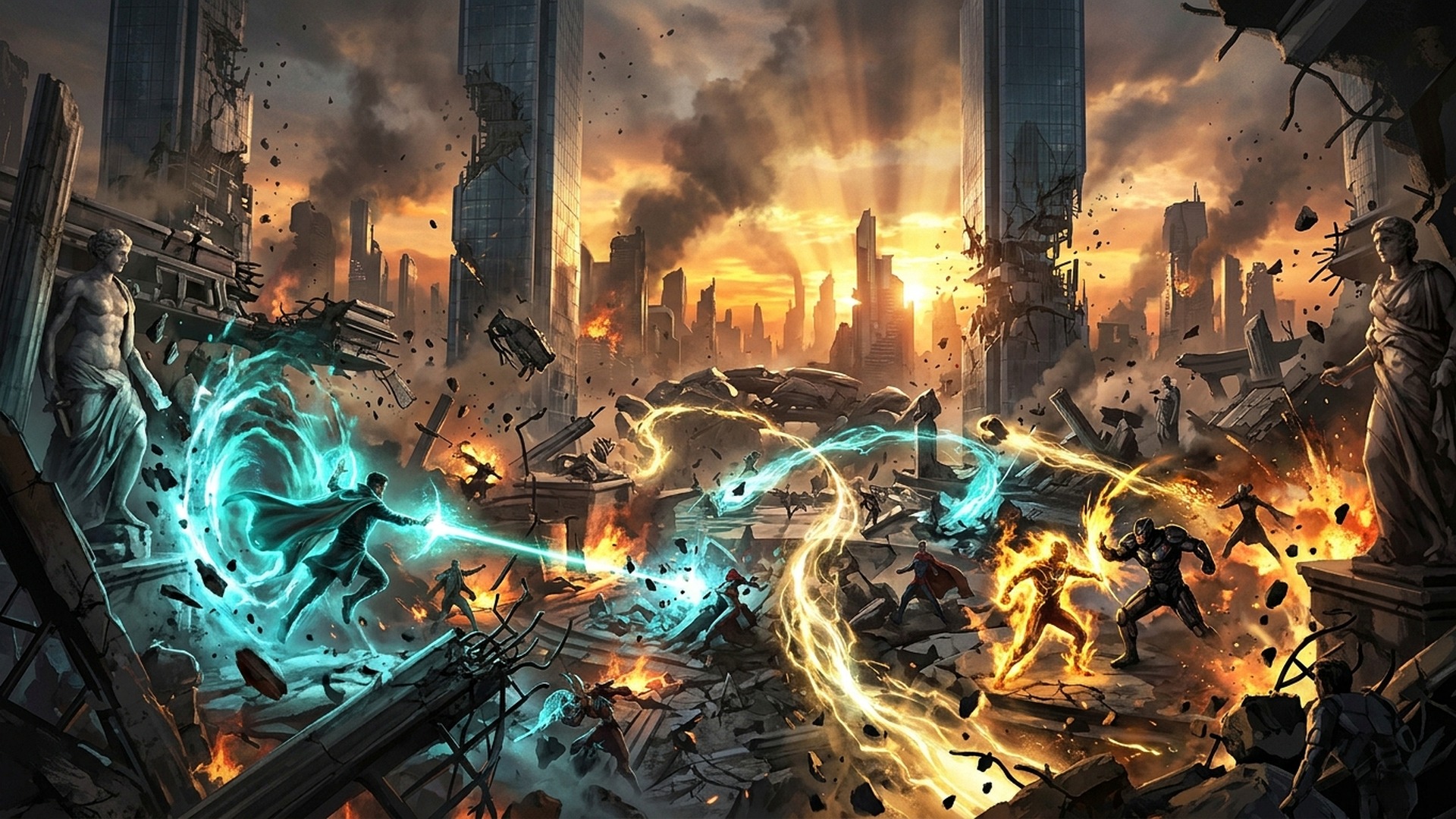
The competitive hero shooter genre, long dominated by Blizzard Entertainment’s Overwatch franchise, has encountered its most formidable challenger to date with the explosive arrival of NetEase Games’ Marvel Rivals. Developed by a veteran team of AAA action and multiplayer designers, Marvel Rivals delivers a high-octane 6v6 third-person competitive hero shooter set across a multiverse colliding under the tyrannical machinations of Doctor Doom and his future counterpart, Doom 2099. With fully destructible dynamic environments, an iconic roster of Marvel superheroes and villains, and revolutionary character-to-character ‘Team-Up’ combat synergies, the closed beta tests have generated extraordinary enthusiasm across the global competitive gaming community.
Where previous attempts to challenge the hero shooter crown faltered due to bland character design or sluggish movement mechanics, Marvel Rivals leans shamelessly into over-the-top comic book power fantasy. Flying heroes soar high above towering skyscrapers, destructible pillars collapse in real time to crush enemy backlines, and iconic pairs execute synchronized ultimate combinations that radically alter team-fight dynamics. Players analyzing structural gameplay balance through our breakdown of the top 10 CS2 players in the world understand that crisp mechanical execution and spatial positioning define championship-tier competitive titles.

The Tri-Class Ecosystem: Vanguards, Duelists, and Strategists
Similar to established competitive hero shooters, Marvel Rivals organizes its diverse roster into three foundational operational roles: Vanguards (tanks), Duelists (damage dealers), and Strategists (support and healers). However, the execution within each role diverges substantially from legacy paradigms. Vanguards are not merely passive meat shields designed to hold blue barrier shields; they are active, hyper-aggressive brawlers capable of initiating disruptive crowd-control combos and reshaping the physical geometry of the battlefield.
Duelists showcase extraordinary mechanical variety, ranging from hitscan sharpshooters like The Punisher and Winter Soldier to hyper-mobile aerial flankers like Spider-Man and Iron Man. Meanwhile, the Strategist class breaks away from monotonous heal-beam tethering by providing offensive utility, defensive shields, and game-saving crowd control through characters like Loki, Mantis, and Luna Snow.
| Character Class | Hero Name | Competitive Meta Tier | Signature Mechanic / Utility | Primary Team-Up Synergy Partner |
|---|---|---|---|---|
| Vanguard | Venom | S-Tier | Symbiotic diving, massive overhealth shield, terrain swinging | Spider-Man & Peni Parker (Symbiote Bond) |
| Vanguard | Magneto | S-Tier | Metallic curtain barrier, metallic cannon, anti-projectile dome | Scarlet Witch (Metallic Chaos Sword) |
| Duelist | The Punisher | S-Tier | Dual shotgun swap, deployable turret, anti-air smoke vision | Rocket Raccoon (Infinite Ammo Device) |
| Duelist | Hela | S-Tier | Crow soul burst, piercing micro-blades, lethal hitscan headshots | Loki & Thor (Ragnarok Rebirth) |
| Strategist | Loki | S-Tier | Doppelganger teleportation, backstab burst, ultimate shapeshift | Hela (Deception Resurrection) |
| Strategist | Luna Snow | S-Tier | Ice-skate mobility, rhythmic healing aura, Fate of Both Worlds | Namor (Frozen Water Spirits) |
| Duelist | Spider-Man | A-Tier | Web-zip air combos, high skill-ceiling dive, backline assassination | Venom (Venomous Webbing) |
| Vanguard | Doctor Strange | A-Tier | Shield of the Seraphim, Portal repositioning, mystic levitation | Hulk (Gamma Mystic Energy) |
The Game-Changing Team-Up System: Co-Op Mechanical Synergies
The single most innovative mechanical feature distinguishing Marvel Rivals from every competitor is the proprietary ‘Team-Up’ synergy system. In standard hero shooters, hero synergy exists purely through timing complementary abilities (such as a Graviton Surge combined with a Dragonstrike). In Marvel Rivals, drafting specific comic-book pairings unlocks exclusive passive enhancements and entirely new active abilities that neither hero possesses in isolation.
For example, drafting Rocket Raccoon alongside The Punisher enables Rocket to deploy an ‘Ammo Overload Device’. When activated, Frank Castle receives infinite ammunition and significantly elevated firing speed for several seconds, transforming his heavy machine gun into an unstoppable barrier-shredding meat grinder. Similarly, pairing Magneto with Scarlet Witch imbues Magneto with a towering greatsword forged from chaotic hex magic, providing the tank with a devastating wide-cleave melee execute that bypasses enemy shields.
Environmental Destruction and Tactical Sightline Manipulation
Built upon custom Unreal Engine physics, the maps in Marvel Rivals—such as the Asgardian realm of Yggsgard and the futuristic neon dystopia of Tokyo 2099—feature dynamic environmental destruction. High-impact explosive abilities and heavy Vanguard attacks shatter concrete bridges, demolish marble balconies, and topple defensive pillars in real time.
This dynamic destructibility completely eliminates static choke-point stalemates. If an opposing defensive team nests behind heavy barriers inside a fortified corridor, a Hulk or Venom can smash through the adjacent load-bearing wall, creating a brand-new flanking sightline for Duelists to exploit. Conversely, heroes like Doctor Strange can cast mystic portals to instantly transport their entire team across shattered terrain, completely resetting spatial map control.
Competitive Esports Potential vs Casual Appeal
NetEase has made no secret of its aspirations to establish Marvel Rivals as a premier global tier-one esports discipline. The closed alpha and beta tournaments generated massive concurrent viewership across Twitch and YouTube, outperforming established rival shooter broadcasts. The third-person camera perspective offers exceptional visual legibility for spectators, allowing broadcast directors to capture wide-angle team-fight geometry without the disorienting first-person visual clutter that plagued earlier hero shooters.
However, maintaining long-term competitive health will require rigorous balance pacing. Certain Team-Up combinations currently exhibit oppressive damage thresholds that make mirror-matching virtually mandatory at high ranks. If the development team maintains transparent communication and swift balance cadences, Marvel Rivals possesses the intellectual property prestige, mechanical depth, and sheer visceral spectacle required to dominate the multiplayer landscape for years to come.
Dynamic Ultimate Economy and Objective Map Rotation in Marvel Rivals
Competitive success in high-level Marvel Rivals lobbies hinges entirely on disciplined ultimate ability management and objective cart pacing. Unlike standard casual matches where players immediately pop their ultimate abilities upon reaching 100% charge, tournament-tier squads treat ultimates as finite strategic currency. Staggering offensive crowd-control ultimates (such as Magneto’s Meteorite Crash or Hela’s Goddess of Death blade storm) ensures that your team always maintains lethal pressure across consecutive objective capture waves.
Furthermore, the game’s objective modes—featuring dynamic Convergence points and convoy escort paths across multi-tiered vertical architecture—heavily reward proactive spatial scouting. Heroes with wall-climbing and aerial hover abilities like Spider-Man and Storm can survey incoming enemy approach vectors from hidden high-ground roosts, relaying vital enemy composition swaps to their shot-callers before the opposing payload advances through contested choke points.
Map layout and vertical destruction play a decisive role in tournament-tier matches. In contested arenas like the Royal Palace of Yggsgard, tactical squads frequently collapse elevated stone bridge structures using heavy explosive projectiles to sever enemy reinforcement routes. Furthermore, airborne Duelists like Storm can harness atmospheric lightning to amplify Magneto’s metallic energy shields, granting their frontline tanks electro-charged barriers that shock approaching enemy divers.
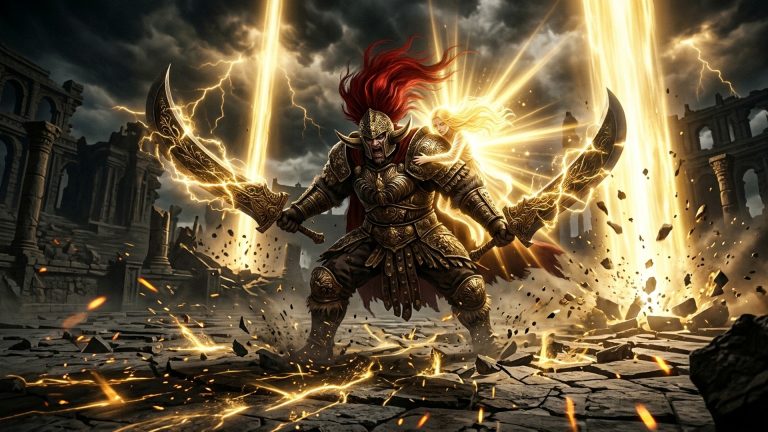
Mastering the rhythm of terrain manipulation allows teams to dictate the pace of every team fight. When defensive anchors demolish load-bearing pillars around objective capture zones, the falling debris forces enemy Strategists out of protected cover, exposing vulnerable healers to swift dive assassinations from high-speed flankers like Spider-Man and Black Panther.
Communication and callout coordination represent the ultimate differentiator in high-stakes Marvel Rivals skirmishes. Assigning a dedicated main tank shot-caller to track enemy cooldowns, sound cues, and ultimate percentages allows teams to execute coordinated dives that dismantle enemy compositions with surgical precision.
Frequently Asked Questions (FAQ)
What platforms is Marvel Rivals releasing on and is it free-to-play?
Marvel Rivals is scheduled to launch as a free-to-play competitive 6v6 hero shooter across PC (Steam and Epic Games Store), PlayStation 5, and Xbox Series X/S, featuring full cross-platform play capabilities.
How do Team-Up abilities function in Marvel Rivals?
Team-Up abilities are exclusive passive or active skills unlocked when specific lore-connected characters are drafted onto the same team, such as Rocket Raccoon granting The Punisher infinite ammunition or Scarlet Witch powering Magneto’s chaos sword.
Is Marvel Rivals played in first-person or third-person perspective?
Marvel Rivals is played entirely in a third-person perspective, providing players with an expanded field of view to track aerial mobility, superhero abilities, and complex environmental destruction around their character.
Which heroes are currently considered top-tier in the closed beta meta?
The current competitive meta is dominated by Venom and Magneto in the Vanguard role, The Punisher and Hela in the Duelist category, and Loki alongside Luna Snow in the Strategist support position due to their game-changing utility and Team-Up synergies.
Related posts:
 Apex Legends Season 23 Ranked Guide: RP Distribution, Map Rotations & Team Composition Meta
 Marvel Rivals Competitive Tier List: Best Hero Synergies, Team-Up Combos and Closed Beta Meta
 LoL Worlds 2026 Swiss Stage Deciders: T1, Bilibili Gaming & Gen.G Quarterfinal Qualification Scenarios & Meta Shift
 EA FC Pro 2027 & ePremier League (£150K Prize Pool): November UK, EU & USA Pro Qualifiers Guide
