
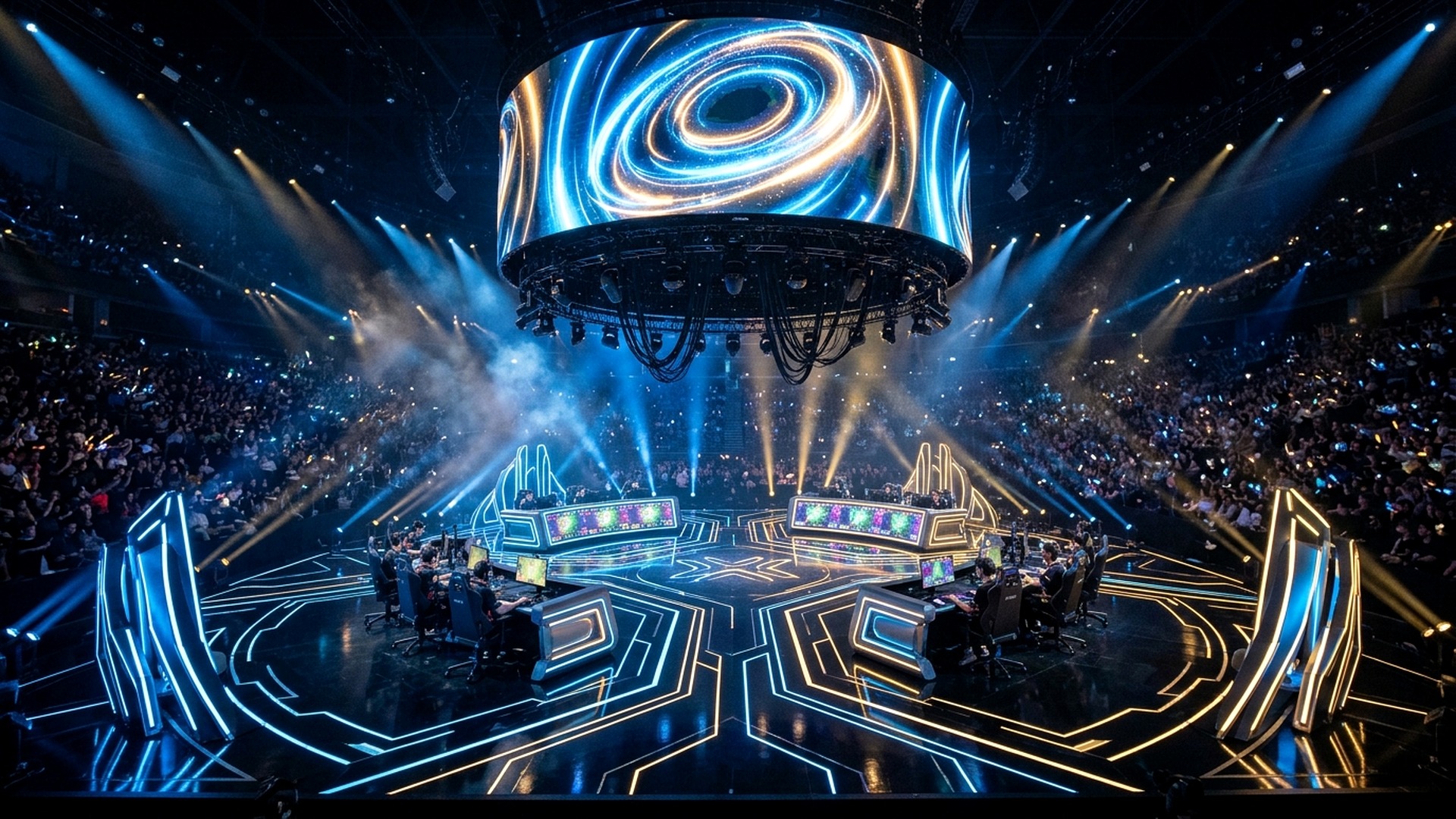
The competitive League of Legends ecosystem erupted with massive transfer market updates on Saturday morning as the annual LCK offseason and KeSPA Cup tournament preparations took center stage. Fresh off capturing their historic fifth World Championship title, South Korean powerhouse T1 dominated global headlines with the official announcement that mid-lane legend Lee ‘Faker’ Sang-hyeok has signed a long-term contract extension, cementing his legendary ‘Unkillable Demon King’ status with the organization. Meanwhile, rival LCK and LPL organizations have initiated multi-million-dollar bidding wars to assemble superteams capable of dethroning the reigning world champions.
For League of Legends esports enthusiasts, fantasy drafters, and meta analysts, the post-Worlds roster shuffle is the most strategically transformative period of the competitive calendar. Riot Games’ upcoming 2026 competitive format introduces unified three-split seasons, fearless draft tournaments, and sweeping map terrain overhauls that demand versatile champion pools from professional players. Below is our comprehensive Saturday roster tracker, KeSPA Cup bracket preview, LCK team power rankings, and tactical meta projections.
T1 Locks Down Faker & The ‘ZOFGK’ Championship Chemistry
In an esports landscape characterized by volatile roster turnover, T1’s commitment to roster stability is unprecedented. Faker’s contract extension ensures that the greatest player in esports history will continue to lead T1 through the 2026 and 2027 competitive campaigns. Under the coaching leadership of Kim ‘kkOma’ Jeong-gyun, T1 has established an unmatched standard of clutch macro execution, mid-game teleports, and teamfight synergy during international tournaments.
Maintaining the core around Faker, bot laner Lee ‘Gumayusi’ Min-hyeong, and support Ryu ‘Keria’ Min-seok provides T1 with an insurmountable tactical advantage heading into the new season. While rival squads spend months establishing in-game communication and shot-calling hierarchies, T1 can immediately focus on mastering new itemization trees, Void objective timings, and early lane-swap counters. Gumayusi’s flawless positioning and Keria’s innovative support champion pool remain the gold standard in professional League of Legends.
| LCK Roster | Top / Jungle | Mid Lane Anchor | ADC / Support Duo | Offseason Trajectory Grade |
|---|---|---|---|---|
| T1 (Reigning World Champions) | Zeus / Oner | Faker (Extended Through 2027) | Gumayusi / Keria | 10 / 10 (Championship Core Preserved) |
| Gen.G Esports | Kiin / Canyon | Chovy (Franchise Anchor) | Peyz / Lehends | 9.5 / 10 (Domestic Dominance Threat) |
| Hanwha Life Esports (HLE) | Doran / Peanut | Zeka (Melee Assassin Master) | Viper / Delight | 9.2 / 10 (Heavy Financial Investment) |
| Dplus KIA (DK) | Kingen / Lucid | ShowMaker (Franchise Pillar) | Aiming / Moham | 8.4 / 10 (Youth Integration Phase) |
| KT Rolster | PerfecT / Pyosik | Bdd (Control Mage Specialist) | Deft (Retirement) / BeryL | 7.8 / 10 (Rebuilding Bot Lane) |
KeSPA Cup Return: Testing Fearless Draft Tournament Rules
The return of the KeSPA Cup provides the first live competitive battleground for testing Riot Games’ revolutionary ‘Fearless Draft’ format. Under Fearless Draft rules, once a champion is selected in Game 1 of a series, that champion is permanently banned for both teams for the remainder of the match. In a Best-of-5 series, up to 50 unique champions can be drafted, completely eliminating one-dimensional meta crutches and testing the raw champion pool depth of professional rosters.
Fearless Draft heavily rewards veteran in-game leaders like Faker and Bdd, who have mastered dozens of niche champions over decade-long careers. Pocket counter-picks like mid-lane Galio, Anivia, Malzahar, and Cassiopeia become game-winning tactical weapons in late-series deciders. Professional coaching staffs are currently conducting intense scrimmages across South Korea to map out multi-game draft matrices ahead of Saturday’s tournament openers.
| Competitive Meta Element | Traditional Draft Rules | KeSPA Cup Fearless Draft Format | Tactical Advantage |
|---|---|---|---|
| Champion Pool Requirement | 3-5 Meta Champions Per Role | 8-10 Viable Champions Per Role | Massive edge for veteran players like Faker |
| Draft Strategy Depth | Repeating power-pick combos | Escalating ban pools across Game 1-5 | Demands deep coaching preparation |
| Viewer Engagement | Repetitive mirror matchups | High variety; unpredictable pocket picks | Surging livestream viewership ratings |
Macro Rotations & Void Grubs Objective Control
The strategic meta in competitive League of Legends revolves around early objective control in the top-river pit. The introduction of Void Grubs has made early lane priority in Top and Mid essential. Teams that secure five or six Void Grubs gain overwhelming tower-shredding true damage, enabling them to tear down outer turret platings and generate substantial gold leads before the 14-minute mark.
T1 has mastered the art of cross-map objective trading. If opposing junglers commit heavy resources toward securing early Dragon stacks, T1 immediately trades for Void Grubs and Rift Herald, using the siege pressure to collapse top-lane tier-one turrets and open up deep enemy jungle vision. This macro fluidity prevents opponents from consolidating leads even when securing dragon souls.
The Rise of LCK Challenger Prodigies in the KeSPA Cup
In addition to established superstars, the KeSPA Cup serves as a vital showcase for rising academy talent from the LCK Challengers league. Organizations like Gen.G Global Academy and Dplus KIA Challengers field fearless young rosters eager to test their skills against world champions. Scouts from across the globe monitor these matches closely to identify the next generation of mid-lane prodigies and mechanical wonders.
The fearless playstyle of rookie players often catches seasoned veterans off guard. Unorthodox pocket picks, aggressive level-one invades, and unhesitating flash engagements make KeSPA Cup matches wildly entertaining and unpredictable. Saturday’s broadcast will highlight which emerging prospects possess the mental composure to step into starting LCK roles in 2026.
| LCK 2026 Tournament Stage | Format & Rule Set | Key Participating Teams | International Qualification |
|---|---|---|---|
| KeSPA Cup (Pre-Season) | Fearless Draft (BO3 / BO5) | All 10 LCK Teams + Challenger Squads | Pre-Season Trophy & Domestic Seeding |
| LCK Split 1 (Winter) | Double Round Robin (BO3) | Top 10 Korean Franchises | Qualifies to New March Global Event |
| LCK Split 2 (Spring / Summer) | Playoffs Gauntlet Format | Top 6 Playoff Seeds | MSI & Worlds 2026 Direct Berths |
Furthermore, managing early lane-swaps remains a critical coaching test. In previous international competitions, Western teams attempted to neutralize Korean top-laners by swapping ADC and Support into the top lane at level one. T1’s counter-strategy revolves around rapid three-man jungle invades, punishing the isolated opposing top-laner under tier-one towers to nullify any CS disadvantage.
Additionally, coaching staff time during champion select has become an art form. Head coaches must anticipate enemy counter-picks in real time, locking in flexible flex-picks like Gragas and Jayce that can flex between Top and Mid.
2026 LCK & Worlds Roadmap: The New International Calendar
Looking ahead to the 2026 competitive season, Riot Games is implementing a unified global calendar featuring three international tournaments: a new first-split international championship in March, the Mid-Season Invitational (MSI) in June, and the World Championship in November. This structure guarantees that Korean titans will face European, North American, and Chinese rivals more frequently throughout the year, raising the stakes of every domestic split.
With Gen.G maintaining Jeong ‘Chovy’ Ji-hoon as their franchise anchor and Hanwha Life Esports investing aggressively in world-class talent, the 2026 LCK season is projected to be the most competitive in league history. Saturday’s KeSPA Cup matches provide the first official glimpse into which roster will set the pace for the new competitive era.
Frequently Asked Questions: LoL Offseason & KeSPA Cup
Did Faker officially re-sign with T1?
Yes, Lee ‘Faker’ Sang-hyeok has signed a historic contract extension with T1, ensuring he will remain the team’s starting mid-laner through 2027.
What is Fearless Draft in League of Legends?
Fearless Draft is a tournament rule where champions picked in earlier games of a series cannot be picked again by either team in subsequent games.
When does the 2026 LCK Spring Split begin?
The official LCK regular season kicks off in mid-January 2026 following the conclusion of the KeSPA Cup.
Where can fans stream the KeSPA Cup matches?
Matches are broadcast live across AfreecaTV, SOOP, Twitch, and YouTube with English community broadcasts available.
Recommended Reading & Related Dossiers
Explore our companion esports performance guides and competitive gaming analyses:
- GTA 6 Gameplay Engine Review: World Scale & Cinematic Physics
- PC Performance Hacks: Registry Tweaks & Latency Optimization Guide
- WWE Survivor Series WarGames Match Card Predictions & Odds Dossier
Related posts:
 T1 vs. Bilibili Gaming (BLG) LoL Worlds 2026 Semifinal Breakdown: Why T1’s Four-Peat Dynasty Ended in a 3-1 Upset & Faker’s Reaction
 Inside T1’s Financial Empire (2026): Faker’s Net Worth, Player Salaries, Red Bull & Mercedes-Benz Sponsorships & Why T1 Is the Richest Esports Team
 BLG Break T1’s Worlds Streak in Epic 3-2 Semifinal Thriller to Reach 2026 Grand Final: Bin & Knight Masterclass
 VALORANT Game Changers Championship 2026: Teams & Schedule
