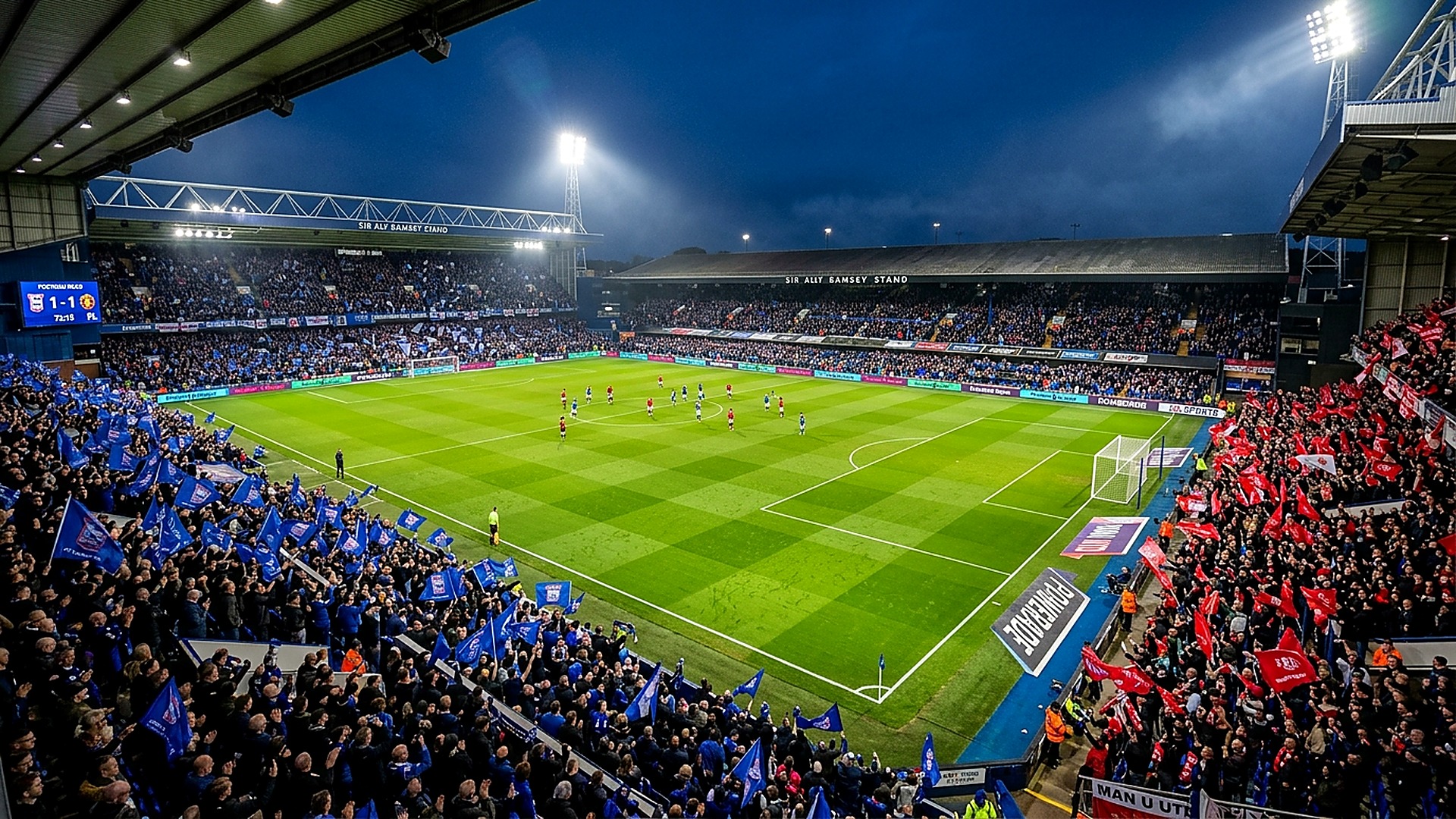
A transformative new tactical chapter in Manchester United’s contemporary history begins at Portman Road this Sunday afternoon as Portuguese tactician Ruben Amorim takes charge of his first competitive Premier League fixture against Ipswich Town. Following the termination of Erik ten Hag’s tumultuous reign and Ruud van Nistelrooy’s stabilizing interim tenure, Amorim’s arrival brings an immediate, uncompromising structural shift to United’s tactical architecture. Facing Kieran McKenna’s energetic, promotion-tested Ipswich side, the match represents an examination of Amorim’s signature 3-4-2-1 formation under the high-tempo demands of English football.
The 3-4-2-1 Paradigm Shift: Structural Mechanics
Throughout his title-winning campaigns with Sporting CP, Ruben Amorim established a reputation for tactical dogmatism anchored around a fluid 3-4-2-1 system. Unlike ten Hag’s disjointed 4-2-3-1, which frequently suffered from an isolated midfield pivot and excessive vertical spacing between defensive and attacking units, Amorim’s setup prioritizes compact central rest defense, aggressive counter-pressing traps, and numerical overloads created by dynamic dual number tens operating in the half-spaces.
At Portman Road, the initial tactical questions center on player positional adaptability. With Lisandro Martinez sidelined by a lower back strain and Harry Maguire regaining match fitness, Amorim’s three-man defensive backline relies on Matthijs de Ligt anchoring the central sweeper position, flanked by Jonny Evans and Noussair Mazraoui. The role of the wingbacks is pivotal: Diogo Dalot and Amad Diallo are tasked with providing natural touchline width, allowing inside forwards Bruno Fernandes and Alejandro Garnacho to operate directly between Ipswich’s midfield and defensive lines.
| Position / Tactical Role | Manchester United Projected Asset | Ipswich Town Counter-Asset | Key Tactical Battle Ground |
|---|---|---|---|
| Central Striker | Rasmus Hojlund | Cameron Burgess / Dara O’Shea | Physical box occupation & blindside channel runs |
| Dual Number 10s | Bruno Fernandes & Alejandro Garnacho | Sam Morsy & Jens Cajuste | Half-space pocket exploitation & transition passing |
| Central Midfield Pivot | Manuel Ugarte & Kobbie Mainoo | Omari Hutchinson & Sammie Szmodics | Second-ball recovery & counter-press interception |
| Right Wingback | Amad Diallo / Diogo Dalot | Leif Davis | Touchline 1v1 duels & deep defensive tracking |
| Central Defensive Core | Matthijs de Ligt | Liam Delap | Direct aerial duels & box-channel containment |
| Goalkeeper / Sweeper | Andre Onana | Arijanet Muric | Build-up distribution under high forward pressing |
| Impact Sub Option | Joshua Zirkzee / Marcus Rashford | Conor Chaplin / Ali Al-Hamadi | Late-game penalty box penetration & transition pace |
The Midfield Engine Room: Ugarte’s Tactical Reunion
Central to Amorim’s immediate success is the revitalization of Manuel Ugarte. Having flourished under Amorim’s guidance at Sporting before his high-profile transfer to Paris Saint-Germain and subsequent move to Old Trafford, Ugarte understands the positional demands of Amorim’s double pivot better than any player in the squad. In Amorim’s system, the defensive midfielder does not merely shield the back three; they must aggressively step out to pinch transition passing lanes while the opposite central midfielder pushes into attacking support.
Paired alongside Kobbie Mainoo—who returns to the starting lineup following a hamstring recovery—Ugarte provides the physical defensive bite and lateral coverage that frees Mainoo to exhibit his elite press-resistant ball manipulation. Against an Ipswich side renowned for rapid vertical transitions through Sammie Szmodics and Omari Hutchinson, United’s double pivot must maintain unyielding positional discipline to prevent dangerous central line-breaking passes.
Goalkeeper Build-up Dynamics: Andre Onana as Eleventh Field Player
Under Amorim’s build-up mechanics, Andre Onana’s distribution duties expand significantly. Rather than launching hurried long balls under pressure, Onana acts as a sweeper-keeper positioned between the wide center-backs, forming a four-man first-phase construction diamond. This baiting mechanism draws Ipswich’s frontline into high pressing zones, creating massive open green territory behind their midfield line for Bruno Fernandes and Garnacho to attack.
Onana’s precision clipped passes over Ipswich’s first pressing wave into the feet of dropping center-forward Rasmus Hojlund represent United’s primary progression trigger. Hojlund’s ability to pin center-backs Dara O’Shea and Cameron Burgess, secure possession with his back to goal, and lay off first-time wall passes into the path of surging wingbacks will dictate whether United can control tempo or become trapped in chaotic second-ball scrambles.
Kieran McKenna’s High-Press Blueprint at Portman Road
Ipswich Town manager Kieran McKenna, who spent several seasons as a first-team coach at Old Trafford under Jose Mourinho and Ole Gunnar Solskjaer, possesses intimate institutional knowledge of Manchester United’s recurring vulnerabilities. McKenna’s tactical blueprint relies on aggressive, front-footed pressing that forces opponents into hasty wide clearances where Ipswich’s physical backline can dominate aerial duels.
In Liam Delap, Ipswich possesses one of the Premier League’s most explosive young physical forwards. Delap’s aggressive channel running and powerful ball carrying will directly test Matthijs de Ligt’s lateral recovery speed. If Ipswich can isolate Delap against United’s wide center-backs in transition, McKenna’s side can generate high-probability shooting chances inside the penalty area. Left-back Leif Davis represents another potent threat, having generated more progressive crosses than almost any fullback in the division this season.
Amad Diallo’s Evolution & Bruno Fernandes as Inside Forward
The tactical repositioning of Amad Diallo on the right flank provides United with a dual-threat dynamic. Possessing lightning acceleration and close-quarters dribbling mastery, Amad forces opposition left-backs to defend on the back foot. However, Amorim demands relentless defensive tracking from his wingbacks, requiring Amad to recover 60 meters on defensive transitions to form a five-man low block when Ipswich sustain attacking phases.
For club captain Bruno Fernandes, Amorim’s 3-4-2-1 represents a profound tactical liberation. Under previous regimes, Fernandes frequently operated as a deep roaming playmaker, forced to drop into his own defensive third to initiate ball progression, which blunted his decisive impact in the final third. Operating as a dedicated right-sided inside forward alongside Garnacho, Fernandes is instructed to occupy advanced half-space pockets directly behind opposition midfielders. This positioning allows Fernandes to deliver his trademark incisive through-balls to Rasmus Hojlund without sacrificing United’s midfield shape.
Bench Impact & In-Game Tactical Adaptations
The depth of Amorim’s bench provides crucial second-half flexibility. With five permitted substitutions, the introduction of Marcus Rashford and Joshua Zirkzee offers drastically different attacking dimensions. Zirkzee’s natural inclination to link play as a ‘false nine’ creates overloads in central midfield when protecting leads, while Rashford’s direct vertical pace against tiring Ipswich legs can punish over-committed defensive lines.
Furthermore, Mason Mount’s return provides Amorim with an ideal tactical chameleon capable of pressing across all three attacking positions. In the final twenty minutes at Portman Road, Amorim’s willingness to adjust his defensive line depth from an aggressive mid-block into a structured 5-4-1 low block will test United’s collective concentration and game-management maturity.

Expected Goals (xG) Analysis & Match Prognosis
Statistical metrics emphasize the contrasting tactical identities on display at Portman Road. Manchester United enters the fixture averaging 1.62 expected goals (xG) per 90 minutes while conceding 1.34 xGA. Conversely, Ipswich Town generates 1.12 xG per match while surrendering 1.88 xGA, highlighting defensive fragilities that have seen them drop 12 points from winning positions this campaign.
Amorim’s primary tactical objective will be establishing immediate game control through sustained ball possession and high-line compression. While tactical teething problems are inevitable during any fundamental system overhaul, United’s superior individual technical quality in the attacking third, combined with the psychological boost of Amorim’s arrival, positions them as strong favorites to navigate a volatile Portman Road environment and secure a decisive opening victory.
Frequently Asked Questions Regarding Ipswich vs Manchester United
What formation does Ruben Amorim use at Manchester United?
Ruben Amorim utilizes a structured 3-4-2-1 formation featuring three central defenders, two attacking wingbacks, a double midfield pivot, and two narrow inside forwards supporting a lone striker.
Where and when is Ruben Amorim’s first match taking place?
Ruben Amorim makes his managerial debut on Sunday, November 22, 2026, at Portman Road against Ipswich Town in a 4:30 PM GMT Premier League fixture.
Which Manchester United players are unavailable for the Ipswich match?
Lisandro Martinez is sidelined with a lower back issue, while Harry Maguire and Luke Shaw are undergoing phased rehabilitation after muscle injuries.
Who is Ipswich Town’s primary attacking threat against Manchester United?
Forward Liam Delap represents Ipswich’s primary threat through his physical channel running and ball-carrying power, supported by Leif Davis’s dangerous wide crossing.
Related posts:
 Lisandro Martinez Statement: Man United Defender Meets Carrick & Hierarchy Ahead of Leeds Clash
 Arsenal Shocked 2-0 by Bournemouth as William Saliba Sees Career-First Red Card: Title Race Fallout
 Mikel Arteta Tactical Crisis: How Arsenal Rebuilds After William Saliba Red Card Ahead of Liverpool Blockbuster
 Man Utd Michael Carrick Plan Emerges Ahead of Monaco Summit: Targeting Bayern’s Aaron Danks