
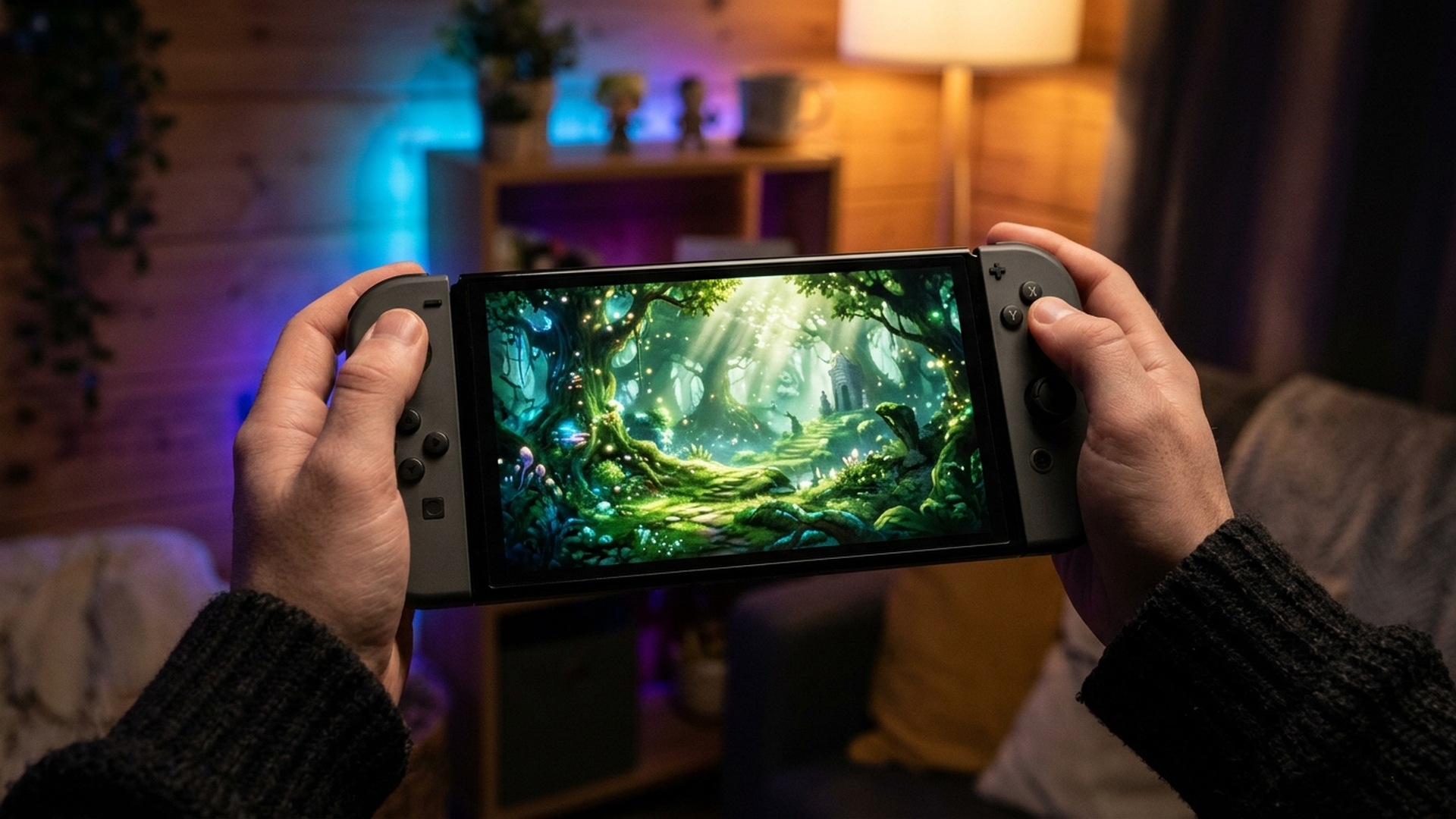
Portable PC gaming has reached an uncomfortable pricing crossroads in late 2026. While ultra-enthusiast Windows handhelds like the ASUS ROG Xbox Ally X20 have pushed retail price tags to an eye-watering $1,299 amid global memory shortages (“RAMageddon”), millions of everyday gamers have been priced out of next-generation silicon upgrades. Now, newly leaked hardware schematics reveal Intel’s bold counter-offensive: an entry-level Panther Lake mobile processor tentatively branded the Intel Arc G3 “Play”. Engineered around an unconventional “0+8+0+4” CPU layout paired with four next-gen Xe3 graphics cores, Intel’s purpose-built handheld chip aims to resurrect the $449–$549 portable PC market.
Inside Intel Arc G3 ‘Play’: Why Dropping Performance Cores Is Genius for Handhelds
At first glance, the leaked core configuration of the Intel Arc G3 Play—listed in silicon validation manifests as 0+8+0+4—looks startling to desktop PC builders. On standard Panther Lake laptop chips, those four digits represent Cougar Cove Performance cores (P-cores), Darkmont Efficient cores (E-cores), Low-Power Island E-cores (LP-E), and integrated Xe3 GPU cores. By setting the P-core count to zero and relying on 8 high-density Efficient cores alongside 4 LP-E cores, Intel is solving the exact thermal and battery bottleneck that has plagued x86 handhelds for years.

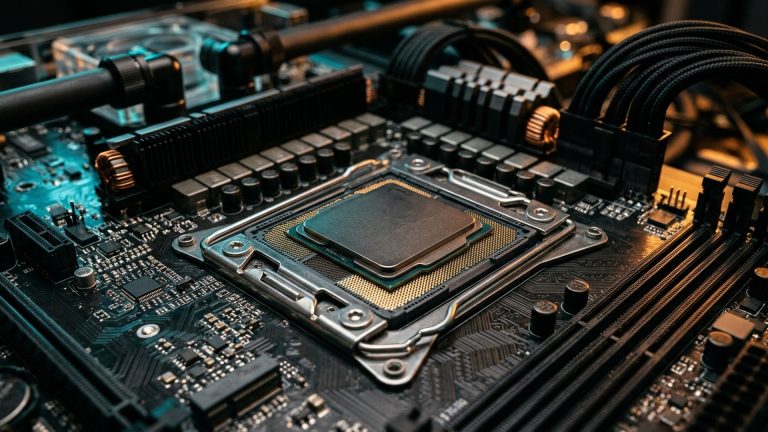
Inside a 15-watt to 22-watt handheld thermal envelope, massive desktop-derived P-cores are power hogs that starve the integrated GPU of wattage whenever modern games compile shaders or stream open-world assets. Modern Darkmont E-cores deliver exceptional IPC (instructions per clock) per watt at modest frequencies, freeing up crucial thermal headroom and memory bandwidth so the 4 Xe3 Celestial-architecture GPU cores can sustain boost clocks above 2.3 GHz without draining a 50Wh battery in ninety minutes.
The $1,299 Problem: ROG Xbox Ally X20, RAMageddon & Mangmi Air X Pro
Intel’s timing could hardly be sharper. Across late 2026, AI data-center demand for LPDDR5X and NAND flash storage has hammered OEM manufacturing budgets, pushing flagship Windows portables like the $1,299 ASUS ROG Xbox Ally X20 (which boots directly into Microsoft’s controller-friendly Xbox full-screen interface) and rival MSI and Lenovo flagships into full-blown gaming laptop territory. In fact, shoppers spending over $1,100 often get dramatically higher rasterization performance from dedicated mobile RTX GPUs—as detailed in our Best Gaming Laptops 2026 Buyer’s Guide: Lenovo LOQ & ROG Zephyrus Picks.
Meanwhile, at the ultra-compact Android and retro end of the spectrum, portable specialist Mangmi officially unveiled the Air X Pro this week, sporting a crisp 5.5-inch 1080p IPS display (450 nits peak brightness), UFS 3.1 flash storage, and a Qualcomm Snapdragon 865 chipset delivering over 5x the GPU throughput of its predecessor. Between sub-$250 Android handhelds, the perennial value kings Steam Deck OLED and Nintendo Switch 2, and $1,299 Windows titans, the $499 Windows/SteamOS mid-tier has been begging for modern silicon—precisely the gap Intel Arc G3 Play targets.
| Portable Gaming Device / Chip | Silicon Architecture | CPU / GPU Core Spec | Display & Target Resolution | Estimated / Retail Price Tier |
|---|---|---|---|---|
| Intel Arc G3 ‘Play’ Handhelds (Leaked) | Intel Panther Lake (18A) | 0 P + 8 E + 4 LP-E / 4 Xe3 Cores | 7-inch 1080p VRR (XeSS 2 Upscaled) | $449 – $579 Target Segment |
| ASUS ROG Xbox Ally X20 | Flagship x86 Handheld APU | High-Core Zen 5 / RDNA 3.5+ Class | 7–8 inch 1080p 120Hz VRR (Xbox UI) | $1,299 Flagship Retail |
| Nintendo Switch 2 | Custom NVIDIA Tegra T239 | 8-Core ARM / Ampere + Hardware DLSS | 8-inch 1080p Handheld / 4K Docked | $449 – $499 Console Hybrid |
| Valve Steam Deck OLED | Custom AMD Sephiroth (6nm) | 4C/8T Zen 2 / 8 RDNA 2 CUs | 7.4-inch 800p 90Hz HDR OLED | $549 – $649 Mainstream Benchmark |
| Mangmi Air X Pro (Newly Revealed) | Qualcomm Snapdragon 865 | 8-Core Kryo 585 / Adreno 650 (5x Leap) | 5.5-inch 1080p IPS (450 Nits, UFS 3.1) | ~$179 – $229 Compact Retro/Cloud |
Can 4 Xe3 GPU Cores Actually Run Modern AAA Games?
Skeptics naturally raise an eyebrow at a “4 Xe3-core” specification when full-fat Lunar Lake and Panther Lake laptop chips boast 8 to 12 Xe cores. However, architectural efficiency per slice has leaped considerably in Xe3. Each Xe3 core packs expanded XMX AI matrix engines capable of running Intel XeSS 2 Super Resolution and Frame Generation at minimal frame-time cost, alongside substantially improved geometry culling and ray-tracing traversal units.
Targeting 720p-to-1080p XeSS Balanced output at 15W–20W, a 4-core Xe3 GPU paired with fast LPDDR5X memory is projected to match or slightly edge out the aging 8-CU RDNA 2 graphics inside the Steam Deck while consuming less idle board power thanks to Intel’s 18A process node. Gamers comparing mobile efficiency against full desktop CPUs and budget towers can also explore our Ryzen 7 9800X3D vs Core Ultra 9 285K Architecture Breakdown and Best Budget Gaming Desktop Builds Under 60K–85K.

Battery Life Telemetry: Why 18A Efficiency Changes Travel Gaming
Beyond sticker-price relief, the biggest quality-of-life breakthrough promised by Intel’s Panther Lake Arc G3 Play architecture is untethered endurance on flights and daily commutes. Current high-wattage handheld APUs routinely guzzle 28W to 35W total system power when sustaining 60 FPS in Unreal Engine 5 titles, forcing travelers to carry bulky 65W USB-C power banks everywhere they go. By eliminating leakage-heavy Performance cores and routing background OS threads onto ultra-frugal LP-E silicon islands, early power-curve models project two-and-a-half to three-and-a-half hours of continuous 1080p XeSS gameplay on a modest 48Wh battery—bringing true console-like stamina back to affordable x86 portables.
Handheld Optimization Tip: If you currently game on a Windows-based handheld APU, manually allocating 6GB of system RAM as dedicated UMA Frame Buffer inside BIOS—and capping in-game refresh rates to 45Hz or 60Hz with VRR active—prevents VRAM spillover stutter while adding up to 40 minutes of untethered battery runtime.
Looking closely at portable gaming ergonomics and silicon economics in late 2026, Intel’s rumored Arc G3 Play represents a refreshingly pragmatic engineering pivot. For three consecutive hardware cycles, handheld manufacturers chased synthetic Cinebench multi-core bragging rights by cramming 8-to-12 laptop CPU cores into tiny dual-fan shells—resulting in heavy 700-gram bricks with roaring fan curves and $1,000-plus MSRPs that alienated mainstream buyers.
By stripping away power-hungry P-cores entirely in favor of an 8 E-core + 4 LP-E Panther Lake cluster feeding 4 modern Xe3 graphics slices, Intel aligns silicon die area with how portable games actually execute at 15 watts. Modern DirectX 12 and Vulkan engines rarely saturate more than six efficient threads when GPU-bound at 60 FPS, meaning every square millimeter saved on CPU die size directly lowers retail device pricing without sacrificing real-world frame pacing.


Combined with vibrant competition at the budget end from devices like the Snapdragon-powered Mangmi Air X Pro and established ecosystems like Steam Deck OLED and Nintendo Switch 2, 2027 shapes up as a pivotal correction year where smart architectural efficiency finally pushes back against runaway handheld price inflation.
Frequently Asked Questions: Intel Arc G3 ‘Play’ & 2026 Handhelds
What are the leaked specs of the Intel Arc G3 ‘Play’ handheld chip?
Built on Intel’s Panther Lake architecture, the rumored Intel Arc G3 ‘Play’ features a ‘0+8+0+4’ configuration: zero high-wattage Performance cores, 8 Darkmont Efficient cores, 4 Low-Power Island cores, and a streamlined 4-core Xe3 integrated GPU tailored for affordable portable PCs.
Why are flagship handhelds like the ASUS ROG Xbox Ally X20 so expensive?
Severe global DRAM and NAND flash memory shortages driven by AI data-center manufacturing demand (‘RAMageddon’), combined with larger high-density batteries and flagship APUs, have pushed top-end Windows handhelds like the ROG Xbox Ally X20 up to $1,299.
What is the Mangmi Air X Pro handheld?
The Mangmi Air X Pro is a newly teased compact portable gaming handheld equipped with a 5.5-inch 1080p 450-nit IPS screen, UFS 3.1 storage, and a Qualcomm Snapdragon 865 processor delivering more than 5x the GPU performance of its predecessor for retro emulation and Android gaming.
Should I buy a $1,299 handheld PC or a gaming laptop in late 2026?
Unless couch and airplane portability is your absolute top priority, a $1,100 to $1,300 gaming laptop with a discrete GPU offers roughly 2.5x to 3.5x higher raw framerates; value-focused handheld buyers are better served by the Steam Deck OLED, Nintendo Switch 2, or upcoming Arc G3 budget portables.
Related posts:
 AMD Ryzen 7 9800X3D Drops to $399.99 With Code BFF36: Buy Now or Wait for Zen 6?
 ASUS Black Friday 2026 Gaming Monitor Deals (Up to 30% Off): PG32UCWM Tandem OLED vs 540Hz XG259QWPG Ace Guide
 Black Friday 2026 PC Hardware & Monitor Deals: Buy QHD 180Hz IPS Displays Now or Wait for Nov 27 GPU Cuts?
 Xbox ‘Project Helix’ Revealed: Console-First PC Hybrid, Magnus SoC & Unified Game Libraries
