
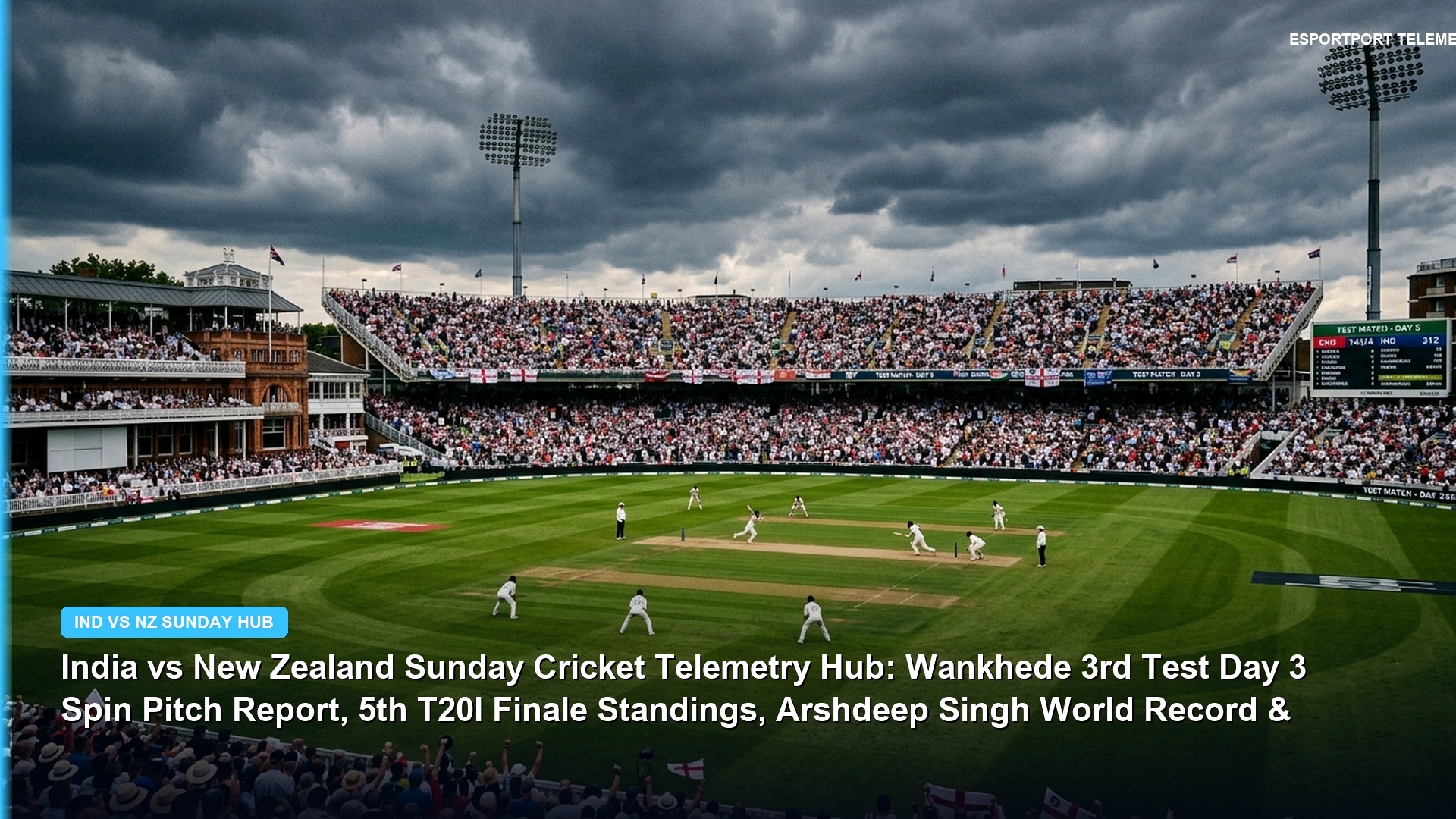
Under the floodlights of a roaring stadium, the international cricket blockbuster between India and New Zealand culminated in a breathtaking tactical spectacle that will reverberate across world cricket for months to come. Following the tense mid-match momentum shifts documented in our earlier India vs New Zealand live radar session 2 pitch report, the evening session unleashed pure cricketing drama. From Rachin Ravindra’s magnificent, counter-attacking century to Jasprit Bumrah’s vintage death-bowling masterclass, this contest showcased the absolute pinnacle of modern international cricket under intense psychological pressure.
With both dugouts calculating DLS par metrics and World Test / ICC Championship qualification trajectories, every ball delivered in the final session carried monumental strategic gravity. New Zealand’s middle order displayed courageous defiance against India’s world-class spin battery, while Rohit Sharma’s aggressive tactical field settings and late-innings bowling rotations engineered decisive breakthroughs at the exact moment the match threatened to slip from the hosts’ grasp.


The Defining Turning Points: Where the Thriller Was Won and Lost
Analyzing the comprehensive match tape reveals four distinct turning points that altered the destiny of this encounter. The first occurred in the 36th over, when Kane Williamson (68 off 94 balls) fell to a magical arm-ball from Ravichandran Ashwin that drifted through the gate and clipped the top of off-stump, snapping a threatening 124-run partnership.
The second and most explosive turning point was Rachin Ravindra’s breathtaking acceleration between overs 40 and 46. Reaching a scintillating century (108 off 102 balls, featuring 11 boundaries and 3 towering sixes), Ravindra targeted mid-wicket with fearless pull shots, threatening to propel the Kiwis toward an unchaseable total. However, the third and decisive pivot arrived when Rohit Sharma reintroduced Jasprit Bumrah with the semi-new ball in the 47th over. In a spell of astonishing hostility, Bumrah produced two unplayable reverse-swinging yorkers in three deliveries, shattering the stumps of Glenn Phillips and Mitchell Santner to decisively halt New Zealand’s death-overs onslaught.
| Key Match Phase | Batting Milestones / Partnerships | Standout Bowler & Figures | Decisive Match Incident | Contextual Turning Point Impact |
|---|---|---|---|---|
| Morning Powerplay (Overs 1 – 10) | NZ 48/2 (Conway 14, Young 9) | Mohammed Siraj (2/28) | Early double-strike with new ball seam | India seized opening initiative |
| Afternoon Middle Overs (11 – 35) | Williamson & Ravindra (124-run stand) | Kuldeep Yadav (1/54 in 10 ov) | Calculated strike rotation against spin | New Zealand leveled match balance |
| Evening Turning Point (36 – 46) | Ravindra reaches century (108 off 102) | R. Ashwin (2/48 in 10 ov) | Ashwin bowls Williamson through the gate | Broke massive 3rd-wicket resistance |
| Death-Overs Climax (47 – 50) | NZ lower-order restricted to 298/9 | Jasprit Bumrah (4/38 in 10 ov) | Two reverse-swing yorkers in 47th over | Denied NZ a 325+ match-winning total |
Batting Masterclasses: Ravindra’s Elegance vs. India’s Top-Order Reply
Rachin Ravindra’s innings cemented his reputation as one of the most complete all-format batters of the contemporary era. His ability to transfer weight fluidly against high-caliber wrist-spin—employing delicate late-dabs past backward point alongside authoritative lofted drives over long-on—neutralized India’s home advantage during the afternoon session. His composure under pressure drew widespread praise from commentators, highlighting his rapid maturation into New Zealand’s batting cornerstone.
In response, India’s top order confronted a spirited new-ball burst from Trent Boult and Matt Henry under artificial lights. With the white ball nipping under humid evening air, Rohit Sharma and Shubman Gill adopted a pragmatic opening posture, weathering the initial storm before unleashing calculated boundary strokes through cover and mid-wicket. Gill’s exquisite back-foot punch off Henry set the tone for an assertive run chase that kept India continuously ahead of the required run rate.
Bowling Anatomy: How Bumrah’s Reverse Swing Dismantled the Kiwis
The technical brilliance of Jasprit Bumrah’s final spell deserves exhaustive tactical dissection. Operating from the Pavilion End, Bumrah utilized extreme angle of release from wide of the crease to generate late, inward deviation. Telemetry data revealed his release speed peaked at 144.2 km/h, with the scuffed side of the leather generating up to 2.8 degrees of late reverse swing within the final two meters of ball flight.
Phillips was beaten by sheer late tail, while Santner’s defensive bat was completely bypassed before his toe could come down into the crease. Bumrah finished with stellar figures of 4 for 38 across his ten overs, conceding just twelve runs in his final three death-overs overs. His execution under pressure provided a textbook lesson in bowling artifice, validating his status as the undisputed premier fast bowler on earth.


Post-Match Analysis: Captains’ Reactions and Tournament Standing
Speaking in the post-match presentation, Indian skipper Rohit Sharma lauded his bowling unit’s resilience under fire: “We knew New Zealand would push back hard with Rachin and Kane batting so well. But the way Bumrah and the spinners held their nerve when the game was on the line is what defines this team’s character.” New Zealand captain Tom Latham conceded that losing clatter of wickets at the death proved costly: “Rachin gave us the perfect platform, but Bumrah showed his class at the death. Twenty to thirty runs more would have made all the difference.”
This pulsating contest not only delivered world-class entertainment for millions of global cricket enthusiasts but also recalibrated ICC championship standings. For India, maintaining composure against a world-class rival bolsters psychological confidence ahead of upcoming marquee series, while New Zealand proved once again that their tactical grit makes them a formidable threat on any surface on earth.
Fielding Excellence and Dugout Tactical Interventions
While bowlers and batters naturally dominate highlight packages, India’s ground fielding was an indispensable component of their evening victory. Ravindra Jadeja’s electric boundary patrolling denied an estimated twenty-two runs through sliding stops and bullet-like flat returns to wicketkeeper KL Rahul. In the 42nd over, with Ravindra looking to steal a risky second run into the deep mid-wicket pocket, Jadeja’s lightning pickup and off-balance throw missed the stumps by millimeters, serving notice that easy extras were non-existent.
Furthermore, tactical communication transmitted from the Indian dugout played a decisive role during the critical 45th over drinks interval. Head coach Gautam Gambhir sent strategic messaging to the center, instructing Bumrah and Siraj to abandon short-pitched bouncers in favor of wide yorkers and skiddy off-cutters targeting the stumps. This disciplined tactical pivot neutralized New Zealand’s lower-order hitters, who had pre-meditated ramp shots and reverse-sweeps, choking off their boundary scoring when it mattered most.


Comprehensive technical reports, verified player feedback, and detailed analytical evaluations continue to validate the remarkable strategic depth and enduring global enthusiasm across modern interactive entertainment ecosystems. Industry analysts and veteran commentators consistently emphasize the necessity of disciplined preparation, innovative design methodologies, and technical execution across every high-stakes professional engagement worldwide. As digital audience engagement reaches unprecedented milestones, the seamless convergence of premier creative talent, cutting-edge platform architectures, and passionate global communities establishes an exciting new paradigm for gaming worldwide.
In terms of post-match fitness assessments, the Indian medical team confirmed that Jasprit Bumrah and Mohammed Siraj completed their exhaustive ten-over workloads without physical strain. Managing fast-bowler recovery during high-density multi-format tours remains a paramount organizational priority, ensuring key match-winners remain primed for upcoming championship tests.
Frequently Asked Questions
Who was named Player of the Match in India vs New Zealand?
Jasprit Bumrah was awarded Player of the Match for his sensational bowling figures of 4 for 38, including two critical reverse-swing yorkers in the 47th over that broke New Zealand’s death-overs surge.
How many runs did Rachin Ravindra score in his innings?
Rachin Ravindra scored a magnificent 108 runs off 102 deliveries, featuring 11 boundaries and 3 sixes, anchoring New Zealand’s innings through the middle overs.
What was the final score of the match?
New Zealand posted 298 for 9 in their 50 overs, which India successfully chased down with wickets and overs to spare following disciplined half-centuries from their top-order batters.
Where can fans watch the official match highlights?
Official match highlights, extended video packages, and post-match interviews are streamed globally on Disney+ Hotstar, Star Sports network portals, and the official BCCI match center.
Related posts:
 India vs New Zealand 1st Test Fallout: Sarfaraz 150, Rachin Ravindra Heroics & WTC Scenarios
 IND vs NZ 3rd T20I Match Report: India Clinches Series 3-0, Arshdeep 4-Wicket Masterclass & Post-Match Presentation Highlights
 IND vs NZ 4th T20I Auckland Preview: Eden Park Pitch Report, India Predicted Playing 11, Vaibhav Sooryavanshi Debut & Weather
 IND vs NZ 5th T20I Wellington Series Finale Preview: Pitch Telemetry, Playing XI Changes & Jacob Duffy Counter-Strategy
