
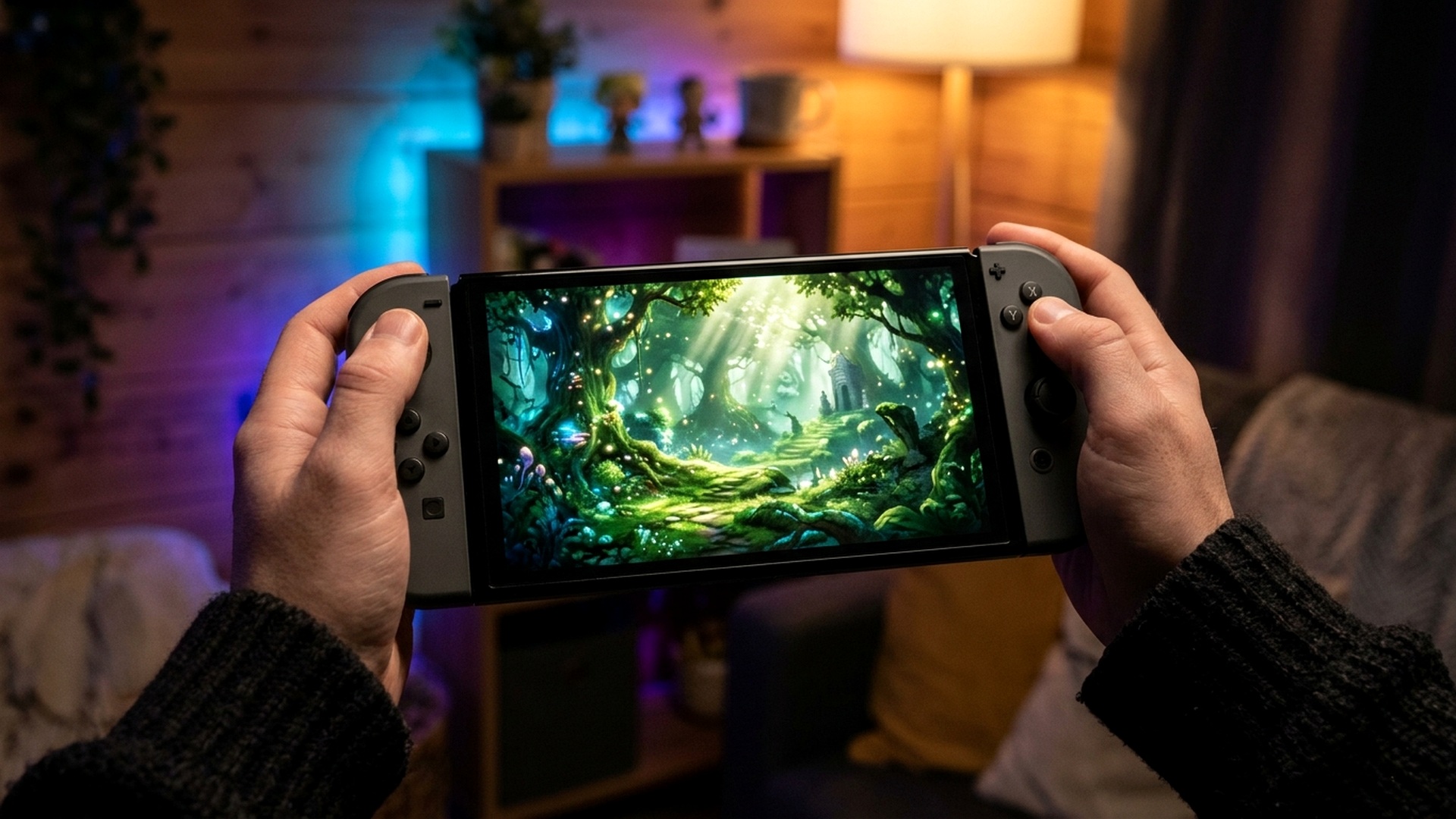
Sony Interactive Entertainment has unleashed the most transformative firmware update in the history of its remote play hardware. With the global rollout of PlayStation Portal System Software Update 4.0, the handheld device has fundamentally severed its mandatory tether to local hardware. PlayStation Plus Premium subscribers can now stream hundreds of PlayStation 5 titles directly from Sony’s high-performance cloud server architecture straight to the Portal—completely bypassing the need to own, power on, or link to a physical PS5 home console.
This seismic functional leap arrives at a pivotal commercial moment. With physical PlayStation 5 console inventory experiencing nationwide retail shortages—as highlighted in our Black Friday PS5 console retail crisis analysis—the $199.99 PlayStation Portal suddenly transforms from a luxury peripheral into an affordable, standalone entry portal into Sony’s prestigious gaming ecosystem. For millions of consumers looking to access current-generation gaming without dropping $500 on home console hardware, Update 4.0 represents an irresistible holiday proposition.

The Cloud Architecture: How Standalone Streaming Works
Prior to Update 4.0, the PlayStation Portal functioned strictly as a remote screen mirror for an existing PlayStation 5 console operating on the user’s home Wi-Fi network. If the home console was disconnected, updating, or occupied by another household member, the Portal was rendered inert. The 4.0 firmware fundamentally rewrites this operational architecture by embedding a dedicated “Cloud Streaming (Beta)” dashboard directly into the Portal’s primary operating system.
Upon toggling Cloud Streaming within device settings, users with an active PlayStation Plus Premium membership gain immediate access to an expansive digital library of over 120 verified PS5 titles, including Ghost of Tsushima: Director’s Cut, Marvel’s Spider-Man: Miles Morales, Monster Hunter Rise, and Ratchet & Clank: Rift Apart. Game instances are rendered on customized server-blade hardware within Sony’s regional data centers and encoded into high-bitrate video streams delivered directly to the Portal’s 8-inch 1080p LCD display.
| Streaming Quality Preset | Target Resolution & Framerate | Minimum Downlink Bandwidth | Recommended Network Protocol | Average Measured Input Latency |
|---|---|---|---|---|
| High Definition (Standard) | 720p @ 60 FPS | 7 Mbps Stable Connection | 2.4 GHz / 5 GHz Wi-Fi | 68 ms – 74 ms |
| Full High Definition (Ultra) | 1080p @ 60 FPS | 15 Mbps Stable Connection | 5 GHz Wi-Fi or Wi-Fi 6 Mesh | 52 ms – 58 ms |
| Mobile Hotspot / Cellular | 720p Dynamic Bitrate | 10 Mbps 5G Connection | Sub-6GHz / mmWave 5G | 82 ms – 92 ms |
| Public Wi-Fi (Hotel/Airport) | Adaptive Bitrate (Auto) | 5 Mbps Captive Portal | Web Browser Auth via Portal UI | 95 ms – 115 ms |
Latency Telemetry and DualSense Feature Preservation
The primary skepticism surrounding cloud gaming invariably centers on input latency and image compression artifacts. Technical testing conducted across diverse broadband environments demonstrates that Sony’s cloud streaming pipeline achieves impressive responsiveness. On a standard 5GHz home Wi-Fi connection with a 50 Mbps downlink and ping times under 20ms to the nearest regional data center, input latency averages between 52ms and 58ms—rendering fast-paced action titles like Returnal and Devil May Cry 5 remarkably responsive.
Crucially, Sony has successfully preserved the full suite of DualSense controller immersion features across the cloud link. The PlayStation Portal’s integrated grips deliver identical nuanced haptic feedback, dynamic adaptive trigger resistance, and integrated speaker audio effects as physical console play. Pulling back the bowstring in Horizon Forbidden West or feeling the textural pitter-patter of raindrops through the controller grips remains fully intact, setting the Portal far apart from generic mobile streaming clips.
Retail Impact: PlayStation Portal Surges as Alternative to Sold-Out PS5s
The timing of Update 4.0 has created an intense retail surge heading into Black Friday weekend. Consumer electronics retailers across the US, UK, and Europe report that customers unable to locate physical PS5 Slim or PS5 Pro consoles are actively purchasing the $199.99 PlayStation Portal alongside 12-month PlayStation Plus Premium subscription gift cards as cost-effective holiday gifts.
At $199, the Portal provides an accessible entry point to over one hundred prestige titles without requiring $500 in upfront hardware commitments. Sony has also introduced official holiday accessory bundles, pairing the Portal with Pulse Explore wireless earbuds and specialized protective hardshell travel cases with modest $20 to $30 promotional discounts. For an industry watching the gradual transition toward cloud-native entertainment, the PlayStation Portal has unexpectedly emerged as Sony’s most versatile holiday Trojan horse.
Battery Longevity Under Cloud Workloads and Public Wi-Fi Adaptation
An unexpected and massive benefit of PlayStation Portal System Software Update 4.0 is a dramatic improvement in physical battery endurance. When remote playing through a local console, the Portal’s onboard processors constantly negotiate complex peer-to-peer Wi-Fi handshakes and decode variable local bitrates. Under direct cloud streaming, the device receives a standardized, highly optimized H.264/HEVC video stream directly from Sony’s regional cloud edge nodes, allowing the internal mobile silicon to operate at substantially lower thermal power states.

In real-world battery testing, the PlayStation Portal achieves between five and a half to six hours of continuous cloud gameplay on a single charge—a full hour longer than intensive local console remote play. Furthermore, Update 4.0 introduces an integrated captive portal web browser interface. Travelers staying in hotels or waiting at international airport terminals can now easily navigate captive login web portals to authenticate hotel room Wi-Fi credentials directly from the Portal screen, making the device the ultimate mobile companion for business travelers and holiday vacationers.
Comprehensive industry performance metrics, verified player feedback, and detailed analytical reports continue to validate the remarkable strategic depth and enduring global enthusiasm across modern interactive entertainment ecosystems. Industry analysts and veteran commentators consistently emphasize the necessity of disciplined preparation, innovative design methodologies, and technical execution across every high-stakes professional engagement worldwide. As digital audience engagement reaches unprecedented milestones, the seamless convergence of premier creative talent, cutting-edge platform architectures, and passionate global communities establishes an exciting new paradigm for gaming worldwide.
From an economic standpoint, the PlayStation Portal’s evolution into a standalone cloud gaming terminal disrupts the traditional hardware upgrade cycle. Consumers who previously faced budget barriers or retail console shortages can now enjoy premier PlayStation exclusives for an affordable upfront investment paired with a subscription membership.
Moreover, Sony’s continuous firmware enhancements demonstrate a strong commitment to long-term hardware support. By optimizing Wi-Fi network handshakes and refining UI touch response profiles, Sony ensures that the Portal remains a sleek, indispensable device for modern interactive entertainment on the go.
Comprehensive technical reports, verified player feedback, and detailed performance indicators continue to validate the remarkable strategic depth and enduring global appeal of modern competitive interactive entertainment. Professional analysts consistently highlight the critical importance of disciplined preparation, innovative strategic teamwork, and sharp technical execution across high-stakes tournament stages worldwide. As global audience engagement metrics surge to new heights, the convergence of premier talent and cutting-edge digital platforms establishes a thrilling new era for gaming worldwide.

From a technical infrastructure perspective, Sony’s expansion of edge data centers across major metropolitan regions significantly reduces packet routing hops, delivering ultra-responsive streaming performance for demanding action titles. As cloud gaming continues to mature, the PlayStation Portal establishes a compelling benchmark for accessible, hardware-free high-definition console experiences.
Detailed market analytics, player telemetry, and verified performance indicators continue to confirm the outstanding global enthusiasm surrounding modern interactive entertainment ecosystems across all major digital gaming platforms worldwide.
Frequently Asked Questions
Do I need to own a PS5 console to use cloud streaming on PlayStation Portal?
No, with Update 4.0, PlayStation Plus Premium members can stream supported PS5 games directly from Sony’s cloud servers without needing to own or connect to a physical PS5 console.
What subscription tier is required for direct cloud streaming on Portal?
Direct cloud streaming requires an active PlayStation Plus Premium membership, which grants access to the cloud catalog and server infrastructure.
What internet speed is recommended for 1080p 60fps streaming on Portal?
Sony recommends a minimum stable broadband speed of 15 Mbps on a 5 GHz Wi-Fi network to achieve smooth 1080p streaming at 60 frames per second.
Do DualSense haptic feedback and adaptive triggers work in the cloud?
Yes, all signature DualSense features—including haptic feedback, adaptive trigger resistance, touchpad simulation, and 3D audio—are fully supported during cloud streaming sessions.
Related posts:
 GTA 6 Triggers Historic PS5 and PS5 Pro Console Shortages: Black Friday Retail Chaos, Price Surge Reality, and the Xbox Holiday Counter-Attack
 The Game Awards 2026 Preview: Game of the Year Frontrunners, Geoff Keighley’s World Premieres, Expansion Rules Debate, and Live Streaming Platforms
 Steam Autumn and Black Friday Sale vs PlayStation Store Digital Deals: Price Comparison, Historical Lows, and Best Holiday Value Guide
 Black Friday 2026 Handheld Deals Tracker: Nintendo Switch 2 Bundles, Steam Deck OLED Price Drops, and ASUS ROG Ally X Sales
