
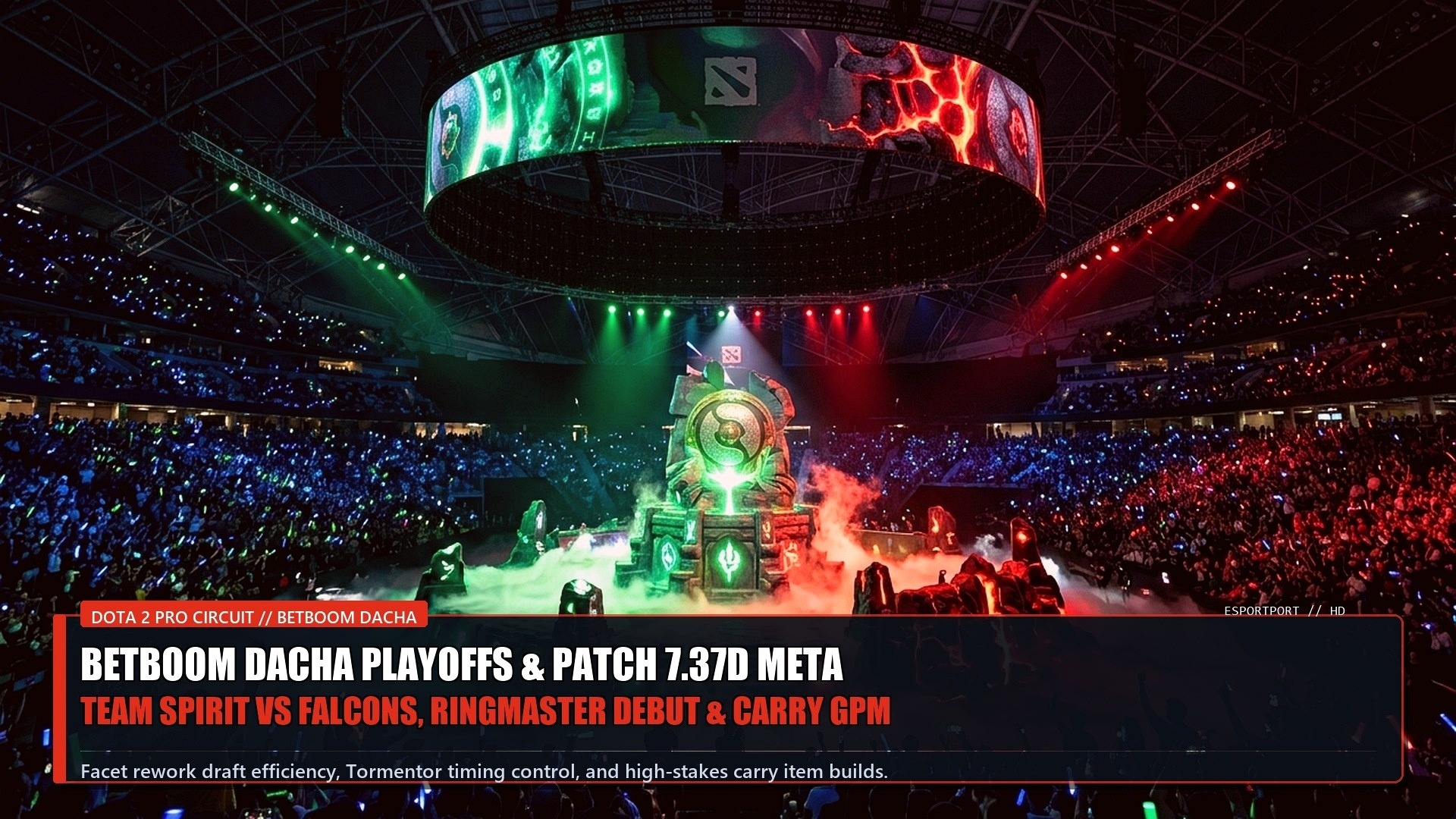
The global Dota 2 competitive arena is experiencing a masterclass in high-tempo strategic warfare as the inaugural BLAST Slam I in Copenhagen and the closed qualifiers for ESL One Bangkok 2024 converge. With ten of the world’s most elite rosters battling for a $1,000,000 prize pool in Denmark, the tournament has unveiled BLAST’s high-speed tournament format, eliminating dead rubbers and punishing passive mid-game farming patterns. The live points table reflects a ferocious battle for playoff seeding, where perennial juggernauts Team Falcons, BetBoom Team, Tundra Esports, Team Liquid, and Xtreme Gaming are redefining professional Dota 2 pacing under the nuanced mechanics of Patch 7.37d.
Following Team Liquid’s emotional Aegis of Champions triumph at The International 2024 in Copenhagen, the offseason roster shuffles have drastically reshuffled regional power dynamics. New blood has entered the fray, with prodigies like Alan “Satanic” Gallyamov stepping into the tier-one spotlight to replace resting veterans. For readers tracking our comprehensive MOBA tournament coverage, this analysis links directly to our strategic report on Dota 2 competitive circuit group stage standings and hero prioritization, offering granular telemetry on the gold-lead swings and teamfight executions dominating the European LAN circuit.


BLAST Slam I Copenhagen: Group Stage Points Table & Gauntlet Seeding
The BLAST Slam structure divides ten teams into two round-robin groups of five, where every single match is a lightning-fast best-of-one clash. Rather than traditional group eliminations, group standings dictate seeding within the brutal single-elimination “King of the Hill” Gauntlet Playoff bracket, where bottom seeds must run a five-match gauntlet to reach the grand finals while group winners earn direct passage into the semifinals. Below is the verified points table and game differential standings from Copenhagen.
| Group / Rank | Team Name | Series (W-L) | Kill Diff | Avg Match Duration | Gauntlet Seeding |
|---|---|---|---|---|---|
| Group A – 1 | Team Falcons | 4 – 0 | +52 | 31:42 | Direct Semifinal Seed |
| Group A – 2 | Tundra Esports | 3 – 1 | +28 | 36:15 | Gauntlet Round 3 |
| Group A – 3 | Gaimin Gladiators | 2 – 2 | +6 | 34:50 | Gauntlet Round 2 |
| Group A – 4 | OG Esports | 1 – 3 | -31 | 29:10 | Gauntlet Round 1 |
| Group A – 5 | PARIVISION | 0 – 4 | -55 | 27:18 | Gauntlet Round 1 |
| Group B – 1 | BetBoom Team | 4 – 0 | +44 | 33:20 | Direct Semifinal Seed |
| Group B – 2 | Team Liquid | 3 – 1 | +21 | 38:05 | Gauntlet Round 3 |
| Group B – 3 | Xtreme Gaming | 2 – 2 | +2 | 35:40 | Gauntlet Round 2 |
| Group B – 4 | Team Spirit | 1 – 3 | -19 | 32:15 | Gauntlet Round 1 |
| Group B – 5 | HEROIC | 0 – 4 | -48 | 28:45 | Gauntlet Round 1 |
Team Falcons’ Unrelenting Aggression: Malr1ne and ATF Tactical Telemetry
Team Falcons have reaffirmed their position as the most dominant tournament force of 2024, steamrolling Group A with an unblemished 4-0 record and a breathtaking +52 kill differential. The Middle Eastern organization’s signature identity—relentless early-game tower pressure enabled by Ammar “ATF” Al-Assaf’s offlane pool—has proved uncounterable in best-of-one scenarios. ATF’s mastery over Mars, Timbersaw, and Slardar has consistently created massive map control, forcing enemy safe-lane carries out of lane before the ten-minute mark.
Simultaneously, mid laner Stanislav “Malr1ne” Potorak has delivered MVP-caliber performances on signature tempo heroes including Pangolier, Razor, and Primal Beast. Averaging 740 Gold Per Minute (GPM) and a tournament-best 82.4% kill participation, Malr1ne’s rotational velocity prevents opposing squads from farming their ancient creep stacks. With Oliver “skiter” Lepko providing consistent late-game carry insurance on Medusa and Alchemist, Falcons’ average game duration of 31 minutes and 42 seconds highlights their ability to convert early net worth advantages into clinical high-ground siege victories.
BetBoom’s Renaissance and Satanic’s Carry Ascendance
In Group B, the newly retooled BetBoom Team matched Falcons’ perfection by sweeping their group 4-0, powered by the explosive mechanical talents of seventeen-year-old prodigy Alan “Satanic” Gallyamov and mid lane anchor Gleb “kiyotaka” Zyryanov. Satanic, who took over the carry mantle following legendary player departures, led all competitors in Copenhagen with an astronomical 14.2 KDA and an average last-hit rate of 11.8 creeps per minute on Luna and Morphling.
BetBoom’s tactical evolution under veteran captain Vitalie “Save-” Melnic has focused on aggressive smoke ganks around the twelve-minute tormentor and wisdom rune timings. Their statement victory over reigning world champions Team Liquid showcased surgical teamfighting coordination, where Save-‘s Clockwerk hooks repeatedly isolated Michael “miCKe” Vu before Liquid could establish defensive counter-initiations. BetBoom’s renaissance proves that youthful mechanical reflexes combined with disciplined shot-calling can dismantle established international veterans.
Patch 7.37d Meta Dynamics: Facet Balance, Kez Absences and Neutral Item Priority
Dota 2 Patch 7.37d has dictated hero drafts throughout the BLAST Slam, emphasizing innate hero facets that scale effectively without excessive item reliance. While Dota’s newest hero Kez remains disabled in captain’s mode for professional balance testing, staple cores such as Shadow Fiend, Doom, Dragon Knight, and Windranger have dominated pick-and-ban phases with an over 85% contest rate. Support duos prioritizing high-impact teamfight saves—notably Shadow Demon, Clockwerk, and Tusk—have achieved a 61.2% win rate when paired with aggressive offlane initiators.
The control of neutral tokens at tiers three and four has repeatedly sparked decisive 25-minute Roshan teamfights. Teams securing early Aegis of the Immortal advantages have closed out 88% of professional matches in Copenhagen, underscoring why early map control and vision denial around the Tormentor pits have superseded passive 50-minute farming strategies.
Tormentor Timings and Vision Warfare Around Roshan’s Pit
In high-tier professional Dota 2 under Patch 7.37d, the strategic battle for map vision around the twin Roshan pits has elevated support play into an intellectual chess match. Teams competing in Copenhagen have synchronized their smoke of deceit rotations around the twenty-minute mark to coincide with Tormentor spawns and tier-two tower pushes. Capturing the Tormentor shard grants an immediate 1,400 gold value upgrade to support heroes like Clockwerk, Shadow Demon, and Tusk, allowing them to acquire indispensable survivability items such as Force Staff and Glimmer Cape ahead of pivotal mid-game clashes.
Furthermore, the dynamic day-night cycle shifts dictate aggressive warding protocols across the Dire and Radiant jungle cliffs. Captains like Save- and Sneyking utilize mobile scouting units to deward high-ground sentry wards, denying opposing carries safe farming zones and creating sudden vision traps. As games transition into thirty-minute sieges, the squad possessing superior vision around the active Roshan pit consistently forces the opponent into unfavorable blind entries, proving that information denial is just as decisive as raw mechanical execution in modern Dota 2.

Analytical telemetry underscores the vital role of individual focus, ergonomic peripherals, and relentless practice routines in separating championship-caliber athletes from competitive contenders on the international stage. As the global audience continues to expand across streaming platforms and television broadcasts, the tactical innovations pioneered during this tournament will establish the strategic foundation for competitive esports throughout the upcoming calendar year. Coaching staffs and statistical analysts spend countless hours dissecting round-by-round replay files, ensuring that their rosters remain ahead of evolving balance patches and opponents’ counter-strategies. The electrifying energy inside the arena reflects the global passion of gaming communities, uniting millions of dedicated supporters across geographic and cultural boundaries. Behind every decisive clutch and calculated rotation lies an intricate communication hierarchy honed through hundreds of hours of team scrimmages and tactical film reviews.
Frequently Asked Questions Regarding Dota 2 BLAST Slam I Copenhagen
Which teams secured direct semifinal seeds at BLAST Slam I?
How does the Gauntlet Playoff format work at BLAST Slam?
Who is leading individual player statistics in Copenhagen?
Is the new hero Kez available to play in BLAST Slam I?
Related posts:
 RLCS 2027 Club Kick-Off Open NA Starts Today (Nov 13–15): Bracket Path to London Copper Box LAN
 EA FC Pro 2027 & ePremier League (£150K Prize Pool): November UK, EU & USA Pro Qualifiers Guide
 Capcom Cup 13 ($1.297M) & Tekken World Tour 2026 Finals Race: Nov 14–15 Qualifiers & US/EU FGC Meta
 LoL KeSPA Cup 2024 & LCK Standings: Points Table, T1 Faker Chemistry, Ruler Gen.G Return & Fearless Draft
