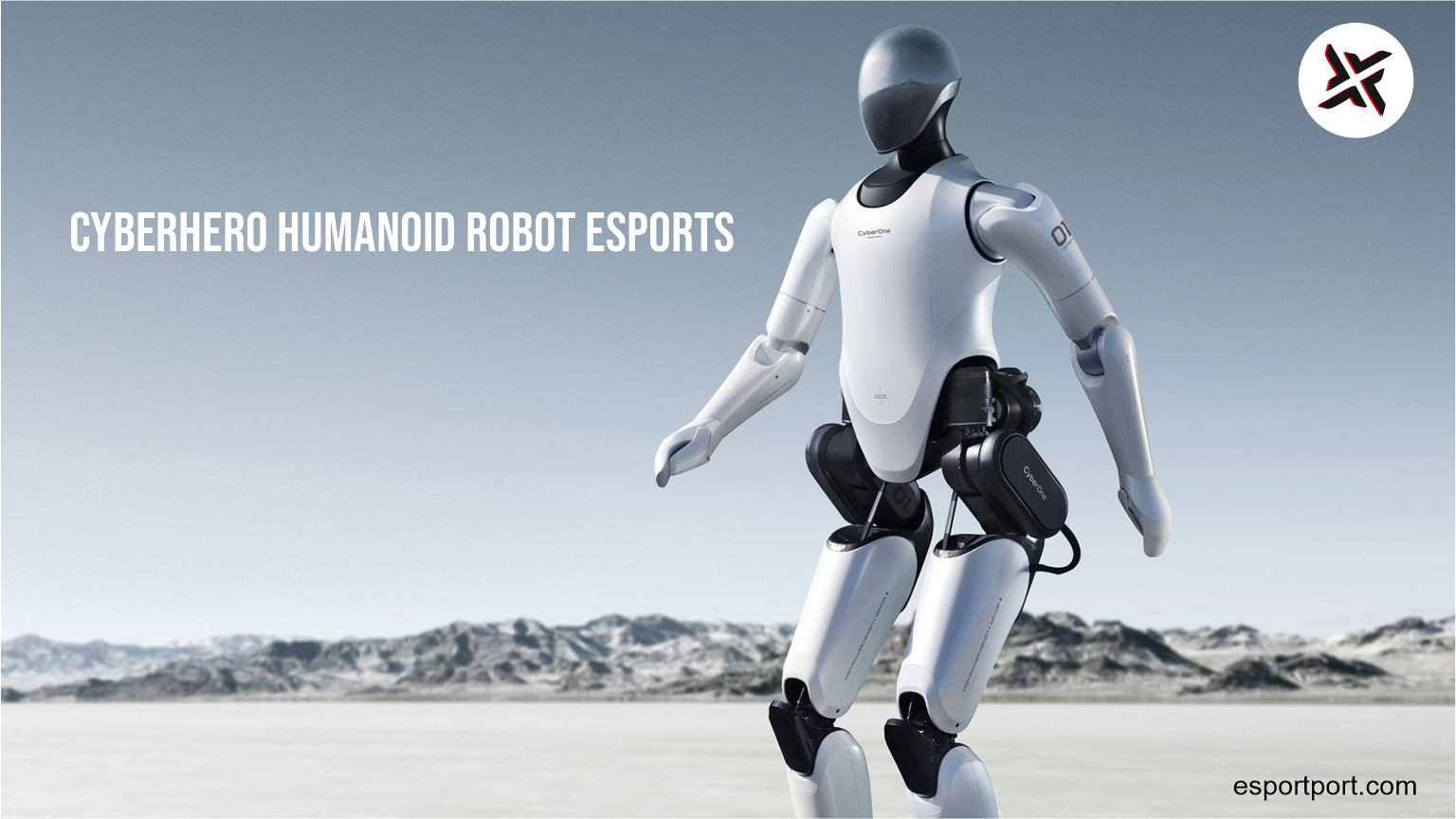
The definition of competitive gaming is undergoing a radical, sci-fi evolution. We are no longer just looking at screens. Asia’s largest esports company, Hero Esports, has officially announced the launch of CyberHero—the world’s very first humanoid robot kickboxing league.
Debuting in Riyadh on September 9, 2026, the inaugural CyberHero x Riyadh event features full-sized humanoid robots engaging in brutal, physical hand-to-hand combat. But there is a massive catch that makes this a true Esports event: these machines are piloted live in the arena by professional Esports athletes. Here is a deep dive into the insane technology powering CyberHero, the retail cost of these machines, and how competitive gaming is bleeding into the physical world.
- Table of Contents:
- The Hardware: EngineAI T800s
- T800 Pricing Architecture
- How Esports Pros Pilot the Robots
- 💡 Industry Impact: Resolving the Latency Problem
🔥 NEXT UP (Don’t Miss This): Esports World Cup 2026 Paris Wrap-Up: AG.AL Wins Big
1. The Hardware: EngineAI T800s
This is not BattleBots where small RC cars flip each other over. The event utilizes ten specialized, combat-ready variants of the EngineAI T800 humanoid robot.
- The Chassis: Standing at 1.73 meters (5’8″) and weighing in at a highly agile 75 to 85 kg, the T800 is a marvel of mechanical engineering. It features 29 articulated joints, giving it human-like mobility.
- The Mechanics: These full-scale machines can walk, sprint, punch, kick, and—most impressively—utilize advanced balance algorithms to recover naturally after suffering heavy falls in the ring.
2. T800 Pricing Architecture
If you want to own one of these robotic fighters, it requires massive capital. Based on official manufacturer listings from robotics marketplaces like Robotopian and JD.com, the EngineAI T800 varies wildly in price depending on its engineering configuration:
- Basic Edition (~$25,000 USD): The entry-level model. It operates on a restricted, closed-source software stack and ships without the custom dexterous hands.
- Eco Edition (~$33,000 USD): Built on a fully open-source framework specifically designed for secondary development. This tier includes the articulated dexterous hands for complex manipulation.
- Pro Edition (~38,500–63,000 USD): Enhanced with a localized Thor AI chip for vastly improved processing. This model offers additional physical Degrees of Freedom (DoF) across the neck, waist, and hands. Limited launch variants of this model have historically peaked at $63,000.
- Max Edition (~50,000–54,000 USD): A high-end configuration positioned as the bridge to enterprise-grade variants, offering ultimate stability and performance features.
3. How Esports Pros Pilot the Spectacle
The true appeal of CyberHero lies in the human element. The ten combat robots will be piloted live by professional esports athletes, confirmed to include two highly renowned pro Street Fighter players.
- The Control Interface: The athletes are strapped into advanced haptic feedback motion-capture suits and wear VR headsets patched directly into the optical sensors of their designated T800. If the pilot ducks or throws a punch in their pod, the robot mirrors the exact movement in the ring.
- The Spectacle: The Riyadh event is not just a fight; it is a massive engineering showcase. The event blends live robotic performance evaluations (testing motion control and reaction speed) with a high-energy production setup, featuring massive lighting rigs and an international DJ to turn the arena into a futuristic entertainment experience.
🛡️ INDUSTRY IMPACT: RESOLVING THE LATENCY PROBLEM
How is this technically possible?
The biggest hurdle in robotics combat has always been ‘input lag.’ In a fighting game, a 30-millisecond delay can cost you a tournament. To ensure CyberHero operates as a legitimate esport, Hero Esports had to build a proprietary, localized 6G intranet loop exclusively for the Riyadh arena. The pilot pods are hard-wired directly into the arena’s floor, transmitting data to the robots via high-frequency lasers rather than standard Wi-Fi. This eliminates network interference from the crowd’s cell phones, dropping the input latency to less than 8 milliseconds—making the titanium robots react faster than a human central nervous system.