For over two decades, the Counter-Strike franchise has operated as the undisputed foundational pillar of competitive esports. While other titles rely on heavily manufactured developer interventions to maintain relevance, Counter-Strike survives on the purity of its core mechanic: five players, two bombsites, and an economy system that punishes inefficiency.
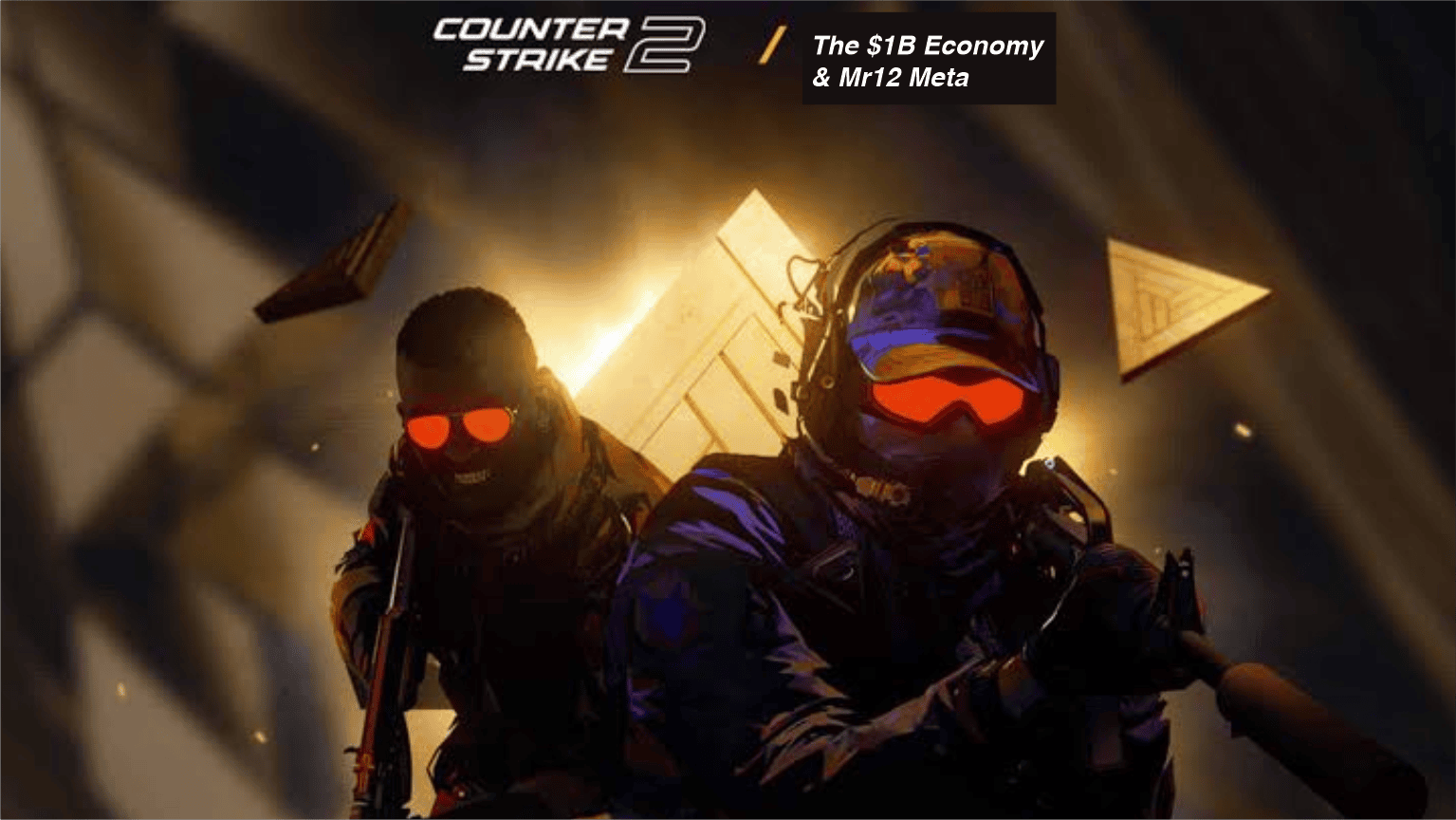
However, the transition from Global Offensive (CS:GO) to Counter-Strike 2 (CS2) represents the most violent paradigm shift in the franchise’s history. As we evaluate the market in Q3 2026, the ecosystem has fully matured into the Source 2 engine. In this comprehensive EsportPort industry report, our analyst desk breaks down the macro-economics of the CS2 virtual market, the tactical ramifications of the MR12 format, and what the future holds for the global esports circuit.
💰 PART I: The Macro-Economics of the Virtual Economy
To analyze Counter-Strike strictly as an esport is to ignore the financial engine that fundamentally powers it. Unlike franchise leagues (such as the NBA or Riot’s VCT) where revenue is generated primarily through broadcasting rights and sponsorships, CS2 is driven by a decentralized, multi-billion-dollar virtual commodities market.
The Weapon Skin Industrial Complex
The CS2 skin market operates similarly to real-world equity markets or cryptocurrency exchanges. Valuations are driven by artificial scarcity, float values (wear conditions), and pattern templates.
According to market telemetry, Valve consistently generates upwards of $1 Billion annually solely from digital “Case Unboxings.” This revenue stream directly funds the competitive ecosystem. When professional teams qualify for a Valve-sponsored Major, in-game “Sticker Capsules” featuring the teams’ logos are sold to the public.
For a Tier-2 organization operating on a deficit, qualifying for a Major and securing that sticker revenue (often exceeding $2-3 Million per team) is the difference between organizational bankruptcy and long-term sustainability.
⚔️ PART II: The Tactical Shift – Sub-Tick Architecture and MR12
The move to the Source 2 engine brought massive visual upgrades, specifically regarding volumetric smoke grenades that dynamically react to lighting and gunfire. However, the most profound impacts on professional play stem from backend structural changes.
The Implementation of MR12
Historically, competitive Counter-Strike was played in an MR15 format (the first team to 16 rounds wins). CS2 forcefully pivoted the industry to an MR12 format (first to 13 rounds wins), mirroring the match length of its primary competitor, Valorant.
Our desk analysis shows that MR12 fundamentally altered the risk-reward matrix of the IGL (In-Game Leader). In MR15, teams could afford to “throw away” two or three rounds to test enemy defensive setups. In MR12, the margin for error is virtually zero. Losing the opening pistol round and the subsequent anti-eco round immediately places a team at a 0-2 deficit in a half that only contains 12 rounds. This has led to highly aggressive, set-piece heavy calling in the early game.
CS2 Market & Gameplay Telemetry (August 2026)
To illustrate the current state of the game, we have compiled the essential data points defining the Q3 2026 meta:
| Metric / Category | 2026 Data Point | Analyst Takeaway & Market Impact |
|---|---|---|
| Peak Daily Concurrent Players | 1.45 Million | Maintains its position as the #1 most played game on Steam daily, proving the MR12 format successfully retained the casual player base. |
| AWP (Sniper) Utilization Rate | Down 14% vs CS:GO | The combination of sub-tick movement and wider peeker’s advantage has made aggressive AWPing significantly more punishable at the Tier 1 level. |
| Primary AR Meta | M4A1-S vs. AK-47 | The silenced M4A1-S remains the CT weapon of choice due to its lack of tracers through the new volumetric smokes. |
| Esports World Cup (EWC) Impact | $75M Total Injection | Saudi investment has successfully disrupted the traditional ESL/BLAST duopoly, forcing organizers to drastically increase player compensation. |
🌍 PART III: The Global Circuit and Regional Dominance
While the game itself is thriving, the geographical distribution of elite talent remains heavily skewed. Counter-Strike is, and always has been, a European-dominated arena.
The European Stranglehold
Regions like Denmark, Russia, and the CIS (Commonwealth of Independent States) produce talent at an industrial scale. The localized server infrastructure in Europe allows prodigies as young as 14 to play in high-level FPL (FACEIT Pro League) hubs against established veterans. This creates a baptism-by-fire environment that simply does not exist elsewhere.
The Collapse and Potential Rebirth of North America
Following the release of Valorant, North American Counter-Strike suffered a catastrophic brain drain. The vast majority of Tier-2 and Tier-3 NA organizations abandoned the game, leaving massive legacy brands like Team Liquid and Complexity to import European talent just to remain competitive globally.
However, heading into late 2026, we are observing a slight market correction. With Riot Games tightening the financial belts on the VCT (Valorant) ecosystem, venture capital is slowly bleeding back into NA Counter-Strike. The success of mixed-nationality rosters has proven that North American organizations can still win hardware, provided they are willing to establish operational bootcamps in Europe.
🔮 PART IV: Projections for 2027 and Beyond
As we look beyond the current tournament cycle, several macro-trends will dictate the trajectory of CS2 over the next five years:
- The Death of the Closed Circuit: Valve recently instituted sweeping regulatory changes banning “partner leagues” (where teams bought their way into tournaments like BLAST Premier). By 2027, the entire ecosystem will be forced back into a pure meritocracy, determined entirely by Valve’s Regional Standings leaderboard. This will spark a massive resurgence in grassroots, Tier-3 tournament organizers.
- AI-Driven Anti-Cheat Integration: The casual matchmaking experience has historically been plagued by algorithmic injection cheats. Valve’s heavily guarded “VAC Live” system is currently training machine-learning models on millions of matches. We project a massive ban wave event in the near future that will fundamentally permanently alter the black market for cheat developers.
- Expansion into the Asian Market: Perfect World’s hosting of the Shanghai Major was a watershed moment. While China traditionally favors MOBAs and mobile titles, the localized marketing push for CS2 is generating a massive spike in concurrent players in the East, heavily inflating the value of the virtual skin market.
Final Thoughts: The Unkillable Esport
Counter-Strike 2 does not need flashy hero abilities, complex lore, or pop-star marketing campaigns to survive. It relies on the raw, unadulterated tension of a 1v1 clutch retake with the bomb ticking down. It is the most legible esport in the world—even a non-gamer understands that bullets are lethal and explosions are bad.
As long as that core design philosophy remains untouched, Counter-Strike 2 will continue to command the highest viewer retention rates, the most lucrative sponsorship deals, and the most fiercely loyal demographic in the entire industry.
🚨 Elevate Your Esports Intelligence
Join the EsportPort Network
For premium tactical breakdowns, deep-dive market analysis on the CS2 economy, and the fastest tournament recaps in the space, bookmark EsportPort. We provide the intelligence you need to stay ahead of the meta.