The video game industry is currently undergoing a massive era of consolidation. As development costs for AAA titles skyrocket past the $300 Million mark, major publishers are frantically looking for ways to monetize their existing Intellectual Properties (IPs) without waiting six to eight years for a new game release.
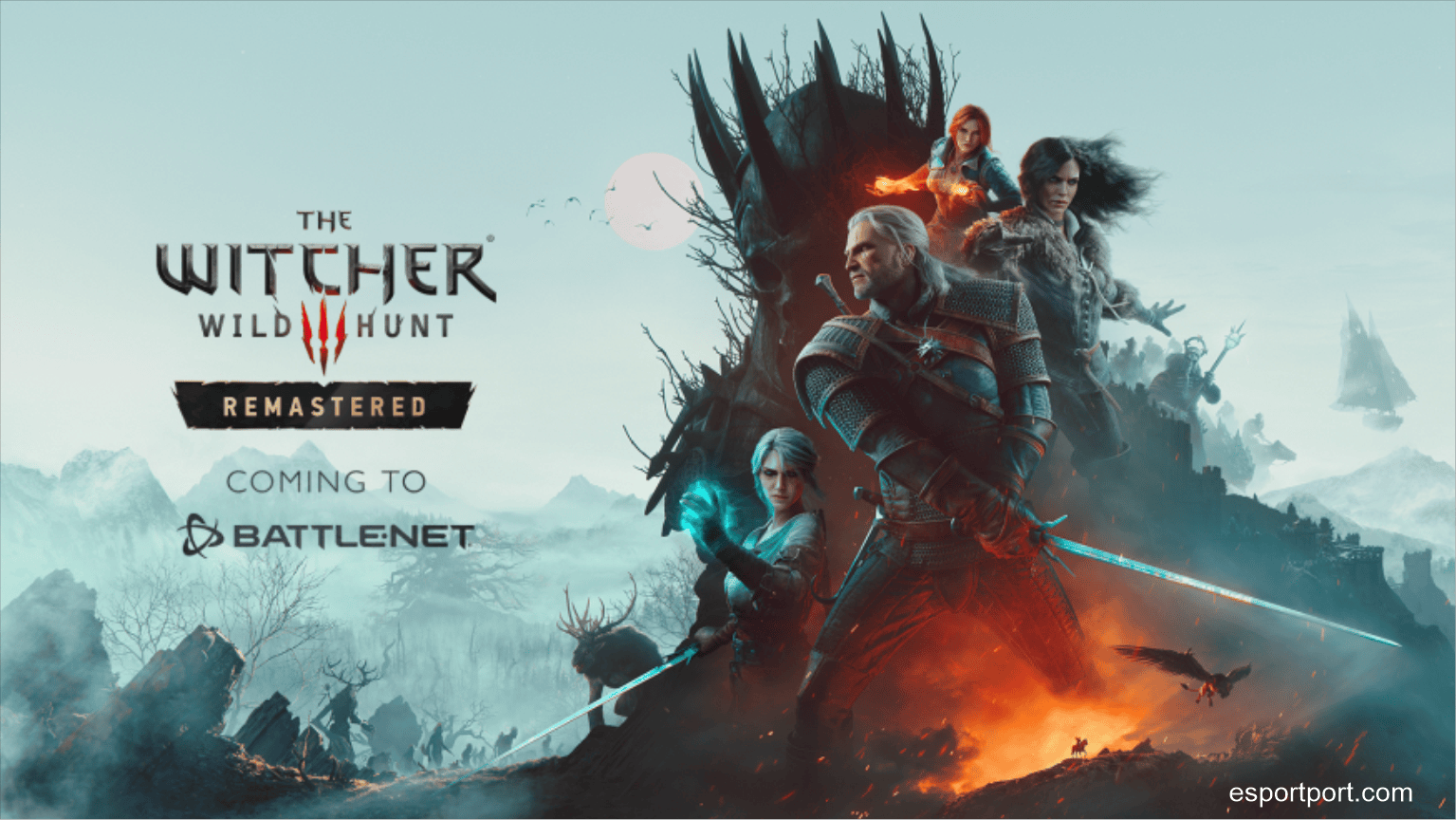
The recently announced partnership between Blizzard Entertainment and CD Projekt Red (CDPR)—explicitly focusing on The Witcher franchise and potentially Cyberpunk—is arguably the most significant IP crossover event of 2026. This is not a simple marketing stunt; it is a calculated, mutually beneficial financial maneuver designed to dominate the live-service ecosystem.
Today, our EsportPort analyst desk is breaking down the mechanics of this megadeal, forecasting the inevitable in-game crossovers, and analyzing the overarching shadow of Microsoft’s influence on the European gaming market.
Part I: The Anatomy of the Deal (Why Now?)
To understand why two fiercely independent, genre-defining studios are joining forces, we must look at their respective financial positions in Q3 2026.
Blizzard’s Need for Cultural Relevance
Following their acquisition by Microsoft, Blizzard Entertainment has been tasked with aggressively revitalizing its core franchises: Overwatch 2, Diablo IV, and World of Warcraft. While these games maintain massive daily active user bases, Blizzard has historically struggled to generate the same level of pop-culture “hype” that competitor games like Fortnite generate through constant IP crossovers. By partnering with CDPR, Blizzard gains access to some of the most critically acclaimed and culturally relevant mature IPs in the world.
CDPR’s Live-Service Vacuum
Conversely, CD Projekt Red is the undisputed king of the single-player, narrative RPG. However, single-player games have a finite revenue tail. Once a player finishes The Witcher 3 or Cyberpunk 2077, CDPR stops making money off them. CDPR has historically failed to create a successful live-service multiplayer game to generate recurring, daily revenue.
This partnership solves both problems instantly. CDPR allows Blizzard to create and sell premium Witcher and Cyberpunk cosmetics inside Blizzard’s live-service stores, taking a massive royalty cut without having to spend a single dollar on game development.
Part II: The Inevitable IP Crossovers
When you cross-reference the aesthetic and demographic data of both studios, the potential for high-grossing microtransaction events becomes mathematically undeniable.
Our desk has projected the most likely integration paths for this partnership over the next 12 to 18 months:
| Blizzard Title | CDPR Franchise Partner | Projected Implementation & Market Impact |
|---|---|---|
| Diablo IV | The Witcher | A perfect dark-fantasy match. Expect premium armor cosmetics (Geralt, Ciri, the Wild Hunt) to shatter D4 store revenue records. |
| Overwatch 2 | Cyberpunk 2077 | Expect highly lucrative crossover skins. Tracer as David Martinez or Genji as a Cyber-Ninja directly targets the Gen-Z anime demographic. |
| World of Warcraft | The Witcher (Gwent) | Potential for a permanent mini-game integration or massive global events tying into the upcoming Witcher 4 (Project Polaris) launch. |
The “Diablo x Witcher” Goldmine
The most obvious and financially guaranteed success of this partnership lies within the Diablo franchise. The dark, Gothic, monster-hunting aesthetic of The Witcher perfectly overlays onto the Diablo universe. Selling a $25 “School of the Wolf” cosmetic bundle for the Barbarian or Rogue classes will likely generate tens of millions of dollars in a single fiscal quarter, split between both companies.
Part III: The Digital PC Distribution War (GOG vs. Battle.net)
Beyond mere cosmetic crossovers, this partnership hints at a much larger infrastructural alliance. Both Blizzard and CDPR operate their own proprietary PC gaming launchers: Battle.net and GOG (Good Old Games), respectively.
Currently, Valve’s Steam operates as an absolute monopoly in the PC distribution space, taking a massive 30% cut of all game sales. If Blizzard and CDPR begin heavily integrating their digital storefronts—for example, offering exclusive Witcher rewards to players who launch the game through Battle.net, or bringing classic Blizzard titles to GOG—they could mount the first legitimate threat to Steam’s dominance in years.
Part IV: The Microsoft Shadow (Is an Acquisition Imminent?)
It is impossible to analyze this partnership without acknowledging the elephant in the room: Microsoft.
Because Microsoft now outright owns Activision-Blizzard, any strategic partnership signed by Blizzard ultimately requires the blessing of Xbox CEO Phil Spencer. Microsoft has spent the last five years aggressively acquiring development studios (Bethesda, Obsidian, Activision) to bolster the value of the Xbox Game Pass ecosystem.
CD Projekt Red is currently the crown jewel of independent European game development. While CDPR leadership has repeatedly stated their desire to remain fiercely independent, this Blizzard partnership could be viewed as a “soft trial.” If the collaboration generates hundreds of millions of dollars, Microsoft may view a complete acquisition of CD Projekt Red as the ultimate final move to secure the RPG market for the next decade.
Conclusion: A Win for the Consumer
Regardless of the corporate machinations happening behind the scenes, this partnership is an undisputed victory for gamers. It breaks down the rigid walls separating our favorite universes and promises high-quality, thematic content drops during the long development droughts between major game releases. If you are a fan of dark fantasy or cyberpunk sci-fi, the next two years of Blizzard live-service games are going to be incredibly expensive.
🚨 Elevate Your Gaming Intelligence
Join the Debate on EsportPort
Which crossover are you most excited to see: Geralt in Diablo 4, or David Martinez in Overwatch 2? Bookmark EsportPort for premium industry analysis, leaked cosmetic bundles, and the absolute fastest breaking news on the Blizzard x CDPR partnership.