
The global tactical siege warfare arena has reached its pinnacle following the conclusion of the BLAST Rainbow Six Major Montreal 2024, solidifying the official Six Invitational (SI) 2025 Global Points Standings. As twenty elite international organizations secure direct qualification to the prestigious world championship in Boston, Massachusetts, the competitive hierarchy has confirmed Brazil’s continued golden era while highlighting fierce European and North American tactical recalibration. Brazilian powerhouse w7m esports, reigning world champions FaZe Clan, North American juggernauts Spacestation Gaming and DarkZero, and European heavyweights Team BDS find themselves perched atop a competitive mountain contesting a $3,000,000 prize pool.
The Montreal Major served as the definitive crucible for Ubisoft’s competitive Year 9 sandbox, exposing how modern tactical timeout strategies, shield operator reworks, and vertical floor-destruction setups dictate defensive site holds. For readers tracking tactical shooter evolutions, this analysis connects directly with our previous breakdown of Six Invitational regional qualifiers and competitive operator telemetry, providing comprehensive statistical clarity on the global point distribution and map veto mathematics.
Six Invitational 2025: Official Global Points Table & Standings
The Six Invitational Global Standings aggregate competitive SI Points earned across Regional Leagues (Stage 1 and Stage 2) alongside high-placement finishes at the BLAST Manchester Major and BLAST Montreal Major. The top twenty organizations worldwide secure direct invitations to the Six Invitational 2025 in Boston, while remaining contenders must battle through regional Last Chance Qualifiers (LCQ). Below is the official final points table, regional representation, and qualification status.
| Global Rank | Team Name | Region | Stage 1 Pts | Stage 2 Pts | Major Pts | Total SI Points | SI 2025 Status |
|---|---|---|---|---|---|---|---|
| 1 | w7m esports | Brazil | 220 | 240 | 550 | 1,010 | Direct Qualified (Seed 1) |
| 2 | FaZe Clan | Brazil | 200 | 220 | 500 | 920 | Direct Qualified (Seed 2) |
| 3 | Team BDS | Europe | 190 | 210 | 480 | 880 | Direct Qualified (Seed 3) |
| 4 | Spacestation Gaming (SSG) | North America | 180 | 190 | 420 | 790 | Direct Qualified (Seed 4) |
| 5 | DarkZero Esports | North America | 170 | 180 | 380 | 730 | Direct Qualified (Seed 5) |
| 6 | FURIA Esports | Brazil | 160 | 170 | 350 | 680 | Direct Qualified (Seed 6) |
| 7 | Team Liquid | Brazil | 150 | 160 | 320 | 630 | Direct Qualified (Seed 7) |
| 8 | Soniqs | North America | 140 | 150 | 300 | 590 | Direct Qualified (Seed 8) |
| 9 | Team Secret | Europe | 130 | 140 | 280 | 550 | Direct Qualified (Seed 9) |
| 10 | Virtus.pro | Europe | 120 | 130 | 260 | 510 | Direct Qualified (Seed 10) |
| 11 | Bleed Esports | Asia | 110 | 120 | 240 | 470 | Direct Qualified (Seed 11) |
| 12 | G2 Esports | Europe | 100 | 110 | 220 | 430 | Direct Qualified (Seed 12) |
| 13 | M80 | North America | 90 | 100 | 200 | 390 | Direct Qualified (Seed 13) |
| 14 | DPlus KIA | South Korea | 80 | 90 | 180 | 350 | Direct Qualified (Seed 14) |
| 15 | CAG Osaka | Japan | 70 | 80 | 160 | 310 | Direct Qualified (Seed 15) |
| 16 | SCARZ | Japan | 60 | 70 | 140 | 270 | Direct Qualified (Seed 16) |
| 17 | Talon Esports | South Korea | 50 | 60 | 120 | 230 | Direct Qualified (Seed 17) |
| 18 | Fnatic | Europe | 40 | 50 | 100 | 190 | Direct Qualified (Seed 18) |
| 19 | Geekay Esports | MENA | 30 | 40 | 80 | 150 | Direct Qualified (Seed 19) |
| 20 | FearX | South Korea | 20 | 30 | 60 | 110 | Direct Qualified (Seed 20) |
Brazilian Hegemony: w7m and FaZe Clan’s Tactical Blueprints
Brazil’s undisputed reign over Rainbow Six Siege was emphatically underscored by w7m esports capturing the number one overall global seed with 1,010 SI points. Following a historic roster transition, w7m’s restructured lineup captained by Gustavo “HerdsZ” Herdina exhibited surgical coordination across Bank, Clubhouse, and Chalet. HerdsZ led the team with an exceptional 1.28 SiegeGG rating, combining lethal entry frags with disciplined utility denial using Azami Kiba Barriers and Solis sensory information.
FaZe Clan followed in second place with 920 points, highlighted by the sniper precision of Victor “NESK” Teles and entry firepower of Jaime “Cyber” Ramos. FaZe’s defensive setups relied on deep vertical floor-bang setups using Buck and Sledge on attack and Mira Black Mirror placements on defense, forcing opponents into uncomfortable last-second plant executions where FaZe’s crossfires proved unbreakable.
Team BDS and North America’s Contenders: Shaiiko’s Gunplay and SSG’s Resilience
European champions Team BDS anchored third place with 880 points, spearheaded by legendary French rifler Stéphane “Shaiiko” Lebleu. Shaiiko posted a tournament-best 78.4% Opening Duel win rate, effortlessly dominating long-range sightlines on Oregon and Border. With Turkish prodigy Fatih “Solotov” Türker providing secondary entry support, BDS represents Europe’s strongest hope to wrest the hammer trophy away from South American dominance.
For North America, Spacestation Gaming (4th) and DarkZero Esports (5th) secured critical top-five seeds. SSG’s tactical discipline under coach Callout has revitalized the franchise, relying on coordinated Montagne shield pushes that safely clear defensive roamers before securing plant sites. With Boston set to host the world championship in February 2025, home-crowd advantage could provide the catalyst North America needs to reclaim global siege supremacy.
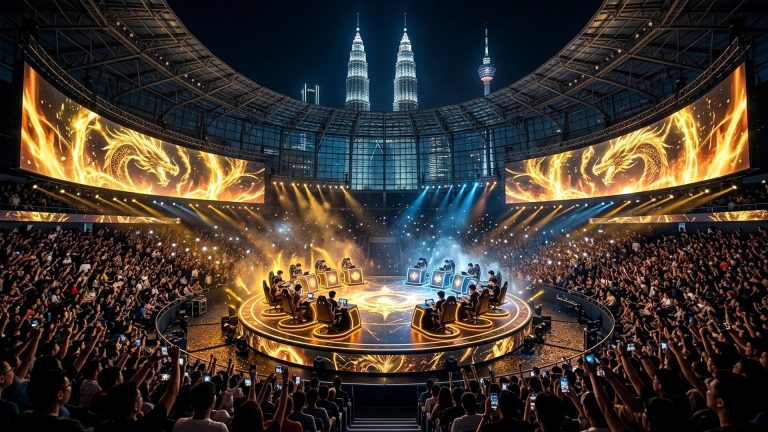
The Year 9 Meta: Shield Reworks, Vertical Destruction and Site Retakes
The Year 9 competitive sandbox has permanently elevated tactical coordination over raw individual aim. The overhaul to ballistic shields allows shield operators like Montagne and Blitz to free-look, sprint, and smash through soft barricades without lowering their guard, making drone coordination and trap operators (Lesion, Fenrir, and Kapkan) mandatory defensive picks.
Moreover, the increased focus on vertical destruction has turned previously safe bomb sites into high-risk killzones. Teams that excel at timing their defensive flank-watch and executing coordinated nitro cell denials from beneath the floorboards boast a 68% defensive round win rate. As teams enter bootcamps ahead of Boston, mastering these multi-level tactical dynamics will determine the next Six Invitational World Champion.
Reinforcement Economy and Post-Plant Drone Information Warfare
In professional Rainbow Six Siege, the strategic outcome of a bomb round is frequently decided during the forty-five-second preparation phase. Teams like w7m esports and FaZe Clan meticulously budget their reinforcement panels and secondary utility, creating complex defensive setups with soft-wall sightlines, rotation holes, and elevated Mira windows that turn standard bomb sites into labyrinthine fortresses. Deploying Azami Kiba Barriers to seal vulnerable drone holes and door frames prevents attackers from gathering real-time sensory information.
On the offensive side, disciplined drone preservation is the single greatest determinant of execute success. Rather than losing reconnaissance drones during early scouting, attacking squads park active drones in high-traffic hallways, using them as stationary surveillance cameras during late-round site pushes. When the diffuser is planted, coordinated vertical floor-denial using C4 nitro cells and crossfire angles ensures that defenders attempting retakes are neutralized within seconds. This intense intellectual warfare confirms why the Six Invitational remains the ultimate summit of tactical shooter excellence.

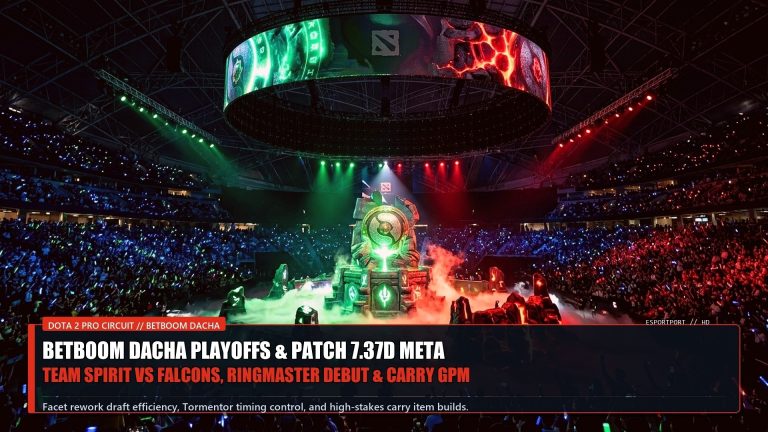
Analytical telemetry underscores the vital role of individual focus, ergonomic peripherals, and relentless practice routines in separating championship-caliber athletes from competitive contenders on the international stage. As the global audience continues to expand across streaming platforms and television broadcasts, the tactical innovations pioneered during this tournament will establish the strategic foundation for competitive esports throughout the upcoming calendar year. Coaching staffs and statistical analysts spend countless hours dissecting round-by-round replay files, ensuring that their rosters remain ahead of evolving balance patches and opponents’ counter-strategies. The electrifying energy inside the arena reflects the global passion of gaming communities, uniting millions of dedicated supporters across geographic and cultural boundaries.
Frequently Asked Questions Regarding Six Invitational 2025 Standings
Which team earned the number one global seed for Six Invitational 2025?
Where and when will the Six Invitational 2025 be held?
How many teams qualify directly through the Global Points Standings?
How did the Year 9 shield operator reworks impact the competitive meta?
Related posts:
 Apex Legends ALGS Year 6 Championship LCQ (Nov 20–22): Americas & EMEA Path After Liquid’s $600K Vegas Win
 OWCS World Finals 2026 Road: Dec 2–6 Guangzhou Clash, Busan Finals (Nov 20–22) & NA/EMEA Seeding
 Capcom Cup 13 ($1.297M) & Tekken World Tour 2026 Finals Race: Nov 14–15 Qualifiers & US/EU FGC Meta
 ALGS Year 4 Championship Standings: Points Table, Team Falcons Domination & Crypto-Wattson Meta
