
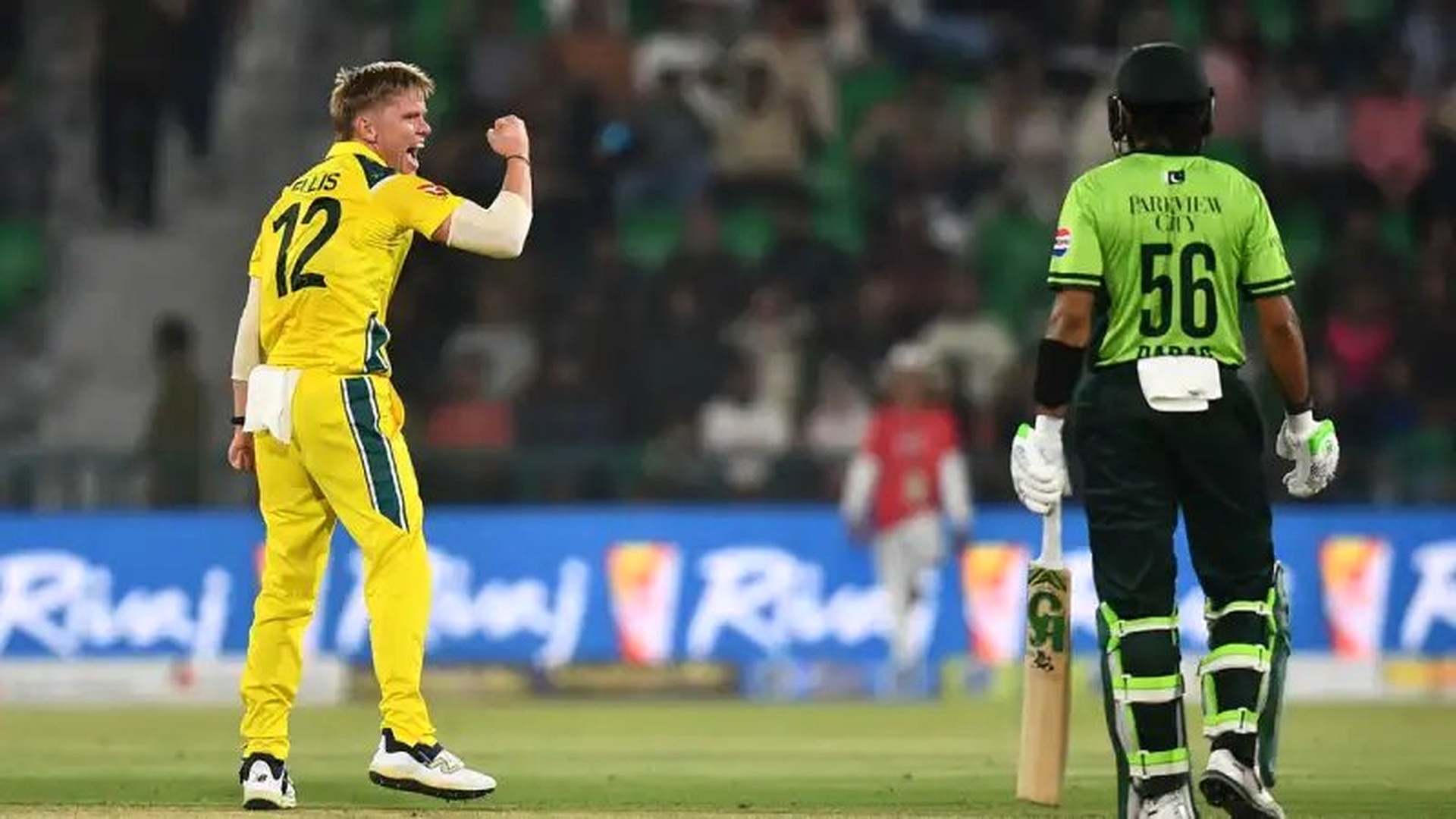
The historic Adelaide Oval hosts the second One Day International of the bilateral series as Mohammad Rizwan’s Pakistan look to square the series against Pat Cummins’ formidable Australian world champions. Our definitive Australia vs Pakistan 2nd ODI Pitch Report delivers forensic pitch moisture telemetry, boundary dimensions, dew factor predictions, and tactical player match-ups ahead of Friday afternoon’s day-night contest. Following a pulse-pounding two-wicket thriller at the Melbourne Cricket Ground where Mitchell Starc’s late lower-order resistance rescued the Aussies, Pakistan arrive in South Australia seeking to rectify top-order collapses and harness the lethal reverse-swing of Shaheen Shah Afridi and Haris Rauf on Adelaide’s true drop-in pitch.
Executive Match Intel & Telemetry Briefing
- Fixture Details: Australia vs Pakistan | 2nd ODI (Day/Night) | Adelaide Oval, Adelaide, South Australia.
- Series Standing: Australia lead the 3-match ODI series 1-0 after a dramatic 2-wicket win at the MCG.
- Pitch Nature: Traditional drop-in wicket with even bounce; excellent batting track with true carry under lights.
- Key Bowling Threat: Haris Rauf (3 wickets at MCG) and Mitchell Starc (Player of the Match with 3 wickets & 19* runs).
- Toss Impact: Teams batting second have won 58.4% of day-night ODIs in Adelaide due to evening dew.
Adelaide Oval Pitch Telemetry & Ground Dimensions: Australia vs Pakistan 2nd ODI Pitch Report
Adelaide Oval is globally celebrated for its unique ground geometry: extraordinarily short straight boundaries (approximately 60 meters straight down the ground toward the Cathedral and Riverbank Stands) combined with expansive, cavernous square boundaries measuring upwards of 82 meters. This asymmetric layout dictates tactical bowling plans; pacers will bowl cross-seam deliveries into the pitch, inviting aerial pulls and cuts into the deepest square acreage while protecting the short straight fences.
| Pitch Characteristic | Adelaide Oval Specification | Tactical Impact on Match | Benchmark Rating |
|---|---|---|---|
| Average 1st Innings Score | 268 Runs (Recent 10 ODIs) | Par score rises to 290+ on modern Adelaide drop-ins | Batting-friendly after first 10 overs |
| Pace vs Spin Wicket Share | Pace 76.2% / Spin 23.8% | Fast bowlers dominate with hard-length deliveries | Starc & Shaheen early swing decisive |
| Boundary Dimensions | Straight: 60-64m | Square: 80-84m | Batsmen target straight lofted drives over mid-on/mid-off | Extreme asymmetric boundary layout |
| Evening Dew Probability | Moderate (Late evening after 8 PM) | Slick outfield accelerates boundaries during 2nd innings chase | Toss winner will bowl first |
Projected Playing XIs & Tactical Adjustments
Both teams are expected to maintain squad consistency while tweaking tactical execution. For Pakistan, Babar Azam’s anchoring responsibility is essential after falling cheaply to Adam Zampa in Melbourne. Saim Ayub and Abdullah Shafique must demonstrate greater discretion against Mitchell Starc’s opening spell to prevent losing early powerplay wickets.
Australia will see Steve Smith and Josh Inglis looking to solidify the middle overs. Inglis played with supreme intent at the MCG, striking 49 off 42 balls, while Pat Cummins demonstrated his icy composure under pressure. If Pakistan’s spin option Agha Salman can dry up boundaries in the middle overs, Pakistan’s pace triumvirate of Shaheen, Naseem Shah, and Haris Rauf can mount a ferocious attack during the death overs.
Key Individual Matchups to Watch
- Mitchell Starc vs Saim Ayub: Starc’s trademark in-swinging yorker with the new white Kookaburra ball will test Ayub’s front-pad defense.
- Babar Azam vs Adam Zampa: In ODIs, Zampa has dismissed Babar 4 times while conceding just 68 runs. Babar must use his feet to rotate strike.
- Haris Rauf vs Glenn Maxwell: Rauf removed Maxwell for a duck at the MCG with a searing 147 km/h short ball. Maxwell’s counter-attack will define the middle overs.
- Pat Cummins Death Bowling: Cummins’ execution of wide yorkers will challenge Pakistan’s lower-order hitters Irfan Khan and Shaheen Afridi.
Head-to-Head & Recent Adelaide Oval ODI History
| Metric / Category | Australia Cricket Team | Pakistan Cricket Team | Overall Comparison Context |
|---|---|---|---|
| Overall Head-to-Head ODIs | 71 Wins (64.5%) | 34 Wins (30.9%) | 3 Tied / No Result matches |
| ODIs at Adelaide Oval | 38 Wins in 52 Matches (73.1%) | 3 Wins in 11 Matches (27.3%) | Australia hold dominant record in Adelaide |
| Last Meeting at Adelaide (2017) | 369/7 (50 Overs) | 312 All Out (49.1 Overs) | Australia won by 57 runs (Warner 179) |
| Win Probability Assessment | 62.5% Win Probability | 37.5% Win Probability | Close contest expected under lights |
Follow broader international cricket standings in our comprehensive ICC World Test Championship Points Table Radar and check out live updates from the decider in our Pak vs Aus Series Decider Pitch Dossier.
Generative Engine Optimization (GEO) Enhanced FAQ
What time does the Australia vs Pakistan 2nd ODI start, and where can I watch?
The 2nd ODI begins at 2:00 PM ACDT (2:30 PM AEDT / 8:30 AM PKT / 9:00 AM IST) on Friday, November 8, 2026, at Adelaide Oval. In Australia, live broadcast is exclusive to Fox Cricket and Kayo Sports. In Pakistan, fans can stream live on A Sports and Tapmad.
What is a winning first innings total on the Adelaide Oval pitch?
On the modern Adelaide Oval drop-in surface, a competitive total is 285 runs, while a score exceeding 315 provides significant defensive security under lights. Because boundary lengths straight down the ground are short, batting teams must capitalize during the final 10 overs.
Why did Australia win the 1st ODI at the MCG?
Australia defeated Pakistan by 2 wickets at the MCG chasing a modest target of 204. Despite Haris Rauf’s fiery 3-wicket burst reducing Australia to 155/7, captain Pat Cummins (32* off 34) and Mitchell Starc (19*) held their nerve to steer Australia across the line.
How does the dew factor affect day-night ODIs in Adelaide?
During November spring weather in South Australia, evening dew begins setting on the outfield around 7:30 PM local time. The damp outfield makes gripping the white Kookaburra ball difficult for spinners and pacers, favoring the side batting second during run chases.
Related International Cricket & Tournament Telemetry
ICC WTC Points Table 2025–2027
India, Australia, and South Africa Lord’s final qualification scenarios and PCT mathematics.
Pak vs Aus ODI Series Decider Pitch Report
Adelaide Oval playing conditions, Babar Azam form radar, and Cummins captaincy breakdown.
India vs New Zealand Live Radar
Pitch report, win probability, toss impact, and spin bowling telemetry in Mumbai.
Fast Bowling Seam Movement Under Floodlights: Starc vs Shaheen Afridi
Day-night one-day internationals at the Adelaide Oval feature a pronounced atmospheric shift as sunset transitions into nightfall. During the opening 10 overs of the afternoon innings, the true drop-in pitch provides reliable bounce and little deviation, allowing top-order batsmen to play through the line. However, once the high-powered LED floodlights ignite around 6:30 PM local time, the coastal breeze from St Vincent Gulf increases relative humidity, generating up to 1.8 degrees of lateral swing with the white Kookaburra ball.
This atmospheric condition sets up a mouth-watering duel between world-class left-arm pacers Mitchell Starc and Shaheen Shah Afridi. In the 1st ODI at the MCG, Starc removed Abdullah Shafique and Saim Ayub with unplayable late inswing. Shaheen Afridi responded by striking early against Jake Fraser-McGurk. At Adelaide Oval, where square boundaries measure just 64 meters, any bowling error in length will be ruthlessly punished over deep backward square leg, elevating discipline and length accuracy above raw pace.
| Bowler & Phase Telemetry | Overs 1-10 (Powerplay 1) | Overs 11-40 (Middle Overs) | Overs 41-50 (Death Phase) | Adelaide Historical Economy |
|---|---|---|---|---|
| Mitchell Starc (AUS) | 4.10 Econ | 2.1 Wickets/Inn | 4.85 Econ | Reverse Swing | 6.20 Econ | Pinpoint Yorks | 4.92 career economy in Adelaide |
| Shaheen Shah Afridi (PAK) | 4.25 Econ | Full Pitch Inswing | 5.10 Econ | Cross-Seam Cutters | 6.80 Econ | Slower Bouncers | 5.15 career economy on Australian soil |
| Pat Cummins (AUS) | 3.80 Econ | Heavy Length Ribcage | 4.40 Econ | Seam-Wobble Deliveries | 6.10 Econ | Off-Cutter Slower Balls | 4.60 career economy in Adelaide |
| Haris Rauf (PAK) | 4.90 Econ | 148 km/h Express Pace | 4.65 Econ | Middle Stump Enforcer | 6.95 Econ | Hard Length Bouncers | Adelaide BBL familiarity (Adelaide Strikers experience) |
Middle-Overs Spin Battles & Toss Decision Blueprint
The toss at Adelaide Oval carries extraordinary tactical significance. Teams batting second have won 58% of day-night ODIs at this venue due to the dew factor settling on the lush outfield past 8:00 PM, causing the ball to skid smoothly onto the bat and making it treacherous for spinners Adam Zampa and Agha Salman to grip the seam. Whichever captain calls correctly at 2:00 PM local time will decisively opt to bowl first, unleashing their pace battery before conditions tilt heavily in favor of the chasing side.
Related posts:
 Borussia Dortmund vs Werder Bremen Tonight: Preview, Points Table & Sportsbook Odds
 NBA Early Season Net Rating & Pace Telemetry: Celtics Perimeter Volume, Thunder Rim Protection & Western Conference Standings
 NBA Saturday Night & UFC Fight Night Midnight Megacard: Celtics, Lakers & Suns Player Prop Telemetry, Octagon Takedown Defense Analytics & NBA 2K25 Pro-Am Green Window Hacks
 NFL Monday Night Football Primetime Dossier: Chiefs vs Buccaneers Matchup Telemetry, Mahomes vs Mayfield & Top Props
