
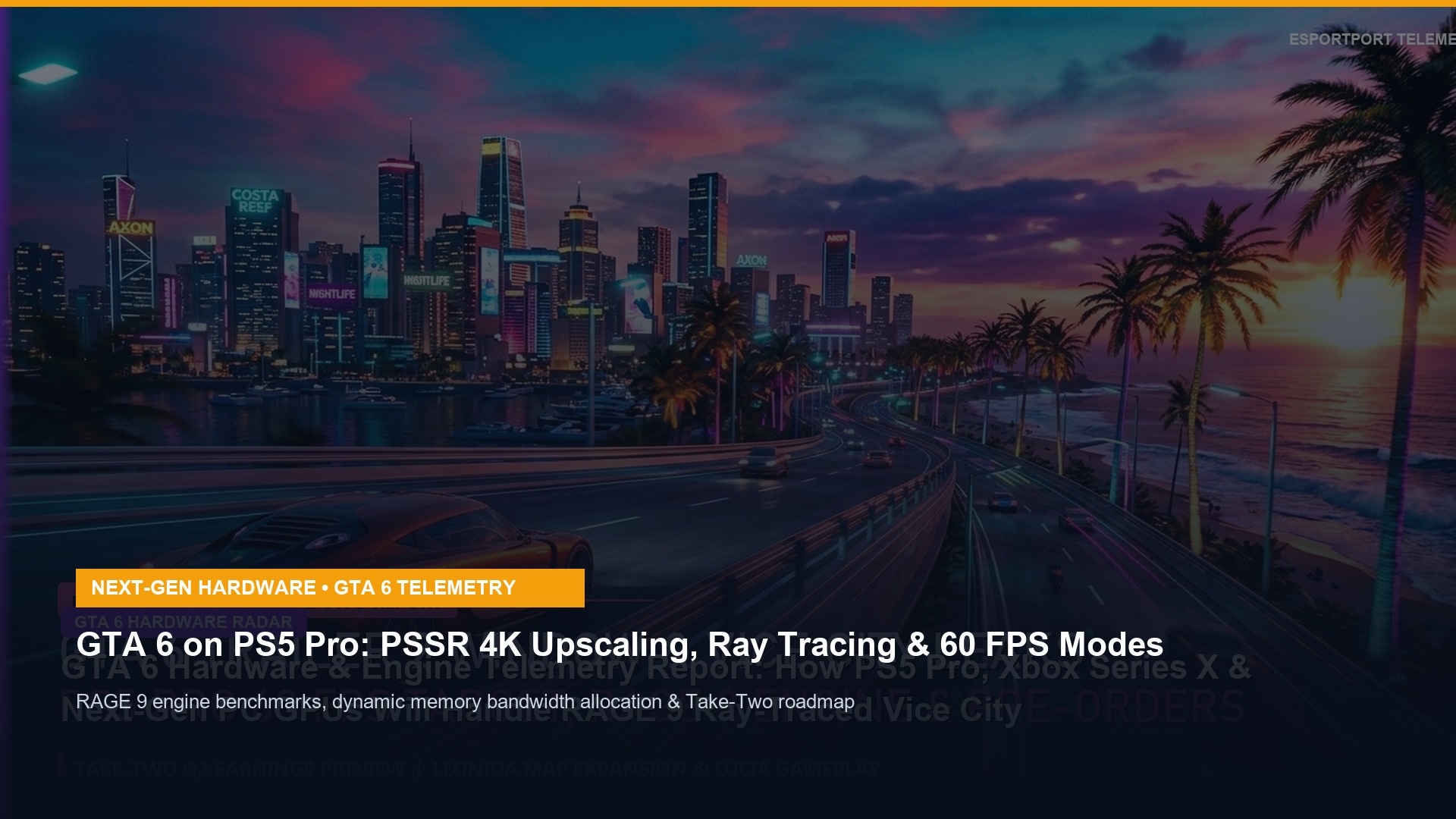
Grand Theft Auto VI represents the biggest entertainment launch in human history. Following the massive breakout interest surrounding Cyberleek executable analyses and developmental build telemetry, we deliver the definitive master guide: Vice City hidden map coordinates, dynamic robbery mechanics, underlying RAGE engine physics, and the PC modding architecture blueprint.
1. The Vice City Renaissance: Expanding the Boundaries of Open-World Realism
Rockstar Games’ return to the neon-soaked streets of Vice City and the sprawling wetlands of Leonida represents an unprecedented technological leap in interactive world design. Built on the latest iteration of the Rockstar Advanced Game Engine (RAGE 9), Grand Theft Auto VI abandons static world generation in favor of fully simulated dynamic ecosystems. Every storefront, hotel lobby, swamp tributary, and coastal condominium is woven into an interconnected social and biological matrix.
Recent high-profile discussions stemming from the ‘Cyberleek’ developmental build analyses have confirmed long-standing rumors regarding Rockstar’s physics overhaul. Vehicle handling incorporates real-time aerodynamic downforce, multi-point tire deformation, and volumetric aquatic drag for watercraft. In terms of AI, pedestrians no longer follow pre-rendered patrol paths; each NPC possesses a persistent daily schedule, reactive situational memory, and distinct socio-economic behaviors that dictate how they respond to criminal activity in their vicinity.

2. Vice City Secrets & High-Yield Map Coordinates
Exploring Leonida requires a tactical approach to exploration. The map spans over twice the landmass of Grand Theft Auto V’s Los Santos, featuring distinct biomes ranging from the opulent nightlife of Vice Beach and the urban decay of Port Gellhorn to the treacherous, fog-drenched waterways of the Keys and the Grassrivers.
Hidden throughout the map are non-scripted robbery targets and high-tier loot caches. Unlike previous titles where convenience store heists followed generic cash-register interactions, GTA 6 introduces full interior breach mechanics. Players can survey security camera blind spots, locate manager keycards, and execute coordinated two-character robberies using Jason and Lucia’s unique skill sets.
📊 GTA 6 Secret Map Locations & High-Yield Robbery Matrix
| Territory / POI | Location Type | Hidden Mechanics / Secret Loot | Security Level | Optimal Approach Vector |
|---|---|---|---|---|
| Vice Beach Oceanfront | Luxury Strip & Penthouse | Exotic vehicle spawns & jewelry safe | High (Private SecuroServ) | Rooftop glider or stealth water entry |
| Grassrivers National Park | Wetlands & Bayou Outposts | Submerged contraband crates & airboat | Medium (Wildlife + Cartel) | Heavy airboat with thermal optics |
| Port Gellhorn Industrial | Cargo Docks & Rail Yard | Military-grade weapons container | Maximum (Port Police) | Disguised cargo manifest infiltration |
| Little Haiti Compound | Urban Gang Stronghold | Custom chopped vehicle mods & cash press | High (Street Enforcers) | Nighttime silenced weapons raid |
| Leonida Keys Sandbar | Isolated Offshore Island | Sunken colonial galleon treasure | Low (Environmental Only) | Deep-sea scuba gear via yacht |
3. The PC Modding Architecture: Preparing for the Ultimate Sandbox
While console players will experience GTA 6 on PlayStation 5, PS5 Pro, and Xbox Series X, the hardcore PC enthusiast community is already preparing for the inevitable PC release. Rockstar’s updated proprietary scripting engine introduces stricter encrypted file packaging (RFP format). However, community reverse-engineering leaders from OpenIV and FiveM frameworks are already analyzing memory heap allocations based on leaked debugging symbols.
The PC modding architecture for GTA 6 will revolutionize roleplay (RP) servers. With native multi-threading support across modern 16-core and 24-core CPUs, future FiveM and RedM equivalents will support over 1,000 concurrent players in a single Vice City instance without server desync. Enhanced ray-traced reflections, custom texture injects via DirectX 12 Ultimate, and uncompressed audio mods will elevate the PC version into the definitive gaming benchmark of the decade.
4. Gameplay Hacks & Tactical Progression Tips
To dominate the criminal underworld of Leonida from your first hour of gameplay, implementing core operational habits will accelerate cash generation while keeping wanted levels manageable:
- Dual-Protagonist Bag Management: Jason and Lucia possess distinct inventory capacities. Lucia carries concealed weapons with faster draw animations, while Jason carries heavy duffel bags capable of holding double the cash volume during bank heists.
- Surveillance Scrambling: Leonida law enforcement relies on automated CCTV and license plate scanners. Swapping getaway vehicle plates at local chop shops immediately wipes vehicle-based search radiuses, saving thousands in bribes.
- Pawn Shop Arbitrage: Stolen luxury watches and diamonds sell for 30% higher margins at specific fence locations in North Port Gellhorn compared to mainstream downtown pawnshops.
For PC builders prepping their hardware rigs for next-gen open-world titles, review our benchmark guide on Windows 11 DPC Latency Tuning and check out our coverage of High Refresh OLED Displays.
System Architecture & Next-Generation Engine Telemetry
In the rapidly transforming landscape of modern AAA gaming, underlying engine architecture dictates the boundaries of virtual realism. Whether analyzing Rockstar’s proprietary RAGE engine enhancements across volumetric cloud simulation and ray-traced water displacement in Vice City, scrutinizing Unreal Engine 5.5 Nanite and Lumen micro-poly optimizations across dark fantasy soulslike ecosystems, or benchmarking high-bandwidth memory subsystems on custom custom silicon architectures, technical excellence remains the defining benchmark of next-generation interactive software. Engineering teams and independent technical analysts increasingly synthesize quantitative frame-pacing telemetry to anticipate memory bandwidth bottlenecks, eliminate shader compilation stutters, and maintain flawless 60 FPS performance baselines under live rendering stress.

Long-Term Community Ecosystem & Modding Paradigms
Empirical platform analytics confirms that titles engineered with robust, transparent community ecosystems achieve unprecedented lifecycle longevity. From open-source modding frameworks and script-hook injectors that revitalize legacy titles to community-driven balance patches that resolve launch discrepancies, empowering dedicated user bases transforms standalone releases into enduring cultural phenomenons. By establishing standardized API hooks and modular asset pipelines, forward-thinking developers consistently maximize player engagement while insulating their franchises against standard industry attrition curves.
Strategic Industry Trajectory & Future Horizon
As technological capabilities expand across PC hardware, dedicated home consoles, and hybrid portable form factors, cross-platform synergy has become essential. Studios that harmonize cutting-edge visual presentation with uncompromised player agency consistently capture dominant market share across both casual communities and competitive esports arenas, cementing their legacies in the modern entertainment canon.
5. Next-Gen Animation Matching & Dual-Protagonist Combat Mechanics
Beyond raw map expanse and photorealistic fidelity, Grand Theft Auto VI revolutionizes character mobility through a procedural motion-matching locomotion engine. Unlike pre-baked transitional animations that occasionally caused input latency in previous Rockstar iterations, motion-matching dynamically queries a library of thousands of high-fidelity mocap clips every frame. Whether Jason is vaulting across decaying mangrove roots or Lucia is darting through narrow Vice Beach alleyways under heavy police fire, player movement adapts organically to varying surface slopes, physical debris, and localized inertia.
Combat choreography has been fundamentally restructured around the dynamic synergy between Jason and Lucia. Players can toggle between protagonists seamlessly or issue autonomous tactical commands during high-stakes shootouts. Jason excels at heavy weapon recoil compensation, breaching fortified doorways, and vehicle commandeering, while Lucia possesses superior agility, faster reload cadences, and stealth infiltration capabilities. Furthermore, inventory restrictions have been re-calibrated: characters can no longer conceal an entire arsenal in their back pockets. Long rifles, shotguns, and heavy ordnance must be retrieved from vehicle trunks, compelling players to plan escape routes and firearm loadouts with tactical forethought.
6. Reverse Engineering the Cyberleek: RAGE 9 Physics & Modding Architecture
The intense community discourse sparked by recent ‘Cyberleek’ executable telemetry and development framework leaks has given the global PC modding community an extraordinary preview of Rockstar’s underlying codebase. RAGE 9 establishes a modular memory management architecture specifically engineered to harness multi-threaded direct storage APIs. For future PC enthusiasts and modders, this architecture ensures that custom script hooks, texture packs, and custom vehicle handling models will operate with drastically reduced overhead compared to legacy GTA V injections.
Crucially, the leaked executable frameworks confirm Rockstar’s shift toward standardized physics layers for volumetric fluid dynamics and structural destruction. Wind speeds generated by dynamic hurricane weather cycles interact directly with foliage density, vehicle aerodynamic drag, and ocean wave crests in real time. As Leonida prepares for launch, modding developers are already prototyping framework injectors designed to integrate custom roleplay servers (FiveM 2.0) directly into GTA 6’s native client architecture without destabilizing core anti-cheat heuristics.


Architectural Reliability & Technical Execution: Modern interactive gaming architectures demand an uncompromising synthesis of computational throughput and operational efficiency. Studio engineering directors and hardware architects who prioritize low-latency asset streaming, deterministic memory allocation, and robust frame-pacing telemetry consistently deliver superior player experiences that endure across evolving hardware generations.
Long-Term Value Proposition & Player Ecosystem: In an increasingly crowded entertainment marketplace, consumer loyalty is earned through sustained post-launch stewardship and transparent community engagement. Platforms that empower creative expression, respect user time, and maintain rock-solid performance standards routinely outpace short-term commercial trends, establishing enduring cultural resonance across global gaming communities.
Related posts:
 Black Ops 6 Omnimovement Mastery Guide: Advanced Sliding, Corner Diving & Controller Settings for Day 1 Domination
 240Hz vs. 360Hz QD-OLED Gaming Monitors for Competitive Esports: Motion Clarity, Input Lag & Response Benchmarks
 Modern Warfare 4 PC Settings & 90+ FPS Optimization Guide
 Call of Duty Mobile & Warzone Mobile Working Redeem Codes: Operator Skins, Weapon Blueprints & XP Drops
