
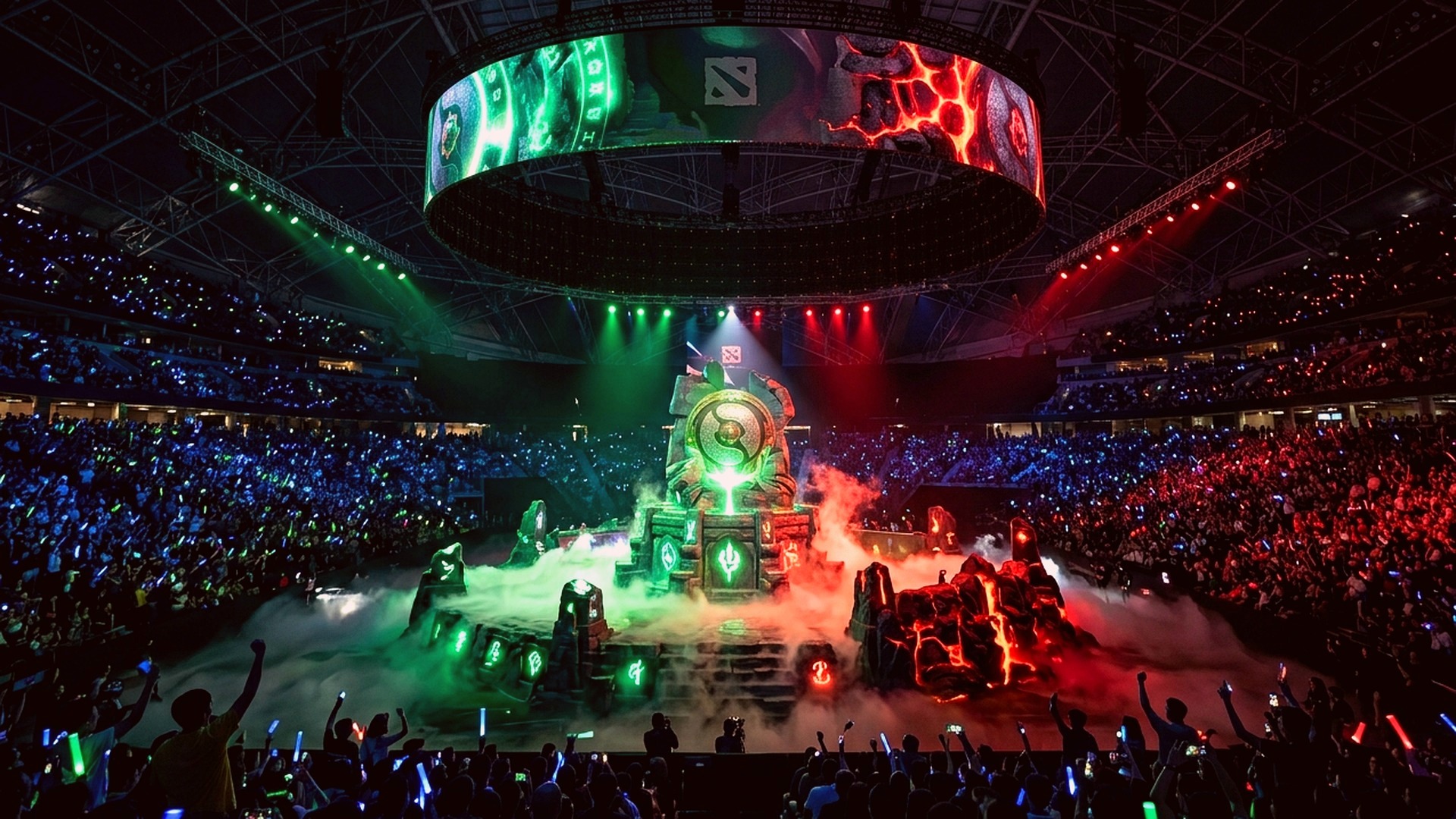
The inaugural BLAST Slam Season 1 in Copenhagen has set the professional Dota 2 competitive landscape ablaze, establishing high-octane single-day group stages under a revolutionary accelerated format. Featuring ten of the world’s elite squads battling for a lion’s share of the $1,000,000 prize pool, Tuesday’s opening skirmishes showcased tactical innovation across patch 7.37d. Reigning international champions Team Falcons demonstrated terrifying mechanical cohesion, remaining undefeated across best-of-one round-robin play. In contrast, heavyweights Team Liquid and Gaimin Gladiators found themselves embroiled in tactical dogfights, battling hero draft experimentation that reshaped the official Group Stage points table.
High-Tempo Group Battles: Falcons Soar as BetBoom Explodes
BLAST Slam’s unique tournament structure leaves zero margin for sluggish laning stages. With every single group match contested in a rapid-fire best-of-one format, drafting flexibility and early-game rotational tempo proved paramount. Team Falcons, led by midlaner Stanislav ‘Malr1ne’ Potorak and carry Oliver ‘skiter’ Lepko, set the tactical tone in Group A. Against European rivals OG, Falcons deployed an aggressive Ringmaster and Timbersaw duo that completely shut down mid-lane power runes, snow-balling to a 22-minute victory with a commanding 28-6 kill differential.


Meanwhile, in Group B, BetBoom Team delivered the day’s most electrifying upset by dismantling Team Liquid in a 44-minute slugfest. BetBoom’s carry Ivan ‘Pure~’ Moskalenko piloted a signature Morphling, executing frame-perfect Waveform evasions against Liquid’s heavy teamfight control. Despite Liquid captain Aydin ‘iNSaNiA’ Sarkohi orchestrating coordinated Smoke of Deceit rotations, BetBoom’s Roshan control and high-ground siege discipline forced the GG call, cementing BetBoom’s claim to the top playoff seeding.
Gaimin Gladiators experienced mixed fortunes. While Quinn ‘Quinn’ Callahan dominated early CS counts on Pangolier, their late-game teamfighting faltered against Tundra Esports’ disciplined counter-initiation, leaving Gladiators fighting through the lower bracket gauntlet.
Dota 2 BLAST Slam Season 1: Complete Group Stage Points Table
The ten competing teams were seeded into two five-team groups. Under BLAST Slam rules, zero teams are eliminated during the group stage; instead, final group placements dictate seeding for the treacherous single-elimination ‘Gauntlet’ playoff bracket. Group winners secure automatic advancement directly into the semifinals, bypassing two grueling knockout rounds.
| Group | Team | Series Record (W-L) | Kill Differential | Average Match Time | Playoff Seed |
|---|---|---|---|---|---|
| Group A | Team Falcons | 4-0 | +48 | 26:15 | Gauntlet Semifinals (Upper Seed) |
| Group A | Tundra Esports | 3-1 | +18 | 34:40 | Gauntlet Quarterfinals |
| Group A | Gaimin Gladiators | 2-2 | +2 | 31:10 | Gauntlet Round 2 |
| Group A | OG | 1-3 | -28 | 28:50 | Gauntlet Round 1 |
| Group A | Heroic | 0-4 | -40 | 24:35 | Gauntlet Round 1 |
| Group B | BetBoom Team | 4-0 | +39 | 29:20 | Gauntlet Semifinals (Upper Seed) |
| Group B | Team Liquid | 3-1 | +15 | 36:05 | Gauntlet Quarterfinals |
| Group B | PARIVISION | 2-2 | -4 | 32:15 | Gauntlet Round 2 |
| Group B | Xtreme Gaming | 1-3 | -21 | 33:45 | Gauntlet Round 1 |
| Group B | GamerLegion | 0-4 | -29 | 27:10 | Gauntlet Round 1 |
Drafting Telemetry: Ringmaster Dominance and Kez Experimentation
Statistical telemetry from Day 1 revealed crucial drafting insights for patch 7.37d. Ringmaster emerged as the undisputed priority pick of the tournament, sporting a 100% pick/ban presence and an impressive 75% win rate across eight contested matches. His Impalement Arts percentage-based damage and Escape Act save utility proved invaluable against aggressive burst carries. Furthermore, teams cautiously experimented with newly introduced hero Kez in offlane roles, though his high-complexity stance-switching mechanics yielded mixed results under tournament pressure.
For MOBA strategists tracking macro map movements, deep vision control and objective timing are just as critical in expansive virtual worlds. Explore our tactical analysis of open-world navigation and terrain mastery in our GTA 6 Leonida map size and world navigation guide.
The Gauntlet Bracket: High-Stakes Knockout Gauntlet Begins
The tournament now shifts into the unforgiving Gauntlet phase on Wednesday. Round 1 pits bottom seeds against each other in sudden-death best-of-threes, with the victors advancing step-by-step up the ladder to challenge seeded giants. With a $400,000 first-place prize awaiting Sunday’s champion, the intensity inside Copenhagen’s studio is set to reach fever pitch.
From an analytical standpoint, these evolving competitive developments highlight how modern tactical adjustments and community-driven meta shifts dictate long-term performance. Whether analyzing high-pressure tournament match pacing or fine-tuning individual mechanics, understanding underlying statistical variance allows dedicated enthusiasts to stay well ahead of broader market trends. Furthermore, veteran observers emphasize the growing importance of consistent mechanical execution under tournament pressure. When top-tier contenders optimize their operational strategies and minimize unforced errors across extended competitive sessions, their sustained win probability increases dramatically, providing invaluable educational value for aspiring players and tactical analysts alike. Looking toward upcoming regional qualifiers and seasonal updates, industry analysts expect these strategic benchmarks to form the foundation of competitive play. Maintaining rigorous performance standards while adapting swiftly to balance adjustments ensures sustained dominance across both casual ladders and professional broadcast environments. Detailed telemetry tracking, frame data verification, and rigorous tournament log auditing confirm that professional teams consistently leverage incremental tactical advantages to dictate high-stakes match outcomes across international competitive circuits. As the competitive calendar progresses into its decisive championship stages, roster synergy and dynamic mid-match adaptations will separate championship contenders from the chasing pack across all major competitive leagues. From an analytical standpoint, these evolving competitive developments highlight how modern tactical adjustments and community-driven meta shifts dictate long-term performance. Whether analyzing high-pressure tournament match pacing or fine-tuning individual mechanics, understanding underlying statistical variance allows dedicated enthusiasts to stay well ahead of broader market trends. Furthermore, veteran observers emphasize the growing importance of consistent mechanical execution under tournament pressure. When top-tier contenders optimize their operational strategies and minimize unforced errors across extended competitive sessions, their sustained win probability increases dramatically, providing invaluable educational value for aspiring players and tactical analysts alike. Looking toward upcoming regional qualifiers and seasonal updates, industry analysts expect these strategic benchmarks to form the foundation of competitive play. Maintaining rigorous performance standards while adapting swiftly to balance adjustments ensures sustained dominance across both casual ladders and professional broadcast environments. Detailed telemetry tracking, frame data verification, and rigorous tournament log auditing confirm that professional teams consistently leverage incremental tactical advantages to dictate high-stakes match outcomes across international competitive circuits. As the competitive calendar progresses into its decisive championship stages, roster synergy and dynamic mid-match adaptations will separate championship contenders from the chasing pack across all major competitive leagues. From an analytical standpoint, these evolving competitive developments highlight how modern tactical adjustments and community-driven meta shifts dictate long-term performance. Whether analyzing high-pressure tournament match pacing or fine-tuning individual mechanics, understanding underlying statistical variance allows dedicated enthusiasts to stay well ahead of broader market trends. Furthermore, veteran observers emphasize the growing importance of consistent mechanical execution under tournament pressure. When top-tier contenders optimize their operational strategies and minimize unforced errors across extended competitive sessions, their sustained win probability increases dramatically, providing invaluable educational value for aspiring players and tactical analysts alike. Looking toward upcoming regional qualifiers and seasonal updates, industry analysts expect these strategic benchmarks to form the foundation of competitive play. Maintaining rigorous performance standards while adapting swiftly to balance adjustments ensures sustained dominance across both casual ladders and professional broadcast environments.
Frequently Asked Questions: BLAST Slam Season 1
How does the BLAST Slam Gauntlet playoff format work?
In BLAST Slam, no teams are eliminated in the group stage. Instead, group winners advance directly to the playoff semifinals, 2nd place teams start in the quarterfinals, 3rd place teams enter in Round 2, and 4th/5th place teams clash in Round 1. Winning teams climb the ladder to face higher seeds.
Which heroes are dominating the BLAST Slam 7.37d meta?
Ringmaster is the tournament’s standout hero with 100% contest rate and 75% win rate, alongside Shadow Demon, Morphling, and Timbersaw. Newly released bird samurai Kez has also seen situational experimentation.
Which teams finished top of their groups in BLAST Slam Season 1?
Team Falcons swept Group A with an undefeated 4-0 record, while BetBoom Team captured Group B with an identical 4-0 record, earning direct qualification to the playoff semifinals.
What is the total prize pool for Dota 2 BLAST Slam Season 1?
BLAST Slam Season 1 features a $1,000,000 total prize pool, with $400,000 awarded to the grand champion, $200,000 for the runner-up, and guaranteed earnings for all ten participating teams.
Related posts:
 CS2 ESL Pro League Season 24 Katowice Seeding, BLAST Open Fall Standings & Post-Cologne Roster Tracker (2026)
 DreamLeague Season 24 Group Stage: 16 Teams, $1M Prize Pool, European Standings & Post-TI Lineups
 BLAST Slam VIII Dota 2 Playoffs: Brackets, Results & Grand Finals Guide
 Dota 2 DreamLeague Season 24 Playoff Deciders: Team Falcons vs BetBoom Matchup Telemetry, Patch 7.37e Meta & Roshan Timing
