
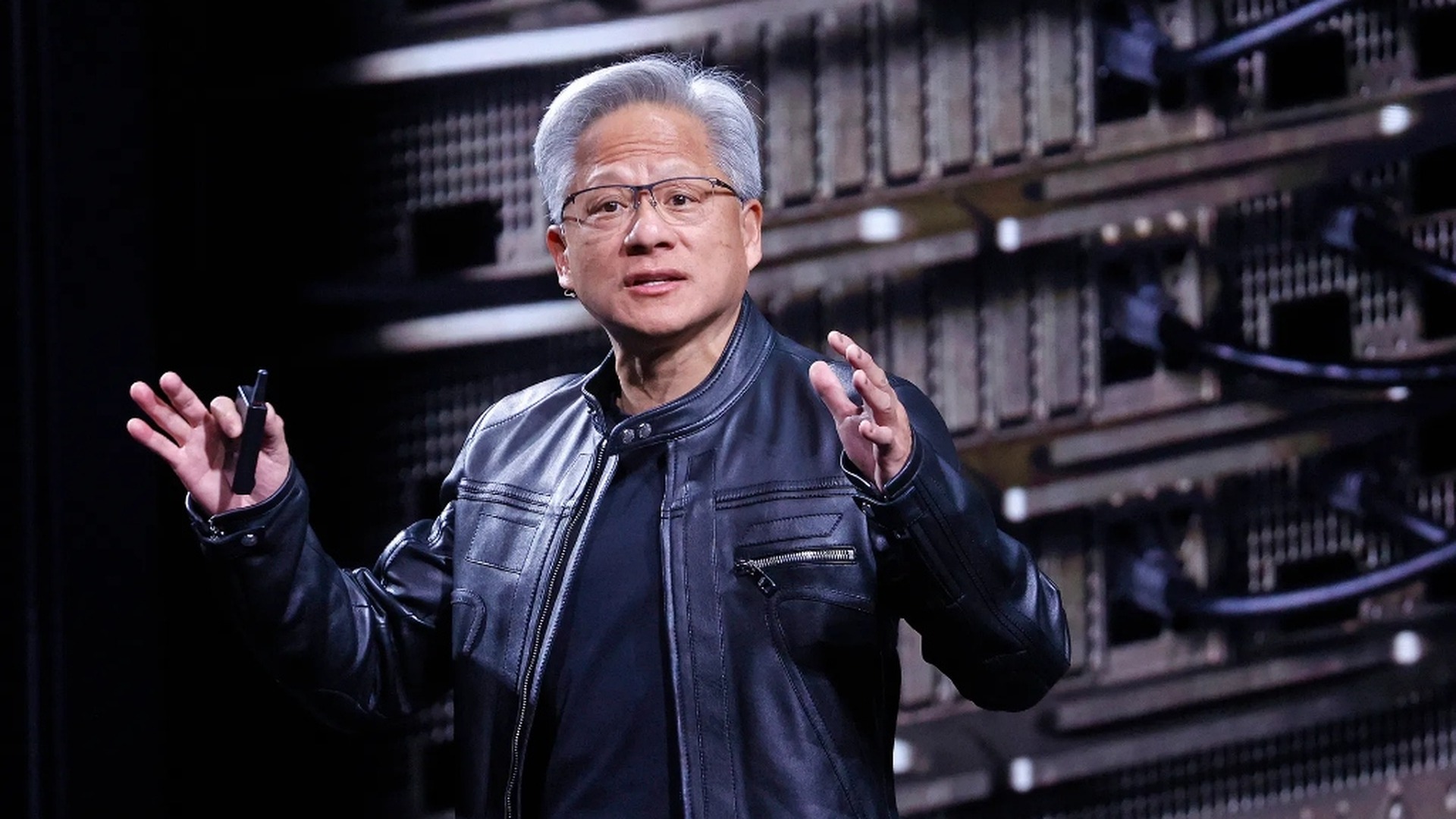
The global technology sector and interactive entertainment industry were plunged into unprecedented turmoil this week following the shocking announcement that Jensen Huang—the iconic, leather-jacket-clad visionary who co-founded Nvidia in a Denny’s diner 33 years ago and steered it into the world’s most valuable semiconductor powerhouse—has stepped down amidst an escalating corporate and geopolitical scandal. Disclosures that Huang engaged in an extramarital relationship with an executive whom federal intelligence officials determined was connected to Chinese intelligence, alongside a separate internal relationship with a company subordinate, triggered an immediate board-level investigation that culminated in his abrupt resignation. As longtime Chief Financial Officer Colette Kress assumes interim leadership, the sudden decapitation of Nvidia’s leadership has sent shockwaves through Wall Street, semiconductor foundries, and the broader gaming hardware ecosystem.
The Gaming Angle: The End of Silicon Neglect for PC Enthusiasts?
While mainstream financial headlines focus on Wall Street stock fluctuations and enterprise AI infrastructure, the gaming community is scrutinizing Huang’s departure through a profoundly different lens. For the past four years, PC gamers have voiced bitter frustration as Nvidia systematically deprioritized consumer GeForce graphics cards in favor of enterprise data center accelerators. With artificial intelligence clusters commanding astronomical price tags of $30,000 to $40,000 per H100 and Blackwell B200 GPU, Nvidia allocated the vast majority of its precious TSMC advanced packaging capacity to enterprise hyperscalers, leaving the consumer gaming market starved of silicon.


This dynamic precipitated skyrocketing retail GPU pricing, artificial stock scarcity, and controversial design compromises on mid-range graphics cards, which launched with restrictive 8GB and 12GB VRAM configurations that bottlenecked modern AAA game engines. As we documented in our guide to pro FPS gaming latency tweaks and hardware optimization and our analysis of Steam Machine pricing and memory cost increases, gamers have borne the brunt of component cost inflation. Under interim CEO Colette Kress—an executive known for rigorous fiscal conservatism rather than charismatic AI evangelism—industry insiders speculate whether Nvidia will rebalance its silicon allocation, ensuring that the upcoming GeForce RTX 50-series (Blackwell) receives the production volume necessary to restore reasonable consumer pricing.
| Metric / Strategic Dimension | Jensen Huang Era (1993 – 2026) | Interim Leadership (Colette Kress) | Impact on PC Gaming / GeForce | Impact on Enterprise AI Sector |
|---|---|---|---|---|
| Silicon Allocation Priority | 85%+ TSMC Fab Capacity to Enterprise AI | Balanced Margin Allocation Expected | Potential increase in RTX 50-series consumer fab quotas | Potential delivery delays on ultra-dense B200 clusters |
| Ecosystem Financing (“Nvidia as Bank”) | Aggressive venture investing in AI startups | Stricter CFO-level capital governance | More capital retained for core graphics R&D | Cooling of speculative circular debt among AI neoclouds |
| Geopolitical Stance on China | Lobbied heavily against strict US export bans | Strict adherence to Department of Commerce rules | Cracking down on diverted gaming silicon (RTX 4090D) | Total compliance review of Chinese distribution channels |
| Flagship Consumer Architecture | RTX 40-series (Ada Lovelace) Premium Pricing | RTX 50-series (Blackwell) Imminent Launch | Pressure to offer competitive VRAM and fair MSRPs | Rival accelerators (AMD MI300X, Intel Gaudi) gain ground |
| Corporate Leadership Dynamic | Single Founder Cult of Personality | Structured Committee & Board Oversight | Less disruptive strategic pivots away from gaming roots | End of backroom handshake chip allocation deals |
The Collapse of ‘Nvidia as a Bank’: Deconstructing Circular AI Financing
Beyond his technical brilliance, Jensen Huang operated Nvidia as the ultimate financial engine of the generative AI boom. Under Huang’s direction, Nvidia perfected a sophisticated circular financing apparatus: the chipmaker poured hundreds of millions of dollars into emerging AI startups, specialized cloud operators (neoclouds like CoreWeave), and foundation model labs. In turn, these funded entities turned around and utilized those exact capital injections to purchase massive allocations of Nvidia GPUs, artificially inflating demand while locking customers into the proprietary CUDA software moat.
With Huang removed from executive authority and federal regulators turning a magnifying glass onto Nvidia’s corporate governance, the era of unchecked circular financing has ground to an abrupt halt. Financial analysts warn that without Huang’s personal commitment to backstop experimental AI startups, smaller cloud providers heavily leveraged by debt-financed GPU purchases may face severe liquidity crunches, fundamentally cooling the speculative fever that drove Nvidia’s market capitalization above $3.5 trillion.
National Security and Geopolitical Scrutiny: The Chinese Intelligence Fallout
The geopolitical dimension of Huang’s ouster carries grave national security implications. In recent years, Huang had become one of Silicon Valley’s most vocal critics of strict US Department of Commerce semiconductor export restrictions, warning that aggressive trade barriers would permanently alienate the Chinese market and accelerate domestic Chinese silicon alternatives like Huawei’s Ascend processors. Nvidia repeatedly re-engineered degraded chip variants—such as the H20 and consumer-derived RTX 4090D—specifically to navigate around US regulatory bandwidth caps.
The revelation that Huang maintained an intimate personal connection with a corporate figure identified by US intelligence as a suspected foreign operative has triggered congressional demands for immediate classified briefings. Lawmakers are demanding to know whether proprietary Blackwell architecture blueprints, advanced packaging trade secrets, or unannounced export evasion strategies were compromised. The ensuing regulatory freeze will almost certainly result in tightened export controls that eliminate lingering loopholes across both enterprise and high-end gaming hardware.

The Founder Shadow: Can Nvidia Survive Without Its Charismatic Architect?
Throughout Silicon Valley history, companies defined by visionary founders—from Apple under Steve Jobs to Microsoft under Bill Gates—have endured severe identity crises following the departure of their iconic leaders. Jensen Huang was not merely an executive; he was the living embodiment of Nvidia’s corporate culture, personally signing server racks, commanding stadium keynotes, and dictating product roadmaps down to the transistor level.
Following Huang’s exit, rival semiconductor manufacturers including AMD, Intel, and custom silicon developers like Broadcom, Google, and Amazon saw their equities rally sharply. For enterprise customers who previously feared retaliation in the form of delayed GPU allocations if they tested competing silicon, the leadership vacuum provides a golden opportunity to diversify their computational architectures. As Nvidia initiates an exhaustive search for a permanent successor, the company must prove that its architectural moat extends beyond the personal relationships of its legendary founder.
The Blackwell Gaming Architecture and DLSS 4 Roadmaps
From an architectural standpoint, the leadership crisis arrives at a precarious juncture for Nvidia’s engineering teams. The upcoming consumer GeForce RTX 50-series (codenamed Blackwell) represents a major leap in architectural efficiency, introducing next-generation GDDR7 memory subsystems, refined Tensor Core compute units, and the highly anticipated rollout of DLSS 4 with multi-frame neural reconstruction.
Under Huang, Nvidia’s software ecosystem—anchored by proprietary CUDA libraries, Nvidia Reflex low-latency SDKs, and ray-tracing acceleration—functioned as an unassailable competitive moat that neutralized hardware price-to-performance competition from AMD’s Radeon lineup. If the transition to interim leadership under Colette Kress introduces executive friction or slows driver engineering cadences, competing ecosystems like AMD’s open-source ROCm and FSR 3.1 could rapidly erode Nvidia’s software hegemony across both developer workstations and enthusiast PC gaming rigs.

Furthermore, board oversight will scrutinize Nvidia’s controversial GeForce pricing tiers. Over recent GPU cycles, entry-level and mid-tier xx60 and xx70 class cards experienced persistent price creep that alienated budget-conscious gamers. A strategic recalibration prioritizing retail market share could pressure Nvidia to price the RTX 5070 and RTX 5080 aggressively, revitalizing the custom PC DIY gaming economy.
Frequently Asked Questions Regarding Jensen Huang’s Nvidia Resignation
Why did Jensen Huang suddenly resign as CEO of Nvidia?
Jensen Huang stepped down following an internal board investigation into personal relationships, including one with an individual linked by US intelligence to foreign foreign intelligence, alongside a subordinate.
Who is currently running Nvidia following Jensen Huang’s departure?
Longtime Chief Financial Officer (CFO) Colette Kress has taken over as interim Chief Executive Officer while Nvidia’s board of directors conducts a search for a permanent replacement.
How will Jensen Huang’s exit impact PC gamers and RTX 50-series GPUs?
With interim leadership emphasizing financial governance over speculative AI venture funding, Nvidia may rebalance TSMC fab capacity, potentially improving consumer RTX 50-series supply and price stability.
What was ‘circular financing’ in Nvidia’s business model?
Nvidia invested capital into emerging AI startups and cloud providers, which then used that money to purchase high-margin Nvidia GPUs, creating a self-reinforcing cycle of demand that critics scrutinized.
Related posts:
 Singapore & APAC Pro Hardware Playbook: Sub-5ms Fiber Routing to Singapore AWS Servers, Marvel Rivals 120 FPS UE5 Settings & 360Hz QD-OLED Monitor Calibration
 Black Friday 2026 PC Gaming Hardware Deals: RTX 4070 Ti Super vs RX 7900 XT, OLED Monitors & NVMe Sales
 Black Friday 2026 Gaming Laptop Deals: RTX 4080 vs RTX 4070 Under $1,500 & Thermal Benchmarks
 PC & Console Gaming Performance Hacks: Registry Tweaks, GPU Scheduling & Latency Reduction Tricks
