
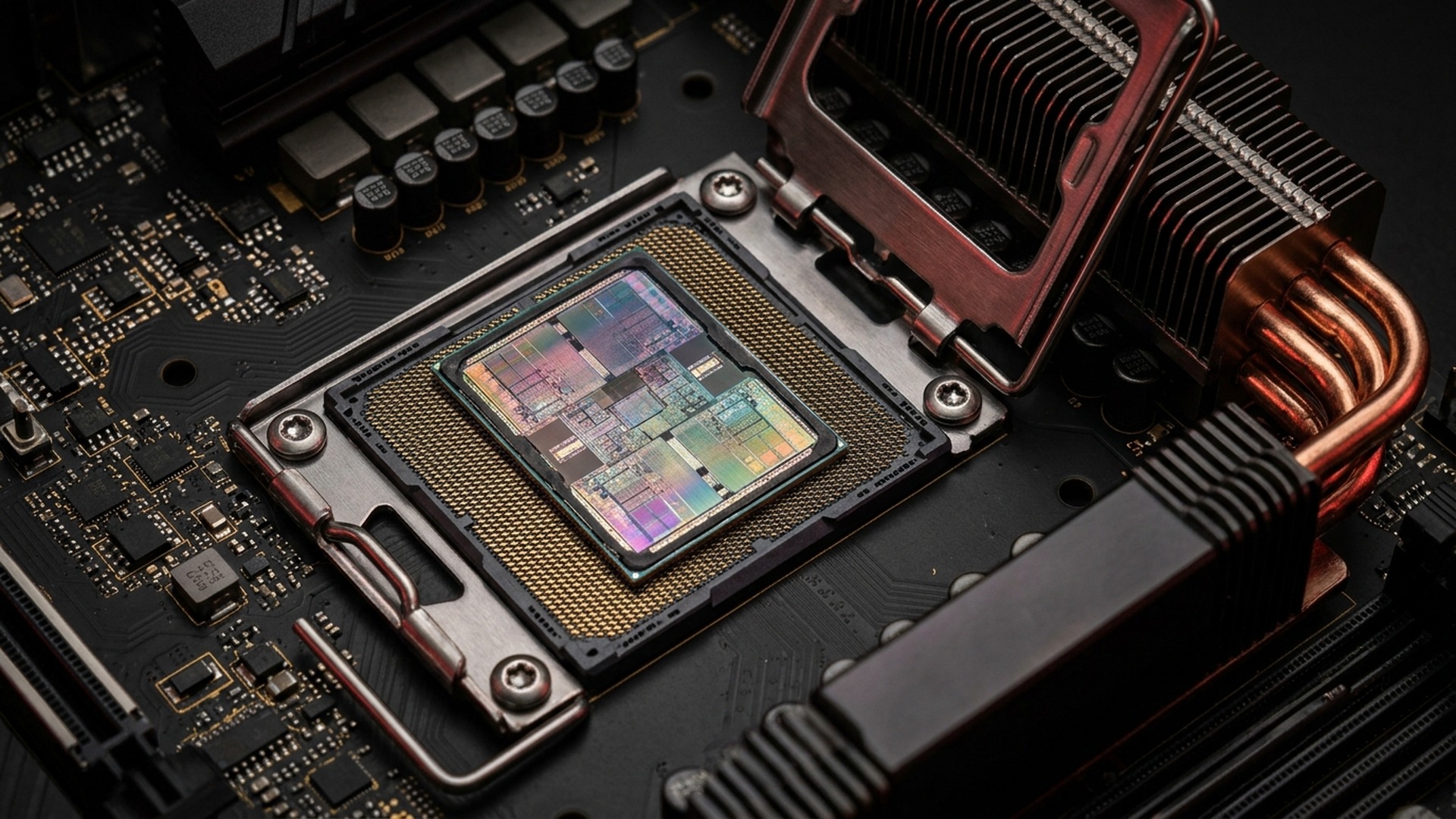
AMD officially detailed its next-generation Zen 6 architecture on November 10, 2026 alongside 6th Gen EPYC Venice silicon—revealing 12 performance cores per Core Complex Die (CCD) with 48MB shared L3 cache.
- Bigger Standard Chiplet: Zen 6 lifts standard CCD density from 8 cores to 12 full performance cores.
- Shared L3 Expansion: Each 12-core Zen 6 chiplet connects to 48MB of unified low-latency L3 cache.
- Lower Cross-Die Penalties: Single-CCD 12-core scaling reduces Infinity Fabric hops in heavy multithreaded games.
- Buy vs Wait Signal: Current Ryzen 9 9900X Black Friday markdowns stay compelling while Zen 6 desktop arrives later.
PC builders and high-refresh gamers finally received concrete architectural receipts on AMD’s next CPU leap on November 10, 2026, when AMD walked engineers through Zen 6 silicon fundamentals during its 6th Gen EPYC ‘Venice’ technical deep dive. The headline milestone transforming future Ryzen desktop chips is unmistakable: AMD stretched its standard Core Complex Die (CCD) from eight cores up to 12 performance cores sharing 48MB of unified L3 cache—an engineering shift that impacts everything from current Ryzen 9 9900X Black Friday price drops to 2027 workstation builds.
- Why Moving From 8-Core to 12-Core CCD Changes Gaming Latency
- Inside the 48MB Unified L3 Pool & Dual-Track Zen 6c Strategy
- Zen 5 vs Zen 6 Architecture Specification Comparison
- Should PC Gamers Buy Zen 5 Holiday Deals or Wait for Zen 6 Desktop?
- Pairing Next-Gen Ryzen CPUs With Upscaling & Fast NVMe Storage
- AMD Zen 6 Architecture Frequently Asked Questions
Why Moving From 8-Core to 12-Core CCD Changes Gaming Latency
Ever since original Zen Ryzen chiplets standardized on eight cores per compute die, AMD faced an unavoidable physics trade-off on 12-core and 16-core consumer processors. To deliver twelve threads or more across Windows workloads, Ryzen 9 models glued two separate 6-core or 8-core chiplets together across an interconnect bridge. Whenever a demanding DX12 game thread hopped from Core Complex 0 over to Core Complex 1, cross-CCD latency spikes briefly stalled frame pacing unless pinned via aggressive Windows scheduler core-parking rules.
Expanding a single Zen 6 CCD to 12 native cores eliminates dual-die scheduling penalties across the sweet spot of high-end desktop computing. Game engines running heavy world streaming, physics destructibility, background OBS AV1 encoding, and voice comms simultaneously inside twelve cores sit entirely within one coherent silicon island, slashing cross-die traffic spikes dramatically.

Inside the 48MB Unified L3 Pool & Dual-Track Zen 6c Strategy
Doubling up from eight to twelve cores on one die would quickly starve CPU pipelines of memory bandwidth unless on-die cache grew proportionally—especially alongside skyrocketing DDR5 kit shortages discussed in our Prebuilt Gaming PC Black Friday DRAM shortage guide. AMD countered by fitting standard Zen 6 compute chiplets with 48MB of shared L3 cache (keeping 4MB per core scaling cleanly across all twelve cores instead of shrinking per-core buffer capacity).
Simultaneously, AMD confirmed a parallel high-density Zen 6c server/compute variant optimized specifically around cloud throughput per rack watt. Separating dense datacenter chiplets cleanly from performance-tuned standard Zen 6 CCDs ensures consumer desktop gamers retain full boost headroom and hefty unified cache without architectural compromises.
- Fewer Memory Trips: A 48MB local L3 hit stops waiting dozens of nanoseconds on main DDR5 channels during intense CPU-bound 1080p esports chases.
- 24-Core Dual-CCD Horizon: Pairing two 12-core Zen 6 chiplets effortlessly opens the path for flagship future Ryzen 9 tiers without shrinking cache slice density.
- Server-Validated Blueprint: Launching inside EPYC Venice production runs proves physical packaging reliability well ahead of consumer socket rollouts.
Zen 5 vs Zen 6 Architecture Specification Comparison
| Architectural Feature | Current Zen 5 Desktop / Server | Confirmed Zen 6 (Venice Reveal) |
|---|---|---|
| Performance Cores per CCD | Up to 8 Performance Cores | Up to 12 Performance Cores (+50% per chiplet) |
| L3 Cache per Standard CCD | 32MB Unified Shared L3 | 48MB Unified Shared L3 (4MB/core ratio maintained) |
| 12-Core Gaming Topology | Requires dual 6-core chiplets (cross-die latency) | Single contiguous 12-core CCD (zero inter-CCD hop) |
| Density Variant Track | Zen 5c dense chiplets | Next-generation high-density Zen 6c architecture |
| November 2026 Availability | Retail now (e.g., Ryzen 9 9900X at $331 discounts) | Technical deep-dive Nov 10 alongside EPYC Venice |
Should PC Gamers Buy Zen 5 Holiday Deals or Wait for Zen 6 Desktop?
Knowing 12-core CCD Zen 6 chips are baked on AMD’s official engineering roadmap creates a classic November buyer dilemma: wait months for consumer Ryzen Zen 6 announcements or grab steep Black Friday Zen 5 discounts right now?
Look closely at real street pricing: when a proven 12-core Zen 5 Ryzen 9 9900X dips around $331 during holiday clearance while DDR5 sticks keep inflating, delaying a needed PC overhaul into uncertain 2027 memory cycles can actually cost more per frame overall. Gamers already running solid AM5 platforms hold an ideal path: lock in affordable storage and graphics upgrades today, verify stability with clean driver baselines noted in our AMD Adrenalin 26.11.1 SSD fix breakdown, and swap in Zen 6 silicon whenever retail desktop SKUs drop onto shelves next year.
Pairing Next-Gen Ryzen CPUs With Upscaling & Fast NVMe Storage
High core counts alone never rescue bottlenecked visuals at 1440p or 4K unless GPU frame pacing and software upscaling work in lockstep. Developers pairing multi-threaded open-world streaming directly alongside machine-learning image reconstruction—explored in our AMD FSR 4.1 INT8 ML upscaling guide and RTX 5070 Ti Black Friday hardware comparison—benefit directly whenever extra contiguous CPU cores handle asset decompression cleanly without stealing GPU draw calls.
Meanwhile, competitive shooters chasing 360Hz and 480Hz OLED smoothness care far more about 1% low frame stability than synthetic Blender renders. Putting twelve execution cores directly next to 48MB of local L3 cache prevents game logic threads from stalling behind operating-system background telemetry or Discord hardware encoding, translating cleanly into steadier spray transfers and cleaner traversal frame pacing.


Creators streaming tournament lobbies at high 1440p bitrates gain a similar practical boost. Historically, single-CCD 8-core Ryzen gamers either lowered stream preset fidelity or paid extra for dual-CCD 12-core and 16-core chips subject to scheduler quirks. Fitting twelve performance cores onto one silicon island bridges everyday gaming latency with crisp multitasking effortlessly. For anyone tracking CPU competition into 2027, AMD’s Venice briefing sends a clear signal: per-die architectural efficiency and oversized shared L3 pools remain the fastest path toward smooth next-generation PC gaming frame times without forcing outrageous socket power spikes.
Frequently Asked Questions
When did AMD reveal the Zen 6 12-core chiplet details?
AMD unveiled its Zen 6 core-complex technical breakdown on November 10, 2026 during deep-dive briefings around 6th Gen EPYC ‘Venice’ processors.
How many cores fit on a single AMD Zen 6 CCD?
Each standard Zen 6 Core Complex Die increases from 8 cores to 12 full performance cores on one silicon chiplet.
How much L3 cache does a Zen 6 chiplet have?
Confirmed specifications double total die cache from 32MB to 48MB of unified L3 cache across all 12 cores on a single CCD.
Why do 12-core single chiplets matter for PC gaming?
Running games and background stream encoders on twelve contiguous cores keeps threads inside one L3 pool, reducing cross-chiplet Infinity Fabric latency stutters.
Related posts:
 Singapore & APAC Pro Hardware Playbook: Sub-5ms Fiber Routing to Singapore AWS Servers, Marvel Rivals 120 FPS UE5 Settings & 360Hz QD-OLED Monitor Calibration
 NVIDIA vs AMD Next-Gen GPU Business Battle: RTX 50-Series Blackwell Launch Windows, RDNA 4 Mid-Range Pricing & Supply Forecasts
 RTX 5070 Ti Black Friday 2026: $1,599 Laptop Deals Outshine Scarce Desktop GPUs
 Prebuilt Gaming PC Black Friday 2026 Guide: Beat the DRAM Shortage & Fake Markdowns
