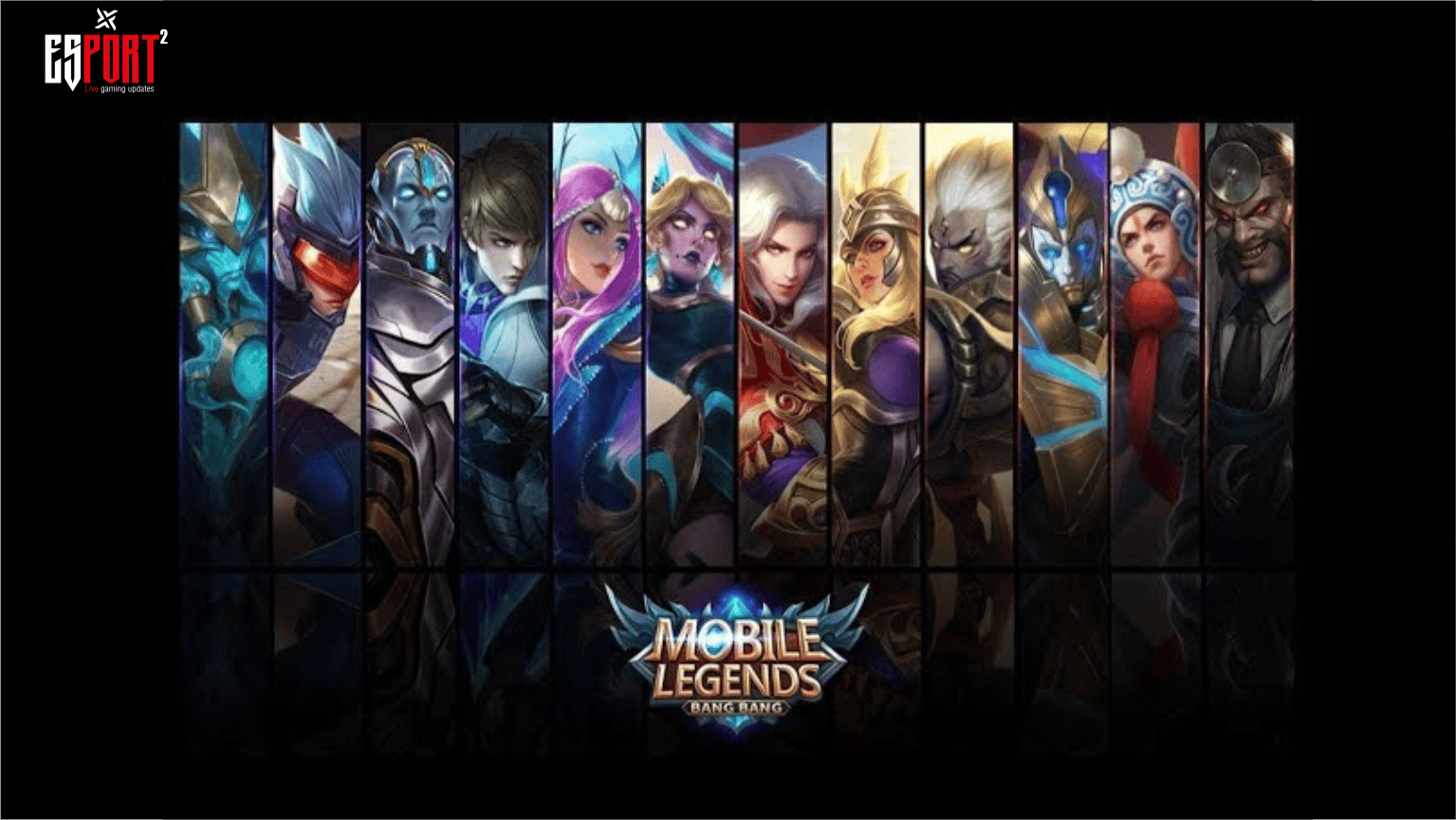
If you rewind the clock just five or six years ago, the traditional PC gaming community often looked down on mobile gaming. The idea that a game played on a touchscreen could rival the strategic depth and mechanical skill of PC giants like League of Legends or Dota 2 was dismissed by esports purists.
But as we sit here in August 2026, the numbers do not lie. Mobile Legends: Bang Bang (MLBB) has not only legitimized mobile gaming esports, but it has completely taken over the industry. During the recent 2026 Esports World Cup (EWC), MLBB consistently pulled some of the highest concurrent viewership numbers across the entire multi-week festival.
For regions like Singapore, the Philippines, and Indonesia, MLBB isn’t just a game—it is a cultural phenomenon. In this deep dive, we are going to explore the unprecedented rise of Mobile Legends esports, analyze the jaw-dropping viewership stats of 2026, and predict where the M-Series and MPL ecosystems are heading next.
📱 PART I: The Origins – Breaking the PC Barrier
To understand the dominance of Mobile Legends in Southeast Asia, you have to understand the hardware economy. In the mid-2010s, building a gaming PC capable of running high-end esports titles was a massive financial hurdle for the average teenager in Southeast Asia. However, almost everyone had a smartphone.
When Moonton launched MLBB in 2016, they capitalized on this exact demographic. They delivered a highly optimized, fast-paced Multiplayer Online Battle Arena (MOBA) that ran flawlessly on budget Android devices.
The Birth of the MPL (Mobile Legends Professional League)
Moonton didn’t just stop at making a successful game; they heavily invested in local infrastructure. The creation of the MPL franchised leagues in Indonesia (MPL ID), the Philippines (MPL PH), and Singapore (MPL SG) created a legitimate, localized career path for aspiring gamers.
Instead of forcing Asian players to compete on high-ping Western servers, Moonton built the esports ecosystem directly in their backyard. This created fierce regional rivalries. The storylines of legendary teams like Blacklist International, ONIC Esports, and RSG SG generated rabid fanbases that rival traditional sports teams in Southeast Asia today.
👑 PART II: The Present – Record-Shattering Viewership in 2026
As of August 2026, the global esports landscape has shifted. While Western audiences still largely cling to PC titles, the sheer volume of the mobile gaming demographic has tilted the global viewership scales.
The EWC 2026 and Global Expansion
Historically, MLBB was viewed as a strictly “SEA-only” phenomenon. However, 2026 marked a massive turning point with the integration of MLBB into the global Esports World Cup (EWC) in Paris and Riyadh. With multi-million dollar prize pools on the line, we saw heavy investment from massive global esports orgs (like Team Liquid and Falcons) acquiring Southeast Asian and MENA (Middle East and North Africa) rosters.
To truly grasp how massive this game has become, we need to look at the hard data from the 2026 competitive season:
| MLBB Esports Metric (2026) | Current Data / Stats | Industry Impact |
|---|---|---|
| Peak Concurrent Viewers (M-Series/EWC) | 5.1 Million+ | Routinely beats major PC titles. The mobile accessibility allows fans to watch streams during commutes or at school. |
| Top Dominant Region | Philippines (MPL PH) | PH continues to dictate the global macro-strategy, though Indonesia and MENA are rapidly closing the mechanical gap. |
| Highest Pick/Ban Hero (August 2026 Meta) | Joy & Nolan | Hyper-mobile assassins dictate the current 2026 jungle meta, forcing teams to draft heavy crowd-control supports. |
| Average Pro Match Length | 14 – 18 Minutes | The hyper-condensed match time is perfect for the TikTok-era attention span, keeping viewer retention incredibly high. |
Why Singapore Matters in the MLBB Ecosystem
While countries like Indonesia boast larger overall player bases due to population size, Singapore (MPL SG) serves as the strategic and financial hub for the region. Singaporean teams are known for bringing highly disciplined, macro-focused gameplay to international tournaments. Furthermore, Singapore routinely hosts major international LAN events, acting as the bridge between Eastern and Western esports investors.
⚔️ PART III: The Mobile Legends Meta (August 2026)
If you are logging in to play ranked today, the professional esports meta heavily dictates what you will see in your matchmaking lobbies. The current August 2026 meta is defined by hyper-aggression.
Unlike older patches where teams would farm passively for 15 minutes, today’s top MPL teams are forcing massive teamfights at the 2-minute Turtle spawn. This has led to the rise of Utility Junglers (like Fredrinn and Barats) who act as massive frontline damage sponges, allowing gold-lane Marksmen (like Claude and Beatrix) to scale safely in the backline.
I’ve been watching the high-level competitive streams all week, and the level of mechanical micro-play required to survive the early game right now is staggering. If your Roamer isn’t rotating to secure mid-lane vision by the 45-second mark, you are already losing the game.
🔮 PART IV: Predictions for 2027 and Beyond
Mobile gaming esports is no longer a niche; it is the industry standard. As we look ahead to the next phase of the M-Series World Championships and the global expansion of the MPL, here are three major predictions for the future of Mobile Legends: Bang Bang.
Prediction 1: The MENA Region Will Win a World Championship
Southeast Asia has held a stranglehold on the MLBB world championship trophy for years. However, the massive influx of esports funding in Saudi Arabia and the MENA region is changing the landscape. Teams like Team Falcons are importing elite coaching staff and establishing state-of-the-art training facilities. By 2028, we predict a non-SEA team will finally lift the M-Series trophy, officially making MLBB a truly global battlefield.
Prediction 2: Complete Mainstream Olympic Integration
We already saw esports integrated into the Southeast Asian Games (SEA Games) with MLBB as a headline medal event. As the International Olympic Committee (IOC) continues to launch its own Olympic Esports Games, Mobile Legends is the undeniable frontrunner to represent the MOBA genre. Its massive global player base and easy-to-understand visual format make it perfect for mainstream television broadcasts.
Prediction 3: A Major Engine Overhaul
As flagship smartphones (like the iPhone 17 and high-end Androids) become exponentially more powerful, the hardware gap is widening. To compete with newer, graphically intense mobile titles, Moonton will likely release a massive “Project NEXT” engine overhaul within the next two years. This update will push the game to a native 120fps standard across all competitive devices, upgrading the visual fidelity of the map while maintaining the optimized performance that made the game famous.
Final Thoughts: The Undisputed King of Mobile
For years, Western esports organizations ignored the mobile market, writing it off as a passing trend. Today, those same organizations are spending millions to buy their way into the MPL.
Mobile Legends: Bang Bang did not just adapt to the esports industry—it rewrote the rules. By making competitive gaming accessible to anyone with a smartphone and a Wi-Fi connection, Moonton unlocked a demographic of hundreds of millions of passionate gamers. The PC elitists can keep their keyboards; the future of global esports viewership is happening on a 6-inch glass screen.
🚨 Did you know how to easily keep perfectly updated?
Join the EsportPort Squad
If you want to climb to Mythic Glory and stay updated on every single MPL roster change, bookmark EsportPort. We drop exclusive MLBB meta guides, redeem codes, and the fastest esports news on the net. Don’t queue up without checking our patch notes first!