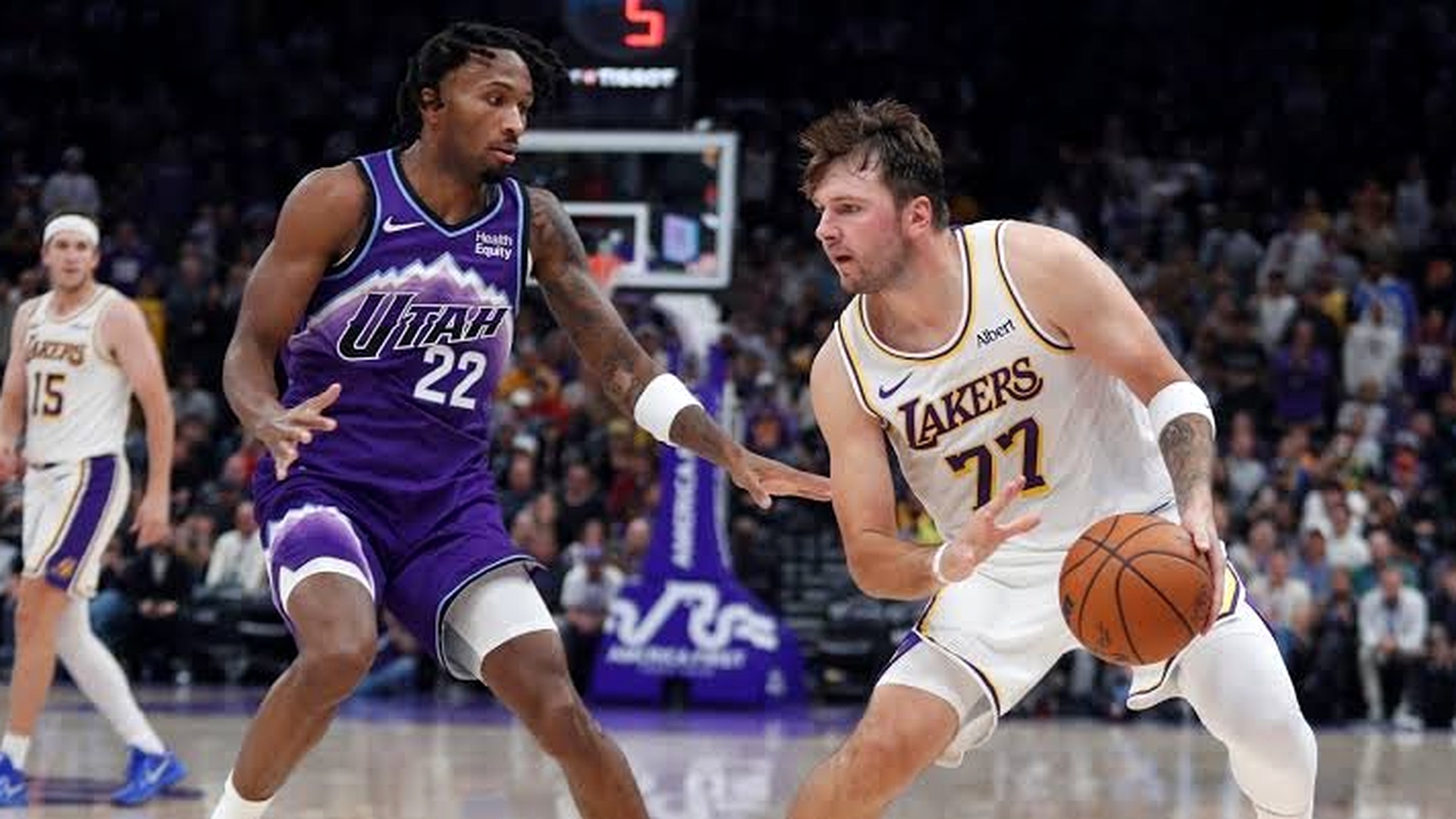
In one of the most stunning defensive masterclasses of the 2026–27 NBA regular season, the Utah Jazz walked onto the floor on Wednesday night, November 18, 2026 (Thursday morning IST), and delivered an emphatic 109–97 upset over the red-hot Los Angeles Lakers. Entering the matchup with an imposing 13–3 record and riding a dominant nine-game winning streak, the Lakers were widely expected to roll through Salt Lake City. Instead, Utah’s disciplined interior defensive wall, relentless glass dominance, and timely perimeter shooting suffocated the Lakers’ high-octane offense, handing Los Angeles their first defeat in nearly three weeks.
Game Overview: How Utah Dismantled the Lakers’ Offense
The Lakers arrived in Utah boasting the Western Conference’s top-ranked offensive rating (118.4) and leading the league in fast-break points per possession. However, Utah head coach Will Hardy instituted a radical tactical shift: packing the paint with a physical drop-coverage scheme that dared the Lakers’ secondary ball-handlers to shoot from the perimeter while completely denying easy lob threats and rim attacks.
The strategy paid immediate dividends. Los Angeles shot a frigid 39.4% from the field and committed 16 costly turnovers that translated directly into 22 Utah transition points. Utah controlled the tempo from the opening tip, establishing a 28–22 lead after the first quarter, withstanding a brief Lakers flurry in the second, and locking down the game in the fourth quarter by outscoring Los Angeles 31–21 in the final frame. For basketball purists analyzing our NBA pro telemetry and shooting guides, this matchup offered a masterclass in half-court defensive containment.
Team Box Score & Key Statistical Breakdown
The tale of the tape highlights Utah’s complete statistical dominance in rebounding margin, paint protection, and three-point efficiency:
| Team / Statistic | 1st Qtr | 2nd Qtr | 3rd Qtr | 4th Qtr | Final Score | FG% (3PT%) | Rebounds (Off) |
|---|---|---|---|---|---|---|---|
| Utah Jazz | 28 | 26 | 24 | 31 | 109 | 47.6% (38.2%) | 52 (14) |
| Los Angeles Lakers (13-3) | 22 | 29 | 25 | 21 | 97 | 39.4% (27.5%) | 39 (7) |
Key Individual Performers & Telemetry Metrics
Utah’s victory was a total collective effort, punctuated by elite rim deterrence and timely scoring runs across four quarters:
- Lauri Markkanen (UTA): Paced the Jazz with 26 points, 10 rebounds, and 4 three-pointers, punishing the Lakers on pick-and-pop actions and dragging interior rim protectors away from the basket.
- Walker Kessler (UTA): The defensive anchor of the evening, Kessler posted a monster line of 14 points, 15 rebounds, and 5 emphatic blocks, completely neutralizing paint finishes in the restricted area.
- Keyonte George (UTA): Contributed 19 points and 8 assists, dictating the tempo down the stretch and hitting two dagger step-back jumpers in the final three minutes.
- Collin Sexton (UTA): Provided 16 points and relentless on-ball pressure, forcing Lakers ball-handlers into 4 costly backcourt turnovers.
- Anthony Davis (LAL): Led Los Angeles with 24 points, 12 rebounds, and 3 blocks, but struggled against Utah’s double-teams in the post, shooting just 8-of-21 from the floor.
- LeBron James (LAL): Added 21 points, 7 rebounds, and 6 assists, but was held to just 4 points in the decisive fourth quarter as Utah’s wing length forced contested mid-range pull-ups.
- Austin Reaves (LAL): Chipped in 15 points on 5-of-14 shooting, struggling to find clean perimeter looks against Utah’s aggressive switch-everything perimeter scheme.
- Rui Hachimura (LAL): Managed 11 points and 5 rebounds, but picked up 4 quick fouls trying to contain Markkanen on the perimeter.
Tactical Deep Dive: How Utah Snapped the Streak
Basketball analysts and sports bettors monitoring sportsbook totals will note three decisive tactical adjustments implemented by Utah:
- Crashing the Offensive Glass: Utah secured 14 offensive rebounds compared to just 7 for the Lakers, generating 19 critical second-chance points that repeatedly stalled Los Angeles’ comeback momentum. Kessler and Markkanen continuously out-muscled Lakers frontcourt rotations.
- Three-Point Disparity: The Jazz converted 13 of 34 attempts (38.2%) from beyond the arc, while the Lakers went cold from downtown, knocking down only 11 of 40 attempts (27.5%). The 33-point perimeter production vs 22-point return created a math deficit the Lakers could not bridge.
- Transition Denial: Utah committed to sending two guards back on every shot release, holding the league-leading Lakers fast break to just 8 total transition points—a staggering 16 points below their season average.
- Post Entry Traps: Whenever Anthony Davis touched the ball on the low block, Utah sent weak-side help from the baseline, forcing contested kick-out passes that resulted in 6 intercepted turnovers.
Quarter-by-Quarter Flow & Decisive Moments
The first quarter established the physical tone of the evening. Utah dominated the interior, with Walker Kessler recording three blocks in the opening six minutes. A Markkanen corner three capped an 8-0 run to give Utah an early 28-22 advantage.
In the second quarter, LeBron James asserted his physicality, driving downhill to generate 11 points and briefly tying the game at 47-47. However, Keyonte George responded with back-to-back pull-up jumpers, sending the Jazz into the locker room with a 54-51 lead.


The third quarter featured intense back-and-forth shot-making, with Anthony Davis converting three consecutive post hooks. But Utah refused to buckle, answering every Lakers push with disciplined drive-and-kick sequences. Leading 78-76 entering the fourth quarter, Utah unleashed a decisive 15-4 run sparked by Sexton’s transition finishes and Markkanen’s fourth three-pointer, extending the margin to 93-80 and putting the game out of reach.
Fourth Quarter Breakdown: The Anatomy of a Collapse
The fourth quarter provided an extraordinary case study in late-game execution and shot-making under duress. Entering the final 12 minutes trailing 78-76, the Lakers were positioned to stage their trademark closing push. However, Utah head coach Will Hardy instituted a high-intensity 1-3-1 trapping zone that completely bewildered the Lakers’ half-court initiators.
Over a catastrophic five-minute scoring drought from the 8:40 mark to the 3:20 mark, the Lakers missed nine consecutive field goal attempts—including four wide-open corner three-pointers by Austin Reaves and Rui Hachimura. Utah capitalized ruthlessly on the other end. Second-year guard Keyonte George operated with supreme composure, probing the paint, drawing help-side defenders, and kicking out to Lauri Markkanen for a back-breaking transition triple from the right wing that pushed the lead to 99-84.
Statistical Comparison: Lakers Season Averages vs. Utah Reality
To understand the magnitude of Utah’s defensive containment, compare the Lakers’ season-long offensive telemetry against their production inside Delta Center:

| Statistical Metric | Lakers Season Average | Performance vs. Utah Jazz | Statistical Differential |
|---|---|---|---|
| Points Per Game | 117.8 PPG | 97.0 PPG | -20.8 PPG |
| Fast-Break Points | 22.4 FBP | 8.0 FBP | -14.4 FBP |
| Paint Points Allowed | 44.2 Paint PTS | 56.0 Paint PTS | +11.8 Paint Deficit |
| Turnover Points Conceded | 13.1 PTS Off TO | 22.0 PTS Off TO | +8.9 Turnover Penalty |
JJ Redick’s Post-Game Accountability & Adjustments
In his post-game media availability, Lakers head coach JJ Redick did not mince words regarding his squad’s lack of offensive poise and defensive transition effort. “We fell in love with individual shot-creation and completely abandoned our secondary ball movement,” Redick stated candidly. “Utah played harder, crashed the glass with more ferocity, and completely deserved this victory. We allowed their physical interior length to dictate our shot selection, and when you shoot under 30% from three on the road against a disciplined squad, you are going to get beaten.”
Western Conference Standings Impact & Betting Market Adjustments
With this landmark victory, the Utah Jazz improved their record, proving their capacity to compete with the conference elite when executing disciplined game plans. Meanwhile, the Lakers fall to 13–3, relinquishing sole possession of the West’s top seed to the Oklahoma City Thunder. In Vegas betting markets, the Lakers’ odds to win the Western Conference lengthened slightly from +320 to +360, while Anthony Davis’ MVP futures price held firm at +450.
Key Takeaways for Future Matchups
- Lakers’ Half-Court Reliance: When denied transition run-outs, Los Angeles must develop more reliable secondary shooting to punish teams that pack the lane against Davis and James.
- Utah’s Twin Towers Identity: Playing Kessler and Markkanen together provides elite defensive rebounding and floor spacing that creates nightmares for traditional frontcourts.
Related posts:
 NBA 2026-27 Defensive Telemetry: Victor Wembanyama vs Chet Holmgren Rim Protection Analytics & DPOY Race Breakdown
 NBA Early Season Net Rating & Pace Telemetry: Celtics Perimeter Volume, Thunder Rim Protection & Western Conference Standings
 NBA Saturday Night & UFC Fight Night Midnight Megacard: Celtics, Lakers & Suns Player Prop Telemetry, Octagon Takedown Defense Analytics & NBA 2K25 Pro-Am Green Window Hacks
 NBA Thursday Power Rankings & Weekend Props Telemetry: Celtics +13.8 Net Rating, Warriors Bench Surge & Bucks Crisis