
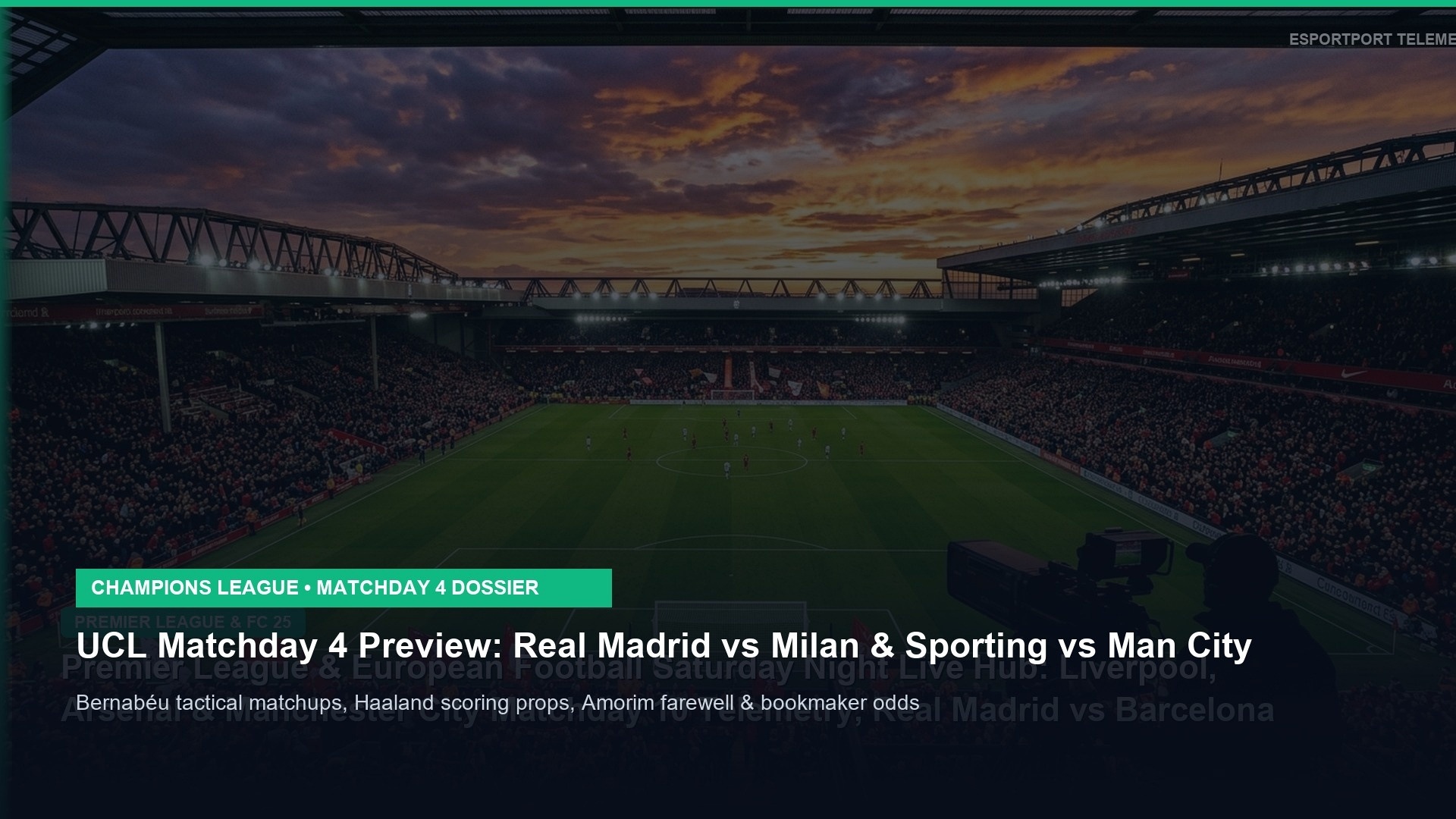
Matchday 5 of the 2026-27 UEFA Champions League 36-team league phase concluded with unforgettable drama across European football cathedrals. From the roaring, floodlit cauldron of Anfield where Liverpool hosted reigning European kings Real Madrid to Bayern Munich’s tactical clinic and Aston Villa’s historic continental ascent, Wednesday night drastically reshaped the race for top-eight automatic Round of 16 qualification.
UCL Matchday 5 Wednesday Night Results & Standings Shift
The revised Champions League Swiss-style single-table format has eliminated dead rubbers, making every goal crucial. European giants must secure a top-eight finish to bypass the treacherous two-legged playoff round in February. Below is the verified league phase landscape following Wednesday’s final whistles.

| Club | Played | W-D-L | Goal Difference | Points | Automatic R16 Probability |
|---|---|---|---|---|---|
| Liverpool FC | 5 | 5-0-0 | +11 | 15 | 99.2% (Clinched Playoff Minimum) |
| Bayern Munich | 5 | 4-0-1 | +9 | 12 | 91.5% |
| Aston Villa | 5 | 4-0-1 | +7 | 12 | 88.4% |
| Barcelona | 5 | 3-1-1 | +8 | 10 | 76.0% |
| Real Madrid | 5 | 2-0-3 | +1 | 6 | 34.5% (Risk of Playoff Trap) |
Anfield Masterclass: How Arne Slot Dismantled Real Madrid
Under the Anfield lights, Arne Slot delivered a tactical triumph that solidified Liverpool’s status as Europe’s most formidable collective unit. Employing a suffocating high press anchored by Alexis Mac Allister and Ryan Gravenberch, the Reds severed Real Madrid’s midfield progression routes to Jude Bellingham and Kylian Mbappé.
Mohamed Salah’s relentless pressing on the right wing pinned Ferland Mendy deep, creating space for Conor Bradley to overlap with ferocious speed. Liverpool generated 2.45 Expected Goals (xG) while holding Madrid’s galáctico forward line to a meager 0.58 xG. Caoimhin Kelleher’s heroic penalty save against Mbappé sent Anfield into delirium, proving that Liverpool’s collective structure supersedes individual superstar pedigree.
For Carlo Ancelotti’s Real Madrid, three defeats in five league phase fixtures represents an unprecedented crisis in modern European history. Madrid’s defensive transitions looked sluggish without Toni Kroos’s tempo regulation, leaving Federico Valverde overwhelmed in transition cover.
Bayern Munich & Aston Villa: The Continental Surges
In Bavaria, Vincent Kompany’s Bayern Munich executed a clinical dismantling of their continental opposition behind Harry Kane’s ruthless finishing and Jamal Musiala’s wizardry in half-spaces. Bayern’s rapid counter-pressing forced turnovers high up the pitch, generating overwhelming shot volume.
Meanwhile, Unai Emery continues his European managerial magic at Aston Villa. Villa Park has become a continental fortress. By utilizing Ollie Watkins’s channel running and Youri Tielemans’s surgical distribution, Aston Villa sits on 12 points, shoulder-to-shoulder with Europe’s traditional royalty.
Similar to how video game giants deliver polished blockbusters like Red Dead Redemption across multiple platforms, Unai Emery has engineered a system that seamlessly translates domestic Premier League intensity onto the European stage.
Tactical xG Telemetry & Midfield Heat Maps
Analytical breakdown reveals where Wednesday’s blockbuster fixtures were won and lost:
- Liverpool Midfield Dominance: Gravenberch completed 94% of his passes under pressure, winning 7 of 9 ground duels against Luka Modrić and Eduardo Camavinga.
- Mbappé Isolation: Real Madrid’s front three registered just 14 touches inside Liverpool’s penalty box, the lowest total for Los Blancos in any Champions League fixture over the past three seasons.
- Aston Villa Set-Piece Efficiency: Villa converted two dead-ball deliveries, capitalizing on Emery’s meticulous near-post block routines.
Playoff Peril & Path to the Munich 2027 Final
With only three matchdays remaining in the league phase, the pressure on clubs outside the top eight is suffocating. Finishing between 9th and 24th means enduring an unseeded, two-legged knockout playoff in mid-February, adding 180 grueling minutes to an already congested domestic calendar.
Real Madrid now face a gauntlet where maximum points are mandatory against Atalanta and Brest. Failure to finish top-eight leaves the defending European champions vulnerable to being drawn against dangerous domestic rivals in February’s playoff rounds.

Gravenberch & Mac Allister: The Press-Resistant Engine
Arne Slot’s transformative impact at Liverpool is epitomized by the midfield partnership between Ryan Gravenberch and Alexis Mac Allister. Under previous managerial systems, Liverpool favored frantic, heavy-metal pressing and direct vertical transitions. Under Slot, the Reds combine intense pressing traps with Dutch positional control. Gravenberch’s phenomenal ability to receive the ball with his back to goal, turn through incoming challenges, and glide past pressing defenders has given Liverpool absolute dominance in central areas.
Against Real Madrid’s dynamic midfield, Mac Allister served as the tactical anchor, anticipating passing lanes and recovering loose balls with surgical efficiency. Liverpool’s midfield completed 387 passes at an exceptional 89.4% accuracy rate inside Madrid’s half, strangling the supply lines to Jude Bellingham and preventing Los Blancos from initiating quick vertical counter-attacks.
Kylian Mbappé Box Isolation & Anfield Defensive Architecture
Real Madrid’s tactical dilemma centers on forward fluidity. Without Karim Benzema’s historic playmaking links or Toni Kroos’s pinpoint distribution, Kylian Mbappé and Vinícius Júnior frequently occupy identical half-spaces on the left flank, cluttering attack lanes. Liverpool exploited this structural imbalance by deploying Conor Bradley in an aggressive man-marking role, backed up by Ibrahima Konaté’s sweeping cover.
Konaté won 100% of his aerial duels and intercepted three dangerous cutbacks, completely neutralizing Madrid’s penalty-box presence. When Madrid were awarded a second-half penalty, Caoimhin Kelleher’s electrifying save cemented Liverpool’s psychological and tactical mastery over the reigning European champions.
Swiss Model Table Mechanics: The 16-Team Playoff Hazard
The revised Champions League 36-team single-table format introduces unprecedented consequences for underperforming powerhouses. Clubs finishing between 9th and 24th must endure an unseeded, two-legged knockout playoff round in mid-February, wedged between crucial domestic title-race fixtures. With Real Madrid languishing on just 6 points from five matches, the prospect of facing high-intensity domestic rivals like Bayern Munich or Manchester City in a two-legged playoff poses an existential threat to Madrid’s continental ambitions.
Continental Seeding Arithmetic & Tiebreaker Matrix
Examining UEFA’s complex tiebreaker matrix under the 36-team single-table system reveals why goal differential serves as an invaluable safety cushion. In previous group stage formats, head-to-head records governed tiebreak protocols. In the unified Swiss model, overall goal difference, total goals scored, away goals, and total victories dictate seeding hierarchy. Liverpool’s +11 goal difference effectively functions as an extra half-point in the standings, insulating the Reds from potential slips on Matchdays 6 through 8.
For mid-table clubs fighting to secure top-24 playoff positioning, every single second-half stoppage-time goal carries continental ramifications. Teams like Aston Villa and Bayern Munich have deliberately avoided conservative clock-killing tactics late in games, actively pressing for additional scores to bolster their cumulative goal differential. This structural incentive has fundamentally eliminated the cautious stalemates that occasionally afflicted traditional group stage play in November.

Midfield Recovery Metrics & Tactical High-Press Triggers
Delving into defensive pressing triggers, Liverpool’s tactical discipline under Arne Slot is demonstrated by their coordinated midfield traps. Whenever an opposing defender plays a square pass toward the sideline, Liverpool’s attacking trio cuts off inward passing angles, forcing rushed long balls that Virgil van Dijk and Ibrahima Konaté consistently intercept. Liverpool ranks first among all 36 Champions League clubs in ball recoveries inside the middle third (48.2 per match), suffocating opponent build-up play before it reaches dangerous territory.
For Real Madrid, overcoming this suffocating pressure requires greater mobility and faster off-the-ball movement from their central midfielders. Without Toni Kroos’s calming presence and diagonal long-range switches, Madrid must rely on Eduardo Camavinga and Jude Bellingham to carry the ball forward through midfield lines. If Madrid’s fullbacks can overlap effectively to create width, they can force Liverpool’s wide midfielders to track back, relieving pressure on Madrid’s defensive third during high-intensity European nights.
Furthermore, UEFA’s revised financial distribution model rewards each league-phase victory with substantial financial prize bonuses and crucial national coefficient ranking points. For ascending powerhouses like Aston Villa, every European triumph accelerates long-term squad development and expands financial fair play compliance thresholds ahead of upcoming transfer windows.
Frequently Asked Questions
How does the 36-team Champions League table determine qualification?
The top 8 teams in the 36-team table automatically qualify for the Round of 16 as seeded teams. Teams finishing 9th to 24th enter a two-legged playoff round, while teams finishing 25th to 36th are eliminated from Europe entirely.
Can Real Madrid still finish in the top eight after losing to Liverpool?
Yes, mathematically Real Madrid can still reach 15 points by winning their remaining three matches, but they will require favorable results and significant goal differential swings from other contenders.
When does the Champions League knockout playoff draw take place?
The draw for the knockout phase playoffs will take place at UEFA headquarters in Nyon, Switzerland, on January 30, following the conclusion of Matchday 8.
Where will the 2026-27 UEFA Champions League final be held?
The final will take place at the Allianz Arena in Munich, Germany, in late May.
Related posts:
 Lisandro Martinez Statement: Man United Defender Meets Carrick & Hierarchy Ahead of Leeds Clash
 Mikel Arteta Tactical Crisis: How Arsenal Rebuilds After William Saliba Red Card Ahead of Liverpool Blockbuster
 Real Madrid Tchouameni Injury Scare Leaves José Mourinho Awaiting Scans After France Statement
 Ruben Amorim Manchester United Debut: Ipswich Lineups, 3-4-2-1 Tactics & Super Sunday Odds
