
EsportPort Critical Review Verdict: 8.5 / 10 (Cult Action-Horror Classic)
From the legendary creative mind of Keiichiro Toyama—the auteur director behind Silent Hill, Siren, and Gravity Rush—comes Slitterhead, the debut title from Bokeh Game Studio. Set in the dense, neon-drenched urban labyrinth of Kowlong in the late 20th century, this title subverts modern horror conventions by abandoning helpless vulnerability in favor of relentless, blood-fueled supernatural body-hopping combat. Here is our in-depth review and technical performance analysis across PC, PS5, and Xbox.
The Hyoki Mechanic: Fluid Possession & Weaponized Blood
Rather than controlling a singular human protagonist, you play as the Hyoki—an ethereal, disembodied spirit possessing no physical form or memory. To navigate the crowded alleyways of Kowlong and hunt down brain-devouring parasitic abominations masquerading as humans (known as Slitterheads), you must possess the bodies of ordinary citizens roaming the streets.
Possession is seamless and instantaneous. Pointing your reticle at any pedestrian within line of sight allows you to leap across rooftops, escape ambushes, and weaponize human blood. By crystallizing blood into razor-sharp scythes, heavy broadswords, and rapid-fire projectiles, combat transforms into an exhilarating dance of strategic possession. Ordinary human bodies are expendable shock-absorbers; when your host takes critical damage, you leap into another bystander, flinging blood claws to parry monstrous tentacles and execute devastating counterattacks.

The Rarities: Deep Character Synergies & Skill Trees
While anonymous pedestrians provide quick vitality replenishment, the tactical depth of Slitterhead emerges when possessing “Rarities”—special human hosts who share a biological resonance with the Hyoki. These characters possess unique skill trees, enhanced endurance, and signature supernatural weapons.
Characters like Julee—an agile masked vigilante wielding dual blood claws—specialize in rapid parries and vertical mobility, while Alex—a shotgun-wielding ex-mercenary—delivers overwhelming concussive force capable of staggering massive Slitterhead brutes. Swapping between Rarities mid-combo allows you to coordinate devastating tag-team abilities, combining crowd-control blood barriers with lethal finishers. Compare this unique combat loop with our analysis of Mario & Luigi: Brothership Combat & Synergies.
| Platform | Resolution Target | Framerate Performance | Loading Times | EsportPort Review Rating |
|---|---|---|---|---|
| PlayStation 5 | Dynamic 4K (1800p-2160p) | Locked 60 FPS | 3.4 seconds (Ultra-fast SSD) | 8.7 / 10 (Superb DualSense haptics) |
| PC (Steam / Epic) | Native 4K Ultrawide | 120+ FPS (RTX 4070+) | Instantaneous NVMe load | 8.8 / 10 (Full ultrawide 21:9 support) |
| Xbox Series X | Dynamic 4K (1800p-2160p) | Locked 60 FPS | 3.8 seconds | 8.6 / 10 (Smooth VRR implementation) |
| Xbox Series S | 1080p Internal | Stable 60 FPS (Reduced crowd density) | 5.1 seconds | 8.0 / 10 (Solid budget performance) |
Atmospheric Brilliance & Kow Otani’s Industrial Soundtrack
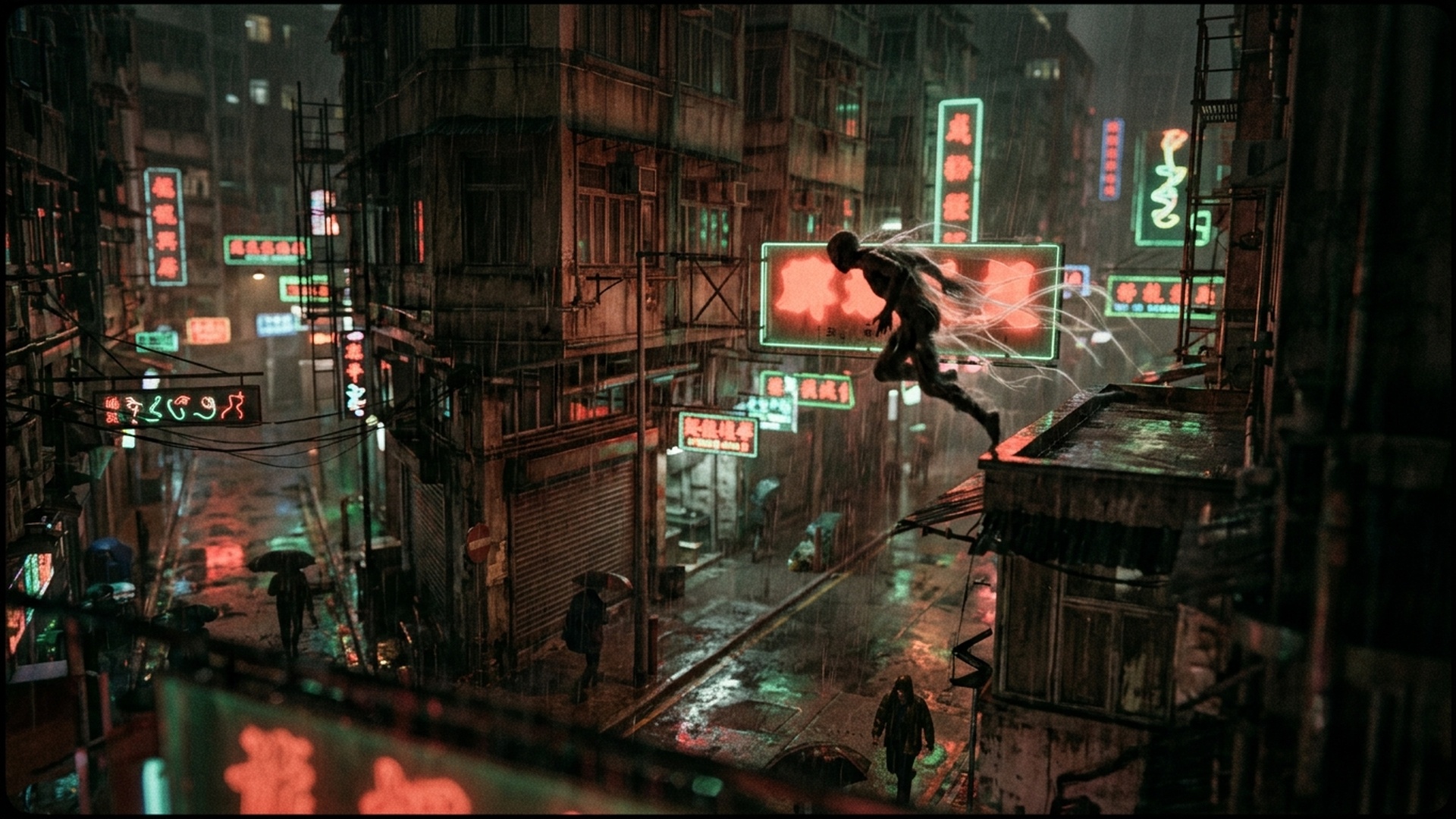
Where Slitterhead achieves true greatness is in its intoxicating atmosphere. The fictional city of Kowlong draws immense inspiration from Hong Kong’s historic Kowloon Walled City, characterized by tangled electrical cables, dripping air conditioners, flickering neon signs, and cramped tenements.
Elevating this urban nightmare is an exceptional original musical score composed by legendary musician Kow Otani (best known for his iconic, melancholic orchestration on Shadow of the Colossus). Otani crafts a haunting industrial soundscape blending traditional Chinese instruments (erhu and guzheng) with distorted synthesizer pulses and heavy electric guitar riffs, evoking the peak golden age of PlayStation 2 Japanese action gaming.
Body Horror Art Direction & Creature Anatomy
The visual aesthetic of Slitterhead stands as an unvarnished love letter to late-1980s Japanese grotesque horror cinema, drawing obvious artistic parallels to manga masterworks like Hitoshi Iwaaki’s Parasyte and the bio-mechanical body horror of Shinya Tsukamoto’s Tetsuo: The Iron Man. The titular Slitterhead creatures do not reside in dark shadows; they walk openly among everyday crowds, disguising themselves beneath synthetic human skin.
When confronted by the Hyoki spirit, the transformation is shockingly visceral. A seemingly harmless office worker or street vendor suddenly splits their cranium vertically, revealing towering chitinous mantis scythes, undulating serpentine tentacles, and glistening clusters of compound eyes. Toyama’s creature design team prioritizes disturbing anatomical asymmetry over generic monster tropes. Battles against elite Alpha Slitterheads require players to slice off specific appendages to disrupt lethal area-of-effect bile attacks, injecting deliberate tactical precision into frantic close-quarters skirmishes.
Narrative Structure & Memory Reconstruction
Narratively, Slitterhead unfolds through a fractured, non-chronological investigation timeline. As the Hyoki spirit bonds with different Rarities across Kowlong, you collect fragmented memory shards that piece together why these parasitic entities infiltrated human civilization. The dialogue between the disembodied spirit and its human hosts is surprisingly philosophical, exploring themes of existential identity, mortality, and the parasitic nature of urban consumerism.
Each Rarity possesses an independent backstory that unlocks optional narrative investigation missions. You might guide Julee through neon-lit night markets to unravel a syndicate kidnapping ring, or assist Alex in uncovering a sinister pharmaceutical conspiracy operating out of a dilapidated hospital. These character-driven subplots provide welcome narrative pacing between intense, blood-soaked combat encounters, creating an emotionally engaging detective thriller wrapped inside a surreal horror nightmare.

Combat Flow & Deflection Timing Optimization
Mastering Slitterhead’s higher difficulty settings requires mastering its directional deflection mechanic. Similar to classic rhythm-action games, enemy attacks flash with directional visual cues, requiring players to flick the right analog stick in the precise direction of incoming claws to parry. A successful deflection instantly slows down time, staggering the monstrosity and allowing your human host to unleash a devastating blood-strike execution.
This deflection loop, paired with the ability to leap across bodies to flank enemies from behind, creates an intoxicating kinetic rhythm. While mainstream action games frequently rely on passive dodge-rolling, Slitterhead forces you to stand your ground, exchange brutal strikes, and conquer terrifying abominations through sheer reflexive aggression.
Replay Value, New Game Plus & Boss Rush Challenges
Completing the initial 15-hour campaign in Slitterhead unlocks substantial endgame content that will delight dedicated action-horror enthusiasts. Bokeh Game Studio has incorporated a comprehensive New Game Plus mode, allowing players to carry over all unlocked Rarity characters, skill tree masteries, and blood-weapon enhancements into higher difficulty tiers where enemy attack animations are significantly faster and deflection parry timing windows are tighter.
Additionally, the game features a standalone “Nightmare Boss Rush” challenge mode that pits your squad against consecutive Alpha Slitterhead encounters in enclosed arenas with restricted civilian host counts. Achieving an S-Rank in these trials requires flawless possession rhythm, conserving civilian blood pools, and coordinating multi-character tag combos under immense pressure.
These rich post-game modes, combined with hidden lore fragments scattered throughout the labyrinthine streets of Kowlong, provide exceptional replay value. Bokeh Game Studio has proved that independent mid-budget video games can deliver bold creative ambition and pure gameplay adrenaline without being shackled to cookie-cutter open-world design tropes.
Artistic Direction: The Neon Melancholy of Kowloon Nights
The visual design of Kowlong in Slitterhead achieves an extraordinary balance of vibrant nostalgia and grimy decay. Bokeh Game Studio’s environmental artists have painstakingly recreated the sensory overload of late-20th-century Asian urban density. Water droplets bead realistically across weathered neon signboards advertising herbal apothecaries, karaoke bars, and street-side noodle stalls, reflecting sickly shades of crimson, violet, and electric green onto puddles along cracked pavement.
This rain-soaked neon haze creates a hypnotic, dreamlike aesthetic that amplifies the underlying psychological dread. Wandering through cramped apartment corridors where residents go about their mundane routines—unaware that horrific parasitic monstrosities lurk among them—evokes a profound sense of fragile humanity. Toyama’s unique artistic vision proves that masterfully directed atmospheric immersion can captivate players far more intensely than standard high-budget visual effects.

Critical Flaws & Final Buying Verdict
Slitterhead is not without rough edges. The camera can struggle in confined indoor stairwells, and mid-campaign mission structures occasionally repeat investigation objectives across previously cleared districts. However, its bold conceptual originality, gruesome body-horror monster designs, and fluid possession combat far outweigh minor budget limitations.
For fans of Keiichiro Toyama’s previous masterpieces and gamers yearning for unapologetically eccentric Japanese action titles, Slitterhead is a glorious, bloody breath of fresh air. To explore top discounts on digital horror titles, view our Steam Autumn & Winter Sale Schedule & Wishlist Guide.
Frequently Asked Questions (FAQ)
Q: Is Slitterhead a pure survival horror game or an action game?
A: Slitterhead is primarily a high-speed action-horror game with tactical possession mechanics, focusing on blood-weapon combos and deflecting enemy attacks rather than resource hoarding or evasion.
Q: Who directed Slitterhead?
A: The game was directed by Keiichiro Toyama, the legendary creator of the original Silent Hill (1999), Siren, and Gravity Rush, operating under his newly founded independent studio, Bokeh Game Studio.
Q: How long does it take to beat Slitterhead?
A: A standard playthrough of the main story takes approximately 12 to 15 hours, extending to 20+ hours for players unlocking all Rarity skill trees and optional memory fragments.
Related posts:
 Silent Hill 2 Remake Definitive Review: Bloober Team Delivers a Psychological Survival Horror Masterpiece
 Silent Hill 2 Remake In-Depth Review: Bloober Team’s Atmospheric Psychological Masterpiece
 Apex Legends Season 23 Weapon Tier List: TTK Stats, Hop-Up Rankings & Best Ranked Loadouts
 Golden Joystick Awards 2026 Winners: Resident Evil Requiem Sweeps Ultimate Game of the Year & 4 Trophies
