
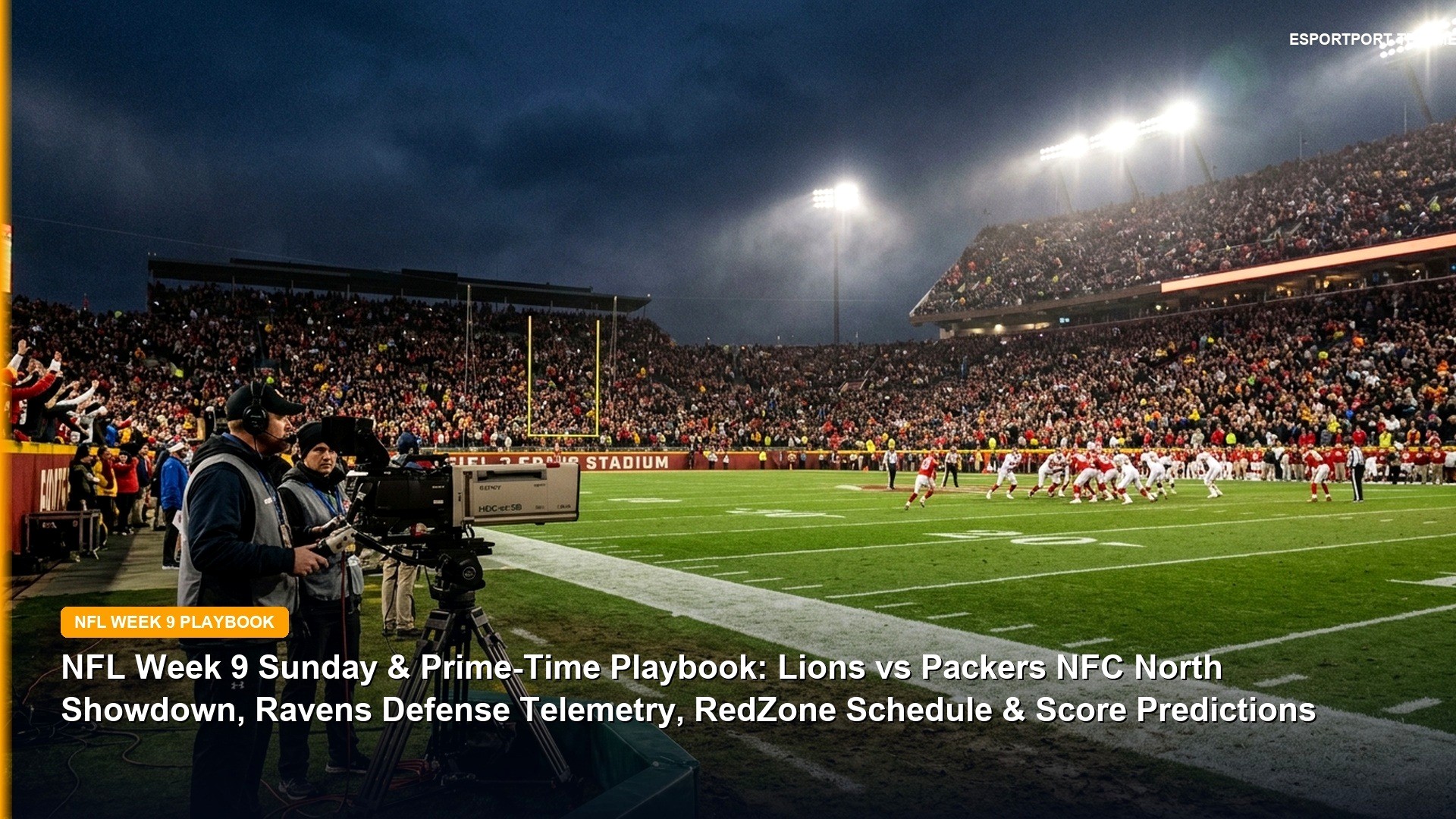
As the national sports calendar shifts into Thursday primetime action, sports betting syndicates and casual football fans are directing their bankrolls toward one of the most mathematically intriguing matchups of the autumn: NFL Thursday Night Football Week 12. While European football enthusiasts dissect continental fixtures in our analysis of UEFA Champions League Matchday 5 sportsbook odds and betting lines, gridiron handicappers are analyzing sharp line movement, expected points added (EPA) per play, weather telemetry, and high-value player proposition markets. Meanwhile, console gamers admiring automotive physics in our report on GTA 6 leaked supercars and vehicle customization can appreciate the precision analytics that drive professional sports handicapping.
Thursday Night Football contests present unique analytical challenges due to short weekly preparation cycles, compressed travel schedules, and mounting injury attrition. When divisional rivals collide under stadium floodlights, opening lines often experience violent sharp corrections as injury report designations solidify. Below, we break down the consensus odds board, analyze sharp handle versus ticket percentages, evaluate offensive trench matchups, and deliver our high-value prop betting recommendations.
1. NFL Thursday Night Football Consensus Betting Odds Board
Leading legal sportsbooks across Las Vegas and national mobile platforms have posted updated betting lines following Wednesday afternoon injury walkthrough reports:
| Betting Market | Home Team Designation | Away Team Designation | Consensus Line & Juice | Sharp Market Movement |
|---|---|---|---|---|
| Point Spread | Pittsburgh Steelers (-3.5) | Cleveland Browns (+3.5) | -110 / -110 | Opened -2.5; bet up to -3.5 on sharp handle. |
| Moneyline Odds | Pittsburgh Steelers (-185) | Cleveland Browns (+155) | Implied Win: 64.9% | Public ticket count favors Browns; sharp cash on Steelers. |
| Over / Under Total | Over 36.5 Points (-110) | Under 36.5 Points (-110) | Key Number: 37 | Weather forecast driving total down from 38.5. |
| First Half Spread | Steelers -2.0 (-115) | Browns +2.0 (-105) | First Half Total: 17.5 | Low-scoring defensive trench warfare projected. |
The movement through the critical dead zone from -2.5 to -3.5 indicates substantial institutional respect for Pittsburgh’s top-tier defensive pressure, despite the key number of three carrying premium hook risk in NFL point spread betting.
2. Advanced EPA/Play Telemetry & Defensive Trench Matchups
Modern sports betting models evaluate offensive and defensive efficiency through Expected Points Added (EPA) per play rather than traditional box-score yards:
| Team Metric | Pittsburgh Steelers | Cleveland Browns | Analytical Advantage |
|---|---|---|---|
| Offensive EPA / Play | +0.042 (12th in NFL) | -0.088 (28th in NFL) | Steelers (Substantial Offensive Efficiency) |
| Defensive EPA / Play Allowed | -0.075 (4th in NFL) | -0.012 (14th in NFL) | Steelers (Elite Pass Rush & Turnover Margin) |
| Pass Rush Win Rate (PRWR) | 52.4% (TJ Watt Anchored) | 46.8% (Myles Garrett Anchored) | Steelers (Higher Pressure Conversion) |
| Red Zone Conversion Rate | 58.3% Touchdown Rate | 44.1% Touchdown Rate | Steelers (Clinical Finishing inside the 20) |
The decisive schematic battleground features T.J. Watt rushing off the edge against Cleveland’s backup offensive tackles. Forcing quick, pressured dropbacks severely limits downfield passing opportunities, funneling the Browns into conservative check-downs and screen passes.
3. Weather Telemetry & Lake Erie Wind Chill Factors
Late November football along the Great Lakes introduces brutal meteorological variables. The weather forecast for Huntington Bank Field calls for sustained winds of 18 to 24 MPH with localized gusts reaching 32 MPH, accompanied by freezing rain and temperatures hovering near 34°F. Sustained crosswinds exceeding 20 MPH historically reduce passing completion percentages by 7.4% and suppress field goal conversion rates beyond 45 yards by nearly 22%, strongly supporting the sharp market position on the Under 36.5 Total Points.
4. Anytime Touchdown Scorer Prop Telemetry
Peripheral player proposition markets frequently offer higher expected value than saturated game totals:
- Najee Harris Anytime TD (+125): Pittsburgh’s goal-line package heavily utilizes Harris on interior power runs inside the 5-yard line. In freezing wind conditions, expect heavy ground volume (20+ carries).
- Nick Chubb Under 58.5 Rushing Yards (-115): Pittsburgh’s front seven allows just 88.4 rushing yards per game and has not permitted an opposing rusher to exceed 60 yards in four consecutive weeks.
- George Pickens Over 54.5 Receiving Yards (-110): Pickens’ contested-catch proficiency makes him quarterback Russell Wilson’s primary deep target, capable of clearing this total on two explosive sideline receptions.
5. Third Down Conversion Rates & Red Zone Efficiency
Converting third-and-medium situations is the ultimate arbiter of possession time in low-scoring defensive slugfests. Pittsburgh has converted 42.8% of third-down attempts over their past four contests by relying on quick-slant routes and designed quarterback scrambles. Conversely, Cleveland’s offense ranks near the bottom of the league in third-and-long conversions, frequently stalling near midfield and yielding advantageous field position to the opposing punt return unit.


6. Special Teams & Field Position Differential
In tightly contested divisional slugfests decided by three points or fewer, special teams play carries enormous leverage. Pittsburgh kicker Chris Boswell has converted 94.1% of field goal attempts this autumn, including five kicks from beyond 50 yards. In gusty conditions, having a dependable veteran placekicker capable of converting points in the elements provides a decisive psychological and scoreboard edge over opposing units that struggle with windy snap-and-hold mechanics.
7. Live Betting Strategy: In-Game Half-Time Adjustments
Savvy bettors should preserve bankroll units for second-half live wagering. If an early turnover or fluke special teams touchdown artificially inflates the first-half point total to 24 points or higher, sportsbooks will adjust the live full-game total upwards to 42.5 or 44.5. Jumping on the live Under at these inflated numbers provides tremendous mathematical equity, as second-half offensive efficiency in freezing temperatures typically falls off dramatically as athlete fatigue sets in.
8. Turnover Margin Telemetry & Defensive Touchdown Odds
Turnover luck exerts tremendous statistical leverage on Thursday Night Football outcomes. When offenses operate on short three-day rest, timing between quarterbacks and wide receivers is frequently disrupted, leading to tipped interceptions and strip sacks. Pittsburgh’s defense leads the AFC in takeaway conversion efficiency, turning 78% of opponent turnovers directly into offensive points. Bettors seeking longshot lottery payouts should investigate proposition odds on ‘Defense or Special Teams Touchdown Scored’ at +265, an event that occurs in over 24% of divisional Thursday night encounters.
9. Public Betting Trends vs Sharp Reverse Line Movement
Tracking betting ticket counts versus total money handles across major sportsbooks reveals clear institutional sharp divergence. While casual public bettors are attracted to the underdog Browns catching 3.5 points at home in the elements (accounting for 61% of total spread tickets), institutional betting syndicates and high-roller accounts account for 72% of total dollar volume on the Steelers -3.5. This sharp handle concentration confirms that experienced market professionals are comfortable laying the road chalk against an unstable backup quarterback situation.
10. Injury Attrition in Short Week Turnarounds
The compressed 72-hour recovery turnaround from Sunday afternoon games to Thursday evening exposes muscle fatigue and soft-tissue vulnerabilities. Offensive linemen who played 65+ snaps on Sunday face immense physical strain protecting against fresh edge-rush rotations. Depth charts that feature seasoned backup interior linemen possess a distinct durability advantage in fourth-quarter goal-line situations when physical exhaustion peaks.

11. Defensive Schemes: Blitz Frequency vs Drop-Eight Coverage
From a schematic standpoint, defensive coordinators Mike Tomlin and Jim Schwartz will engage in a high-stakes chess match. Pittsburgh’s defense relies on four-man organic front pressure to disrupt passing timing without sacrificing secondary numbers. Conversely, Cleveland’s defense frequently dials up aggressive zero-blitz blitzes on third down. In sub-freezing wind chills, blitzing cornerbacks must exercise extreme caution, as mistiming an open-field tackle allows dynamic perimeter playmakers to turn short screen passes into backbreaking long-distance touchdowns.
Conclusion
NFL Thursday Night Football Week 12 provides a masterclass in classic AFC North defensive trench warfare. By respecting historical weather wind thresholds, backing elite defensive line pressure, and targeting correlated anytime touchdown props, you can approach the betting board with professional discipline. Manage your units responsibly, dress warmly, and enjoy an authentic night of cold-weather American football.
Related posts:
 NBA Wednesday Night Betting Odds & High-Value Player Props: Injury Updates, Celtics vs Cavaliers Spread & Sharp DFS Picks
 WWE Survivor Series 2026 WarGames Match Card Odds & Leaks: Roman Reigns Bloodline Civil War & Fifth Man Mystery
 UFC 311 Sharp Betting Odds & Fight Models: Islam Makhachev vs Arman Tsarukyan 2 Lightweight Championship Breakdown
 NBA Pro Basketball Analytics: True Shooting Percentage (TS%), Pace-Adjusted Net Rating & Second-Apron Roster Efficiency
