
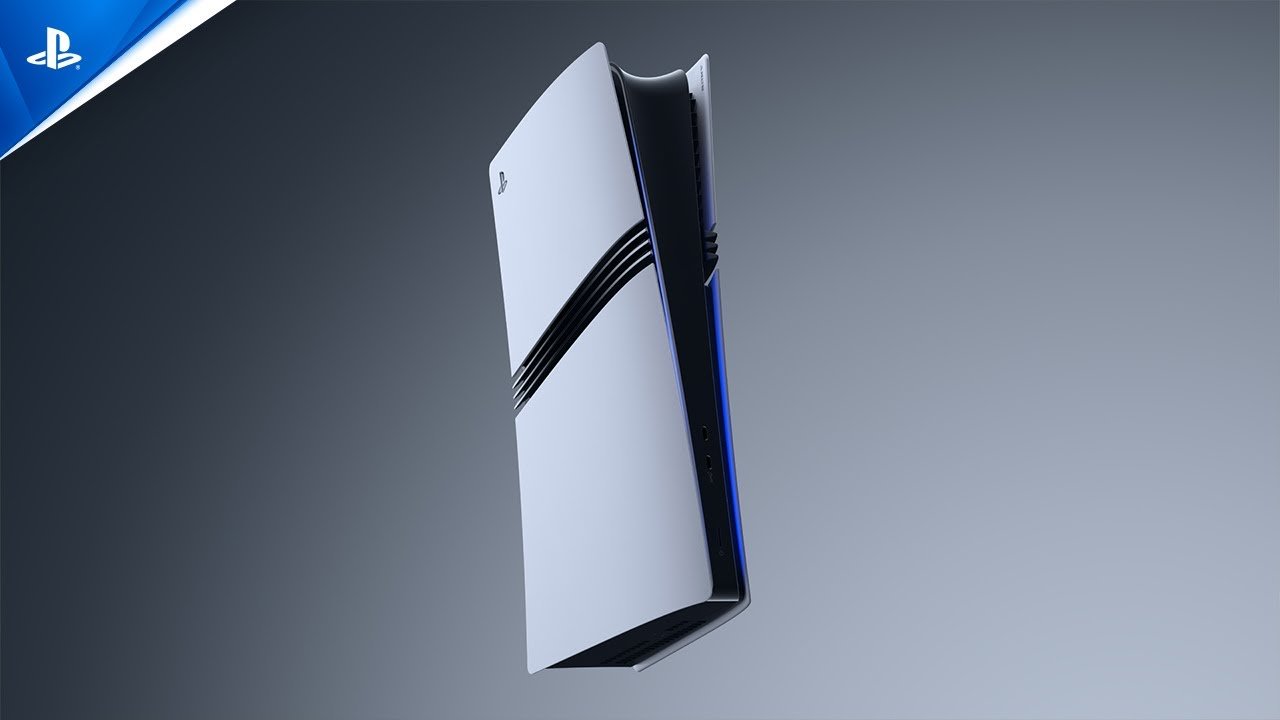
Sony Interactive Entertainment ignited fierce debate across the consumer technology landscape with the announcement of its premium mid-generation hardware refresh, and our rigorous evaluation asks the definitive question: PS5 Pro PSSR AI Upscaling Worth It for discerning gamers? Priced at $699 without an optical disc drive or vertical stand, the PS5 Pro represents the most expensive baseline console launch since the PlayStation 3 era. However, beneath its polarizing price tag lies a foundational architectural shift that signals the definitive demise of brute-force native 4K rendering in favor of machine learning reconstruction.
Architectural Anatomy: GPU Compute & AI Tensor Acceleration
First and foremost, understanding the PS5 Pro requires looking beyond raw teraflop figures. While the baseline PlayStation 5 utilized a standard RDNA 2 GPU architecture, the Pro model implements a hybrid RDNA 3 and RDNA 4 graphical pipeline. The GPU compute unit count expands by 67%, boosting rasterization throughput by 45%. However, the true centerpiece of the upgrade is Sony’s proprietary hardware AI tensor processor, capable of delivering 300 TOPS (Tera Operations Per Second) of 8-bit machine learning inference.
The Death of the 30 FPS Fidelity Dilemma
Throughout the current console generation, gamers faced an infuriating compromise: select “Performance Mode” to enjoy responsive 60 FPS gameplay at the cost of muddy 1080p internal resolutions, or choose “Fidelity Mode” for crisp 4K visuals constrained to a cinematic yet sluggish 30 FPS. The PS5 Pro effectively abolishes this dilemma.
Through PlayStation Spectral Super Resolution (PSSR), the console renders an internal image at a modest 1200p or 1440p resolution at full 60 FPS. The machine learning neural network then analyzes motion vectors and temporal history buffers to reconstruct a pristine, razor-sharp 4K output image that surpasses the clarity of traditional native 4K with Temporal Anti-Aliasing (TAA). Wire fences, hair strands, foliage, and text overlays maintain rock-solid stability without the distracting blur associated with AMD FSR.
Advanced Ray Tracing: RDNA 4 Architectural Leap
Furthermore, the PS5 Pro adopts ray-tracing architectural features borrowed from AMD’s unreleased RDNA 4 architecture. Bounding Volume Hierarchy (BVH) intersection testing is executed entirely within dedicated silicon, doubling and in some titles tripling ray intersection speeds. In titles like Gran Turismo 7 and Marvel’s Spider-Man 2, players can now drive through reflective rain-slicked city streets with real-time ray-traced ambient occlusion while locked at a buttery-smooth 60 frames per second.
- Enhanced Game Patches: Check the complete list of enhanced titles and patch roadmaps in our PS5 Pro Enhanced Games List.
- Remote Play Latency Synergy: See how high-framerate rendering benefits remote handheld streaming in our PlayStation Portal Bitrate Fix analysis.
Purchasing Verdict: Who Should Buy It?
In conclusion, the PS5 Pro is not intended for the casual living-room consumer content with an entry-level television. However, for enthusiast gamers equipped with 120Hz OLED displays and VRR (Variable Refresh Rate) HDMI 2.1 setups, the console delivers an uncompromising premium gaming experience that bridges the gap between console convenience and high-end PC performance.
Related posts:
 The Last of Us Part 1 Review & Franchise Guide: PS5 vs PS4 Remaster, Buying Guide & Part 3 Leaks
 Why Escape from Tarkov is Dominating Streaming Charts in 2026
 Monster Hunter Wilds Review: Cross-Platform Fixes & Pro Shortcuts
 BLAST Open Fall 2026 Porto Quarterfinals: Falcons vs G2 & FURIA vs Vitality Preview