
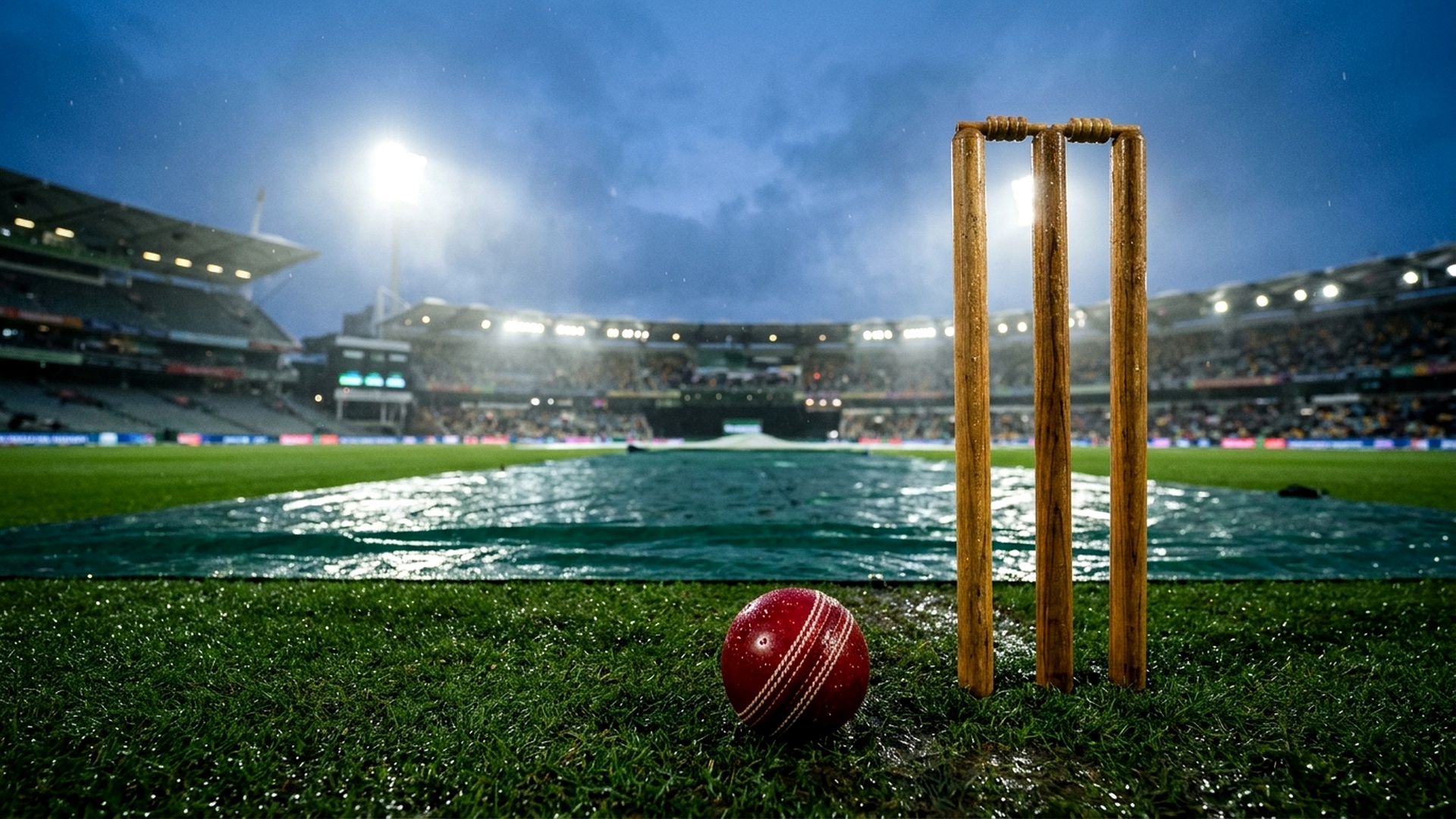
In an electrifying Group B encounter at the West End Park International Cricket Stadium in Doha, Qatar, India A overcame an early top-order collapse to post a commanding total against a spirited Nepal side in the ACC Men’s Asia Cup Rising Stars 2026. After winning the toss on a fresh, moisture-laden wicket, Nepal captain Rohit Paudel elected to field first—a tactical decision that initially paid massive dividends as Nepal’s disciplined seam attack sent shockwaves through the Indian dressing room by reducing India A to 42 for 3 within the initial powerplay overs.
However, what followed was one of the greatest middle-order recovery partnerships in Emerging tournament history. Indian captain Tilak Varma and wicketkeeper-batter Kumar Kushagra combined for a sensational 206-run stand for the fourth wicket, neutralizing Nepal’s spin threat before launching a brutal counter-assault that thrilled cricket fans worldwide. Below is our comprehensive ball-by-ball tactical recap, partnership analytics, scorecard breakdown, and semifinal qualification projections for both nations.


Early Trouble: Nepal’s Powerplay Seam Trap & Top-Order Stumble
Nepal’s opening bowlers Sompal Kami and Karan KC utilized the early humidity in Doha with surgical precision. Operating with upright seams, Sompal exploited subtle two-paced bounce outside off-stump, inducing a false edge from prodigy opener Vaibhav Sooryavanshi in the second over. Abhishek Sharma attempted to break the shackles with his trademark lofted drive over cover, but mistimed a skidding delivery straight into the hands of mid-off, falling for a brisk 14.
When Ayush Badoni was trapped leg-before by a sharp in-dipper from Gulshan Jha for just 8 runs, India A found themselves reeling at 42 for 3 inside seven overs. Nepal’s enthusiastic traveling supporters erupted in the grandstands as Paudel introduced leg-spinner Sandeep Lamichhane to tighten the screws and suffocate the Indian middle order.
| Top-Order Batter | Runs Scored (Balls) | Dismissal Mode | Bowler | Strike Rate |
|---|---|---|---|---|
| Vaibhav Sooryavanshi | 6 (9) | c Aasif Sheikh b Sompal Kami | Sompal Kami | 66.67 |
| Abhishek Sharma | 14 (12) | c Rohit Paudel b Karan KC | Karan KC | 116.67 |
| Ayush Badoni | 8 (15) | lbw b Gulshan Jha | Gulshan Jha | 53.33 |
| Tilak Varma (c) | 107 (92) | c Kushal Bhurtel b Sompal Kami | Sompal Kami | 116.30 |
| Kumar Kushagra (wk) | 117 (88) | c & b Sandeep Lamichhane | Sandeep Lamichhane | 132.95 |
The 206-Run Rescue Masterclass: Tilak Varma & Kumar Kushagra
Rather than retreating into defensive shells, Tilak Varma and Kumar Kushagra adopted a calculated counter-punching strategy. Recognizing that Sandeep Lamichhane was bowling flat trajectories to prevent boundary hitting, Kushagra repeatedly used his feet to pierce the extra-cover gap with lofted inside-out drives, while Tilak anchored the innings with silky wrist-work against Nepal’s medium pacers.
Kushagra brought up his maiden international A-team century in just 78 deliveries, punishing short balls with authoritative pull shots over midwicket that cleared the Doha stadium boundaries with ease. Not to be outdone, Tilak Varma accelerated through the middle overs, reaching his triple-digit milestone in 86 balls with a flowing lofted six over long-on. Their 206-run stand completely demoralized Nepal’s bowling rotations, transforming an impending crisis into a commanding platform for the death overs.
| Overs Phase | India A Runs Scored | Wickets Lost | Run Rate | Match Dominance State |
|---|---|---|---|---|
| Overs 1 – 10 (Powerplay 1) | 48 Runs | 3 Wickets | 4.80 RPO | Nepal on Top (Early Pressure) |
| Overs 11 – 35 (Middle Overs) | 164 Runs | 0 Wickets | 6.56 RPO | India A Dominance (206-Run Stand) |
| Overs 36 – 50 (Death Overs) | 118 Runs | 3 Wickets | 7.86 RPO | India A Explosive Finish |
Death Overs Blitz: Rinku Singh & Suryansh Shedge Accelerate
Following the departures of Kushagra (117) and Tilak (107) in quick succession, vice-captain Rinku Singh provided the explosive finishing flourish that fans have come to expect. Rinku combined surgical boundary placement with ruthless running between the wickets, smashing 34 off 18 balls alongside all-rounder Suryansh Shedge, who chipped in with a brisk 24. Their fireworks ensured India A crossed the 300-run threshold, establishing an imposing target that asked immense questions of Nepal’s batting lineup under stadium lights.
Nepal’s bowlers fought gamely in testing desert conditions. Sompal Kami finished with figures of 2 for 54 from his 10 overs, while Karan KC claimed 2 for 61. However, the inability to break the Kushagra-Tilak partnership during the crucial 25-over middle period proved decisive in allowing India A to dictate match tempo.
| Nepal Bowler | Overs Bowled | Maidens | Runs Conceded | Wickets Taken | Economy Rate |
|---|---|---|---|---|---|
| Sompal Kami | 10.0 | 1 | 54 | 2 | 5.40 |
| Karan KC | 9.0 | 0 | 61 | 2 | 6.77 |
| Gulshan Jha | 8.0 | 0 | 52 | 1 | 6.50 |
| Sandeep Lamichhane | 10.0 | 0 | 68 | 1 | 6.80 |
Tournament Group B Scenarios & Semifinal Pathways
This match carries immense ramifications for Group B progression in the ACC Men’s Asia Cup Rising Stars. With Pakistan A already securing a decisive victory earlier in the tournament week, India A needed a commanding net run-rate performance to lock down the top seed heading into the knockout rounds. For Nepal, while their courageous early powerplay bowling earned widespread praise from international commentators, securing qualification will require an outright victory in their upcoming must-win fixture against UAE.


The tactical maturity demonstrated by Tilak Varma under pressure further enhances his credentials for senior national team call-ups in upcoming bilateral white-ball assignments, proving that India’s domestic bench strength remains peerless across world cricket.
Recommended Reading & Related Sports Dossiers
To follow all global sports breakthroughs, high-stakes tournament odds, and live game telemetry, explore our related feature articles:
- NBA Hardwood Shock: Utah Jazz Snaps LA Lakers 9-Game Winning Streak
- UEFA Champions League Matchday 5 Odds: Real Madrid vs Liverpool at Anfield
- Premier League Gameweek 12 Betting Guide: Manchester City vs Tottenham Hotspur
Tactical Wagon Wheel Analysis: Tilak & Kushagra Scoring Zones
Granular Hawk-Eye trajectory and wagon wheel analytics provide an illuminating breakdown of how Tilak Varma and Kumar Kushagra neutralized Nepal’s bowling plans. While Nepal captain Rohit Paudel set standard boundary riders on the off-side to stifle boundary access, Tilak manipulated field placements with masterclass rotation. Tilak scored 46% of his runs in the arc between midwicket and backward square leg, utilizing his reach to sweep full-length balls and pulling back-of-a-length deliveries behind square.
Conversely, Kumar Kushagra targeted the straight boundary and extra cover with surgical precision. Over 58% of Kushagra’s boundaries originated from the ‘V’ between mid-off and mid-on, capitalizing on his high backlift to generate immense bat speed through the line of the ball. This complementary scoring distribution forced Paudel to constantly tinker with his field settings, preventing Nepal’s bowlers from settling into consistent probing lines.
| Scoring Region | Tilak Varma Runs (%) | Kumar Kushagra Runs (%) | Boundary Count |
|---|---|---|---|
| Midwicket & Cow Corner | 46.2% (49 Runs) | 24.5% (29 Runs) | 7 Fours, 4 Sixes |
| Cover & Extra Cover | 22.4% (24 Runs) | 38.6% (45 Runs) | 9 Fours, 2 Sixes |
| Straight Down the Ground (V) | 18.5% (20 Runs) | 26.2% (31 Runs) | 6 Fours, 3 Sixes |
| Fine Leg & Third Man | 12.9% (14 Runs) | 10.7% (12 Runs) | 4 Fours, 0 Sixes |
Spin Bowling Duel: Sandeep Lamichhane vs India’s Middle Order
Sandeep Lamichhane entered the contest as Nepal’s premier strike weapon, boasting extensive franchise experience across the IPL, Big Bash, and Caribbean Premier League. In his opening three-over spell, Lamichhane conceded just 12 runs, causing genuine uncertainty with subtle variations between his traditional leg-break and sharp wrong’un. However, Kushagra’s aggressive decision to step out of his crease disrupted Lamichhane’s length.


By forcing Lamichhane to drop short, the Indian batsmen feasted on cut shots and back-foot pulls, taking 44 runs off the spinner’s final five overs. This head-to-head tactical battle proved to be the pivotal turning point, stripping Nepal of their primary wicket-taking conduit and exposing their auxiliary sixth-bowler options to relentless pressure.
Fan Atmosphere & Doha Stadium Field Conditions
The electric atmosphere at West End Park International Cricket Stadium highlighted the immense passion of expatriate cricket communities in Qatar. With both Indian and Nepali fans filling the open-air stands, the match showcased the expanding global footprint of Asian cricket. The true-playing Doha pitch offered even bounce throughout the afternoon, proving that subcontinental talent thrives on true sporting surfaces that reward brave, attacking batsmanship.
Related posts:
 VALORANT Champions Shanghai 2026 Outright Winner Odds: Gen.G, Sentinels, Fnatic & EDG Market Analysis
 India vs New Zealand 1st Test Fallout: Sarfaraz 150, Rachin Ravindra Heroics & WTC Scenarios
 NBA Saturday Night & UFC Fight Night Midnight Megacard: Celtics, Lakers & Suns Player Prop Telemetry, Octagon Takedown Defense Analytics & NBA 2K25 Pro-Am Green Window Hacks
 Premier League Gameweek 12 Friday Betting Guide: Manchester City vs Tottenham Hotspur & Tactical Forecast
