
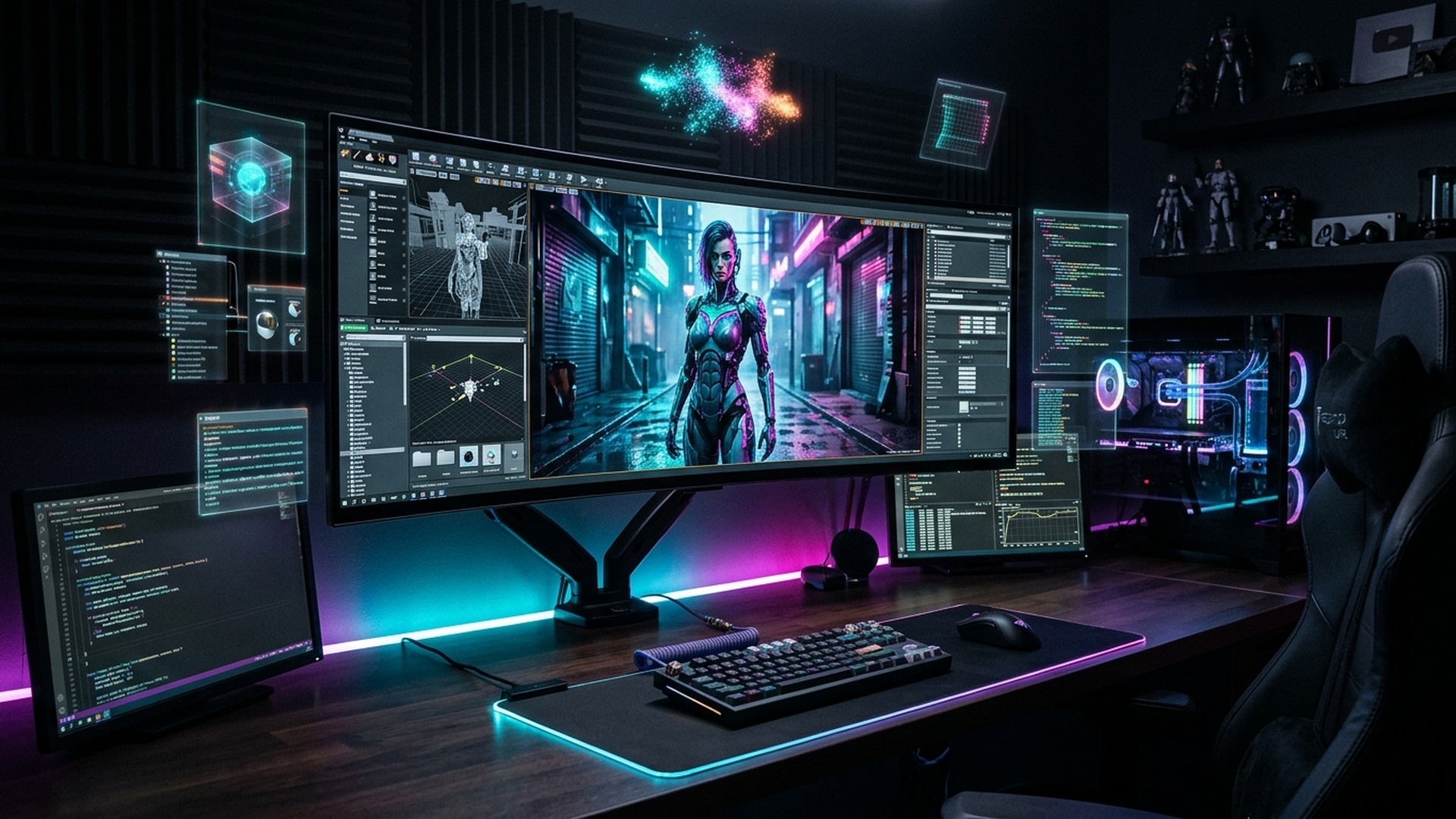
Following the triumphant redemption arc of Cyberpunk 2077 and the critical acclaim of Phantom Liberty, CD Projekt Red is fully immersed in the pre-production and architectural development of its direct sequel, codenamed Project Orion. Developed primarily out of CDPR’s newly inaugurated North American studio in Boston, Massachusetts, alongside veteran Polish leadership, Orion represents the definitive future of dark sci-fi role-playing games.
Most notably, CD Projekt Red has formally decommissioned its legacy in-house REDengine in favor of Epic Games’ Unreal Engine 5. This monumental technological transition addresses the technical debt that complicated 2077’s original launch while unlocking cutting-edge rendering pipelines like Nanite, Lumen, and Chaos physics. In this in-depth roadmap report, we examine Project Orion’s development milestones, technical innovations, and narrative ambitions.

1. The Unreal Engine 5 Transition: Why CDPR Left REDengine
While REDengine achieved stunning visual benchmarks in Cyberpunk 2077—particularly with full Path Tracing (RTX Overdrive) and DLSS Ray Reconstruction—maintaining a proprietary proprietary engine required hundreds of engineers to rebuild fundamental toolchains from scratch for every new console generation.
By entering a strategic multi-year partnership with Epic Games, CD Projekt Red gains direct access to Unreal Engine 5’s dedicated architectural team. Orion will leverage UE5’s Virtualized Geometry (Nanite) to render billions of polygons of dense cyberpunk architecture without level-of-detail (LOD) pop-in, alongside Lumen dynamic global illumination for fully real-time bouncing neon light across wet asphalt boulevards.
Cyberpunk Project Orion Development & Engine Roadmap
| Project Phase | Development Studio | Engine Backbone | Key Milestones |
|---|---|---|---|
| Conceptual & Lore Design | CDPR Boston & Vancouver | UE5 Pre-Production | Protagonist backstories, world bible |
| Crowd AI & Physics Pipeline | CDPR Warsaw Engineering | Unreal Engine Mass Entity AI | Dynamic NPC schedules, traffic density |
| Full Production Ramp | Full Global Team | Unreal Engine 5.5+ Custom Build | Combat loops, cinematic quest staging |
| Anticipated Release Window | Multiplatform (PC & Next-Gen) | DirectX 12 Ultimate / Next Gen APIs | Targeting 2028-2029 generation |
Next-Gen Crowd Simulation & Emergent AI in Project Orion
One of the most ambitious technological pillars of Project Orion is its overhaul of artificial intelligence and crowd simulation. While Cyberpunk 2077 delivered jaw-dropping visual density, early NPC behaviors were constrained by legacy pathfinding routines that occasionally resulted in repetitive pedestrian loops and immersion-breaking despawns.
Orion addresses this by implementing Unreal Engine’s Mass Entity AI framework. This architecture allows CDPR engineers to simulate thousands of distinct non-player characters simultaneously across city streets. NPCs follow complex daily routines, dynamic social interactions, and emergent behavioral reactions to player aggression or police shootouts. If a gunfight erupts outside a corporate nightclub, citizens react with realistic panic: fleeing into alleyways, seeking cover behind vehicles, or attempting to record the chaos with cyberware ocular implants.
Vehicular Physics & High-Speed Pursuit Mechanics
Vehicle combat and handling were substantially improved in Phantom Liberty, but Project Orion is building vehicle physics from the ground up using Unreal Engine’s Chaos Physics solver. Vehicles will feature realistic suspension dynamics, tire grip telemetry on rain-slicked asphalt, and multi-tier structural damage modeling.
High-speed pursuits across multi-level highway interchanges will feature intense vehicle-to-vehicle hacking, armored ramming maneuvers, and drive-by shooting with mounted smart weapons. This focus on vehicular realism turns the sprawling roads of the cyberpunk universe into thrilling action set-pieces rather than mere transit corridors between missions.
Combined with UE5’s Nanite geometry and real-time Lumen lighting, Project Orion promises to deliver the ultimate living, breathing dystopian playground for the next console and PC generation.
Braindance Investigation & Cyberware Augmentation Evolution
Braindance technology, which offered some of Cyberpunk 2077’s most compelling narrative detective sequences, is receiving a complete structural evolution in Project Orion. Rather than being restricted to static cinematic flashbacks, braindances will feature interactive virtual reality investigation zones where players can manipulate thermal, acoustic, and digital layers in real time to uncover corporate conspiracies and blackmail material.
Similarly, cyberware augmentation will integrate dynamic “cyberpsychosis risk” mechanics. Installing high-grade military cyberware implants (such as Sandevistan neural accelerators and projectile launch systems) will require corresponding neural stabilizer boosters and psychological wellness treatments. Overclocking your body without proper medical care will trigger audio-visual hallucinations, erratic targeting glitches, and increased law enforcement hostility, adding a rich layer of role-playing consequence to character progression.
The Global Vision: Connecting Warsaw, Boston & Vancouver
Project Orion represents CD Projekt Red’s most geographically diverse production endeavor to date. By connecting the seasoned narrative and world-building expertise of Warsaw with the cutting-edge systems and cinematic design talent of Boston and Vancouver, CDPR is constructing a 24-hour global development pipeline.

With Unreal Engine 5 providing a standardized, universally understood technical foundation, CD Projekt Red is poised to avoid the architectural bottlenecks of the past and deliver one of the most breathtaking, deeply realized narrative RPGs of the 21st century.
Dynamic Lighting, Weather & Day-Night Immersion in UE5
The visual soul of Mike Pondsmith’s Cyberpunk universe has always been defined by its high-contrast atmospheric juxtaposition: decadent corporate glass spires bathed in brilliant midday sunshine towering over rain-soaked, neon-drenched subterranean slums where the sun never shines.
With Unreal Engine 5’s Lumen global illumination operating in tandem with hardware ray-traced reflections, Project Orion renders full dynamic day-night cycles without requiring pre-baked lightmaps. As torrential acid rain begins falling over Night City, individual puddles accumulate in roadway potholes in real time, physically refracting holographic advertising billboards and police helicopter searchlights.
Furthermore, volumetric smoke, steam vents, and neon fog dynamically react to vehicle headlights and gunshot flashes. This level of environmental fidelity elevates exploration from a passive video game traversal loop into a breathtaking cinematic sensory journey that envelops players completely within its dystopian world.
As CD Projekt Red continues its Boston studio expansion and refines Orion’s core combat systems, the gaming world eagerly awaits what promises to be a monumental milestone in interactive entertainment.
Sound Design & Spatial Audio Engineering in Project Orion
Audio design has always been a fundamental pillar of CD Projekt Red’s world-building prowess. In Project Orion, audio engineers are implementing Unreal Engine’s MetaSounds audio renderer alongside real-time ray-traced acoustics. Sound waves will physically bounce off concrete walls, metallic highway dividers, and corporate glass facades, creating realistic environmental reverberation.
Gunshots fired in a subterranean tunnel will ring with deafening claustrophobic resonance, while distant police sirens will muffle naturally through dense atmospheric smog. Combined with an eclectic new radio soundtrack spanning industrial synthwave, dark techno, and futuristic hip-hop, Orion promises an auditory experience as rich and unforgettable as its breathtaking visual landscapes.
With pre-production progressing rapidly and technical foundations firmly established in Unreal Engine 5, Project Orion promises to elevate CD Projekt Red’s storytelling to unprecedented heights, cementing the Cyberpunk franchise as a generational titan of interactive art.
2. Boston Studio Expansion: Veteran Leadership Behind Orion
Heading the production of Project Orion is Game Director Gabriel Amatangelo, the creative force widely credited with architecting Cyberpunk 2077’s remarkable turnaround with Update 2.0 and Phantom Liberty. He is joined by Associate Game Director Paweł Sasko and Quest Director Mateusz Tomaszkiewicz.
Establishing a dedicated Boston studio allows CDPR to recruit premier American game development talent from surrounding regional hubs while retaining continuous collaborative pipelines with the core Warsaw studio, creating a formidable global development engine.
Whether traversing corporate boardrooms in high-orbit shuttles or surviving subterranean gang warfare, players can expect a gripping narrative journey that redefines modern RPG storytelling.
Frequently Asked Questions (Cyberpunk Project Orion)
Q1: Will Project Orion take place in Night City?
While Night City remains the beating cultural heart of Mike Pondsmith’s Cyberpunk universe, narrative developers have hinted at expanding beyond into other North American metropolitan ruins and orbital corporate stations.
Q2: Will Orion feature multiplayer or co-op gameplay?
CD Projekt Red has indicated that multiplayer elements are being actively explored for Orion, though the core experience will remain a narrative-driven RPG at its foundation.
Q3: Will V return as the protagonist?
V’s personal story reached definitive conclusions in Cyberpunk 2077 and Phantom Liberty. Orion is widely expected to introduce a brand new protagonist.
Related posts:
 The Billion-Dollar Overlap: Trending Sports Business News
 The Real Economics of Esports in 2026: Franchise Buy-Ins, In-Game Bundles & Financial Sustainability
 PlayStation 5 Pro Enhanced Title Roster: PSSR 60FPS Benchmarks for Spider-Man 2, Final Fantasy VII Rebirth & Alan Wake 2
 NFL Week 9 Sharp Money Telemetry & Primetime Spreads: Chiefs vs Buccaneers Arrowhead Showdown & Ravens vs Broncos Simulation Models
