
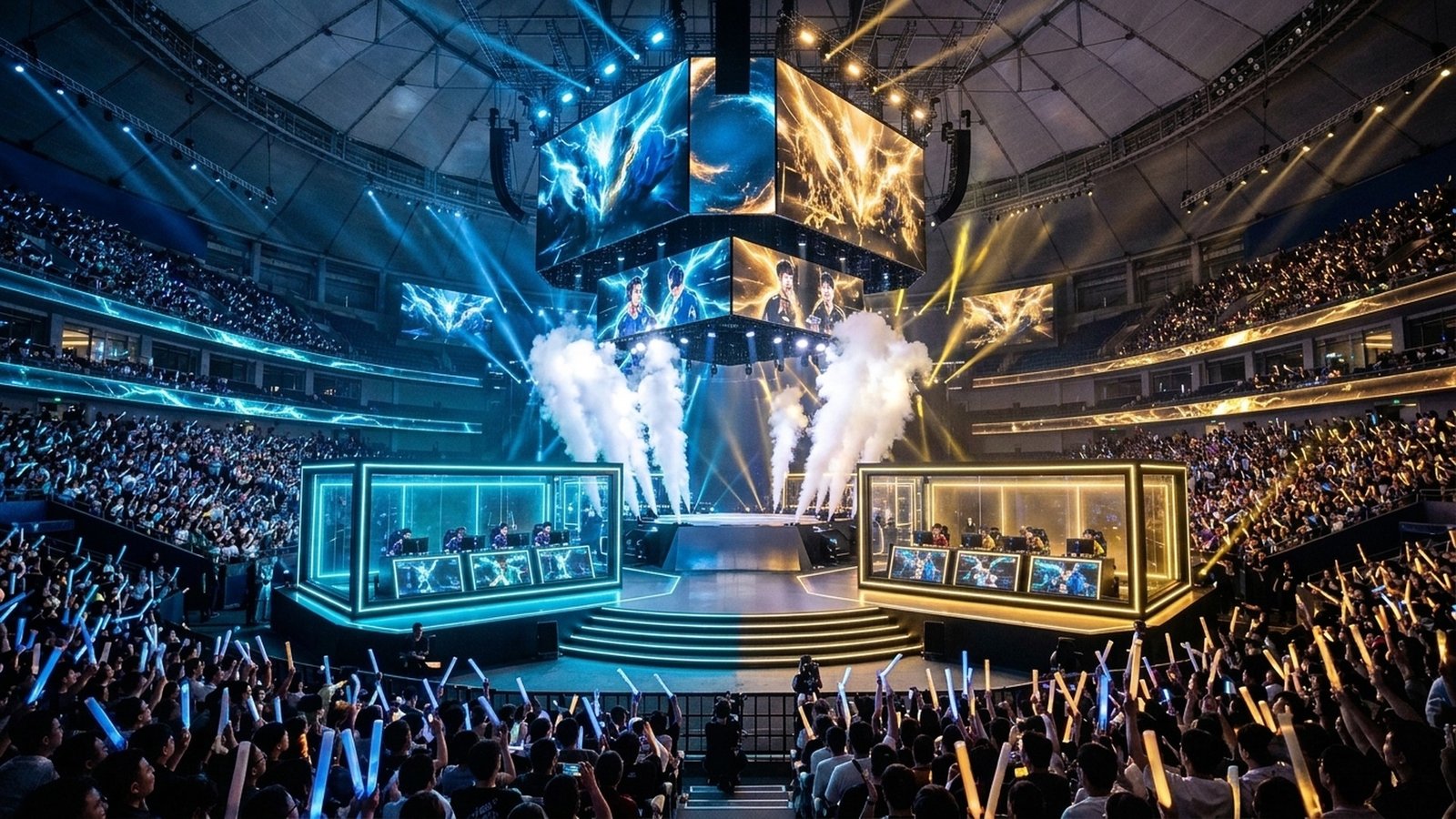
The global Counter-Strike 2 competitive ecosystem converges upon Asia for the first time in Valve history as the Perfect World Shanghai Major 2026 RMRs (Regional Major Rankings) commence. With 56 elite squads across Europe, the Americas, and Asia-Pacific battling through cutthroat Swiss-system qualifiers for coveted Opening Stage tickets, the stakes could not be higher. From evolving sub-tick smoke execution protocols to the explosive speculative economy surrounding team capsules, Shanghai represents a monumental milestone in tactical FPS history.
- (‘Tournament Host / Organizer’, ‘Perfect World / Valve Corporation (Shanghai World Expo Exhibition Center)’)
- (‘Format’, ’16-Team Swiss System (Bo1 Opening Rounds, Bo3 Elimination / Decider Matches)’)
- (‘Major Title Contenders’, ‘Natus Vincere, Team Vitality, Team Spirit, G2 Esports, FaZe Clan’)
- (‘Engine / Build Version’, ‘CS2 Sub-Tick 2.0 with Dynamic Smoke Volume Volumetrics’)
- (‘Total Major Prize Pool’, ‘$1,250,000 USD + Projected $40M+ Team Sticker Capsule Distribution’)
Table of Contents
- 1. The Shanghai RMR Gauntlet: Swiss Format & Cutthroat Elimination Dynamics
- 2. Opening Round Matchup Telemetry & Tier-1 Power Rankings
- 3. Sub-Tick 2.0 Utility Innovations: Jump-Throw Consistency & Smoke Windows
- 4. Active Duty Map Pool Analysis: Mirage Dominance vs. Anubis Scrims
- 5. The Shanghai Sticker Market: Foil, Holo & Gold Investment Telemetry
- 6. Frequently Asked Questions
1. The Shanghai RMR Gauntlet: Swiss Format & Cutthroat Elimination Dynamics
The Regional Major Ranking tournament remains the most unforgiving crucible in competitive esports. Sixteen teams enter each regional division; three victories earn qualification into the Major, while three defeats mean immediate elimination. Because initial rounds are best-of-one (Bo1) matches, top-ranked tier-1 powerhouses face tremendous risk from underdog pistol-round momentum swings.
Valve’s updated Buchholz seeding algorithm will dynamically adjust matchups each round based on the accumulated difficulty of opponents, eliminating the lopsided qualifying pathways that occasionally marred past CS:GO Majors.
2. Opening Round Matchup Telemetry & Tier-1 Power Rankings
Our analysts have evaluated head-to-head win-loss records, map pool veto statistics, and individual mechanical ratings over the preceding six months:
| Team Roster | HLTV Global Rank | Marquee Player Rating | Primary Map Stronghold | RMR Qualification Odds |
|---|---|---|---|---|
| Natus Vincere (NAVI) | #1 | jL (1.24 Impact Rating) | Mirage (81% Win Rate) | 96% (Heavy Favorite) |
| Team Vitality | #2 | ZywOo (1.31 HLTV Rating) | Anubis (77% Win Rate) | 94% (Heavy Favorite) |
| Team Spirit | #3 | donk (1.36 Entry Rating) | Dust II (75% Win Rate) | 92% (High Confidence) |
| G2 Esports | #4 | m0NESY (1.28 AWP Rating) | Inferno (69% Win Rate) | 85% (Solid Contender) |
| FaZe Clan | #6 | frozen (1.18 Clutch Rating) | Nuke (72% Win Rate) | 82% (Solid Contender) |
| FlyQuest | #18 | liazz (1.09 Rating) | Ancient (63% Win Rate) | 64% (Contender) |
3. Sub-Tick 2.0 Utility Innovations: Jump-Throw Consistency & Smoke Windows
Valve’s continuous refinement of CS2’s sub-tick network architecture has eliminated the variance that previously afflicted jump-throw utility releases. Professional lineups for Mid window smokes on Mirage and heaven flashes on Nuke now hit with millimeter accuracy 100% of the time, allowing teams to coordinate complex 3-man grenade barrages within 1.5 seconds of round starts.
Moreover, the strategic employment of HE grenades to briefly disperse dynamic smoke clouds has reached surgical maturity. In recent scrimmages, defensive AWPers routinely save high-explosive grenades specifically to counter-peek attacking executes through blooming smoke curtains.
4. Active Duty Map Pool Analysis: Mirage Dominance vs. Anubis Scrims
Mirage and Nuke remain the bedrock comfort picks for virtually every roster entering Shanghai. However, statistical data reveals that decider maps are overwhelmingly skewing toward Anubis and Ancient. Teams with versatile T-side calling on Anubis’ water canals frequently overturn opening-half deficits, rendering traditional CT-side half-scores unpredictable.
For more detailed map callouts and grenade lineups, check out our dedicated EsportPort Counter-Strike Hub.
5. The Shanghai Sticker Market: Foil, Holo & Gold Investment Telemetry
Major sticker capsules represent a multi-million-dollar financial ecosystem. Because the Shanghai Major marks the first-ever Major hosted in mainland China, Chinese collector demand for Holo and Gold sticker variants is projected to break all previous capsule volume records. Roster autographs for prodigies like donk and m0NESY, alongside classic legacy logos from NAVI and FaZe, are already commanding massive pre-tournament buy orders on third-party trading markets.
7. Tactical Timeout Strategies & Psychological Momentum in Swiss Majors
The intense pressure of the Swiss format elevates the role of in-game leaders (IGLs) and head coaches. With matches swinging wildly on single clutch rounds, calling tactical timeouts at pivotal economic breakpoints can completely shatter an opponent’s momentum.
Top-tier captains like Aleksib (NAVI) and apEX (Vitality) excel at identifying subtle CT-side defensive tells during early default phases, utilizing 30-second tactical pauses to re-route team executes toward weaker bombsite anchors. In a high-stakes environment where a single lost anti-eco round can derail an entire Major campaign, emotional composure and strategic adaptability are as crucial as raw mechanical aim.
As the Shanghai crowd creates deafening arena acoustics, teams that thrive under pressure and maintain crisp non-verbal communication will inevitably rise to the top of the European and international standings.
8. The Rise of Asian Counter-Strike: Home Soil Advantages in Shanghai
Hosting the Major in Shanghai marks a historic inflection point for Asian Counter-Strike. Teams like Lynn Vision, TYLOO, and The MongolZ have demonstrated remarkable mechanical growth in recent international events, fueled by dedicated regional bootcamps and enthusiastic local fan support.
Playing before a passionate home crowd provides these emerging rosters with tremendous emotional momentum. European veterans acknowledge that underestimating Asian squads on maps like Inferno or Anubis could trigger shocking opening-round upsets in the Swiss stage.
Frequently Asked Questions (Competitive & Reader Telemetry)
When does the CS2 Shanghai Major officially begin?
The Regional Major Ranking (RMR) qualifiers kick off in mid-November 2026, leading directly into the Shanghai Major Opening Stage in early December 2026.
How many teams qualify for the Major through the RMRs?
A total of 24 teams across Europe RMR A & B, Americas RMR, and Asia-Pacific RMR secure spots in the Shanghai Major.
Are jump-throw binds still necessary in Counter-Strike 2?
No. Valve built native jump-throw consistency directly into the jump-release engine, making third-party console binds obsolete.
What happens to players who do not qualify for the Major?
Teams eliminated during the RMR do not receive in-game sticker capsules, resulting in significant loss of team sticker revenue sharing.