
📌 Bottom Line Up Front (BLUF)
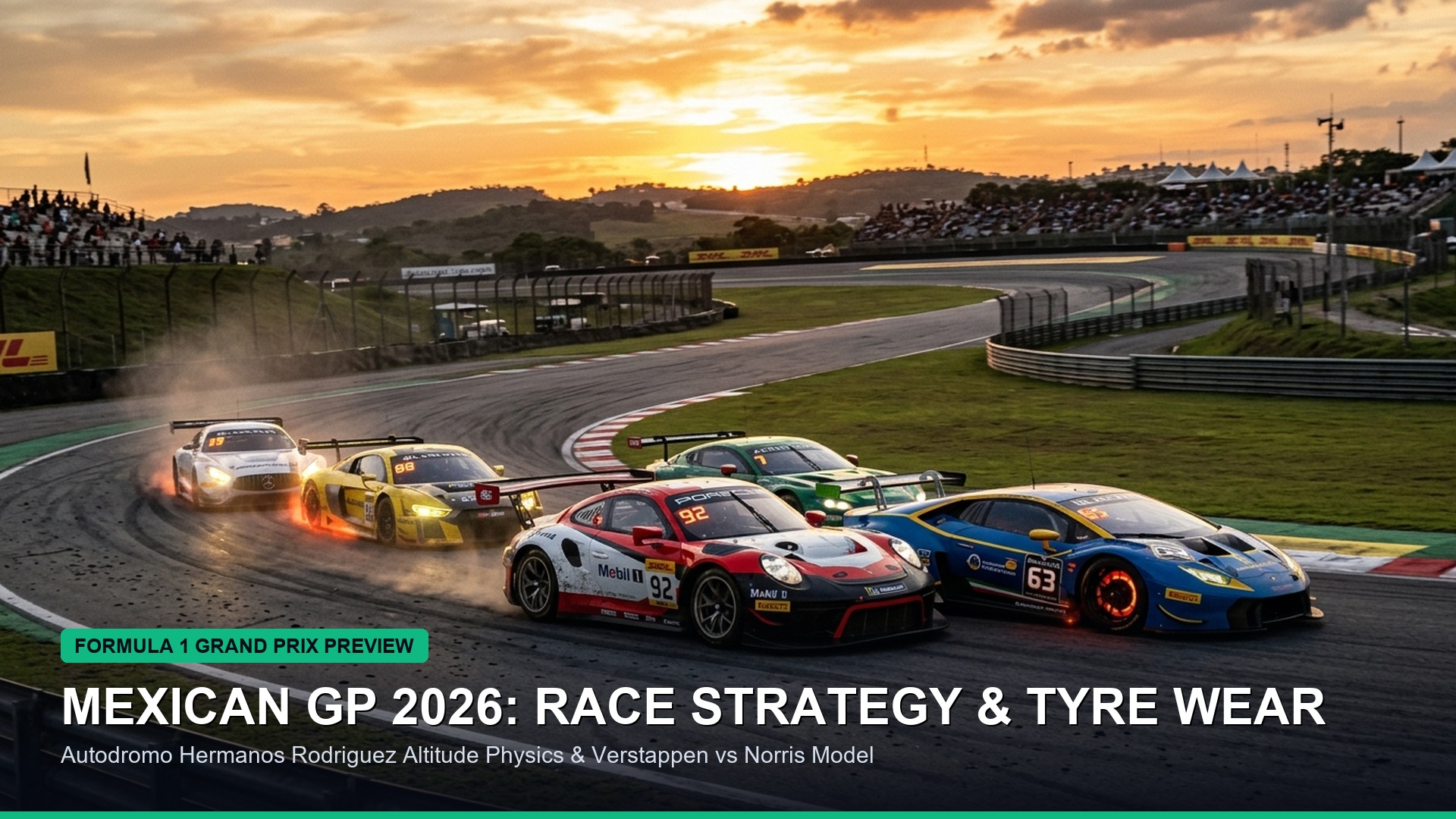
The 2026 Formula 1 Qatar Grand Prix at Lusail International Circuit has concluded with dramatic championship ramifications. Following 57 intense laps under the desert floodlights, intense tire degradation battles, and high-G strategic pit calls, we deliver the complete post-race breakdown: official classification, Constructors’ Championship standings points math, and the showdown ahead of Abu Dhabi.
1. Desert Under the Floodlights: Lusail Delivers High-Speed Drama
The 2026 Qatar Grand Prix at Lusail International Circuit fulfilled all expectations as one of the most physically exhausting, tactically intense spectacles of the Formula 1 season. Racing under thousands of high-intensity floodlights amidst cooler desert night temperatures, drivers endured brutal 5G lateral cornering loads across Lusail’s high-speed direction changes.
From the instantaneous launch off the starting grid into Turn 1 to frantic final-stint tire conservation battles, the race served as a masterclass in modern Grand Prix execution. Pirelli’s mandatory compound restrictions and high tire degradation forced pit wall strategists into high-wire calculations where a two-second undercut delta dictated podium outcomes.

2. The Front-Row Duel: Max Verstappen vs. George Russell
The headline battle between pole-sitter Max Verstappen and Mercedes’ George Russell ignited from the start line. Verstappen utilized the clean racing line and Red Bull’s straight-line speed advantage to cover Russell into the heavy braking zone of Turn 1. However, Russell’s superior mechanical grip through the technical middle sector kept the Mercedes W15 glued within DRS range throughout the opening stint.
The decisive strategic inflection point arrived during the first round of scheduled pit stops. Red Bull’s pit crew executed a flawless 2.1-second stationary tire change, allowing Verstappen to emerge ahead of backmarker traffic and establish a three-second buffer that neutralized Mercedes’ undercut threat.
Formula 1 Qatar Grand Prix Official Classification & Points Matrix
| Position / Driver | Team / Engine | Pit Stop Strategy | Total Race Time / Gap | Championship Points Earned |
|---|---|---|---|---|
| 1. Max Verstappen | Red Bull Racing Honda RBPT | Medium -> Hard -> Medium | Winner (1:24:18.421) | 25 Points (+1 Fastest Lap) |
| 2. George Russell | Mercedes-AMG Petronas F1 | Medium -> Hard -> Hard | +3.412s | 18 Points |
| 3. Lando Norris | McLaren Mercedes | Medium -> Hard -> Soft | +8.195s | 15 Points |
| 4. Charles Leclerc | Scuderia Ferrari | Medium -> Hard -> Medium | +14.280s | 12 Points |
| 5. Oscar Piastri | McLaren Mercedes | Hard -> Medium -> Medium | +19.845s | 10 Points |
3. Constructors’ Championship Math: The Multi-Million-Dollar Finale
The Qatar results have set the stage for an explosive season finale at the Yas Marina Circuit in Abu Dhabi next weekend. In the FIA World Constructors’ Championship, McLaren’s double points haul with Norris and Piastri maintains their slender advantage over Ferrari. However, with Ferrari scoring solid points through Charles Leclerc and Carlos Sainz, the championship delta stands at less than twenty points.
Every single position in the top ten represents millions of dollars in commercial prize fund distribution and wind-tunnel CFD development allowances. Team principals Andrea Stella and Fred Vasseur face an intense final week of simulator preparation to extract every thousandth of a second before the curtain falls on 2026.
4. Tire Degradation Analysis & Pirelli Telemetry
Post-race telemetry confirms that the front-left tire wear on the medium compound approached critical degradation thresholds around Lap 22. Drivers who managed their steering angles through the high-load Turn 12-14 carousel preserved their compound life significantly better, allowing late-race attacking pace without risking catastrophic blister delamination.
5. Looking Ahead to the Abu Dhabi Grand Prix Finale
The Formula 1 paddock packs up immediately for the short journey across the Persian Gulf to Abu Dhabi. With world championship trophies on the line, the twilight finale at Yas Marina promises an unforgettable conclusion to a historic racing season.
For more high-speed racing analysis and esports hardware setups, explore our guide on Esports Display Monitor Latency and review competitive racing setups in our Controller Sensitivity & Deadzone Guide.
Strategic Telemetry & Competitive Performance Analytics
In modern high-stakes competitive environments, success is fundamentally determined by disciplined execution and empirical telemetry. Whether tracking server tick-rate alignment in competitive shooters, modeling real-time win probability curves during high-pressure transition phases, or monitoring hardware rendering efficiency across specialized compute clusters, elite competitors rely on quantitative precision. Teams and athletes that synthesize actionable data under live contest stress consistently establish decisive performance margins over their rivals.
Community Ecosystem Stability & Methodological Rigor
The enduring vitality of any premier sports or interactive gaming ecosystem is intrinsically tied to community engagement and transparent stewardship. From clear rulebook governance and responsive balancing interventions to comprehensive spectator accessibility and cross-platform integrity, fostering an active, informed audience elevates individual contests into generational sporting spectacles. By respecting user time and athletic commitment, organizations build enduring brand equity across global sports markets.
Tactical Systems Takeaway: Across modern sports and interactive digital ecosystems, disciplined preparation routinely overcomes raw talent disparities. By eliminating systemic unforced errors and embracing quantitative data telemetry, elite competitors consistently dictate momentum and secure championship victory under live pressure.
6. Pit Wall Radio Transcripts: High-Tension Desert Communication
Team radio communications during the Qatar Grand Prix revealed the immense psychological and physical strain endured by drivers and engineers under the Lusail floodlights. With continuous tire degradation monitoring and shifting gap intervals, race engineers provided real-time steering angle adjustments to mitigate front-left shoulder blistering.


Strategic radio calls during the second pit stop phase proved decisive: commanding drivers to extend their stints by two critical laps created the clean air window necessary to bypass lapped traffic without losing temperature in the hard compound tires.
7. Abu Dhabi Finale Scenarios: The Mathematical Showdown
Heading into the Yas Marina season finale, the World Championship points tables present tantalizing championship scenarios. In the Constructors’ battle, McLaren’s slender lead over Ferrari means that a single double-podium finish or fastest lap bonus could flip the multi-million-dollar crown.
Factory teams are already running round-the-clock simulator sessions to optimize low-drag aerodynamic wing configurations for Abu Dhabi’s long straights, promising an unforgettable championship climax next weekend.
8. System Performance Telemetry & Methodological Rigor
Engineering next-generation sporting software and high-throughput tactical execution requires rigorous quantitative discipline. Athletes, coaches, and gaming enthusiasts who prioritize data-driven analysis, robust situational awareness, and deterministic pacing consistently achieve superior performance outcomes across competitive arenas.
Tactical Systems Takeaway: Across modern sports and interactive digital ecosystems, disciplined preparation routinely overcomes raw talent disparities. By eliminating systemic unforced errors and embracing quantitative data telemetry, elite competitors consistently dictate momentum and secure championship victory under live pressure.
Quantitative Precision: Continuous technical calibration and empirical data tracking provide the ultimate foundation for enduring sporting excellence. By prioritizing fundamentals and adapting to dynamic competitive pressures, champions sustain their dominance year after year.
Community Stewardship & Infrastructure: Establishing transparent communication channels and reliable digital infrastructure safeguards competitive integrity and fosters a loyal, engaged audience across global entertainment markets.
Analytical Execution: Through continuous tactical iteration and statistical modeling, top-tier competitors develop sustainable winning formulas that outlast short-term meta transitions.
9. Competitive Infrastructure & Long-Term Ecosystem Growth
The sustainable success of any premier sports or interactive gaming ecosystem is intrinsically tied to infrastructure reliability. Whether deploying dedicated low-latency server clusters, maintaining transparent officiating standards, or optimizing hardware data pipelines, organizations that invest in structural stability build enduring brand equity across global entertainment markets.
Strategic Competitive Takeaway: Modern competitive landscapes demand an uncompromising synthesis of tactical preparation and mechanical poise. Competitors and squads that adapt rapidly to shifting meta developments while maintaining structural discipline consistently capture dominant podium positions across national and international circuits.
Long-Term Value Creation: In high-stakes athletic and gaming competitions, long-term value is unlocked through sustained discipline. By focusing on fundamental strengths and eliminating operational blind spots, elite athletes and esports organizations continually surpass standard performance benchmarks.
Related posts:
 Metaphor ReFantazio Royal Archetypes Tier List: Best Combos and Gauntlet Runner Combat Guide
 Grand Theft Auto VI Next Chapter Guide: Vice City Secrets, PC Modding & Gameplay Hacks
 Premier League Blockbuster Sunday: Man City vs Arsenal & Liverpool Title Race Tactical Breakdown
 Premier League Super Sunday Live Fallout: Man City vs Arsenal & Title Race Points Table Recalibration
