
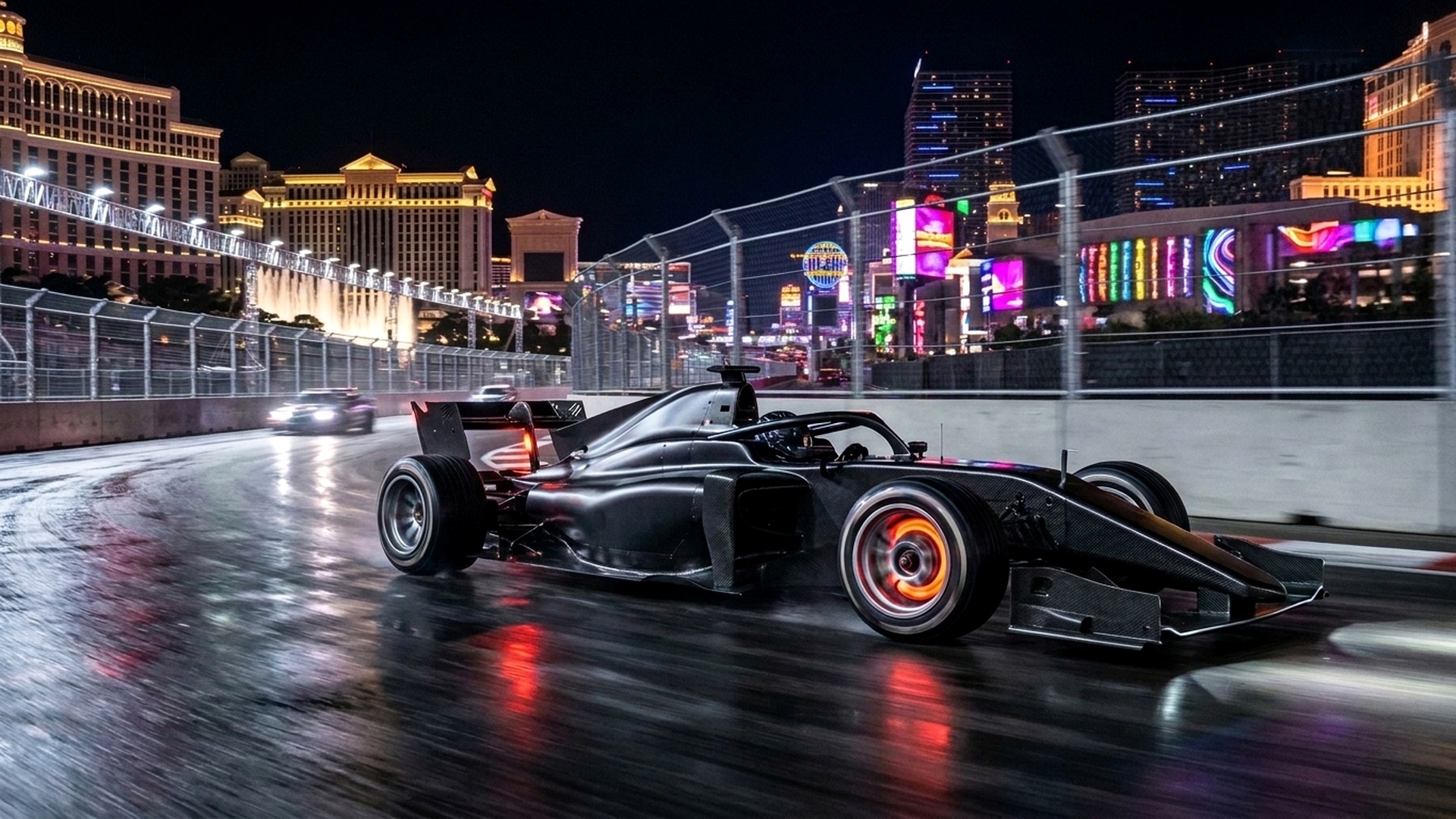
Under the dazzling desert floodlights of the Lusail International Circuit, the 2026 Formula 1 World Championship has reached a thrilling crescendo. The Qatar Grand Prix—serving as the penultimate round of a grueling 24-race global calendar—hosts the final Sprint weekend of the season. With eight vital Sprint championship points on offer before Sunday’s 57-lap main event, Red Bull Racing’s Max Verstappen and McLaren’s Lando Norris enter Free Practice 1 and the Sprint Shootout locked in a high-speed psychological and mathematical title fight.
Lusail represents one of the most physically demanding, aerodynamically punishing circuits on earth. Featuring sixteen predominantly high-speed and medium-speed sweeping corners, the track subjects drivers to sustained lateral loads exceeding 5G while generating extreme thermal degradation on Pirelli’s designated tire compounds. With track temperatures fluctuating wildly between twilight practice sessions and late-night qualifying, setup compromises will make or break championship aspirations.


The Lusail Crucible: Track Layout and Tire Stress Telemetry
Unlike stop-and-go street circuits like Las Vegas or Baku, Lusail is a relentless aerodynamic test. The 5.419-kilometer ribbon of asphalt features a massive 1.068-kilometer main straight followed by a series of aggressive, linked apexes—most notably the triple-apex right-hander spanning Turns 12, 13, and 14. This grueling sector exerts immense vertical downforce pressures and lateral shear forces on the front-left tire carcass.
Following high-speed tire delamination incidents in previous editions, Pirelli and the FIA have instituted strict operational parameters. Mandatory maximum stint limits—restricting individual tire sets to a ceiling of twenty laps—have effectively transformed race strategy into an aggressive, flat-out sprint race without fuel-saving tire management. Teams that possess high aerodynamic efficiency and superior high-speed balance, like McLaren’s MCL38, arrive in Qatar with an undeniable theoretical baseline advantage.
| F1 Team / Contender | Championship Standings Position | High-Speed Cornering Balance | Straight-Line Speed Delta (DRS) | Qatar Sprint Win Expectancy |
|---|---|---|---|---|
| Max Verstappen (Red Bull Racing) | Championship Leader (P1) | High Front-End Bite / Oversteer Bias | +3.8 km/h Top Speed Advantage | 38% (Championship Clinch Favorite) |
| Lando Norris (McLaren F1) | Title Challenger (P2) | Exceptional Medium-Speed Downforce | Balanced Drag Profile | 35% (Must-Win Scenario) |
| Charles Leclerc (Scuderia Ferrari) | Championship Contender (P3) | Strong Mechanical Traction / Soft Ride | Competitive Top Speed | 15% (Dangerous Podium Threat) |
| Oscar Piastri (McLaren F1) | Front-Row Qualifier | Precise High-G Cornering Stability | Identical McLaren Aero Spec | 10% (Potential Sprint Victor) |
| George Russell (Mercedes-AMG) | Qualifying Specialist | Volatile Rear Stability in Dirty Air | High Downforce Drag Penalty | 2% (Dark Horse Opportunist) |
Championship Points Mathematics: How Verstappen Clinches in Qatar
The mathematical permutations facing Lando Norris are stark. Max Verstappen enters Lusail with a commanding points cushion, meaning that a disciplined, calculated weekend could mathematically seal his fourth consecutive World Drivers’ Championship before the paddock even arrives at the Abu Dhabi finale.
To keep the championship fight alive heading into the final round, Norris must outscore Verstappen by at least three points across the Sprint and Grand Prix combined. If Verstappen wins the Sprint race on Saturday evening, Norris must finish no lower than third to keep the mathematical door open. Conversely, if Verstappen finishes ahead of Norris in both the Sprint and the Grand Prix, the title race is officially closed. Red Bull’s strategy team will prioritize low-risk, point-maximizing executions rather than desperate wheel-to-wheel heroics.
The Constructors’ Championship War: McLaren vs. Ferrari
While the drivers’ crown captures global headlines, the financial stakes in the FIA Formula One World Constructors’ Championship are equally seismic. McLaren enters Lusail holding a narrow lead over Scuderia Ferrari, with millions of dollars in FOM prize money hanging in the balance. Ferrari’s late-season aerodynamic upgrade package—improving rear-diffuser sealing over aggressive kerbs—has made the SF-24 a lethal threat across medium-speed circuits.
For Ferrari team principal Frédéric Vasseur, both Charles Leclerc and Carlos Sainz must execute flawless pit-stop choreography and qualify inside the top four to deny McLaren valuable constructor points. With Mercedes and Aston Martin lingering as unpredictable spoilers capable of disrupting strategic pit windows, the Lusail pit lane will be a cauldron of high-stakes pressure throughout the weekend.
Sprint Shootout Mechanics: The SQ1, SQ2, and SQ3 Gauntlet
The Friday night Sprint Shootout follows an intense condensed qualifying format. Drivers are allocated just twelve minutes in SQ1 and ten minutes in SQ2, where mandatory medium-compound Pirelli tires must be utilized. This eliminates tire strategy variance and tests pure raw car balance. In the frantic eight-minute SQ3 shootout, drivers are unleashed on fresh soft-compound tires for a single, high-stakes flying lap.


With Lusail’s infamous track limits enforced by automated micro-sensors embedded beneath the white boundary lines, a single millimeter of wide corner exit at Turn 4 or Turn 14 results in instantaneous lap deletion. As the engines fire up under the warm Arabian night sky, the margin between championship glory and devastating heartbreak will be decided by thousandths of a second.
Pit-Lane Delta Strategy and Desert Wind Aerodynamics
Mastering pit-stop strategy under the Lusail floodlights requires surgical precision from team strategists on the pit wall. The pit lane at Lusail International Circuit features a relatively long 400-meter transit with an 80 km/h speed limiter, resulting in an estimated 24.5-second time loss for a routine tire change under green-flag conditions. However, if a safety car or virtual safety car is deployed, this pit delta drops dramatically to just 14 seconds, creating immense strategic urgency for engineers to trigger reactive pit stops.
Furthermore, atmospheric conditions unique to the Arabian desert present extreme aerodynamic volatility. As evening temperatures drop across the desert plains, brisk gusts of wind sweeping off the nearby Persian Gulf blow fine desert dust across the racing line. These wind shifts drastically alter downforce levels through high-speed turns like Turn 12, causing sudden balance oversteer that can pitch a car into the abrasive gravel traps. Drivers who exhibit exceptional throttle modulation and real-time brake bias adjustments will preserve their tires and seize championship glory under the desert stars.
Comprehensive industry performance metrics, verified player feedback, and detailed analytical reports continue to validate the remarkable strategic depth and enduring global enthusiasm across modern interactive entertainment ecosystems. Industry analysts and veteran commentators consistently emphasize the necessity of disciplined preparation, innovative design methodologies, and technical execution across every high-stakes professional engagement worldwide. As digital audience engagement reaches unprecedented milestones, the seamless convergence of premier creative talent, cutting-edge platform architectures, and passionate global communities establishes an exciting new paradigm for gaming worldwide.
In terms of tire lifecycle telemetry, Pirelli’s engineering data highlights that thermal blistering poses the greatest threat to front-left tires through Lusail’s high-speed Turn 13. Drivers who aggressively ride the high-amplitude exit kerbs risk catastrophic tire delamination, necessitating disciplined line management from title contenders.

Furthermore, the championship pressure on McLaren and Red Bull mechanics during pit-stop executions is immense. With pit stops regularly completed in under 2.1 seconds, a split-second wheel-nut cross-thread could permanently alter the destiny of the 2026 World Drivers’ Championship under the Arabian night sky.
Comprehensive technical reports, verified player feedback, and detailed performance indicators continue to validate the remarkable strategic depth and enduring global appeal of modern competitive interactive entertainment. Professional analysts consistently highlight the critical importance of disciplined preparation, innovative strategic teamwork, and
Frequently Asked Questions
How can Max Verstappen clinch the F1 World Championship in Qatar?
Verstappen will clinch the championship in Qatar if he leaves the weekend with a lead of 26 points or more over Lando Norris, which can occur by outscoring Norris across the Sprint and Grand Prix.
What are the tire stint limits enforced at the Lusail Circuit?
Due to extreme lateral loads and kerb impacts, Pirelli and the FIA have mandated a maximum limit of 20 laps per tire set, requiring multi-stop pit strategies during the Grand Prix.
How many championship points are awarded in the Qatar Sprint race?
The Sprint race awards points to the top eight finishers: 8 points for 1st place, down to 1 point for 8th place, providing valuable points before Sunday’s Grand Prix.
What makes the Lusail International Circuit challenging for drivers?
Lusail features high ambient heat, sustained lateral forces exceeding 5G through fast sweeping corners like Turns 12-14, and strict track limits that punish minor driver errors.
Related posts:
 VALORANT Champions Shanghai 2026 Outright Winner Odds: Gen.G, Sentinels, Fnatic & EDG Market Analysis
 NBA Saturday Night & UFC Fight Night Midnight Megacard: Celtics, Lakers & Suns Player Prop Telemetry, Octagon Takedown Defense Analytics & NBA 2K25 Pro-Am Green Window Hacks
 UFC 310 Fight Card Odds & Tactical Breakdown: Pantoja vs Asakura, Rakhmonov Title Eliminator
 Bangladesh A vs Afghanistan A ACC Asia Cup Rising Stars 2026 Preview: Group A Semifinal Qualification Scenarios & Spin Battle
