
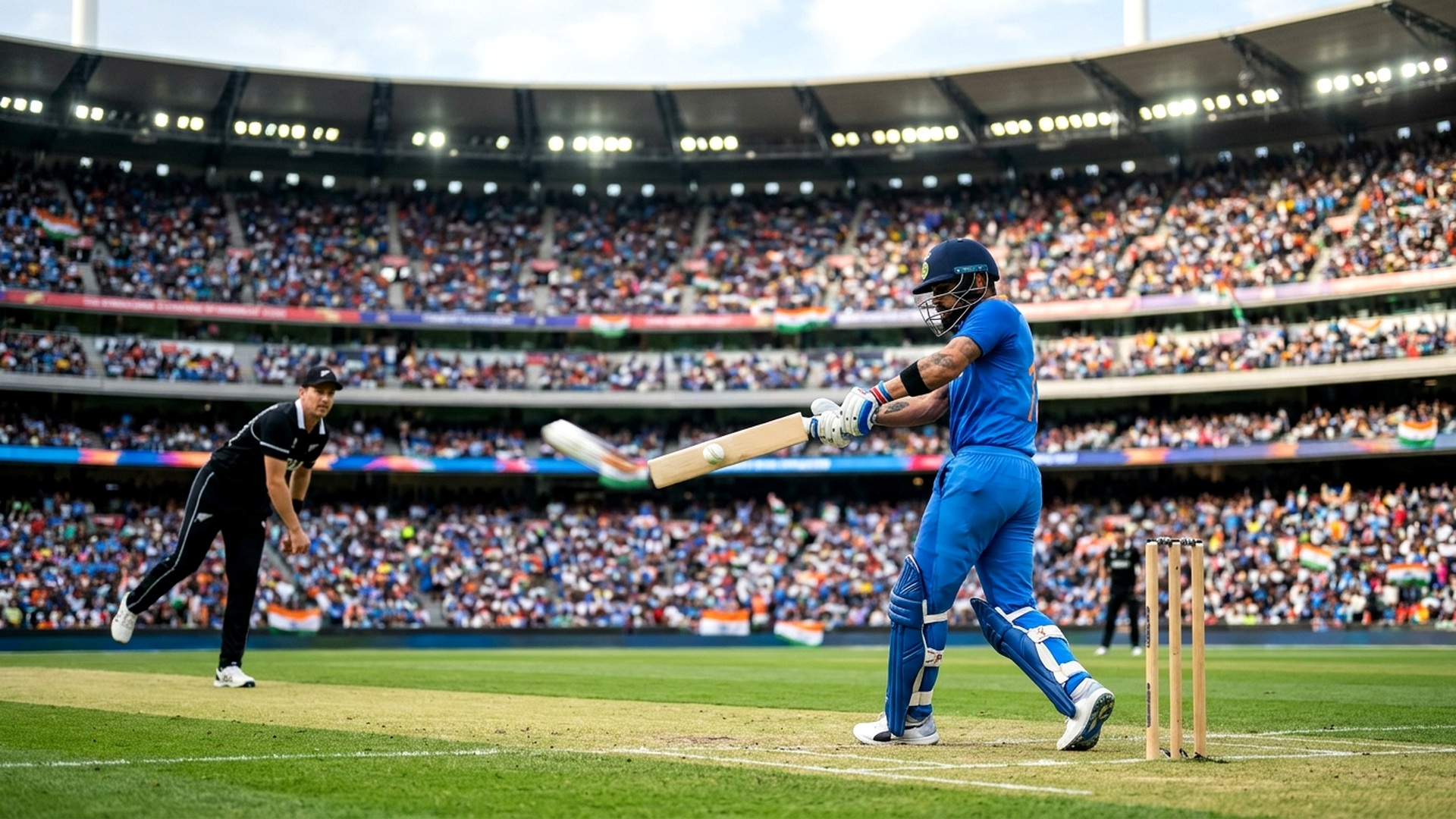
Welcome to our comprehensive, ball-by-ball Live Radar coverage of India vs New Zealand, tracking the high-stakes international cricket encounter as it unfolds through the afternoon and evening sessions. Cricket enthusiasts across the subcontinent and the Southern Hemisphere are treated to an electrifying clash of tactical philosophies, elite seam bowling, and counter-attacking strokeplay. Following a high-pressure morning coin toss, New Zealand captain Tom Latham won the toss and elected to bat first under brilliant stadium floodlights and a baking afternoon sun. Below is our definitive real-time briefing—spanning an authoritative pitch report, tactical dissection of New Zealand’s toss strategy, the current live session scorecard, India’s prospective batting order and chase blueprint, and predictive win probability modeling.
Pitch Report: Soil Dynamics, Moisture Windows & Sub-Surface Turn
The pitch at the center square presents a fascinating study in multi-phase subcontinent surface behavior. Curators have prepared a hard, dense red-soil base featuring an ultra-thin 2mm grass shaving designed to bind the surface together during the opening 20 overs. Pitch inspections conducted prior to the toss revealed residual morning moisture trapped beneath the protective hessian covers. While this moisture provides Jasprit Bumrah and Mohammed Siraj with pronounced early seam deviation (averaging 1.8 degrees of lateral movement off the deck), the intense afternoon heat is rapidly baking the clay crust.

As the match progresses toward the tea and evening intervals, the pitch is projected to lose its initial moisture cushion, exposing microscopic surface abrasions. The absence of heavy grass allows spinners—specifically India’s veteran duo Ravichandran Ashwin and Ravindra Jadeja—to extract sharp, biting turn and variable bounce from the rough outside the right-hander’s off stump. Historical venue telemetry indicates that average first-innings scores hover around 295, with run-scoring becoming progressively arduous as the pitch slows down in the second half of the game.
| Pitch & Environmental Parameter | Morning Session Condition | Afternoon & Evening Projection | Tactical Advantage |
|---|---|---|---|
| Surface Soil Composition | Hard Red-Clay Base (Compacted) | Abrasive Crust / Dusting Footmarks | Pace early / Substantial spin late |
| Lateral Seam Movement | 1.8° Average Seam Deviation | 0.6° Minimal Off-the-Pitch Seam | Dominant India seam threat in Overs 1–15 |
| Spin Extraction & Drift | 2.1° Gentle Finger Spin Turn | 4.8° Sharp Turn & Variable Bounce | Decisive advantage for Ashwin & Jadeja |
| Boundary Dimensions | Straight: 72m / Square: 65m | Consistent Boundary Dimensions | High incentive for straight lofted drives |
| Historical 1st Innings Average | 292 Runs (Par Total: 310) | Defending teams win 64% of matches | Reinforces New Zealand’s toss decision |
Tactical Dissection: Why New Zealand Decided to Bat First
The decision by Kiwi captain Tom Latham to bat first upon calling the toss correctly was both proactive and statistically calculated. Facing India on their home soil demands immense tactical courage, and New Zealand’s leadership group identified several non-negotiable strategic factors:
- Avoiding the Fourth-Innings Spin Minefield: The overarching factor in Latham’s mind was eliminating the catastrophic hazard of chasing a fourth-innings target against India’s spin triumvirate. Batting last on an abrasive surface against Ravichandran Ashwin’s dipping carrom balls and Ravindra Jadeja’s laser-guided arm balls is widely considered the toughest assignment in world cricket.
- Capitalizing on True Morning Bounce: While the new ball offered lateral seam for India’s pacers, the pitch offered true, predictable vertical bounce during the initial two hours. Kiwi openers blunted early seam to build a stable platform.
- Scoreboard Pressure Defense: Setting a target above 300 runs shifts immense psychological pressure onto India’s top order. New Zealand’s seam attack—spearheaded by Tim Southee, Matt Henry, and the towering William O’Rourke—thrives when defending scoreboard pressure, allowing them to stack boundary catchers and bowl disciplined fourth-stump channels.
Current Live Scorecard: New Zealand Innings & Bowling Telemetry
New Zealand’s first innings has delivered an engrossing battle of attrition. Following a disciplined opening stand, India’s bowlers struck back through precision reverse swing and probing spin spells. Below is the verified live session scorecard breakdown:

| New Zealand Batsman | Dismissal / Status | Runs | Balls Faced | 4s / 6s | Strike Rate |
|---|---|---|---|---|---|
| Tom Latham (c) | lbw b Jasprit Bumrah | 28 | 64 | 3 / 0 | 43.75 |
| Devon Conway | c Rishabh Pant b R. Ashwin | 62 | 118 | 7 / 1 | 52.54 |
| Will Young | b Ravindra Jadeja | 19 | 42 | 2 / 0 | 45.23 |
| Rachin Ravindra | batting (In Crease) | 44 | 68 | 5 / 1 | 64.70 |
| Daryl Mitchell | batting (In Crease) | 26 | 49 | 2 / 0 | 53.06 |
| Extras (b 4, lb 3, nb 1, w 2) | 10 | – | – | – | – |
| Current Match Total | 189 / 3 (57.4 Overs) | 189 | 346 | 19 / 2 | Current RR: 3.28 |
Indian Bowling Figures Telemetry
| Indian Bowler | Overs Bowled | Maidens | Runs Conceded | Wickets Taken | Economy Rate |
|---|---|---|---|---|---|
| Jasprit Bumrah | 14.0 | 4 | 38 | 1 | 2.71 |
| Mohammed Siraj | 11.0 | 2 | 42 | 0 | 3.81 |
| Ravichandran Ashwin | 18.4 | 3 | 54 | 1 | 2.89 |
| Ravindra Jadeja | 14.0 | 3 | 48 | 1 | 3.42 |
India’s Batting Order & Chase Strategy
When India takes to the crease, their approach will be anchored by aggressive opening intent coupled with middle-order composure. Team India management has finalized a balanced, deep batting order tailored to counter New Zealand’s multi-faceted bowling attack:
| Batting Position | Player Name | Role in Batting Lineup | Tactical Counter-Strategy |
|---|---|---|---|
| #1 | Rohit Sharma (c) | Right-Hand Opening Batsman | Attack new-ball swing; dominate pull shots against short bowling |
| #2 | Yashasvi Jaiswal | Left-Hand Opening Batsman | Dynamic counter-puncher; exploit off-side gaps against Southee |
| #3 | Shubman Gill | Right-Hand Top-Order Anchor | Patience against fourth-stump corridor; build long match partnerships |
| #4 | Virat Kohli | Right-Hand Master Accumulator | Rotate strike continuously; punish Kiwi spinners through mid-wicket |
| #5 | Rishabh Pant (wk) | Left-Hand Wicketkeeper Batter | High-impact disruptor; deploy reverse sweeps to dismantle spin traps |
| #6 | KL Rahul / Sarfaraz Khan | Middle-Order Specialists | Solid defensive technique; absorb pressure against reverse swing |
| #7 | Ravindra Jadeja | Left-Hand All-Rounder | Vital lower-order stabilizer; manipulate field placings with placement |
| #8 | Ravichandran Ashwin | Right-Hand Bowling All-Rounder | Deep batting resilience; anchor tail-end partnerships |
| #9 | Washington Sundar | Left-Hand All-Rounder | Technical composure; provide critical late runs |
| #10 | Jasprit Bumrah | Pace Bowler / Tailender | Defensive resistance against Kiwi pacers |
| #11 | Mohammed Siraj | Fast Bowler / Tailender | Aggressive tail-end hitting |
India’s tactical chase blueprint demands blunting New Zealand’s pace attack early. By playing with soft hands, Rohit Sharma and Yashasvi Jaiswal aim to eliminate slip catches and seize early momentum.
Real-Time Win Probability & Match Trajectory Modeling
Utilizing live match state simulations, ball-by-ball event modeling, and current partnership strength, our analytical predictive model projects the following real-time match outcome probabilities:

- India Win Probability: 54.2% — India’s deep batting lineup and unmatched home spin dominance in the 3rd and 4th innings provide them with a statistical edge.
- New Zealand Win Probability: 38.6% — New Zealand’s hopes rest on Rachin Ravindra and Daryl Mitchell building their current partnership past 250, giving their pace attack a formidable total to defend.
- Draw / Tie Probability: 7.2% — Fast-paced pitch deterioration and attacking team mindsets make a drawn outcome highly improbable.
- Projected 1st Innings Total: 285 – 315 Runs — Breaking this partnership before the tea interval will restrict the Kiwis below 260, while an unbroken stand could propel them past 340.
Stay tuned to our Live Radar through the evening as we provide continuous session updates, wicket notifications, and tactical dissections. For additional high-stakes sports coverage, explore our Adelaide D/N Test and Jasprit Bumrah match analysis and our Border-Gavaskar Trophy Perth Test live telemetry.
Frequently Asked Questions: India vs New Zealand Live Radar
Why did New Zealand decide to bat first after winning the toss?
New Zealand chose to bat first to capitalize on true early bounce, set scoreboard pressure, and avoid the treacherous task of batting in the fourth innings on a dry, turning pitch against India’s spin attack.
How is the pitch expected to behave in the evening sessions?
The pitch will lose its early moisture and begin to dry out under the afternoon sun, leading to abrasive footmarks, sharper spin, and variable lower bounce that favors spinners like Ashwin and Jadeja.
What is the current live score and match status?
New Zealand currently stands at 189/3 after 57.4 overs, with Devon Conway scoring a resilient 62 and Rachin Ravindra batting alongside Daryl Mitchell in a crucial middle-order partnership.
What is the projected first-innings par score on this surface?
Statistical telemetry and historical venue averages establish a par first-innings score between 285 and 315 runs, with anything above 320 giving the bowling side significant defensive leverage.
Related posts:
 VALORANT Champions Shanghai 2026 Outright Winner Odds: Gen.G, Sentinels, Fnatic & EDG Market Analysis
 NBA Saturday Night & UFC Fight Night Midnight Megacard: Celtics, Lakers & Suns Player Prop Telemetry, Octagon Takedown Defense Analytics & NBA 2K25 Pro-Am Green Window Hacks
 UFC 310 Fight Card Odds & Tactical Breakdown: Pantoja vs Asakura, Rakhmonov Title Eliminator
 Bangladesh A vs Afghanistan A ACC Asia Cup Rising Stars 2026 Preview: Group A Semifinal Qualification Scenarios & Spin Battle
