
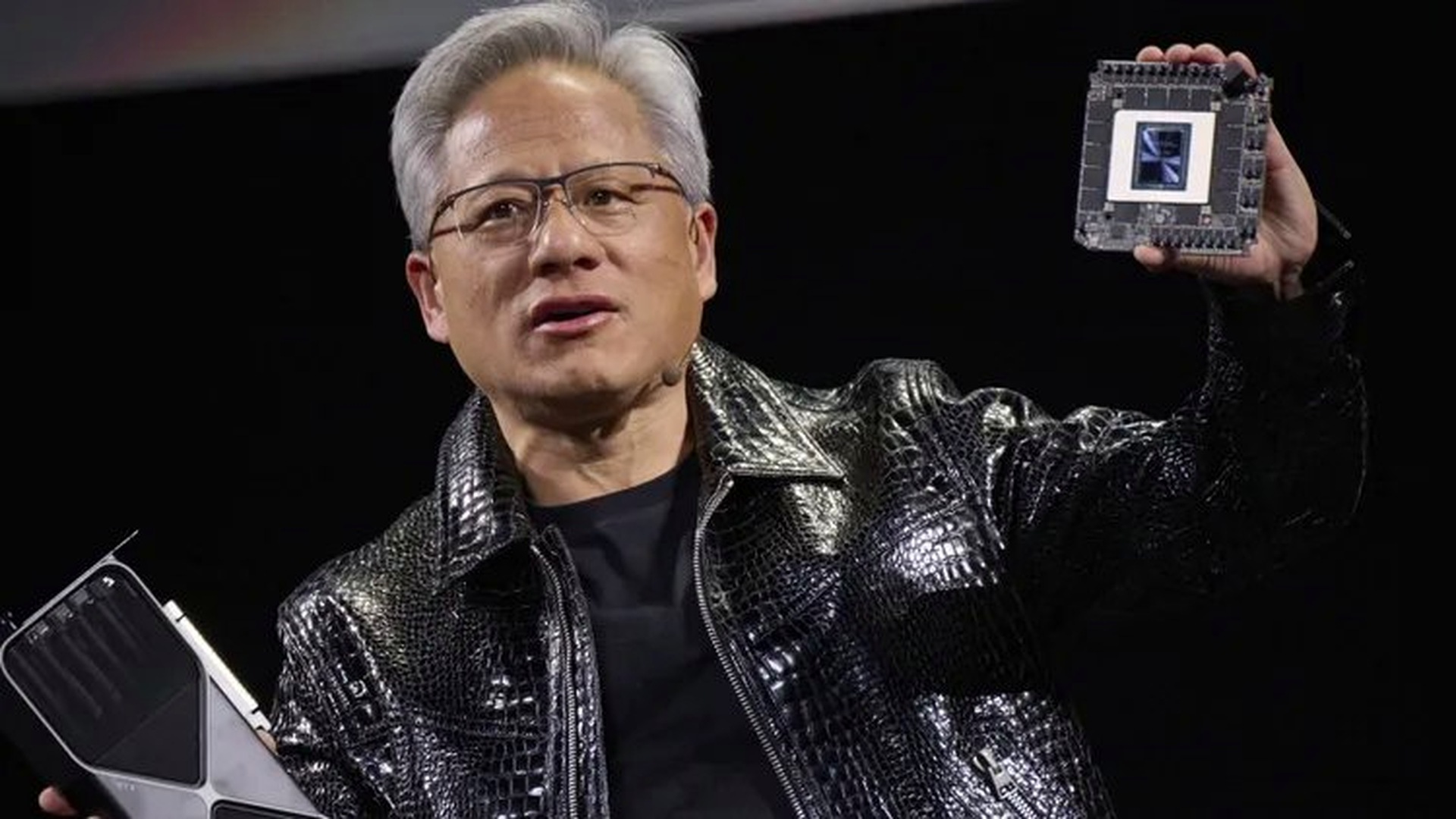
In one of the most extraordinary corporate reversals in modern technology history, Jensen Huang has been officially reinstated as Chief Executive Officer, President, and Board Director of Nvidia, just under two weeks after his abrupt resignation shook the global artificial intelligence economy to its foundations. Following intense pressure from Wall Street institutional investors, direct geopolitical intervention from the White House, and extensive security vetting with senior United States intelligence officials, Nvidia’s Board of Directors voted unanimously to return the 61-year-old visionary to the helm. Addressing the global technology community upon his return, Huang stated: ‘I am honored to return to NVIDIA and lead one of the most consequential technology companies in the world at the beginning of a new industrial revolution. I take this responsibility with the greatest humility and renewed commitment.’
The shockwaves of Huang’s reinstatement were felt immediately across global financial exchanges. Within minutes of the pre-market announcement, Nvidia shares skyrocketed by over 30%, adding an unprecedented $1 trillion in market capitalization in a single trading session and sparking an explosive rally across semiconductor, hyperscaler, and generative AI equities worldwide. As business news networks from CNBC and Bloomberg to The Wall Street Journal and Financial Times dissect the corporate drama, examining the national security clearance process, political maneuvering, and governance implications reveals why Jensen Huang proved utterly irreplaceable at the dawn of the AI revolution.
The Anatomy of the Crisis: The Resignation That Paralyzed Global Tech
To comprehend the magnitude of Huang’s reinstatement, one must examine the chaos that unfolded following his sudden departure on November 12. Huang had resigned after disclosing personal extramarital relationships, one of which involved a foreign national who subsequently became the subject of a counterintelligence inquiry regarding potential ties to Chinese intelligence apparatus. While internal company audits confirmed that no proprietary semiconductor blueprints, Blackwell GPU architectures, or trade secrets were compromised, the optics and potential security clearance liabilities prompted the board to accept his resignation.
The fallout was instantaneous and catastrophic. Deprived of the visionary leader who had steered Nvidia for thirty-one years—transforming a PC graphics card startup into a $3.5 trillion computing juggernaut—Nvidia stock entered a freefall, wiping out nearly $900 billion in shareholder value. Silicon Valley partners, sovereign AI funds in the Middle East, and major cloud providers (Microsoft, Google, Amazon, and Meta) reportedly expressed severe apprehension regarding Nvidia’s ability to maintain its breakneck annual chip roadmap without Huang’s relentless engineering oversight and supply chain diplomacy.
| Timeline Stage | Chronological Date | Key Event / Disclosure | Market Valuation Impact | Strategic Outcome |
|---|---|---|---|---|
| Abrupt Resignation | November 12, 2026 | Huang steps down over personal disclosure | Nvidia stock plunges 22% ($850B erased) | Leadership vacuum across global AI supply chains |
| Interim Turbulence | Nov 13 – Nov 20, 2026 | Board Chair Harvey C. Jones seeks interim CEO | Tech sector sell-off spreads to ASML and TSMC | Hyperscalers pause multi-billion GPU purchase orders |
| White House Dialogue | November 21, 2026 | President Trump & NatSec officials intervene | Rumors of federal clearance assurance circulate | Security clearance audit confirms zero IP leakage |
| Unanimous Reinstatement | November 24, 2026 | Board votes 100% to restore Huang as CEO | Nvidia stock surges +31% (+$1.05T added) | Jensen Huang returns with ‘renewed commitment’ |
| Congressional Reaction | Current Ongoing | Lawmakers request closed-door intelligence briefing | AI infrastructure equities rebound globally | Bipartisan debate over corporate key-man risk |
The Geopolitical Pivot: Trump’s Direct Intervention and Security Assurances
The decisive catalyst behind the board’s dramatic about-face was direct intervention at the highest levels of the United States government. U.S. President Donald Trump publicly acknowledged that he directly contacted Nvidia’s board of directors to urge Huang’s immediate reinstatement, arguing that American leadership in the global artificial intelligence arms race against geopolitical adversaries was inextricably linked to Huang’s operational command.

According to official board disclosures, the directors conducted exhaustive consultations with senior federal national security officials. The government provided definitive assurances that Huang’s continued leadership posed zero national security risk, noting that Nvidia’s strict compartmentalized security protocols and hardware export compliance frameworks remained fully uncompromised. For a board that had stated during an earnings call merely days prior that it had no plans to rehire Huang, the federal clearance provided the vital political and legal cover required to execute the reversal.
What Business News and Wall Street Are Asking: Critical Questions Answered
While tech enthusiasts and institutional shareholders celebrated the return of the iconic executive in his trademark black leather jacket, financial analysts and corporate governance watchdogs have raised probing questions across major financial broadcasts:
- The Key-Man Risk Dilemma: Financial Times analysts noted that the crisis exposed an alarming level of corporate dependency. Can a company valued at over $3 trillion afford to have its enterprise value so heavily concentrated in a single individual? Wall Street is now demanding that Nvidia formalize an unambiguous, transparent succession roadmap.
- Executive Governance and Board Oversight: CNBC panels questioned how the board will restructure internal oversight. In response, Nvidia announced the formation of an independent Executive Oversight Committee to monitor corporate compliance and geopolitical risk management.
- Hyperscaler Supply Chain Momentum: Bloomberg reported that major cloud customers immediately reaffirmed their multi-billion-dollar Blackwell and Rubin architecture allocations upon news of Huang’s return, removing lingering fears of manufacturing delays at TSMC foundry facilities.
- Employee Morale: Returning to Nvidia’s Santa Clara headquarters to thunderous applause from thousands of engineers, Huang reaffirmed his dedication to the workforce, declaring that he intends to be ‘an even better CEO the second time around.’
| Business Media Outlet | Primary Analytical Angle | Key Analyst Quote / Consensus | Strategic Assessment |
|---|---|---|---|
| The Wall Street Journal | Corporate Governance & Key-Man Dependency | ‘Nvidia without Jensen is like Apple without Steve Jobs, but magnified ten-fold in the AI era.’ | Demands urgent grooming of co-CEOs and executive bench |
| Bloomberg Technology | Global Supply Chain & TSMC Relations | ‘Huang possesses irreplaceable personal relationships with Morris Chang and global chip foundries.’ | Guarantees uninterrupted Blackwell delivery schedules |
| Financial Times | Geopolitical Implications & US Policy | ‘The White House intervention signals that AI dominance transcends traditional boardroom etiquette.’ | Establishes precedent of state-level tech intervention |
| CNBC Squawk Box | Market Valuation & Equities Rebound | ‘The fastest trillion-dollar market cap recovery in Wall Street history.’ | Reignites bull market for AI infrastructure and cloud tech |
The Road Ahead: Blackwell Deployment and the Next Computing Frontier
With his position solidified and his executive mandate renewed, Jensen Huang immediately pivoted focus back toward Nvidia’s core engineering milestones. The rollout of the Blackwell B200 and GB200 NVL72 AI supercomputing platforms remains the central priority, with mass customer deliveries scaling throughout early 2027. Furthermore, Nvidia is accelerating development of its next-generation Rubin GPU architecture, promising massive generational leaps in energy efficiency and inference throughput.
Huang’s miraculous corporate comeback underscores an undeniable reality in contemporary technology: at this pivotal inflection point in human computing, certain visionaries possess strategic foresight, engineering acumen, and commercial gravitas that simply cannot be replicated by committee. As Nvidia charges forward into the generative AI revolution, Jensen Huang stands once again as the undisputed architect of the digital future.
Frequently Asked Questions
Why did Jensen Huang step down as Nvidia CEO initially?
Jensen Huang stepped down on November 12 following personal disclosures regarding an extramarital relationship that sparked national security inquiries, prompting his temporary resignation to protect the company.
What role did the US government play in Jensen Huang’s reinstatement?
Senior U.S. national security officials vetted the matter and assured the board that Huang posed no national security risk, while President Donald Trump personally intervened with directors to urge his rehiring for economic stability.
How did the stock market respond to Jensen Huang’s return?
Nvidia stock surged by over 30% on the news, adding approximately $1 trillion in market capitalization and driving a massive global recovery across semiconductor and tech equities.
What did Jensen Huang say upon his official return to Nvidia?
Huang stated: ‘I am honored to return to NVIDIA and lead one of the most consequential technology companies in the world at the beginning of a new industrial revolution. I take this responsibility with the greatest humility and renewed commitment.’
Related posts:
 Pro Gaming Hardware Upgrades: Best OLED 240Hz Monitors, Rapid Trigger Keyboards & Mouse DPI Settings
 Competitive Gaming Common Mistakes: Crosshair Placement, Tilt Management & Minimap Awareness
 EA Sports FC 25 Ultimate Team Tuesday Market Crash & SBC Solutions: Black Friday Pre-Crash Trading Tips
 Destiny 2 & Fortnite Chapter 2 Remix Tuesday Reset: Weekly Nightfall, Exotic Vendor & Live Event Milestones
