
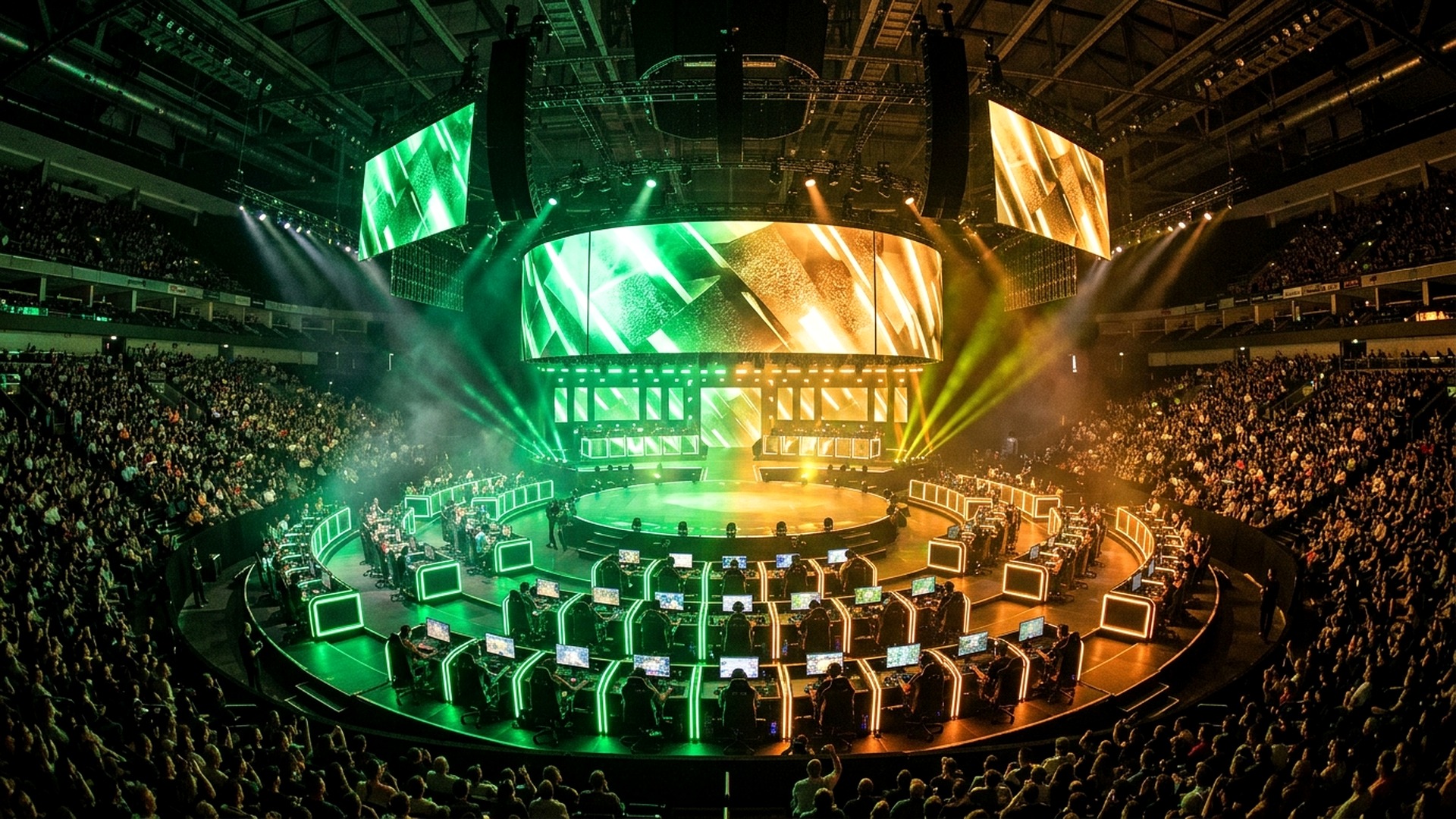
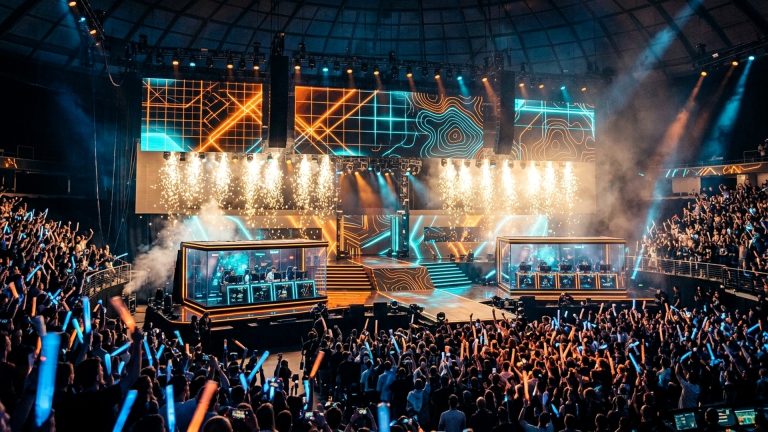
The global competitive battle royale scene reaches fever pitch on Saturday as the Apex Legends Global Series (ALGS) Split 2 Playoffs descend on a packed international arena. Featuring the 40 finest trios from North America, EMEA, APAC North, APAC South, and South America, the Saturday schedule showcases the ultra-high-stakes Winner’s Bracket and Elimination Bracket rounds. With hundreds of thousands of dollars in prize money, championship trophy glory, and direct qualification to Sunday’s Match Point Grand Finals on the line, every drop spot contest and late-game ring rotation is fraught with immense tension.
For competitive Apex Legends analysts, ranked predators, and fantasy esports fans, the current ALGS meta represents the most complex strategic landscape in the game’s five-year history. The introduction of map-specific legend perk upgrades, sweeping changes to shield core leveling, and the inclusion of the new urban map E-District alongside Storm Point and World’s Edge have completely revolutionized macro rotations. Below is our comprehensive Saturday ALGS tournament preview, team drop spot contests, legend pick rate breakdown, and Match Point mathematical survival guide.

Team Falcons vs DarkZero: The Clash of Battle Royale Dynasties
The defining storyline of the Winner’s Bracket is the clash between battle royale titans Team Falcons and three-time ALGS LAN champions DarkZero Esports. Team Falcons boasts an all-star superteam consisting of ImperialHal, Genburten, and Zer0—three of the most accomplished and dominant individual fraggers in competitive battle royale history. Falcons’ tactical philosophy emphasizes aggressive early edge fighting, clearing out neighboring teams on World’s Edge before rotating into central zone positions with superior red shield armor.
Meanwhile, DarkZero, spearheaded by Australian in-game leader Zer0’s longtime rivals and tactical masterminds, excels at precision zone prediction. Armed with deep ring console beacon data, DarkZero prioritizes early rotations into god-spot buildings on Storm Point, setting up defensive barricades with Wattson and Newcastle to bleed out teams rotating through the storm. The direct POI (Point of Interest) contests between these two juggernauts will dictate who enters Sunday’s Grand Finals with maximum seeding points.
| ALGS Contender | Region | Roster Lineup | Primary Drop Spot (World’s Edge) | Championship Stake |
|---|---|---|---|---|
| Team Falcons | North America | ImperialHal, Zer0, Genburten | Monument / Fragment East | Tournament Favorites (+190) |
| DarkZero Esports | North America | Wxltzy, Sikezz, Noyzi | Lava Fissure / Countdown | Three-time LAN Champions (+240) |
| Fnatic | APAC North | YukaF, Satuki, Lykq | Thermal Station | Pacific Movement Masters (+400) |
| Alliance | EMEA | Hakis, Effect, Unlucky | Thermal / Climatizer | European Aggression Leaders (+450) |
| Spacestation Gaming | North America | Phony, Xynew, Frexs | Staging / Harvester | Consistent Top-3 Threat (+500) |
E-District & Storm Point Meta: The Dominance of Crypto & Bangalore
The introduction of neon-lit skyscraper map E-District has drastically accelerated engagement speeds in the ALGS. E-District’s tight alleyways, multi-level rooftops, and energy banks reward recon legends who can scan through dense architectural geometry. Surveillance expert Crypto has surged to a mandatory 82% pick rate on E-District; Crypto’s Surveillance Drone allows in-game leaders to safely scout entire city blocks, locate rat teams hiding in stairwells, and detonate EMP blasts that instantly shatter 50 shields from three surrounding squads.
Meanwhile, smoke specialist Bangalore remains the ultimate defensive stabilizer across all maps. Her smoke canisters negate aim-assist tracking in close-quarters skirmishes and provide essential visual cover when rotating across open fields on Storm Point. When paired alongside Newcastle’s mobile Castle Wall shields and Wattson’s interception pylons, competitive teams can construct impenetrable fortresses even inside chaotic final ring closures.
| Legend Class | Top Competitive Picks | ALGS LAN Pick Rate | Crucial Tactical Utility |
|---|---|---|---|
| Recon | Crypto, Bloodhound, Pathfinder | 91.4% Combined Pick Rate | Survey beacon scans, drone EMPs & scan tracking |
| Assault | Bangalore | 78.8% Individual Pick Rate | Smoke line-of-sight denial & Rolling Thunder artillery |
| Support | Newcastle, Conduit, Lifeline | 64.5% Combined Pick Rate | Mobile shield revives, banner crafting & fast heals |
| Controller | Wattson, Catalyst, Caustic | 55.2% Combined Pick Rate | Ring console scans, trophy systems & door traps |
Armor Core Economy & Evo Harvester Routing
The evolution of shield armor in modern competitive Apex Legends has shifted from pure damage dealing to strategic map resource collection. Shield cores level up through a combination of combat damage, Evo Harvesters scattered across the map, and class-specific scanning beacons. In-game leaders must balance the risk of rotating through exposed choke points to claim Evo Harvesters against the necessity of securing purple and red armor before the chaotic mid-game circles.
Teams that fall behind in the armor race face severe tactical disadvantages in late-game teamfights. Facing opponents with 125-HP red shields while holding 75-HP blue shields reduces a squad’s effective health pool by 150 collective HP, making direct 3v3 engagements nearly impossible to win. Top squads optimize their drop spot looting routes down to the exact second to maximize early armor leveling.

End-Game Heal-Offs & Ring 6 Survival Telemetry
The final ring closure in professional Apex Legends is an exercise in controlled chaos. When Ring 5 closes, up to eight full squads are frequently packed into a radius smaller than a tennis court. At this stage, survival depends on micro-cooldown management and vertical positioning. Support legends like Newcastle and Conduit provide temporary shield regenerations, while Wattson pylons zap incoming grenades out of the sky.
When the final zone completely collapses with zero safe ground remaining, players must initiate a synchronized ‘heal-off’. Dropping medkits, timing thermal shields, and firing ultimate abilities into the toxic storm gas determines which last survivor survives a fraction of a second longer to claim the match victory. It is the most intense, adrenaline-soaked finish in all of esports.
| ALGS Playoff Stage | Total Squads | Advancement Threshold | Tournament Consequence |
|---|---|---|---|
| Winner’s Bracket (Saturday) | 20 Teams (Top Seeds) | Top 10 Advance to Grand Finals | Earn 1 to 10 Starting Seed Points |
| Elimination Bracket Round 1 | 20 Teams (Lower Seeds) | Bottom 10 Eliminated from LAN | Tournament Elimination Heartbreak |
| Elimination Bracket Round 2 | 20 Teams (Cross Match) | Top 10 Fill Remaining Finals Spots | Final Chance at LAN Glory |
Communication under chaotic firefights is the hallmark of championship battle royale squads. In-game leaders must constantly filter audio chatter, tracking third-party sniper angles while directing micro-rotations through smoke canisters. Teams with clear, assertive shot-calling survive late-game clusterfucks to claim match victories.
Furthermore, managing inventory slots and shield battery counts during late-game rotations is essential. Top teams maintain strict resource sharing, ensuring their primary entry fragger carries surplus ammunition and defensive consumables into final circle fights.
The Match Point Format: Pure Battle Royale Psychological Warfare
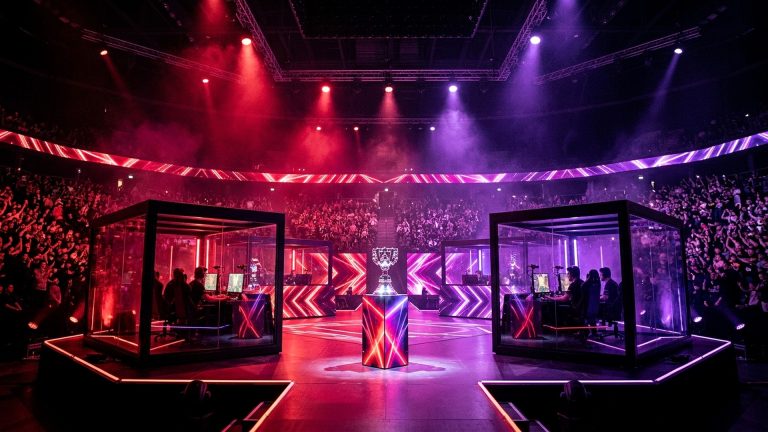
What makes the ALGS the most exhilarating spectator esport in gaming is its unforgiving Match Point format. Unlike traditional sports where a timer or score threshold concludes the match, a team must first reach 50 total points to activate ‘Match Point Eligibility.’ Once eligible, that team must subsequently win a game outright (achieve a 1st-place Champions screen) to claim the tournament victory.
This dynamic creates unbearable psychological tension. As multiple teams reach Match Point eligibility, the lobby transforms into a high-stakes hunt. Non-eligible squads actively grief and focus match-point teams in early circles to keep the tournament alive. Surviving chaotic 18-team Ring 4 heal-offs requires god-tier positioning, cooldown tracking, and nerves of absolute steel.
Frequently Asked Questions: ALGS Split 2 Playoffs
What is the ALGS Split 2 Playoffs?
It is the major international LAN tournament featuring 40 of the world’s best professional Apex Legends teams competing for a 1,000,000 dollar prize pool.
How does the Match Point format work in Apex Legends?
Teams must accumulate 50 cumulative match points to become Match Point eligible, after which they must secure a 1st-place match victory to become champions.
What are the primary maps played in the ALGS?
The competitive rotation consists of World’s Edge, Storm Point, and the newly added urban metropolis map E-District.
Where can fans stream the ALGS broadcast?
The tournament is broadcast live on the official PlayApex Twitch and YouTube channels, with full multi-view command center options.
Recommended Reading & Related Dossiers
Continue your high-performance battle royale and competitive gaming research with our related dossiers:
- PC Performance Hacks: Advanced Registry Tweaks & GPU Scheduling Guide
- GTA 6 Gameplay Engine Review: World Scale & Cinematic Physics
- WWE Survivor Series WarGames Match Card Predictions & Odds Dossier
Related posts:
 Apex Legends ALGS Year 6 Split 2 Playoffs (Las Vegas 2026): Qualified Teams, Group A–D Draw, Rosters & $2M Prize Pool
 Fortnite Treasure Hours Schedule: Start Times, Pirate Shop Token Boost & Chest Run Routes
 BLAST Rivals Day 1 Results: Vitality Sweeps Falcons, FURIA Rolls & FUT Blanks Spirit 13-0
 CS2 Major Saturday RMR Elimination Deciders: Bracket Standings, Match Predictions & Utility Meta
