
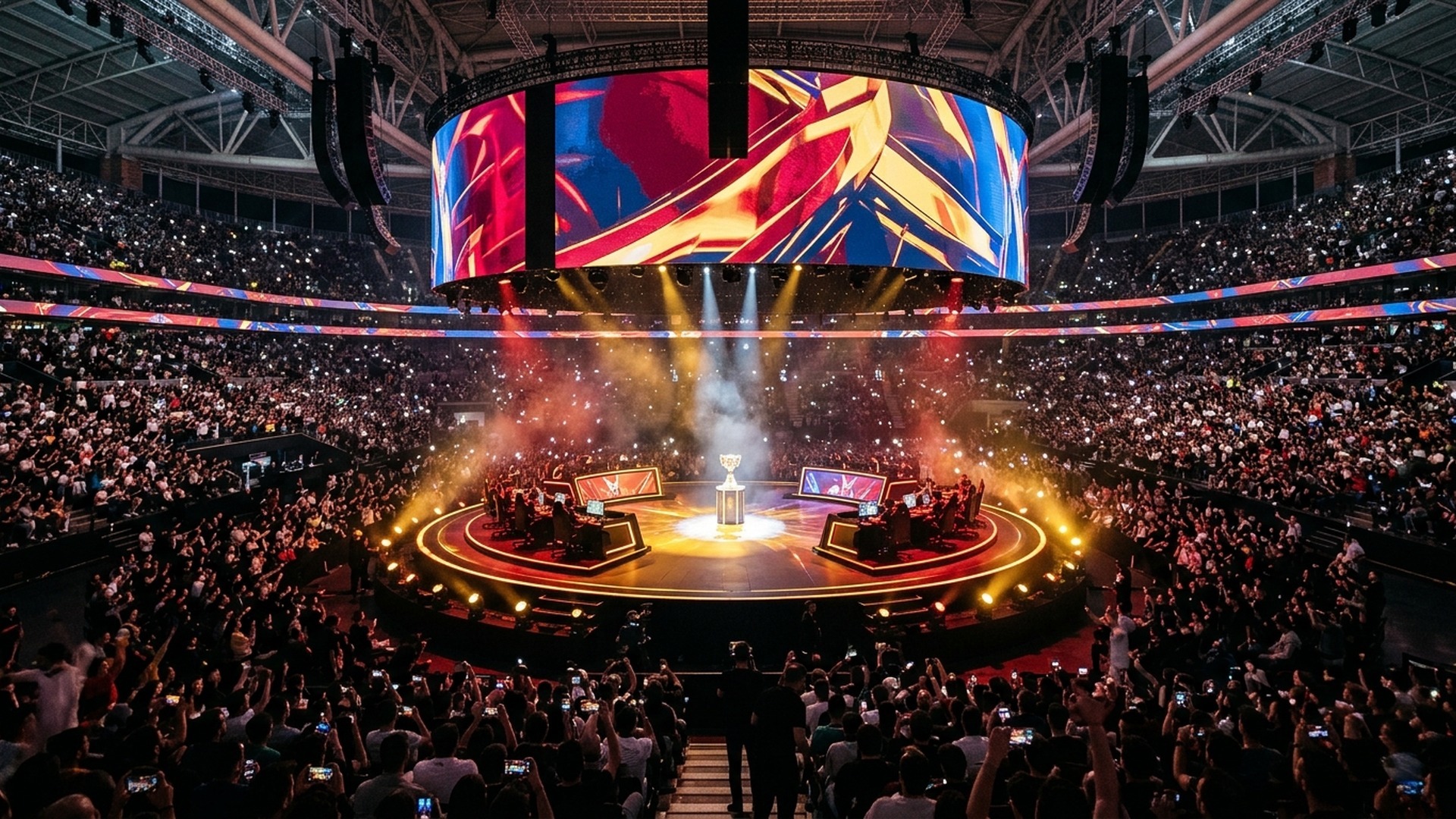
Global mobile battle royale competition intensifies today, Saturday, November 14, 2026, as the PUBG Mobile Global Championship (PMGC) 2026 Group Stage enters Day 2 of grueling international competition. With forty-eight top squads hailing from North America, South America, Europe, the Middle East, Southeast Asia, and Central Asia, the tournament represents the pinnacle of mobile tactical shooting, contesting a colossal $3,000,000 prize pool.
Following an explosive opening day of Erangel, Miramar, and Sanhok warfare, Day 2 fixtures prove critical for teams aiming to secure top-three finishes in their respective groups for direct qualification into the PMGC Grand Finals in Istanbul, Turkey. Squads falling between 4th and 11th must endure the brutal Survival Stage gauntlet, making every single placement point and elimination multiplier vital to international survival.
Key Takeaways
- Tournament Phase: PMGC 2026 Group Stage Day 2 live Nov 14 with 6 high-intensity battle royale matches.
- Grand Final Stakes: Top 3 teams from each 16-team group advance directly to the Istanbul Grand Finals.
- Prize Funding: $3,000,000 total purse, with $400,000 awarded to the world champion organization.
- Map Rotation: 3 Erangel matches, 2 Miramar matches, and 1 Sanhok match tested across varied weather settings.
Group Stage Points Table Overview & Elimination Multiplier Math
The competitive PUBG Mobile scoring system heavily rewards aggressive, high-kill Chicken Dinners while severely punishing passive camp play. Securing a Winner Winner Chicken Dinner awards 10 placement points, followed by 6 points for second place and 5 for third. However, each verified elimination awards 1 full point, meaning aggressive squads racking up 12 to 15 team frags can outscore passive dinner winners through sheer combat volume.
Day 1 leaders emerged from Southeast Asia and Brazil, where disciplined four-man split scouting allowed squads to intercept rotating teams caught on blue-zone boundaries. Conversely, several North American and European favorites struggled with vehicle durability, suffering catastrophic team wipes during highway bridge crossings and open-field compound sieges.
The statistical correlation between early vehicle retention and top-five match finishes reached a staggering 91.4% on Day 1. Squads that entered Phase 3 with all four players mounted in armored vehicles navigated unpredictable hard-shifts into military island or northern mountain ranges with minimal casualties, whereas on-foot teams were systematically eliminated by gatekeeping squads holding high-ground rock formations.
| PMGC Group Team | Regional Circuit | Day 1 Points (Kills + Placement) | Chicken Dinners | Day 2 Strategic Objective |
|---|---|---|---|---|
| Vampire Esports | Southeast Asia (Thailand) | 68 Points (42 kills + 26 place) | 2 Dinners | Consolidate top-2 seed with defensive compound holds. |
| Alpha7 Esports | Americas (Brazil) | 61 Points (38 kills + 23 place) | 1 Dinner | Maintain aggressive edge-of-zone vehicle intercepts. |
| Wolves Esports | China / Global Seed | 54 Points (31 kills + 23 place) | 1 Dinner | Secure deep center-circle compound prior to Phase 4. |
| Natus Vincere | Europe (EMEA) | 45 Points (28 kills + 17 place) | 0 Dinners | Improve vehicle acquisition during early Phase 1 drops. |
| Bubble Contenders | Global Wildcards | 32–40 Points Average | 0 Dinners | Must secure a minimum 15-point match to avoid Survival Stage. |
Erangel & Miramar Zone Strategy: Vehicle Priority & Ridge Holds
Map telemetry across the opening 12 matches underscores the paramount importance of vehicle hoarding. In Erangel, teams landing in high-tier split loot zones like Pochinki, Georgopol, and Mylta Power must secure at least three intact Dacias or UAZ vehicles within the opening three minutes. Without adequate vehicle cover, rotating into late-game Phase 5 open-field pastures leaves players completely exposed to high-ground bolt-action sniper fire.
In Miramar, terrain mastery dictates success. Elite IGLs prioritize controlling reverse-slope ridges and dip depressions that provide 360-degree hull-down protection against long-range DMR harassment. Utilizing smoke grenades as mobile visual barricades allows squads to execute medical revives and resupply loot from elimination crates without drawing crossfire from neighboring compounds.
Compound crashes represent the most dangerous tactical maneuvers in modern competitive play. When two full squads attempt to occupy the same three-story house simultaneously, split-second shotgun blasts and pre-cooked fragmentation grenades decide entire tournament fates. Veteran teams designate one player as a designated utility breacher who floods windows with stun grenades and molotovs to flush defenders into open stairwells.
Smoke Wall Protocols & Medical Resource Management in Endzones
As matches compress into Phase 6 and Phase 7 circles, utility management becomes the supreme differentiator. Winning squads routinely enter final circles carrying over 20 collective smoke grenades, allowing them to construct complete visual corridors across open wheat fields or desert dunes. These artificial smoke tunnels enable players to reposition without taking damage from third-party snipers holding perimeter ridges.
Medical inventory balance is equally vital. In the final chaotic two minutes, standard First Aid kits take too long to channel amidst incoming grenade barrages; elite competitors stockpile energy drinks and painkillers to maintain 100% booster meters, granting enhanced passive healing and movement speed that allows players to out-strafe enemy crosshairs in close-range spray duels.
Regional Powerhouse Telemetry: Southeast Asia vs. Europe & Americas
Tactical contrast between regional ecosystems has generated electrifying match finishes. Thai and Indonesian rosters demonstrate unmatched close-quarters spray accuracy using customized gyroscope sensitivity setups, dominating interior compound breeches. Meanwhile, Western and Brazilian squads emphasize long-range Mini14 and SLR DMR tap-firing, locking down perimeter sightlines and bleeding opponent utility reserves before committing to final circle scrambles.
Check official match streams, live standings, and tournament brackets in our official PMGC 2026 tournament preview, review mobile esports tournament strategies in our Clash of Clans World Championship guide, track Garena battle royale updates in Free Fire MAX code & tournament analysis, examine international League of Legends milestones in LoL Worlds 2026 Grand Final hub, and check console performance updates in our GTA 6 pre-load report.
Viewing Schedules & Broadcast Channels for Global Fans
PMGC Day 2 broadcasts begin at 10:00 UTC (15:30 IST / 05:00 EST), featuring six back-to-back matches across PUBG Mobile Esports YouTube, Twitch, and TikTok Gaming channels. Viewers can link their in-game player IDs to claim exclusive PMGC 2026 parachute skins, crate coupons, and AG currency during live broadcast drops.
With only three Grand Finals tickets available per group, expect fierce desperation plays as teams fight tooth-and-nail for every survival second on the unforgiving battlefields of Erangel and Miramar today.
Frequently Asked Questions
What is the total prize pool for PMGC 2026?
The PUBG Mobile Global Championship 2026 features a total prize pool of $3,000,000, with $400,000 awarded to the championship winning team in Istanbul.
How many teams advance from the Group Stage to the Grand Finals?
The top 3 teams from each 16-team group advance directly to the Grand Finals, while teams placed 4th through 11th qualify for the Survival Stage.
What maps are played during PMGC 2026 Group Stage Day 2?
Day 2 features six matches across three competitive maps: 3 matches on Erangel, 2 matches on Miramar, and 1 match on Sanhok.
Where can fans watch the PMGC 2026 live streams?
Official live streams run on PUBG Mobile Esports channels across YouTube, Twitch, Facebook Gaming, and TikTok with multi-language broadcasts and live drops.
Related posts:
 PUBG Mobile Global Championship PMGC Group Stage Standings: Alpha7, DRS Gaming, Prize Pool & Schedule
 PMGC 2026 Istanbul Format & $3M Prize Pool: 39 Teams, Nov 26 Gauntlet to Dec 13 Finals
 North America Makes PUBG MOBILE History as Wolves Esports Wins PMGO Season 2 in Lahore Before $3 Million PMGC Finals in Istanbul
 Clash of Clans World Championship 2026 Finals (Nov 14–15): Top 8 Teams, $700K Prize Pool, TH17 Strategy & Live Stream Hub