
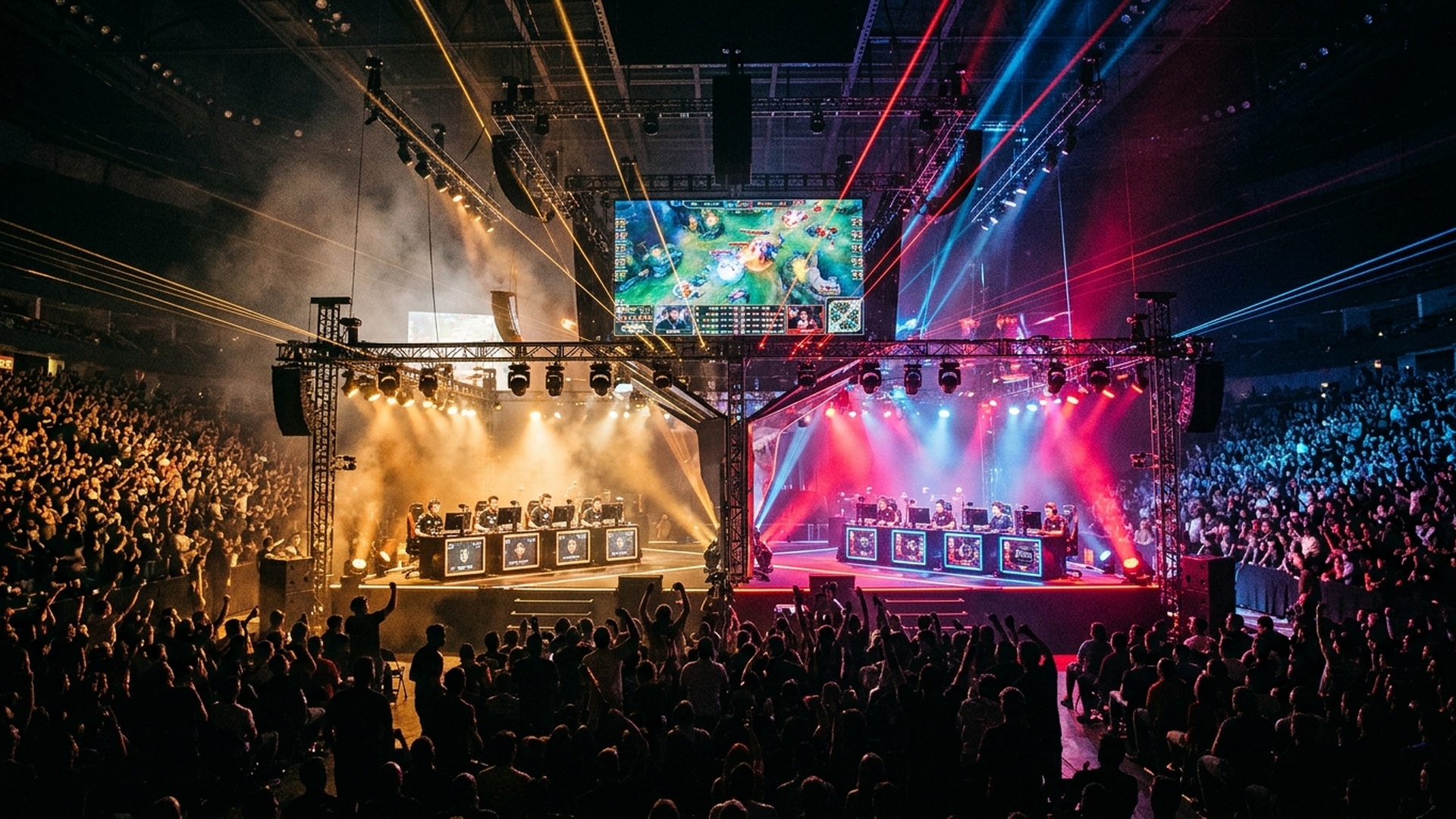
Key Takeaway: Evaluating CS2 vs VALORANT esports in 2026 exposes two starkly contrasting philosophies of competitive gaming. Counter-Strike 2 dominates raw global viewership with 205 million S-tier watch hours and 2.75 million peak viewers across an open third-party circuit, while VALORANT delivers superior prize stability through Riot’s $2.25 million Champions showcase and four structured VCT partnership leagues.
No debate inside competitive PC gaming triggers sharper division than weighing CS2 vs VALORANT esports superiority at the highest tournament level. Superficially, both five-player tactical shooters reward nerve-wracking clutch instincts, careful round economy planning, razor-thin crosshair accuracy, and calm mid-round calls. Beneath identical tactical fundamentals, however, Valve and Riot Games constructed vastly different sporting pyramids with distinct rewards for players, organizations, and spectators.
Drawing upon verified 2026 championship records, broadcast engagement figures, and competitive frameworks reviewed alongside Fragster’s industry overview and Esports Charts telemetry, we examine which ecosystem provides the tougher proving ground today.
Open-Circuit Meritocracy vs. Centralized Franchise Control
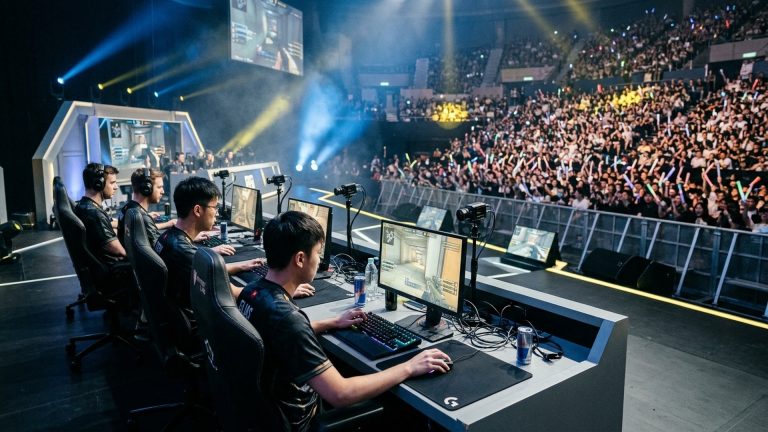
Structurally, the widest divide separating CS2 vs VALORANT esports stems directly from tournament ownership rights. Valve intentionally avoids gating Counter-Strike behind permanent corporate franchises. Instead, independent event organizers—headed by powerhouses like ESL, BLAST, and PGL—craft a sprawling global calendar anchored by meritocratic qualification and Valve Regional Standings (VRS).
Because doors remain perpetually open through regional qualifiers, hungry outsider squads regularly ambush billionaire-backed rosters inside roaring international arenas, such as the expansion detailed in our look at BLAST Premier Rivals connecting Hong Kong to mainland CS2 talent. Every trophy requires surviving brutal multi-stage gauntlets with zero guaranteed franchise safety nets.
Conversely, Riot Games exercises tight centralized command over professional VALORANT via the VALORANT Champions Tour (VCT). Elite play splits neatly across four uniform international regions: Americas, EMEA, Pacific, and China. Partnered clubs compete within scheduled seasonal splits to lock seats at international Masters stopovers and the season-ending Champions spectacle. Consequently, broadcasters and sponsors enjoy reliable calendar stability year-round, even though brand-new amateur startups face stricter entry barriers into Tier-1 play.
| Competitive Category (2026) | Counter-Strike 2 (CS2) | VALORANT (VCT) |
|---|---|---|
| Calendar Structure | Open Ecosystem (ESL, BLAST, PGL) | Centralized Partnership (4 Global Regions) |
| 2026 Signature Title Winner | Team Falcons 3-0 FURIA (IEM Cologne Major) | LOUD def. Team Vitality (Champions Shanghai) |
| Flagship Tournament Purse | $1.25 Million USD (+ Sticker Royalties) | $2.25 Million USD (+ Bundle Sales) |
| Peak Concurrent Viewership | ~2.75 Million Viewers (HLTV Telemetry) | ~1.49 Million Viewers (Shanghai Peak) |
| Jan–May 2026 Total Volume | ~205 Million Watch Hours (292K Avg) | 130+ Million Watch Hours (141K Avg) |
The Road to Going Pro: FACEIT Grinders vs. In-Client Premier
Up-and-coming teenage prodigies encounter radically different progression routes depending on their chosen shooter. Within CS2, the talent pipeline operates as an uncompromising survival ladder. Dedicated grinders migrate away from casual queues onto third-party anti-cheat hubs like FACEIT, prove consistency inside daily hubs and regional cash cups, and catch scouting eyes across academy rosters—similar to the elite trajectories spotlighted in our IEM Beijing 2026 CS2 playoffs guide.
In contrast, Riot built VALORANT’s scouting ladder directly inside the main game executable. Organized amateur five-stacks climb smoothly from rated queues into structured Premier tournament divisions, earning direct promotion shots into regional Challengers brackets and Ascension finals. As a result, VALORANT minimizes onboarding friction for aspiring rosters, whereas CS2 rewards relentless entrepreneurial resilience across fragmented regional circuits.
Championship Prestige, Money, and Global Audience Numbers
Evaluating raw prize purses alongside long-term prestige further highlights fascinating contrasts across CS2 vs VALORANT esports in 2026. Riot’s flagship Champions finals typically advertise larger baseline prize distributions. When Brazilian powerhouse LOUD defeated European juggernaut Team Vitality at VALORANT Champions 2026 in Shanghai, competitors competed over a handsome $2.25 million prize pool.
By comparison, Counter-Strike 2’s iconic 2026 IEM Cologne Major distributed $1.25 million as Team Falcons swept FURIA 3-0 inside Germany’s “Cathedral of Counter-Strike.” Nevertheless, Counter-Strike Majors carry nearly three decades of competitive mythology, and Valve’s lucrative digital tournament sticker royalties regularly inject tens of millions extra directly into competing organizations and players.
Audience tracking from Esports Charts further proves CS2’s historic grip on live esports broadcasting. Across selected S-tier events between January and May 2026, Counter-Strike 2 accumulated approximately 205 million hours watched behind a stellar 292,000 weighted average audience—skyrocketing to roughly 2.75 million peak concurrent viewers during Cologne’s grand final according to HLTV records. VALORANT logged an impressive 130 million watch hours at a 141,000 weighted average during that window, hitting 1.49 million peak viewers in Shanghai behind explosive Asian fanbase growth.
Sponsor Stability vs. Underdog Cinderella Drama
From a commercial partnership standpoint, both governance structures cultivate vastly different investor appetites. Corporate sponsors seeking low-volatility media guarantees often gravitate naturally toward Riot Games’ predictable VCT broadcast windows, knowing marquee franchises remain visible throughout every regional split regardless of temporary map meta slumps. Conversely, grassroots storylines—where unheralded five-player CS2 mixes upset million-dollar superteams through open qualifiers—generate unmatched emotional electricity that keeps Counter-Strike arenas thunderously engaged across Europe, South America, and Asia alike.
In-Server Skill Expression: Pure Symmetry vs. Agent Synergy
Beyond broadcast metrics and tournament rulebooks, intense debate persists around which shooter asks heavier cognitive sacrifices from elite roster players:
- Counter-Strike 2 (Symmetric Mechanical Purity): Every player spawns onto an identical level playing field. Tactical surprises rely entirely on disciplined grenade lineups, sharp counter-strafing acceleration mastery, deterministic rifle recoil control, and ruthless mid-round adaptation without special character abilities bailing out flawed positioning.
- VALORANT (Ever-Shifting Utility Chess): Pinpoint aim forms only one piece of victory. Coaches spend countless scrimmage hours architecting diverse agent combinations, managing asymmetrical ultimate orb timing, and chaining complex overlapping utility executes that evolve relentlessly after every Riot balance patch.
Verdict: Which Esports Ecosystem Takes the Crown in 2026?
Ultimately, crowning a singular winner in CS2 vs VALORANT esports comes down to what fans cherish inside elite competition. VALORANT stands unmatched as a modern global franchised league delivering crisp broadcast schedules, dynamic hero strategy, and surging viewership across Pacific and Chinese territories.
Yet if pure sporting competitiveness means merciless open qualification brackets, unmatched legacy arenas, higher sustained viewership depth, and raw mechanical parity where anyone can challenge the world’s best—Counter-Strike 2 still commands an indisputable edge atop tactical FPS gaming in 2026.
Frequently Asked Questions
Which shooter drew more esports viewership in 2026, CS2 or VALORANT?
CS2 led S-tier broadcasting with around 205 million watch hours between January and May 2026 and a 2.75 million peak at IEM Cologne, ahead of VALORANT’s 130+ million watch hours and 1.49 million peak in Shanghai.
How do CS2 and VALORANT organize professional tournaments differently?
Counter-Strike 2 uses an open competition model led by independent organizers like ESL, BLAST, and PGL, while VALORANT runs Riot Games’ centralized VCT leagues across four global regions.
Which teams won the 2026 flagship CS2 and VALORANT championships?
Team Falcons defeated FURIA 3-0 to capture the 2026 IEM Cologne Major in CS2, whereas LOUD defeated Team Vitality to lift the 2026 VALORANT Champions trophy in Shanghai.
Does VALORANT or CS2 feature higher flagship prize pools?
VALORANT Champions 2026 featured a larger $2.25 million base purse compared to IEM Cologne Major’s $1.25 million prize pool, though CS2 Major organizations also earn lucrative team sticker royalties.
Related posts:
 CS2 Shanghai Major 2026 Playoff Deciders: NaVi, Vitality & FaZe Bracket Seeding, MR12 Economy & Mirage Pick Rates
 Valorant Episode 9 Act 3 & Counter-Strike 2 Saturday Night Grind Playbook: Shanghai Major RMR Utility Lineups, Vyse/Omen Abyss Setups & Raw Input Buffer Latency Hacks
 CS2 NaVi vs Vitality BLAST Premier Finals Preview: Standings, Veto & Odds
 VALORANT Game Changers Championship 2026: Teams & Schedule
